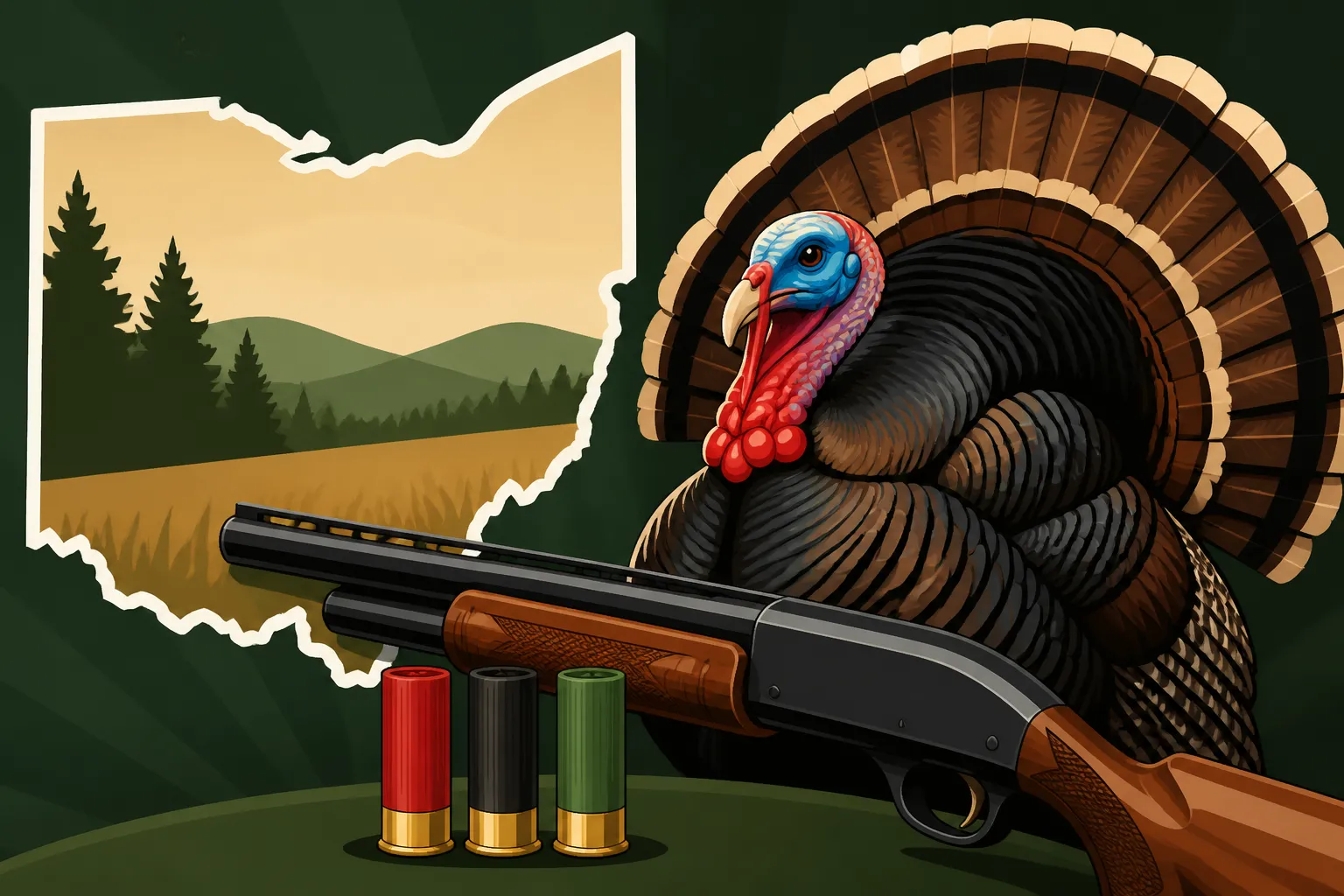
Turkey Shotgun Gauge Choice
Okay, let's talk turkey guns! Deciding on the right shotgun gauge for chasing gobblers in Ohio can feel like a real puzzle. There's a lot of tradition tied up in what we carry afield, but modern ammunition and personal preferences are constantly evolving what hunters choose. This guide is here to break down the different options, helping you understand the pros and cons of each gauge so you can pick the perfect firearm for your Ohio spring or fall turkey hunt.
The Enduring Power of the 12-Gauge Shotgun
For generations, the 12-gauge has been the undisputed king of the turkey woods, and for good reason. It offers an incredible balance of power, pellet count, and versatility that many hunters still rely on today, especially when you're targeting those big Ohio gobblers.
Why the 12-Gauge Still Dominates
The primary advantage of the 12-gauge lies in its ability to throw a heavy payload of shot with authority. This means more pellets are heading downrange towards your target, creating a denser pattern that increases your chances of hitting a turkey's vital zone – primarily the head and neck. When you're talking about standard lead shot, a 12-gauge simply carries more of it than any other common turkey gun. This larger payload translates to a greater margin for error and often extends your effective range compared to smaller gauges using similar shot types. Many hunters feel a deep sense of confidence with a 12-gauge in their hands, knowing they have the horsepower to anchor a bird cleanly. It's a workhorse that has proven itself time and again in diverse hunting conditions, from the open fields of Northwest Ohio to the dense timber of Wayne National Forest.
Considerations for the 12-Gauge Hunter
While powerful, the 12-gauge does come with a few considerations. The most notable is recoil. A heavy turkey load in a 12-gauge can pack a significant punch, especially in a lightweight turkey-specific shotgun. This can be a concern for newer hunters, youth hunters, or anyone sensitive to recoil, as flinching can lead to missed shots. Modern recoil pads and specialized stocks can help mitigate this, but it's still a factor to acknowledge. Furthermore, the overall size and weight of a 12-gauge can be a bit more cumbersome if you're planning on a lot of Run-and-Gun Turkey Tactics on Public Land. You might find yourself wishing for something a little lighter when navigating thick brush or covering miles across varied terrain. However, if you're primarily hunting from a blind or a stationary setup, the weight might be less of a factor. Be sure to explore different options for Turkey Shotguns and Chokes to find one that fits your comfort level.
The Rise of the Nimble 20-Gauge
In recent years, the 20-gauge shotgun has made a remarkable comeback in the turkey hunting world, evolving from a "youth" or "ladies" gun to a serious contender for any experienced hunter. This resurgence is largely thanks to advancements in ammunition technology, particularly the development of Tungsten Super Shot (TSS).
The 20-Gauge Advantage: Lightweight and Low Recoil
The most immediate benefits of the 20-gauge are its lighter weight and reduced recoil compared to its 12-gauge counterpart. This makes for a much more comfortable shooting experience, which can be invaluable when you're trying to stay steady on a gobbler that's hung up at 40 yards. Less recoil also means less flinching, leading to more consistent and accurate shooting. For hunters who value mobility and quick handling, a 20-gauge often feels like a natural extension of themselves. It's easier to maneuver in tight cover, quicker to shoulder when a tom pops up unexpectedly, and less fatiguing to carry all day, whether you're still-hunting creek bottoms or Hunting Ohio's South Zone Spring Opener in the hills. The reduced weight is a huge plus if you're covering a lot of ground, using tools like GoHunt to scout and traverse different sections of public land.
The Game-Changing Impact of TSS Ammunition
The true game-changer for the 20-gauge has been Tungsten Super Shot (TSS). These ultra-dense pellets dramatically increase the pellet count and energy retention downrange, allowing a 20-gauge to deliver patterns that often outperform traditional lead 12-gauge loads. Because TSS is so dense, smaller pellet sizes (like #9) carry incredible energy, and you can pack far more of them into a 20-gauge shell than you could lead shot of a comparable effective size. This means the 20-gauge, when paired with TSS, can achieve excellent pattern density and lethal range, often extending out to 40-50 yards or more, essentially mirroring or even exceeding the performance of many traditional 12-gauge setups. While TSS loads are typically more expensive, many hunters find the trade-off worthwhile for the enhanced performance, reduced recoil, and lighter gun. It has completely changed the conversation around "adequate" gauges for turkey hunting, making the 20-gauge a powerful, viable, and often preferred option for serious hunters. It's worth researching Tungsten Turkey Loads Worth the Price to see how they can transform your hunting experience.
Niche Choices: The .410 and 28-Gauge
While less common, the .410 bore and 28-gauge have carved out their own niches in the turkey hunting community, largely propelled by the same TSS revolution that boosted the 20-gauge. These smaller gauges offer unique advantages for specific types of hunters or hunting scenarios.
The Mighty .410: A Lightweight Surprise
The .410 bore was once considered almost exclusively a squirrel or rabbit gun, definitely not for turkeys. But with TSS, the .410 has become a surprisingly effective turkey tool. Its feather-light weight and minimal recoil make it an absolute joy to carry and shoot, especially for youth hunters, smaller framed individuals, or those with physical limitations. Imagine a youngster making their first successful turkey harvest with a gun that doesn't bruise their shoulder – that's the magic of the .410 with TSS. It offers a low barrier to entry, allowing new hunters to focus on fundamental skills like calling and stealth, rather than bracing for a massive kick. While its effective range is generally shorter than a 12 or 20, usually kept within 30-35 yards, this can be perfectly adequate for those close encounters you work so hard for after Calling an Ohio Gobbler Off the Roost. You'll need to be disciplined with your shot placement and ensure you know your gun's patterns thoroughly by Turkey Chokes and Patterning. GoHunt can even help you pinpoint areas where thick cover might keep birds closer, making a .410 a viable choice.
The Versatile 28-Gauge
The 28-gauge sits comfortably between the .410 and the 20-gauge, offering a nice middle ground in terms of size, weight, and recoil. Historically, it was seen as an upland bird gun, but with TSS, it too has entered the turkey conversation. It delivers a slightly larger payload than the .410, potentially extending its effective range a bit, while still maintaining the desirable characteristics of light weight and manageable recoil. For a hunter looking for something truly unique, perhaps for a specialized setup or just a different experience, the 28-gauge offers a blend of performance and comfort. It's a great option for hunters who want more "oomph" than a .410 but prefer something even lighter than a 20-gauge. Like all smaller gauges, careful patterning with TSS is absolutely essential to understand its capabilities.
Factors Beyond Gauge: Choke, Shot Size, and Ammunition
While the gauge of your shotgun is a foundational decision, it's really just the starting point. To truly optimize your turkey gun, you need to think about the combination of components working together.
The Critical Role of Your Choke
Your choke tube is arguably just as important as your chosen gauge, if not more so, for achieving dense, consistent patterns. Turkey chokes are typically very tight, designed to constrict the shot column and deliver a concentrated pattern of pellets to the turkey's head and neck. Different chokes, even within the "extra-full" or "super-full" category, can perform vastly differently with various ammunition brands and shot sizes. What patterns perfectly in one gun might scatter wildly in another. This is why Turkey Chokes and Patterning is not just a suggestion, it's a mandatory part of preparing for turkey season. You need to shoot your specific gun, with your specific choke, and your specific ammunition at various distances to understand its effective range and pattern density. Don't skip this step!
Understanding Shot Size and Ammunition
The type of ammunition you choose will profoundly impact your shotgun's performance. Traditional lead turkey loads typically come in sizes like #4, #5, or #6. Heavier lead options or blends might include #7. With TSS, the game changes entirely, with #7, #8, and #9 shot being common. The smaller size of TSS pellets means more pellets per ounce, which translates directly to higher pellet count in your pattern. Even small TSS pellets retain incredible energy due to their density. Understanding this relationship between shot size, material, and gauge is key to maximizing your turkey gun's potential. Some hunters even experiment with duplex loads (blends of different shot sizes) to try and achieve the best of both worlds.
Here's a quick comparison of common turkey shotgun gauges:
| Gauge | Common Ammunition Type | Typical Effective Range (with modern loads) | Recoil Profile | Ideal Hunter Profile |
|---|---|---|---|---|
| 12-Gauge | Lead, TSS, Blends | 35-60 yards | Moderate to Heavy | Experienced hunters, those wanting maximum flexibility and power |
| 20-Gauge | TSS (primarily) | 30-50 yards | Light to Moderate | Hunters valuing mobility, reduced recoil, youth/smaller hunters with TSS |
| .410 Bore | TSS (exclusively) | 20-35 yards | Very Light | Youth, recoil-sensitive, close-range specialists, minimalists |
The Power of Practice and Confidence
Ultimately, the best turkey shotgun gauge for you is the one you shoot most accurately and confidently. There's no magic bullet, or rather, no magic gauge, that guarantees success. A hunter who practices regularly with a 20-gauge and understands its capabilities will likely be more successful than a hunter who picks up a 12-gauge for the first time on opening day and is surprised by the recoil. Spend time at the range, pattern your gun meticulously, and understand its limitations. This preparation will not only make you a more ethical hunter but will also boost your confidence when that big tom struts into range, whether you're Setting Up Against a Big Oak or calling him across a field. Before you hit the woods, make sure you're familiar with Ohio Spring Turkey Zones and Dates and that you've secured all your necessary permits.
Choosing a turkey shotgun is a deeply personal decision, influenced by your physical build, hunting style, and budget. Whether you stick with the tried-and-true 12-gauge, embrace the lighter 20-gauge, or experiment with a compact .410, modern ammunition and a good understanding of your setup mean you have more viable options than ever before to bring that Ohio gobbler home.
Disclaimer
This article is for general informational purposes only and does not constitute professional advice. Laws, prices and regulations vary by location and change over time. Consult a qualified professional for guidance on your specific situation.