Sabot Versus Conical for Deer
The biting cold of Ohio's late muzzleloader season can be daunting, and the last thing you want to worry about is whether your projectile will perform when that hard-earned shot opportunity finally arises. Many hunters grapple with the choice between sabot and conical bullets, wondering which offers the best accuracy, knockdown power, and reliability for deer within our state's varied terrain. This guide will help you navigate the nuances of both options, ensuring you head into the woods with confidence in your load and your gear.
Understanding Muzzleloader Projectiles: Sabots vs. Conicals
When you load up your muzzleloader, whether it's an inline or a traditional side-hammer, the projectile you choose is just as critical as your powder charge. These aren't like centerfire cartridges where the bullet is already perfectly matched to the case. With a muzzleloader, you are assembling the components, and that means understanding the distinct characteristics of sabots and conical bullets. It's a fundamental decision that impacts everything from loading ease to terminal performance on an Ohio whitetail.
What Exactly is a Sabot?
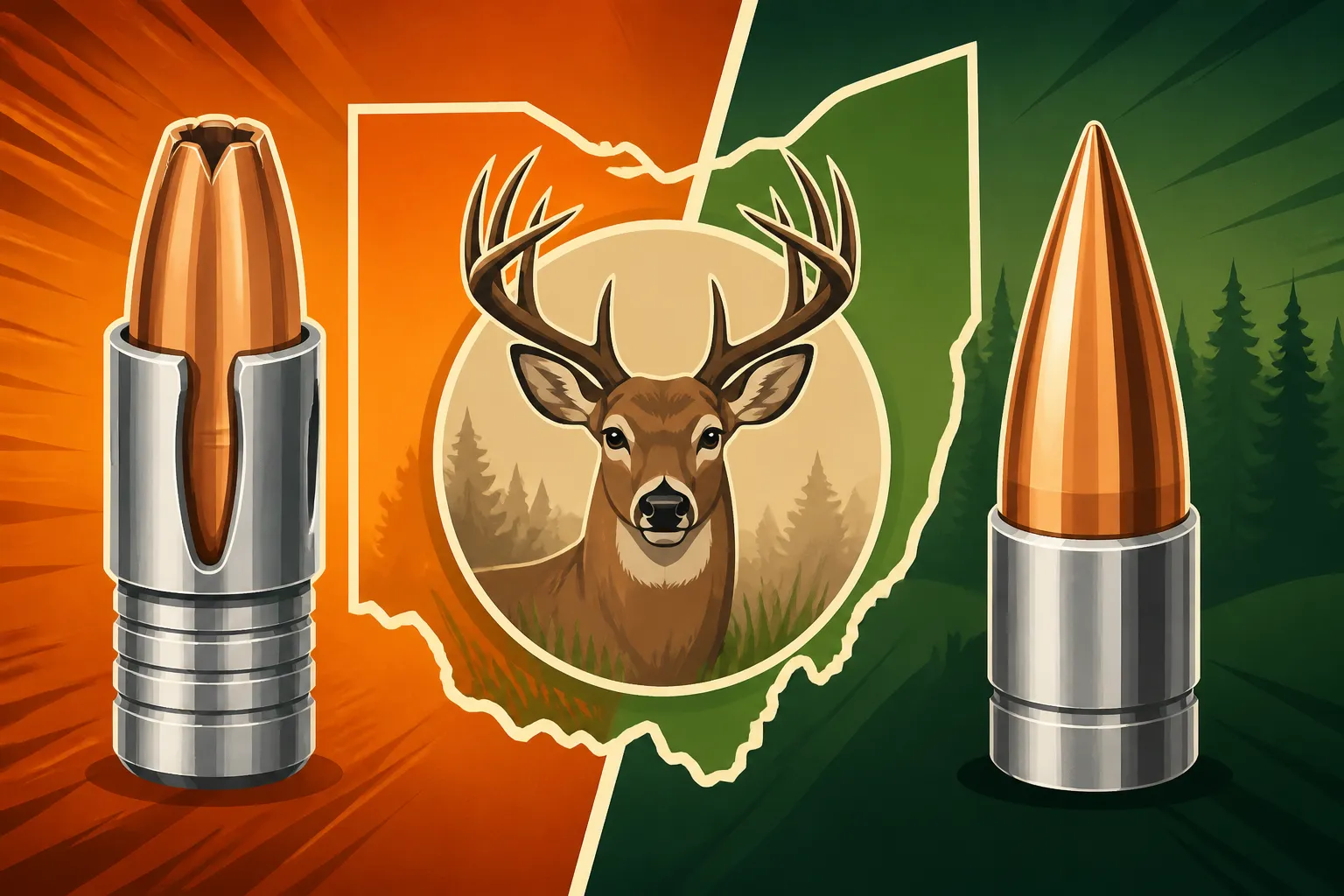
A sabot, pronounced "SAY-bow," is essentially a plastic sleeve or cup that encases a smaller-diameter bullet, typically a .45 or .40 caliber projectile, allowing it to be fired through a larger bore muzzleloader, commonly a .50 caliber. Think of it like a miniature, reusable carrying case for a bullet that allows it to achieve higher velocities and flatter trajectories than traditional full-bore projectiles. When the gun is fired, the sabot seals the bore, utilizing the full pressure of the powder charge to propel the bullet down the barrel. Once the projectile leaves the muzzle, the sabot peels away, often quite dramatically, leaving the smaller, aerodynamic bullet to continue its flight path. This design was a game-changer for muzzleloader accuracy and extended range, mirroring the performance characteristics of modern rifle bullets more closely. For example, many hunters using an inline muzzleloader in the open agricultural fields of Northwest Ohio might lean towards sabots for those potentially longer shots.
Delving into Conical Bullets
On the other side of the spectrum, we have conical bullets. These are solid lead or lead-alloy projectiles that are typically full-bore diameter, meaning a .50 caliber conical bullet is designed to be loaded directly into a .50 caliber barrel without a plastic sabot. Traditional conical bullets, like the famous "Minie ball" from historical firearms, relied on a hollow base that would expand under powder pressure to seal the bore and engage the rifling. Modern conical designs, such as PowerBelt bullets or specialized cast lead projectiles, often feature lubricating grooves and a slightly undersized base, sometimes with a skirt, designed to engage the rifling directly. The key here is the direct metal-to-metal contact with the bore. These bullets are generally heavier for their caliber than sabot-encased projectiles and, while they often fly slower, they carry a tremendous amount of kinetic energy and momentum. Hunters who appreciate the simplicity and traditional feel of muzzleloading, especially in the thick timber of Wayne National Forest Hunting or Shawnee State Forest Hunting, often favor conicals.
The Advantages and Disadvantages of Sabots for Ohio Deer Hunting
Sabots revolutionized muzzleloading, pulling it out of the realm of purely short-range, primitive hunting and closer to modern rifle performance. For many Ohio hunters, especially those who appreciate the extended season Muzzleloader Deer Hunting in Ohio offers, sabots are the go-to choice. However, they aren't without their quirks.
Why Sabots Might Be Your Best Friend
One of the biggest draws of sabots is accuracy and extended range. Because they encase a smaller, more aerodynamic bullet, they typically maintain velocity better and are less affected by wind than a fatter, heavier conical. This translates to a flatter trajectory and tighter groups, which can be a huge advantage when you're hunting deer in Ohio's more open country, like the field edges of Hunting Northwest Ohio Farmland Deer. A hunter might find that with practice, they can confidently make shots out to 150-200 yards with a sabot and a well-tuned inline muzzleloader, whereas traditional conicals might limit them to under 100 yards.
Another benefit is the variety of bullet designs available. The bullets inside sabots are often modern jacketed rifle bullets, offering controlled expansion and superior weight retention. Companies like Barnes, Hornady, and Nosler all make bullets specifically designed for sabots, featuring advanced tips and bonding processes that ensure devastating terminal performance. This means you can pick a bullet with characteristics — like rapid expansion for closer shots or deeper penetration for quartering shots — that best suit your hunting style and the conditions you expect to encounter. The ability to tailor your projectile choice to specific scenarios, whether it's hunting in dense brush or across a wide cut field, gives you a significant edge. Checking a reputable hunting resource like GoHunt can provide insights into popular sabot choices among Ohio hunters.
Finally, easier loading can sometimes be a factor. While a tight sabot fit is crucial for accuracy, the plastic sabot can often glide down a fouled bore more smoothly than a lead conical, which might scrape and bind. This can be particularly noticeable on a cold January morning when your hands are numb, and you need to reload quickly.
The Downside to Sabots
Despite their benefits, sabots come with their own set of considerations. One significant issue can be fouling. The plastic material of the sabot can melt or leave plastic residue in the rifling, especially after multiple shots or with hotter loads. This build-up can quickly degrade accuracy and make subsequent loading incredibly difficult. Imagine trying to push a tight sabot down a barrel caked with plastic and powder residue – it's a real struggle. This means diligent cleaning between shots, even in the field, is often necessary for optimal performance. Keeping a Muzzleloader Dry in Wet Snow becomes even more challenging when you also need to manage a clean bore.
Another factor is barrel twist rate. Sabots perform best with faster twist rates, typically 1:28 or 1:32, common in modern inline muzzleloaders. If you have an older muzzleloader with a slower twist rate (like 1:48 or slower), sabots might not stabilize properly, leading to poor accuracy. It's vital to know your rifle's twist rate and match your projectile accordingly.
Lastly, temperature sensitivity can be an issue. The plastic of the sabot can become brittle in extreme cold or soft in high heat, affecting its ability to properly seal the bore or separate cleanly from the bullet. While Ohio rarely sees desert heat during muzzleloader season, those deep freezes in January can certainly impact sabot performance. If you're heading out for Hunting Ohio's Early-January Muzzleloader Week, you'll want to test your sabot load in similar cold conditions.
The Advantages and Disadvantages of Conical Bullets for Ohio Deer Hunting
Conical bullets, while perhaps seen as more "traditional," are far from obsolete. Many experienced muzzleloader hunters in Ohio swear by them, particularly for their sheer power and simplicity.
The Power and Reliability of Conicals
The primary advantage of conical bullets is their sheer knockdown power. Being full-bore diameter and often heavier than sabot-encased bullets, conicals deliver a tremendous amount of energy and momentum upon impact. A heavy .50 caliber conical striking a deer is often described as feeling like it's hit with a freight train. They tend to create large wound channels and often result in complete pass-throughs, even on large bucks, leaving excellent blood trails. This can be especially reassuring when hunting in the dense Appalachian foothills of southeast Ohio, where a short, clear blood trail is paramount for recovery.
Conicals are also praised for their simplicity and reduced fouling. There's no plastic sabot to melt or shed, which means less plastic residue in your barrel. While you still get powder fouling, it's typically easier to manage than plastic fouling, potentially allowing for more shots between thorough cleanings. This makes them a favorite for hunters who prioritize reliability in the field and want to focus on the hunt, not constantly swabbing their barrel. If you're out for an all-day sit in January, the thought of fewer cleaning interruptions after a shot is appealing.
Furthermore, many traditional muzzleloader enthusiasts prefer conicals for their historical accuracy and aesthetic. There's a certain satisfaction in loading a heavy lead projectile directly down the barrel, feeling connected to the hunting heritage. Conicals also tend to perform well in older muzzleloaders with slower twist rates, which might not stabilize sabots effectively. So if you're rocking a classic Hawken-style rifle, conicals are likely your best bet.
Where Conicals Fall Short
The most common drawback of conical bullets is their limited range and trajectory. Due to their larger diameter and less aerodynamic shape, conicals shed velocity faster and have a more pronounced bullet drop compared to sabots. This makes accurate long-range shooting significantly more challenging. While some hunters can achieve decent accuracy with conicals out to 100-125 yards, pushing them much further generally results in a drastic drop in precision and energy. For open-country hunting, this can be a serious limitation, forcing you to adjust your approach or pass on shots you might take with a sabot. GoHunt forums often have discussions about hunters testing the practical limits of conicals in various Ohio hunting scenarios.
Another challenge can be loading difficulty, especially after the first shot. A full-bore lead conical will often "shave" lead as it's pushed down a fouled barrel, making subsequent loading very stiff and difficult. This can be exacerbated by tight bore tolerances or cold weather, where lead becomes less pliable. Imagine trying to ram a stubborn conical down a dirty barrel with frozen fingers – it's not a pleasant experience.
Finally, the limited bullet expansion of traditional lead conicals can be a concern. While their heavy weight and momentum create significant damage, they might not expand as aggressively or predictably as modern jacketed bullets found in sabots. Some newer conical designs address this with hollow points or softer lead alloys, but it's still something to consider regarding terminal performance, particularly if you're aiming for quick, clean kills.
Choosing the Right Projectile for Your Ohio Muzzleloader Hunt
Making the choice between sabots and conicals isn't about one being inherently "better" than the other, but rather about which projectile is best suited for your specific muzzleloader, your hunting style, and the conditions you'll face in the Ohio woods. It’s a decision that can make or break your hunt, so taking the time to understand your setup and preferences is crucial.
Consider Your Muzzleloader and Its Capabilities
First and foremost, you need to understand your firearm. Does your muzzleloader have a fast twist rate (1:28 to 1:32), common in modern inline rifles from brands like Thompson/Center, CVA, or Traditions? If so, sabots will likely perform exceptionally well. These barrels are designed to stabilize the shorter, lighter bullets found in sabots at high velocities. If your rifle has a slower twist rate (1:48 or slower), often found in traditional side-hammer rifles or older inline models, then conicals are generally the superior choice. A slow twist rate will not adequately stabilize a sabot-encased bullet, leading to keyholing and abysmal accuracy. This information is usually stamped on the barrel or can be found in your rifle's manual. A quick search on GoHunt or the manufacturer's website can also help confirm your barrel's twist rate.
Next, consider the bore condition of your muzzleloader. Some barrels are notoriously tight, making it a struggle to load certain sabots or conicals. Others might be slightly oversized. You want a projectile that offers a snug, but manageable, fit. If it's too loose, you'll lose accuracy; too tight, and you'll fight every load. It's a balance.
Assess Your Hunting Environment and Preferred Range
Where do you typically hunt in Ohio? The dense woods and steep ravines of the Wayne National Forest or Hunting Southeast Ohio Appalachian Foothills often mean shots are close, rarely exceeding 75 yards. In such scenarios, the raw power and momentum of a heavy conical bullet might be more appealing. Their slightly rainbow trajectory is less of an issue at these ranges, and their ability to bust through brush (though still not recommended for ethical shots) can be reassuring.
Conversely, if you primarily hunt the open farmlands of Northwest Ohio or the edges of large ag fields in central Ohio, where shots of 100-150 yards are not uncommon, the flatter trajectory and extended accuracy of a sabot will provide a significant advantage. It allows you to confidently engage deer at ranges where a conical would require considerable holdover and guesswork. When planning your hunt, consider the likely maximum shot distance you'll encounter. This often dictates the need for a more ballistically efficient projectile.
Test, Test, Test: The Only Real Way to Know
The single most important piece of advice anyone can give you about muzzleloader projectiles is this: you absolutely must test different options with your specific rifle. What shoots well in one rifle, even the same make and model, might not shoot well in another. Purchase a few different types of sabots and conicals from various manufacturers.
Here's a simple testing approach:
- Start Clean: Begin with a thoroughly cleaned barrel.
- Consistent Loading: Use a consistent powder charge, ramrod pressure, and cleaning regimen between shots (if you plan to load multiple times without a full scrub). For traditional hunting, this usually means swabbing with a damp patch between each shot to remove fouling.
- Shoot Groups: Shoot 3-shot groups at your intended hunting range (e.g., 50, 75, and 100 yards). Don't just fire one shot and call it good. Look for consistent group sizes.
- Experiment: Try different powder charges within safe limits, and different bullet weights or designs. Some rifles prefer lighter sabots, others heavier conicals.
A good goal for deer hunting is to consistently place shots within a 4-inch circle at your maximum comfortable range. Better yet, aim for a 2-3 inch group at 100 yards. This gives you a good margin of error for ethical shots on a deer's vital zone. Don't forget to test in cold conditions if you're hunting in Muzzleloader Tactics in January Cold. Many hunters find that cold weather can slightly change point of impact or loading characteristics. Use your range sessions to practice shooting off a shooting stick or from a hunting rest, mimicking real-world conditions.
A Quick Comparison Table
To help visualize the trade-offs, here’s a basic comparison:
| Feature | Sabots | Conical Bullets |
|---|---|---|
| Accuracy | Generally superior, especially at longer ranges | Good at closer ranges, declines rapidly with distance |
| Range | Longer effective range (150-200+ yards possible) | Shorter effective range (typically < 100-125 yards) |
| Knockdown Power | Excellent, controlled expansion | Tremendous momentum, large wound channels |
| Loading | Can be easier on fouled bores, but plastic can be sticky | Can be very tight after first shot, shaves lead |
| Fouling | Plastic residue can build up quickly, affects accuracy | Lead/powder fouling, generally easier to manage |
| Twist Rate | Prefers fast twist (1:28-1:32) | Prefers slower twist (1:48 or slower) |
| Bullet Variety | Wide array of modern jacketed bullets available | More limited, often solid lead or hollow point designs |
| Cost | Can be more expensive per shot | Generally less expensive per shot |
Ultimately, the best choice is the one that gives you unwavering confidence in your ability to make a clean, ethical shot on a deer. For some, that's the long-range precision of a sabot, while for others, it's the raw power and traditional feel of a heavy conical. Whichever you choose, ensure it's thoroughly tested and matches your specific hunting scenario in Ohio. Remember to always consult with reputable resources like GoHunt or your local sporting goods store for the most up-to-date recommendations and availability.
Disclaimer
This article is for general informational purposes only and does not constitute professional advice. Laws, prices and regulations vary by location and change over time. Consult a qualified professional for guidance on your specific situation.