The Ohio Deer Checking Deadline
That moment when the adrenaline is still pumping after a successful deer harvest, and all you want to do is celebrate and start planning how to get that venison processed, it’s easy to let important details slip. But overlooking the Ohio deer checking deadline can turn a triumph into a headache. This guide is here to walk you through everything you need to know about checking your deer in Ohio, ensuring you stay legal and contribute to responsible wildlife management.
Understanding the Ohio Deer Checking Deadline
The Ohio deer checking deadline isn't just a suggestion; it's a critical component of legal hunting and wildlife management in our state. Failing to adhere to it can lead to unfortunate consequences, so it's vital to grasp the specifics. It all boils down to a clear, non-negotiable timeframe after you've taken an animal.
The 24-Hour Rule: When the Clock Starts Ticking
The most fundamental rule every Ohio deer hunter needs to engrave in their mind is the 24-hour window. Once you've harvested a deer, the clock starts ticking immediately, and you have exactly 24 hours from the time of the kill to report your harvest. This isn't 24 hours from when you get it back to camp, or 24 hours from when you finish field dressing it in the woods; it's 24 hours from when the animal expires. This immediate start time is crucial, especially for hunters who might be deep in the backcountry, perhaps in a remote part of Wayne National Forest or Shawnee State Forest, far from cell service or a comfortable place to sit and report.
Consider a scenario: you make a perfect shot on a mature buck at 4:30 PM on a Saturday afternoon. That means your deer must be checked in by 4:30 PM on Sunday. This rule applies uniformly across all deer seasons, whether you're hunting during the early archery season, the intense Ohio's Two-Weekend Gun Deer Season in November and December, or the late muzzleloader period. It's a system designed to ensure timely data collection, which is paramount for the Ohio Department of Natural Resources (ODNR) to accurately track harvest numbers and manage our deer herd effectively. It's not meant to be a burden, but rather a simple and effective way to gather the necessary information.
The Role of Legal Shooting Hours in the Deadline
While the 24-hour rule is straightforward, it's also important to remember that it operates within the framework of legal shooting hours. You might wonder how these two concepts intertwine. The legal shooting hours dictate when you can actively hunt and take a deer. In Ohio, these hours generally run from 30 minutes before sunrise to 30 minutes after sunset. This is detailed clearly in the regulations for Ohio Legal Shooting Hours and applies to all game species.
The significance here is subtle but important: your 24-hour checking window begins the moment the deer is legally taken. So, if you harvest a deer right at the very end of legal shooting hours, say 30 minutes after sunset, that precise time becomes the start of your 24-hour countdown. It doesn't extend into the next day simply because it was dark when you pulled the trigger. This means if you're out late and make a kill, you might be checking in your deer in the dark or early the next morning, regardless of when the next day's hunting hours begin. It’s a good practice to note the exact time of the kill as accurately as possible, perhaps by checking your watch or phone the moment you reach the downed animal. This small habit can save you a lot of grief and ensure you meet the Ohio Deer Checking and Reporting Rules without issue.
Special Considerations for Youth Hunts
Ohio’s youth hunting opportunities are fantastic for introducing the next generation to our outdoor traditions. Events like the Ohio Youth Gun Weekend Rules are eagerly anticipated by young hunters and their mentors. However, these special seasons don't come with relaxed deer checking deadlines. The same 24-hour rule applies rigorously to deer harvested during youth hunts. This means that if a young hunter harvests a deer on Saturday morning, that deer must be checked in by Saturday morning of the following day, just like any adult-harvested animal.
Mentors, parents, and guardians play a crucial role here. It's their responsibility to ensure the youth hunter understands the checking process and that the actual check-in is completed on time. This is an excellent opportunity to teach not just hunting skills, but also the importance of legal compliance and ethical hunting practices. While the excitement of a youth's first deer can be overwhelming, integrating the check-in process as part of the harvest experience can instill good habits early on. Make it a point to sit down with your young hunter, show them how to use the app or website, and explain why it's so important. It turns a necessary chore into another teaching moment in their hunting journey.
How to Check Your Deer in Ohio
Checking your deer in Ohio is a straightforward process, thanks to modern technology. The Ohio Department of Natural Resources (ODNR) has streamlined the system to make it accessible for hunters across the state. Gone are the days of needing to find a physical check station in many areas, though some specialized CWD stations still exist for mandatory testing. The vast majority of hunters will utilize the digital platforms available.
Using the Online Check-In System
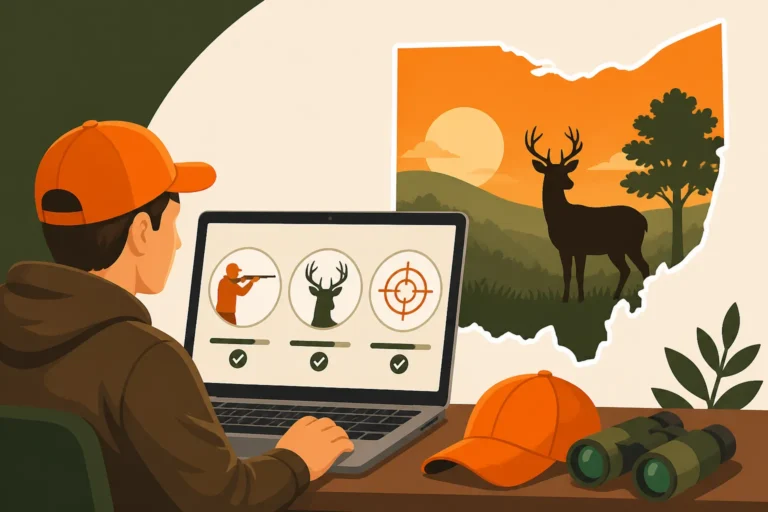
The primary method for checking your deer is through the Ohio Wildlife Licensing System website. This online portal is accessible from any computer or mobile device with internet access. The beauty of this system is its convenience; you can check your deer from your kitchen table, your deer camp, or even, with a little planning, from a remote location if you’ve got a signal booster. The website is intuitive, guiding you through the necessary steps. You’ll need to navigate to the "Game Check" section, select "Deer," and begin entering your harvest information.
This method allows you to complete the entire process quickly, issuing you a confirmation number that serves as proof of your legal check-in. It's a good idea to either print this confirmation or save a screenshot on your phone. This digital record is your official compliance, proving you’ve adhered to Ohio Deer Checking and Reporting Rules. While you might rely on a sophisticated hunting app like GoHunt for mapping and scouting, remember that the official check-in must always be done directly through the ODNR's dedicated system to be legally valid. Don’t confuse other hunting apps with the official reporting platform, as that could lead to penalties.
The HuntFish Ohio Mobile App
For hunters on the go, the HuntFish Ohio mobile app is an absolute game-changer. Available for both iOS and Android devices, this app puts the power of the online checking system right in your pocket. It's essentially a mobile version of the ODNR's website, optimized for smartphones. This is particularly useful for those moments when you've just dragged a deer out of a deep ravine in Southeast Ohio, you're tired, and you want to get the check-in done before you even get home.
The app is user-friendly, allowing you to quickly input your harvest details, including the county of harvest, date, time of kill, sex of the deer, antler points (if applicable), and method of take. Make sure you have your customer ID ready. In areas with spotty cell service, it’s wise to complete the check-in as soon as you hit an area with good reception. Some hunters even head to a nearby town or gas station just to ensure a strong connection before submitting their information. Having the app pre-downloaded and logged in before you even head out for your hunt can save precious minutes and reduce stress when the moment arrives. Think of it as another essential piece of gear, just like your broadheads or your hunting boots.
What Information You'll Need
Before you even start the check-in process, whether online or via the app, you need to have specific information readily available. This isn't just a simple click-and-go; accurate data is vital for ODNR’s wildlife biologists. Here’s a rundown of what you’ll typically need:
- Your Customer ID: This is a unique number associated with your Ohio hunting license. You’ll find it on your license itself.
- Permit Number: If you used a specific deer permit, such as a regular deer permit or a special Ohio Deer Management Permits for antlerless deer, you’ll need that number.
- County of Harvest: The specific county where you harvested the deer. Accuracy here is important for localized data.
- Date and Time of Kill: As discussed, the precise date and time the deer expired.
- Sex of Deer: Whether it was a buck or a doe.
- Antler Points (if a buck): You’ll need to count the number of antler points, usually defined as any projection that is at least one inch long.
- Method of Take: This includes archery (vertical bow or crossbow), shotgun, straight-wall cartridge rifle, muzzleloader, or handgun.
Gathering this information before you sit down to check in your deer makes the process much faster and reduces the chance of errors. Many hunters keep a small notepad or use their phone's notes app to jot down these details immediately after the harvest.
Here's a quick summary of the required information:
| Information Category | Specific Details Needed |
|---|---|
| Hunter Identification | Ohio Customer ID, Hunting License Number |
| Permit Used | Deer Permit Number (e.g., General Deer, Deer Management Permit) |
| Harvest Location | County where the deer was taken |
| Harvest Details | Date of Kill, Time of Kill (as accurate as possible) |
| Deer Characteristics | Sex of the deer (Buck/Doe), Number of Antler Points (if applicable) |
| Method of Take | Archery (vertical/crossbow), Shotgun, Straight-Wall Cartridge Rifle, Muzzleloader |
Why These Deadlines Matter for Ohio Hunting
The 24-hour deer checking deadline isn't arbitrary; it serves several critical functions that benefit both the hunters and the health of Ohio's deer herd. Understanding these reasons can help underscore the importance of prompt reporting.
Data for Wildlife Management and Season Adjustments
Every checked deer contributes a vital data point to the Ohio Department of Natural Resources' extensive wildlife management efforts. When you input the county, date, time, sex, and method of take, you're providing information that biologists use to understand harvest trends, population densities, and overall deer health. This data is aggregated across thousands of hunters and helps the ODNR make informed decisions about future hunting regulations. For instance, if harvest numbers in a particular region are consistently low, it might prompt a review of season lengths or bag limits in that area. Conversely, if certain counties show exceptionally high harvest rates or a skewed buck-to-doe ratio, it could lead to increased antlerless opportunities or adjusted permit structures.
This continuous collection of harvest data is how the ODNR ensures sustainable hunting for generations to come. Without accurate and timely reporting, their models would be less precise, making it harder to manage the White-Tailed Deer Across Ohio responsibly. It's a collective effort, and every hunter plays a direct role in this science-based approach to conservation. The information helps predict trends, assess habitat impacts, and even understand the efficacy of different hunting methods.
Legal Compliance and Avoiding Penalties
Beyond wildlife management, adhering to the deer checking deadline is a matter of legal compliance. In Ohio, failure to check your deer within the specified 24-hour period is a violation of state wildlife laws. Ignorance of the law is generally not considered a valid excuse, and Ohio Wildlife Officers take these regulations seriously. The penalties for such violations can range from monetary fines to the potential suspension or revocation of your hunting license. Imagine the frustration of successfully harvesting a deer, only to face legal trouble because you forgot to check it in on time. It's a disheartening scenario that's entirely avoidable.
These rules are clearly outlined in the Ohio Revised Code and Ohio Administrative Code, and are regularly communicated through the annual hunting regulations booklet and the ODNR website. The enforcement of these rules ensures fairness among hunters and upholds the integrity of the state's wildlife management system. Always remember that possessing an untagged and unreported deer beyond the 24-hour deadline can be considered poaching, a serious offense with severe consequences as outlined in the Ohio Wildlife Violation Penalties. It’s simply not worth the risk.
CWD Surveillance and Mandatory Testing Windows
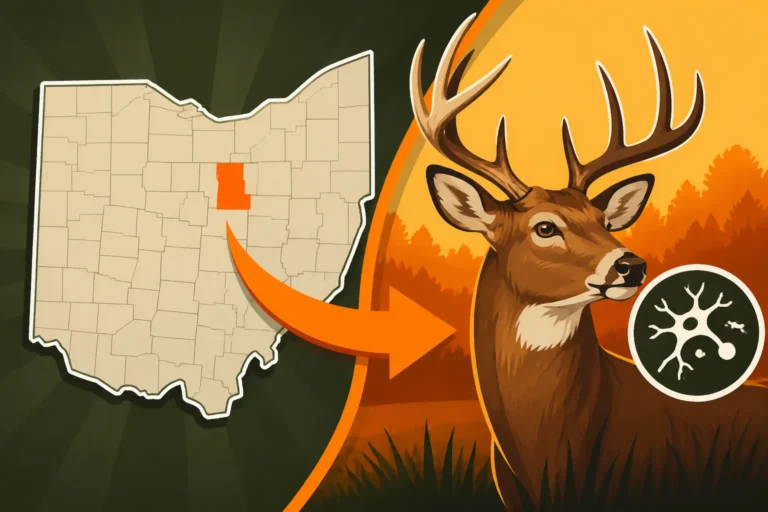
Perhaps one of the most critical reasons for the strict deer checking deadline, especially in recent years, is its role in Ohio's Chronic Wasting Disease (CWD) surveillance efforts. CWD is a fatal neurological disease that affects deer, elk, and moose, and it has been detected in certain areas of Ohio, notably in counties like Wyandot, Marion, Hardin, and others designated within the Ohio's Chronic Wasting Disease Surveillance Area. To monitor the spread and prevalence of this disease, the ODNR conducts mandatory CWD testing during specific periods and in specific counties.
During these mandatory testing windows, which often coincide with the opening weekends of the gun seasons, hunters who harvest a deer in a designated CWD Surveillance Area county are required to take their deer to an official ODNR CWD sampling station or self-serve kiosk within 24 hours of harvest. This is in addition to the standard online or app check-in process. The quick turnaround of the 24-hour rule ensures that tissue samples can be collected efficiently, before significant decomposition occurs, allowing for accurate testing. These proactive measures are vital for understanding the disease's presence in the herd and implementing management strategies to mitigate its impact. By checking your deer promptly, you're not just complying with the law; you're actively participating in the health and future of Ohio’s deer population. For more details on this, you can look up specific regulations regarding Mandatory CWD Testing Windows in the DSA for the current year.
Common Mistakes and How to Avoid Them
Even experienced hunters can sometimes make mistakes when it comes to deer checking. The excitement of the moment, coupled with the logistics of field dressing and transporting an animal, can lead to oversight. Being aware of these common pitfalls can help you avoid them.
Misinterpreting the Start Time of the Deadline
One of the most frequent errors hunters make is misinterpreting when the 24-hour clock actually begins. As emphasized earlier, it starts the moment the deer expires, not when you finish processing it, get it to your vehicle, or arrive home. The confusion often stems from the practical reality of hunting: it can take hours to track a deer, field dress it, and then physically remove it from the woods, especially if you're deep in challenging terrain like the Appalachian foothills of Southeast Ohio.
A real-life scenario might be a hunter who takes a deer at 8:00 AM, spends the next six hours tracking, recovering, and field dressing it, and finally gets it back to camp around 2:00 PM. They then assume they have 24 hours from 2:00 PM. This is incorrect. The deadline is 8:00 AM the following day. To avoid this mistake, make it a habit to immediately note the time of harvest. A quick glance at your watch or phone the moment you lay hands on the deer is all it takes. Better yet, if you’re using a mapping app like GoHunt for navigation, you might even have a timestamped waypoint near your kill site that can help confirm the precise moment. This simple discipline can prevent a lot of stress and potential legal issues.
Connectivity Issues in Remote Hunting Areas
Ohio offers incredible hunting opportunities in vast, wild areas, but these remote locations often come with a downside: unreliable cell phone service. Imagine you're hunting deep in Zaleski State Forest or the Ironton Unit of Wayne National Forest, you harvest a deer, and you pull out your phone to use the HuntFish Ohio app, only to find you have no signal. This is a common and frustrating problem that can lead to missing the 24-hour deadline.
To circumvent this, proactive planning is key. Before heading out to a known dead zone, consider taking a screenshot of your hunting license and permits, or even writing down your customer ID and permit numbers. You can also research areas with better cell service nearby your hunting location, knowing you might need to drive there specifically to check in. Some hunters even carry satellite communicators, though that might be overkill for most. The important thing is to have a plan for connectivity. Don't wait until the last minute of your 24-hour window to attempt the check-in, especially if you know you’re in a remote area. Head to town, find a public Wi-Fi spot, or simply drive until you hit bars of service. This foresight is part of responsible hunting in the modern age.
Forgetting Critical Information or Incorrectly Inputting Details
The check-in process requires several pieces of specific information, and it's surprisingly easy to forget one or accidentally input incorrect details, especially when you're tired or excited. Hunters might mistakenly select the wrong county, miscount antler points, or accidentally transpose digits in their customer ID. These errors, while seemingly minor, can create issues for the ODNR's data collection and could even flag your harvest as suspicious if inconsistencies are too great.
Before you begin the online or app check-in, take a moment to review all the required information. Double-check the county name, recount the antler points (if it's a buck), and confirm the date and time of kill. Having a physical note or a screenshot of your license and permits can significantly reduce the chance of inputting incorrect identification numbers. Once you've submitted the information, always save or screenshot the confirmation number. This number is your proof that the deer has been legally checked. If you realize you made a mistake after submission, contact the ODNR wildlife district office immediately. They can often help correct errors before they become larger problems. This diligence ensures that your hunting experience remains positive and compliant with Ohio's regulations, from the shot to the dinner table. You can learn more about Registering a Deer Through Ohio's Check-In System on the ODNR's main page.
Final Thoughts on Ohio Deer Checking
Meeting the Ohio deer checking deadline is more than just a regulatory hurdle; it's a fundamental responsibility of every hunter. It contributes directly to the ODNR’s ability to manage our precious deer resources effectively, ensuring healthy populations for future generations of hunters. By understanding the 24-hour rule, knowing how to utilize the online and app-based systems, being prepared with all necessary information, and avoiding common mistakes, you can ensure your hunt concludes legally and ethically. Don't let the excitement of a successful harvest overshadow this critical step.
Disclaimer
The information provided in this guide is for general informational purposes only and is subject to change. While we strive to keep the content up-to-date and accurate, hunting regulations in Ohio can be complex and are regularly updated by the Ohio Department of Natural Resources (ODNR). Always consult the most current official Ohio hunting and trapping regulations booklet, available from the ODNR, or visit their official website (ohiodnr.gov) for the definitive and most recent rules, laws, and season dates before participating in any hunting activity. Failure to comply with all applicable laws and regulations may result in penalties.