Which Counties Sit in the Northeast Turkey Zone
Trying to figure out exactly where you can chase gobblers in Ohio can feel like solving a complicated puzzle, especially when you hear folks talking about "zones." It's not always clear which counties fall into which bucket, leaving many hunters scratching their heads about season dates and regulations. This comprehensive guide is here to clear up that confusion, specifically outlining every county that makes up Ohio's Northeast Turkey Zone and providing all the detailed information you need to plan a successful spring hunt.
Understanding Ohio's Spring Turkey Zones
Ohio's approach to spring turkey hunting isn't a one-size-fits-all statewide opener. Instead, the state is carved into distinct zones, primarily the South Zone and the Northeast Zone. This system helps the Ohio Department of Natural Resources (ODNR) manage turkey populations effectively, accounting for regional differences in habitat, climate, and turkey reproductive cycles. It's a pragmatic way to ensure that hunting pressure aligns with what the local turkey populations can sustain, aiming for healthy flocks for generations to come.
Why Ohio Has Multiple Zones
The decision to implement multiple turkey zones wasn't made on a whim; it's rooted in ecological necessity and historical data. Ohio is a state with incredibly diverse landscapes, from the rolling Appalachian foothills in the southeast to the flat, agricultural plains in the northwest, and the more varied terrain of the northeast. These geographical differences mean turkeys in one part of the state might be further along in their breeding cycle, or have different nesting success rates, compared to those in another region. For instance, milder spring weather in southern Ohio often means turkeys there begin their breeding rituals, like gobbling and strutting, earlier than their counterparts up north.
By creating distinct zones, the ODNR can tailor season dates to these regional variations, maximizing hunter opportunity while minimizing disturbance during critical periods like nesting. It's about finding that sweet spot where hunters can enjoy the peak gobbling activity without unduly impacting the birds' ability to reproduce. This localized management is crucial for maintaining the robust Ohio Turkey Population Trends we've come to enjoy. Without it, a statewide opener might be too early for some areas, resulting in poor success rates, or too late for others, leading to missed opportunities during peak activity.
Key Differences Between Zones
The most significant difference between Ohio's turkey zones boils down to the calendar. The South Zone typically opens earlier in the spring, reflecting the earlier onset of warm weather and turkey breeding behavior in those southern counties. Hunters in the South Zone often get a jump on the season, sometimes by a week or more, compared to their colleagues in the Northeast Zone. This staggered start also helps to disperse hunting pressure across the state, preventing massive crowds from descending on every patch of public land on the same day.
Beyond just the opening dates, hunters might notice subtle differences in turkey behavior and preferred habitats between the zones. While the South Zone often features more mature timber and rugged terrain, the Northeast Zone, as we'll delve into, can be a mix of smaller woodlots, agricultural fields, and suburban fringes. Understanding these ecological nuances is key to adapting your hunting strategy, whether you're trying Roost Hunting Ohio Gobblers in an isolated timber stand or Run-and-Gun Turkey Tactics on Public Land through mixed habitat. The daily bag limit, however, remains consistent across both zones, allowing hunters to take one bearded turkey per day, with a season limit. You can dive deeper into these specifics by checking out the article on Ohio Spring Turkey Zones and Dates.
The Northeast Turkey Zone: A Detailed County Breakdown
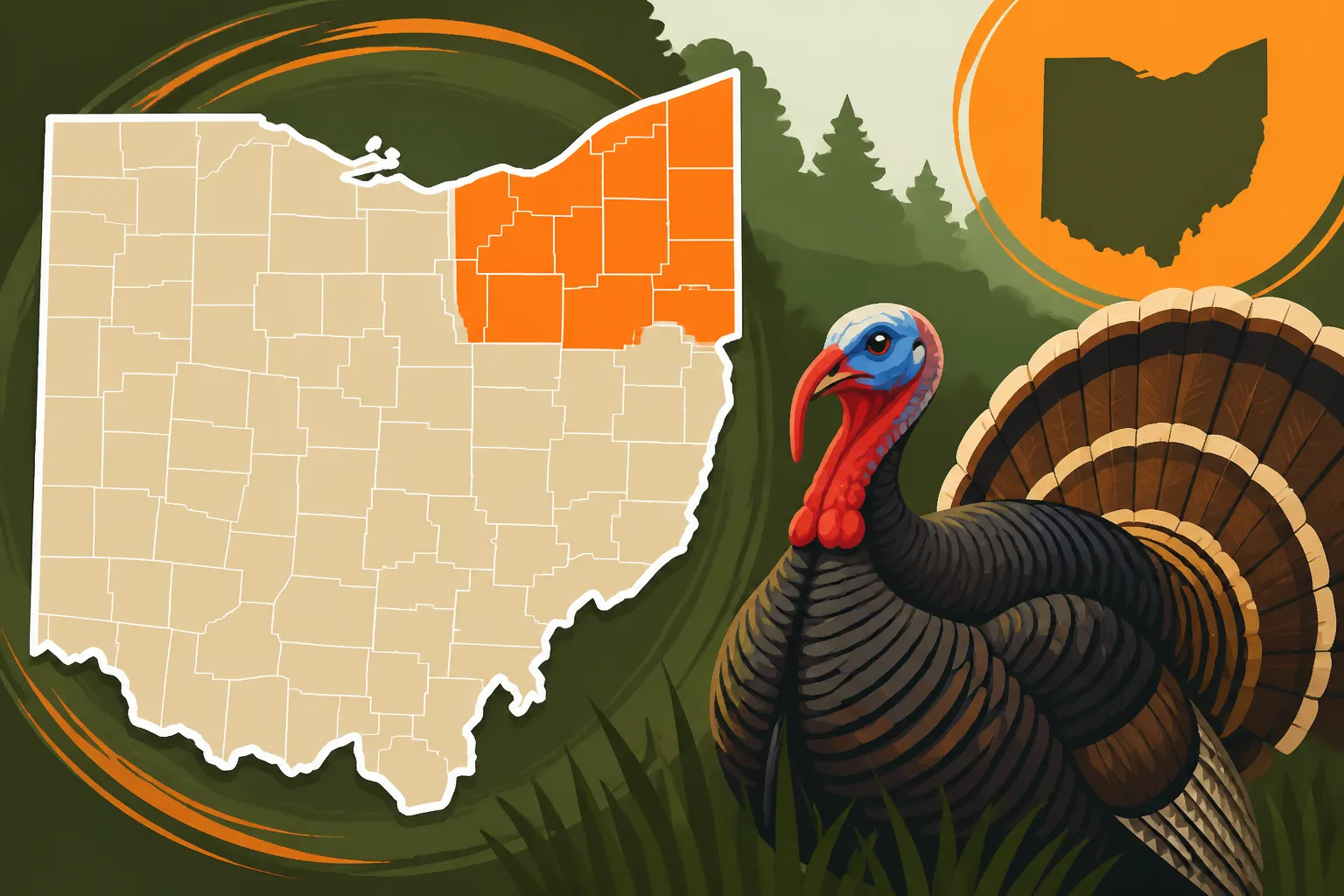
Now, let's get down to the brass tacks: which counties actually comprise the elusive Northeast Turkey Zone. This is the information many hunters desperately seek when mapping out their spring adventures, and for good reason. Knowing which side of the line your favorite hunting spot falls on can literally dictate when you can legally pursue those wary gobblers. The Northeast Zone encompasses a significant portion of the state, stretching from the central-eastern counties all the way up to the Lake Erie shoreline.
List of Counties in the Northeast Zone
To make it as clear as possible, here is a comprehensive list of all the counties that are part of the Ohio Northeast Turkey Zone for the spring season. This table is a quick reference, but remember, always double-check the current year's regulations from the Ohio Department of Natural Resources (ODNR) website, as boundaries and rules can occasionally be tweaked.
| County Name | Northeast Turkey Zone Status | Region | Common Characteristics |
|---|---|---|---|
| Ashland | YES | North-Central | Mixed agriculture, woodlots |
| Ashtabula | YES | Northeast | Large tracts of timber, lake effects |
| Carroll | YES | East-Central | Rolling hills, some agriculture |
| Columbiana | YES | East-Central | Hilly, wooded, some industry |
| Coshocton | YES | East-Central | Heavily wooded, mixed farms |
| Crawford | YES | North-Central | Primarily agricultural, small woodlots |
| Cuyahoga | YES | Northeast | Highly urbanized, limited hunting |
| Delaware | YES | Central | Mixed suburban, agricultural |
| Erie | YES | Northwest | Lake plain, some marsh, agriculture |
| Fairfield | YES | Central | Hilly, mixed agriculture |
| Fayette | YES | Southwest | Primarily agricultural |
| Franklin | YES | Central | Urban/suburban, very limited hunting |
| Geauga | YES | Northeast | Rural, wooded, some agriculture |
| Guernsey | YES | East-Central | Hilly, forested, strip mines |
| Hancock | YES | Northwest | Flat, agricultural |
| Hardin | YES | North-Central | Flat, agricultural |
| Harrison | YES | East-Central | Rolling hills, extensive timber |
| Henry | YES | Northwest | Flat, agricultural |
| Holmes | YES | East-Central | Hilly, Amish farms, timber |
| Huron | YES | North-Central | Agricultural |
| Jackson | YES | Southeast | Heavily forested, rugged |
| Jefferson | YES | East-Central | Steep hills, Ohio River Valley |
| Knox | YES | Central | Mixed agriculture, rolling hills |
| Lake | YES | Northeast | Suburban, Lake Erie shoreline |
| Licking | YES | Central | Varied, urban, rural, hills |
| Logan | YES | West-Central | Rolling hills, agriculture |
| Lorain | YES | Northeast | Suburban, some rural |
| Lucas | YES | Northwest | Urban, Lake Erie, limited hunting |
| Mahoning | YES | Northeast | Mixed urban, rural |
| Marion | YES | North-Central | Flat, agricultural |
| Medina | YES | Northeast | Suburban, some rural |
| Mercer | YES | West-Central | Flat, agricultural |
| Morrow | YES | Central | Rolling hills, agriculture |
| Muskingum | YES | East-Central | Hilly, Muskingum River |
| Noble | YES | Southeast | Rugged, forested |
| Ottawa | YES | Northwest | Lake Erie, marsh, agriculture |
| Paulding | YES | Northwest | Flat, agricultural |
| Perry | YES | Central-East | Hilly, forested, some agriculture |
| Pickaway | YES | Central | Flat, agricultural |
| Pike | YES | Southern | Hilly, forested |
| Portage | YES | Northeast | Mixed rural, suburban |
| Preble | YES | Southwest | Primarily agricultural |
| Putnam | YES | Northwest | Flat, agricultural |
| Richland | YES | North-Central | Rolling hills, agriculture |
| Sandusky | YES | Northwest | Flat, agricultural, Lake Erie |
| Seneca | YES | North-Central | Flat, agricultural |
| Shelby | YES | West-Central | Agricultural |
| Stark | YES | Northeast | Mixed urban, rural |
| Summit | YES | Northeast | Urban, suburban |
| Trumbull | YES | Northeast | Mixed rural, suburban |
| Tuscarawas | YES | East-Central | Hilly, Amish farms, timber |
| Union | YES | Central | Flat, agricultural |
| Van Wert | YES | Northwest | Flat, agricultural |
| Wayne | YES | North-Central | Rolling hills, Amish farms |
| Williams | YES | Northwest | Flat, agricultural |
| Wood | YES | Northwest | Flat, agricultural |
| Wyandot | YES | North-Central | Agricultural |
As you can see, the Northeast Zone is quite expansive, covering a vast array of geographies and population densities. This list will give you a clear starting point for planning your Hunting Ohio's Northeast Zone Spring Opener.
What Defines Northeast Zone Habitat
The habitat within the Northeast Turkey Zone is incredibly diverse, making it a fascinating area to hunt but also challenging to generalize. Unlike the often contiguous national and state forests of southern Ohio, the Northeast Zone is a patchwork. You'll find significant tracts of mature timber in counties like Ashtabula, Geauga, and parts of Coshocton and Harrison. These areas can hold strong turkey populations, especially where oak and hickory trees provide ample mast crops. These are the places where you might find more classic turkey hunting scenarios, working ridgelines and calling birds off the roost.
However, a large portion of the Northeast Zone also consists of agricultural landscapes interspersed with smaller woodlots, fencerows, and riparian corridors. In counties like Marion, Crawford, or Hancock, turkeys thrive by utilizing these smaller timber blocks for roosting and security cover, while feeding heavily in the surrounding corn and soybean fields. This "farm-country turkey" often requires different tactics, focusing on scouting field edges, understanding travel corridors between woodlots, and being patient. Turkeys here are often highly visible but can be more wary due to increased human presence. They adapt remarkably well to living close to people, but that doesn't make them easy to fool. The key is adapting your approach to these varied landscapes.
Navigating Northeast Ohio for Turkeys
Once you know which counties are fair game, the next step is figuring out where to hunt. Northeast Ohio, while having significant population centers, still offers plenty of opportunities for turkey hunters, whether you're looking for public access or trying to secure private land permission. The key is doing your homework and being prepared for the specific challenges and rewards each type of land presents.
Public Land Opportunities in the Northeast Zone
Ohio boasts a respectable amount of public hunting land, and the Northeast Zone is no exception, though the parcels might be more fragmented than the vast expanses of Wayne National Forest or Shawnee State Forest. You'll primarily be looking at Ohio Wildlife Areas and State Forests. For instance, in northeastern Ohio, areas like Grand River Wildlife Area in Trumbull County, or Mosquito Creek Wildlife Area also in Trumbull and Ashtabula counties, offer substantial public acreage for spring turkey hunting. Further south within the zone, you might explore parts of Woodbury Wildlife Area in Coshocton County or Salt Fork Wildlife Area in Guernsey County. These areas are actively managed by the ODNR to provide habitat for various game species, including turkeys.
Before heading out, it's always wise to check the ODNR's website or use their interactive Scouting With the Ohio HuntFish App to pinpoint specific boundaries, parking areas, and any unique regulations for each wildlife area. Some areas might have special access rules or designated non-hunting zones, so familiarity with the local details is paramount. Hunting pressure can be a factor on public land, especially on opening day, but if you're willing to hike a bit further or explore less-obvious access points, you can often find solitude and undisturbed birds. Look for areas with diverse habitat – a mix of mature timber, brushy edges, and perhaps some open fields – as this variety generally equates to better turkey numbers and opportunities for calling. You can learn more about finding public access in the main guide on Public Hunting Land in Ohio.
Private Land Access Strategies
For many Ohio turkey hunters, private land is the holy grail. The state's landscape is dominated by private holdings, and securing permission can open up some incredible hunting opportunities, especially in the more agriculturally dominant counties of the Northeast Zone. Getting permission often comes down to respectful communication and building relationships with landowners. Start early, well before the season, and dress presentably when you knock on doors. A simple, polite conversation can go a long way.
Offer to help the landowner in some way, whether it's by reporting anything unusual you see on their property, helping with chores, or offering to share some of your harvest. Many farmers appreciate hunters who are mindful of their land and respectful of their operations. Tools and resources like GoHunt's mapping features can be invaluable here. While GoHunt is perhaps more known for western big game, their platform often provides detailed property ownership information that can help you identify landowners to approach. This allows you to research and pinpoint properties that might hold turkeys, giving you a better chance of success when asking for permission. Always carry a written permission slip with you when hunting private land, even if it's just a simple note signed by the landowner, clearly stating the dates and permissions granted. This protects both you and the landowner.
Important Regulations for Northeast Zone Hunters
Understanding the specific rules and regulations is not just about staying on the right side of the law; it's about ethical hunting and contributing to sound wildlife management. Ohio has clear guidelines for turkey hunting, and being familiar with them before you head into the field is non-negotiable.
Season Dates and Bag Limits
For the Northeast Turkey Zone, the spring season typically opens later than the South Zone. While the exact dates can shift slightly each year, it generally kicks off around late April or early May, running for about four weeks. This later start accounts for the colder spring temperatures and later green-up often experienced in the northern and eastern parts of Ohio, ensuring that hunters are out when gobblers are most active in their breeding cycle. The official Ohio Northeast Zone Turkey Rules will always have the definitive dates for the current year, so always check the ODNR's website or the latest hunting regulations booklet.
The bag limit for Ohio spring turkey season, across both zones, is consistent: one bearded turkey per day, with a maximum of two bearded turkeys for the entire spring season. It's important to note that you can only take one bird per day, regardless of how many permits you hold. A bearded turkey means any turkey, male or female, possessing a visible beard. While most bearded turkeys are gobblers, a small percentage of hens can also grow beards. These are legal to harvest. Always ensure you have the proper Ohio Spring Turkey Permit Cost and a valid hunting license before heading afield.
Special Considerations for the Region
Hunting in the Northeast Zone comes with its own set of unique considerations. Given the more fragmented nature of the habitat and the higher population density in many areas, hunters need to be especially mindful of safety and property boundaries. Blaze orange requirements generally do not apply to spring turkey hunting, but it's always a good idea to wear it when moving through public lands or in and out of your hunting spot, especially if other hunters might be in the vicinity. However, when set up and calling, most turkey hunters prefer camouflage.
Also, many counties in the Northeast Zone are closer to suburban and urban areas, meaning you might encounter more non-hunters using public lands for recreation. Courtesy and awareness are paramount. Always be sure of your target and what's beyond it, and understand that calling techniques might need to be more subtle or adaptable in areas with increased pressure. Remember to check your birds through the Ohio check-in system as required by law, usually by midnight on the day of harvest. This data is critical for the ODNR to track Ohio Turkey Harvest Numbers and make informed management decisions. Finally, be aware of Ohio Legal Shooting Hours, which typically limit hunting to a specific window from a half-hour before sunrise until noon during the earlier part of the season, extending to sunset later on. Always check the current year's regulations for precise times.
Disclaimer
Please remember that hunting regulations, season dates, and zone boundaries can change. Always consult the official Ohio Department of Natural Resources (ODNR) website or the current year's Ohio Hunting and Trapping Regulations booklet for the most accurate and up-to-date information before planning any hunting trip. This guide is for informational purposes only and should not be considered a substitute for official state regulations.