Taking Ohio Hunter Education Online
Let's be real, life is busy, and finding time to squeeze in a traditional hunter education course can feel like another impossible task on an already overflowing plate. Between work, family, and everything else, the thought of dedicating multiple evenings or an entire weekend to a classroom setting might just push your hunting dreams back another year. This comprehensive guide is here to cut through that frustration, walking you through everything you need to know about taking your Ohio hunter education online, making it easier than ever to get certified and hit the woods safely and confidently.
The Shifting Landscape of Hunter Education in Ohio
For many of us, the idea of hunter education conjures up memories of sitting in a stuffy classroom, watching outdated videos, and flipping through binders. While those traditional courses still exist and are incredibly valuable, the world has evolved, and thankfully, so has the way we can get our certification. Ohio, like many states, has embraced online learning, offering a flexible path for aspiring hunters.
Why Hunter Education is a Must-Have
Beyond simply checking a box to get your hunting license, hunter education is truly the bedrock of responsible and safe hunting. It's not just about learning which end of the gun the bullet comes out of – it’s a holistic approach to understanding wildlife, conservation, and your role as a steward of the land. In Ohio, if you were born on or after January 1, 1973, you absolutely need to complete a hunter education course before you can legally purchase a hunting license. This requirement is in place to ensure every new hunter has a foundational understanding of safety. Without it, you’re simply not eligible to participate in the tradition we all love. It's a key part of understanding Ohio Hunter Education Requirements.
Think about it: you’re handling powerful tools, navigating diverse terrain, and interacting with wild animals. A lack of education can lead to serious accidents, not just for yourself but for others in the field. The course covers everything from basic firearm handling to emergency preparedness, ensuring you’re equipped to make sound decisions. It’s about building a community of knowledgeable hunters who respect the game, the land, and each other.
The Modern Hunter's Dilemma: Finding Time for Certification
We all know the struggle. You've got the passion, you've got the gear (or you're saving up for it), and you're dreaming of those crisp fall mornings in the Ohio hardwoods. But then reality sets in: how do you actually get certified when your schedule is already packed to the brim? Traditional in-person courses, while excellent for hands-on learning, often demand specific dates and times that just don't align with a busy lifestyle. You might work odd hours, have kids' sporting events, or live miles from the nearest course offering. This time constraint can be a real barrier, leaving many aspiring hunters frustrated and postponing their entry into the field.
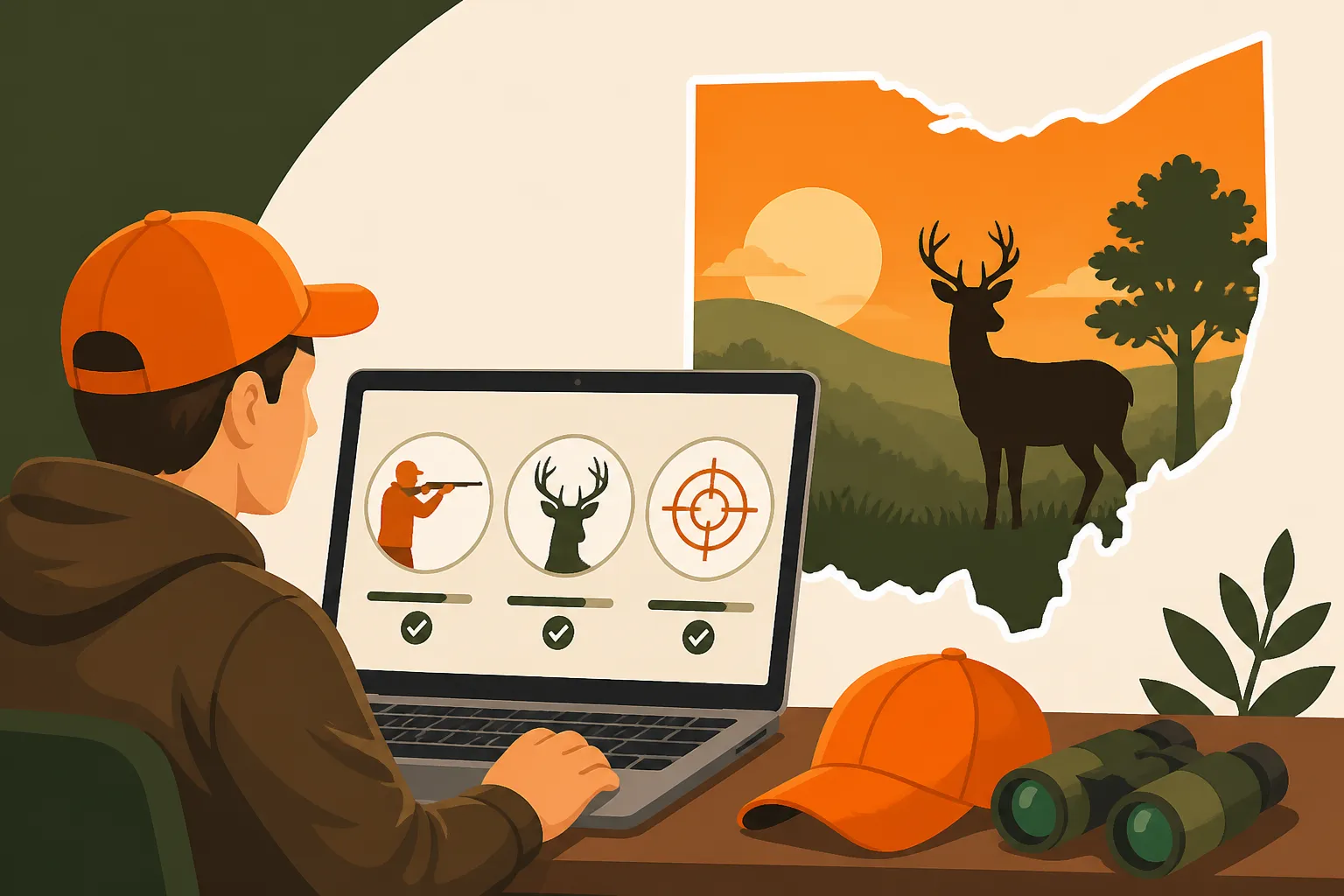
That’s where the online option truly shines. It acknowledges that modern life requires flexibility. Instead of needing to be in a specific place at a specific time, you can tackle modules when it suits your schedule – whether that’s late at night after the kids are asleep, during a lunch break, or spread out over a few weekends. This convenience isn't about cutting corners; it's about making essential education accessible to everyone who wants to participate in Ohio's rich hunting heritage.
Diving Into Ohio's Online Hunter Education Options
Ohio has made strides to ensure that its online hunter education courses are not just convenient, but also comprehensive and effective. It's not a watered-down version of the classroom experience; it's just delivered differently.
The Core Online Course Structure
Generally, an online hunter education course in Ohio is structured into several modules or chapters. Each module covers a specific aspect of hunting and safety, building your knowledge base progressively. You'll typically find topics such as:
- Firearms and Archery Safety: This is foundational, covering everything from loading and unloading to proper carrying techniques and storage. You’ll learn about different types of firearms legal for hunting in Ohio, like straight-wall rifles and shotguns.
- Hunting Techniques and Ethics: This delves into fieldcraft, shot placement, tracking, and recovery. More importantly, it emphasizes the ethical responsibilities of a hunter – fair chase, respect for game, and minimizing suffering.
- Wildlife Management and Identification: Understanding the species you're hunting, their habitats, and the role hunting plays in conservation is crucial. You'll learn about different Ohio game animals, like White-Tailed Deer Across Ohio and Wild Turkeys in Ohio, and how to identify them properly.
- Ohio Hunting Laws and Regulations: This section is vital. It covers the legal framework for hunting in Ohio, including licensing, bag limits, seasons, and permissible hunting methods. You’ll learn about Ohio Deer Season Structure Explained and various Ohio Hunting Licenses and What They Cost.
- Survival and First Aid: Being prepared for the unexpected in the field is a mark of a responsible hunter. This covers basic first aid, emergency signaling, and survival techniques if you get lost or injured.
Each module usually includes interactive elements like videos, animations, quizzes, and exercises to reinforce learning. You’ll progress through at your own pace, often able to review material as many times as you need before moving on to the next section.
The Critical ODNR Approval: What to Look For
This is perhaps the most important detail when choosing an online course: it must be approved by the Ohio Department of Natural Resources (ODNR). There are many online "hunter education" courses out there, but if it's not on the ODNR's official list of approved providers, your certification won't be valid in Ohio. You’ll waste your time and money. Always, always start your search on the official ODNR website, looking for their approved list of online providers.
Reputable providers that partner with state agencies ensure their curriculum meets specific state standards. They are designed to deliver the same high-quality content as an in-person class, just in a digital format. While resources like GoHunt offer incredible tools for trip planning, research, and understanding regulations for various states, when it comes to the official certification itself, you need to stick with a direct ODNR-approved course provider. Think of it this way: GoHunt might help you plan an amazing adventure, but it's the ODNR-approved course that gives you the legal foundation to go on it.
Online-Only vs. The Blended Approach with Field Day
Ohio offers two main paths for online hunter education, and understanding the difference is key to choosing the right one for you:
- Online-Only Certification: This option is typically available for hunters aged 18 and older. You complete the entire course, including the final exam, entirely online. Once you pass, you print your certification, and you’re good to go. This is the most flexible option for adult learners who are comfortable with self-directed study and practical skills.
- Blended Course (Online + Field Day): This is the more common path, especially for younger hunters (those under 18) or anyone who feels they need hands-on practice. You complete the academic portion of the course online, usually finishing with an online exam. However, after completing the online portion, you must attend a mandatory, in-person "field day" session. This field day is where you demonstrate practical skills, such as safe firearm handling, shooting proficiency, ethical decision-making, and often includes a live-fire exercise. It's a crucial step to ensure you can apply what you've learned in a real-world scenario.
Choosing between these often comes down to age and personal preference. If you're an adult with prior experience with firearms or archery and feel confident in your self-discipline, the online-only course might be perfect. However, for a brand-new hunter, especially a younger one, that field day experience is invaluable. It provides direct instruction from certified instructors and allows for immediate feedback on critical safety skills.
Here’s a quick overview of the differences:
| Feature | Online-Only (Typically 18+) | Blended Course (Online + Field Day) |
|---|---|---|
| Academic Portion | Completed entirely online, at your own pace. | Completed entirely online, at your own pace. |
| Practical Skills Test | Included in the online curriculum (simulations/videos). | Mandatory in-person field day with certified instructors. |
| Age Requirement | Generally 18 years or older. | Required for all hunters under 18; optional for adults. |
| Certification | Issued immediately upon passing online exam. | Issued after successful completion of both online course AND field day. |
| Time Commitment | Flexible, self-paced online hours. | Flexible online hours PLUS a scheduled in-person session (typically 4-8 hours). |
| Benefit | Ultimate flexibility, ideal for experienced adults. | Hands-on practice, direct instruction, crucial for new/younger hunters. |
What to Expect from Your Ohio Online Hunter Ed Course
Once you've chosen an ODNR-approved provider and decided on the online-only or blended approach, it's time to dive into the learning. Knowing what’s ahead can help you prepare and get the most out of the experience.
Module by Module: Key Learning Areas
While the specific layout might vary slightly between providers, the core content remains consistent with Ohio's requirements. You'll typically encounter modules focused on:
- Understanding Firearms and Ammunition: This covers different types of guns (rifles, shotguns, handguns, muzzleloaders), their parts, how they function, and the various ammunition types. Emphasis is placed on safe handling, loading, unloading, and cleaning.
- Basic Shooting Skills and Shot Placement: While you won't be shooting a live firearm in the online course, you'll learn about proper shooting fundamentals, aiming, and the critical importance of shot placement for a humane harvest. This knowledge is then reinforced during a field day if you opt for the blended course.
- Archery Equipment and Techniques: For those interested in pursuing Bowhunting Ohio's Long Archery Season, this section covers different bow types (compound, recurve, crossbows), arrow components, and safe shooting practices.
- Wildlife Identification and Biology: You’ll learn how to distinguish between legal game and non-game species, understand animal behavior, and identify common tracks and signs. This is particularly useful for differentiating between species like white-tailed deer and, say, the increasingly sighted Ohio's Recovering Black Bear Sightings.
- Hunting Regulations and Licensing: This module goes deep into Ohio's specific hunting laws, including information on bag limits, season dates, permissible weapons, and tagging requirements. You'll learn about Ohio Legal Shooting Hours and the importance of checking your game properly.
- Survival and First Aid: This isn't just theory; it's practical advice on what to do if you get lost, how to treat common injuries in the field, and how to prepare a basic emergency kit.
- Ethics and Conservation: Beyond the rules, this section emphasizes the moral and ethical responsibilities of a hunter. It covers fair chase principles, respecting landowners, and the vital role hunters play in funding wildlife conservation through license and tag purchases.
Expect a combination of text, images, videos, and interactive quizzes. Many courses are designed to be engaging, recognizing that people learn best through varied methods.
Mastering the Online Exam
At the end of the online course, you'll typically face a comprehensive final exam. This exam is designed to test your understanding of all the material covered in the modules. It's usually multiple-choice, and you'll need to achieve a certain passing score (often 80% or higher) to receive credit for the online portion.
Here are some tips for success:
- Take good notes: Even though it’s online, jotting down key points can help with retention.
- Don't rush the quizzes: Use the module quizzes as a way to gauge your understanding and identify areas where you need to review. They’re not just hurdles; they’re learning tools.
- Review all material: Before the final exam, take time to go back through any sections you found challenging.
- Simulate exam conditions: Try to take the final exam in a quiet environment without distractions, just like you would a traditional test.
Once you pass the online exam, you'll usually be able to print a certificate of completion for the online academic portion. This certificate is crucial, especially if you're taking the blended course and need it to register for your field day.
The Hands-On Field Day: Essential for Many
If you chose the blended course, your journey isn't over after passing the online exam. The field day is the practical culmination of your online learning. These sessions are held at various locations across Ohio, often at local shooting ranges, conservation clubs, or wildlife areas. You'll need to register for one in advance, usually through the ODNR website, and bring your online completion certificate with you.
What happens at a field day? Expect to:
- Review Key Concepts: Instructors will often lead a brief review of critical safety rules and ethical considerations.
- Demonstrate Safe Firearm/Archery Handling: You’ll be asked to show how to safely load, unload, carry, and store different types of hunting equipment. This often includes practicing the "four primary rules of firearm safety" (Treat every firearm as if it were loaded; Never point the muzzle at anything you are not willing to destroy; Keep your finger off the trigger until your sights are on the target; Be sure of your target and what is beyond it).
- Participate in a Live-Fire Exercise: This is often the highlight for many. Under strict supervision, you'll get to shoot a firearm or archery equipment, putting your aiming and safety skills to the test. This is an excellent opportunity to learn about Ohio Legal Firearms for Deer Hunting in a controlled environment.
- Practice Field Scenarios: Instructors might set up mock hunting scenarios to assess your decision-making, such as identifying targets, communicating with hunting partners, and understanding Ohio Blaze Orange Requirements.
The field day is where the theoretical knowledge from the online course becomes practical skill. It’s an invaluable experience, especially for new hunters, ensuring you’re truly ready for the challenges of hunting in Ohio’s diverse landscapes.
Specific Considerations for Ohio Hunters
Ohio has its own unique set of regulations and opportunities that new hunters should be aware of. Tailoring your education to these specifics will make you a more prepared and successful hunter.
Youth Hunters and the Apprentice License Path
Ohio is committed to fostering the next generation of hunters, and as such, has specific provisions for youth. If you are under 18, the blended online + field day course is generally required for your certification. This ensures that younger hunters receive crucial hands-on instruction and direct mentorship, something that an online-only course simply can't provide.
Additionally, Ohio offers an Ohio Apprentice Hunter License Rules program. This fantastic initiative allows individuals of any age, including youth, to try hunting for up to three years before completing a hunter education course. The catch? They must be accompanied by a licensed, experienced hunter (the mentor) who is at least 18 years old. This mentor must maintain direct supervision and ensure the apprentice adheres to all hunting laws. It’s a great way for new hunters to get a taste of the experience and learn from an experienced hand before committing to the full certification process. However, after those three years, or if they wish to hunt unsupervised, hunter education becomes mandatory.
Navigating Non-Resident Requirements
For those coming to Ohio from out of state to hunt, the question of hunter education can be a bit confusing. Generally, Ohio will accept a hunter education certificate from any other state or Canadian province, as long as that certificate is recognized by the hunter's home state or province. So, if you're certified in Pennsylvania or Michigan, for example, your certification is likely valid here.
However, if you're a non-resident who has never taken a hunter education course, you would need to complete an Ohio-approved course (either online + field day or online-only if 18+) to obtain an Ohio Nonresident Hunting License Options. Always double-check with the ODNR if you have any doubts about the reciprocity of your home state's certification. It's better to be safe than sorry and ensure you're fully compliant with Ohio's regulations before your hunt.
Common Pitfalls and How to Avoid Them
Even with the convenience of online learning, there are a few common traps that new hunters fall into.
- Choosing Unapproved Courses: As mentioned, this is the biggest mistake. Always verify that your online course provider is on the official ODNR list. A quick search on the ODNR's website is all it takes.
- Rushing Through Material: The flexibility of online learning can sometimes lead to rushing. Resist the urge to click through modules without truly absorbing the information. Remember, this isn’t just a hoop to jump through; it's about real-world safety.
- Not Preparing for the Field Day: If you’re doing the blended course, don’t treat the field day as a mere formality. It’s a practical test. Review your safety rules, practice your handling commands, and be ready to demonstrate proficiency.
- Ignoring Local Regulations: Hunter education provides a general overview, but local rules, specific wildlife area regulations, or even temporary closures can vary. Always check current Ohio regulations, consult the HuntFish Ohio mobile app, and review specific rules for the area you plan to hunt, especially if you're Scouting Ohio Public Land Before Season. Platforms like GoHunt can be excellent for scouting and understanding general game trends, but for specific regulatory updates, always defer to the ODNR.
Beyond the Certificate: Becoming a Responsible Ohio Hunter
Getting your hunter education certificate is a monumental first step, but it’s just the beginning of your journey as a responsible hunter in Ohio. The learning never truly stops.
Continuous Learning and Ethical Practices
The hunting landscape, wildlife populations, and regulations can evolve. A truly responsible hunter embraces continuous learning. This means staying up-to-date with annual regulation changes, paying attention to conservation efforts, and refining your skills. The ODNR regularly publishes updates, and resources like hunting forums, local conservation groups, and even reputable online platforms like GoHunt can provide valuable insights into current conditions, game behavior, and advanced techniques.
Ethical hunting isn't just about following the law; it's about a deep respect for the animals we pursue and the land they inhabit. It means making quick, clean kills, respecting bag limits, and never wasting game meat. It means asking for permission before stepping onto private land and being a good ambassador for the hunting community. Remember, your actions reflect on all hunters, and upholding a high ethical standard helps ensure the future of our hunting traditions. If you ever witness unethical behavior or suspect poaching, knowing how to act, such as Reporting a Poacher in Ohio, is part of that ethical responsibility.
Utilizing Modern Hunting Resources
Today’s hunter has access to an incredible array of tools and resources that simply didn't exist a generation ago. Beyond your formal education, embrace these:
- The ODNR Website and App: Your primary source for all official Ohio hunting regulations, season dates, bag limits, and checking your game. The HuntFish Ohio app is a powerhouse for checking game, buying licenses, and reviewing regulations in the field.
- Mapping Applications: Tools like onX Hunt, BaseMap, and even features within GoHunt offer detailed satellite imagery, public/private land boundaries, and topographic maps. These are invaluable for scouting, navigating unfamiliar terrain, and respecting property lines.
- Mentorship: Seek out experienced hunters. Join a local conservation club, participate in mentored hunts, or simply spend time with seasoned veterans. There’s no substitute for hands-on learning from someone who has spent decades in the field.
- Specialized Training: Consider advanced courses in things like blood trailing, first aid specific to outdoor emergencies, or even advanced marksmanship. These supplemental skills can significantly enhance your safety and effectiveness as a hunter.
By combining your foundational hunter education with ongoing learning and the smart use of modern resources, you'll not only be certified but truly prepared to enjoy all that Ohio hunting has to offer.
Disclaimer
The information provided in this guide is for general informational purposes only and is not a substitute for the official regulations and laws set forth by the Ohio Department of Natural Resources (ODNR). Hunting regulations can change, and it is the hunter's responsibility to consult the most current Ohio hunting digests and laws directly from the ODNR before participating in any hunting activities. Always prioritize safety and ethical practices in the field.