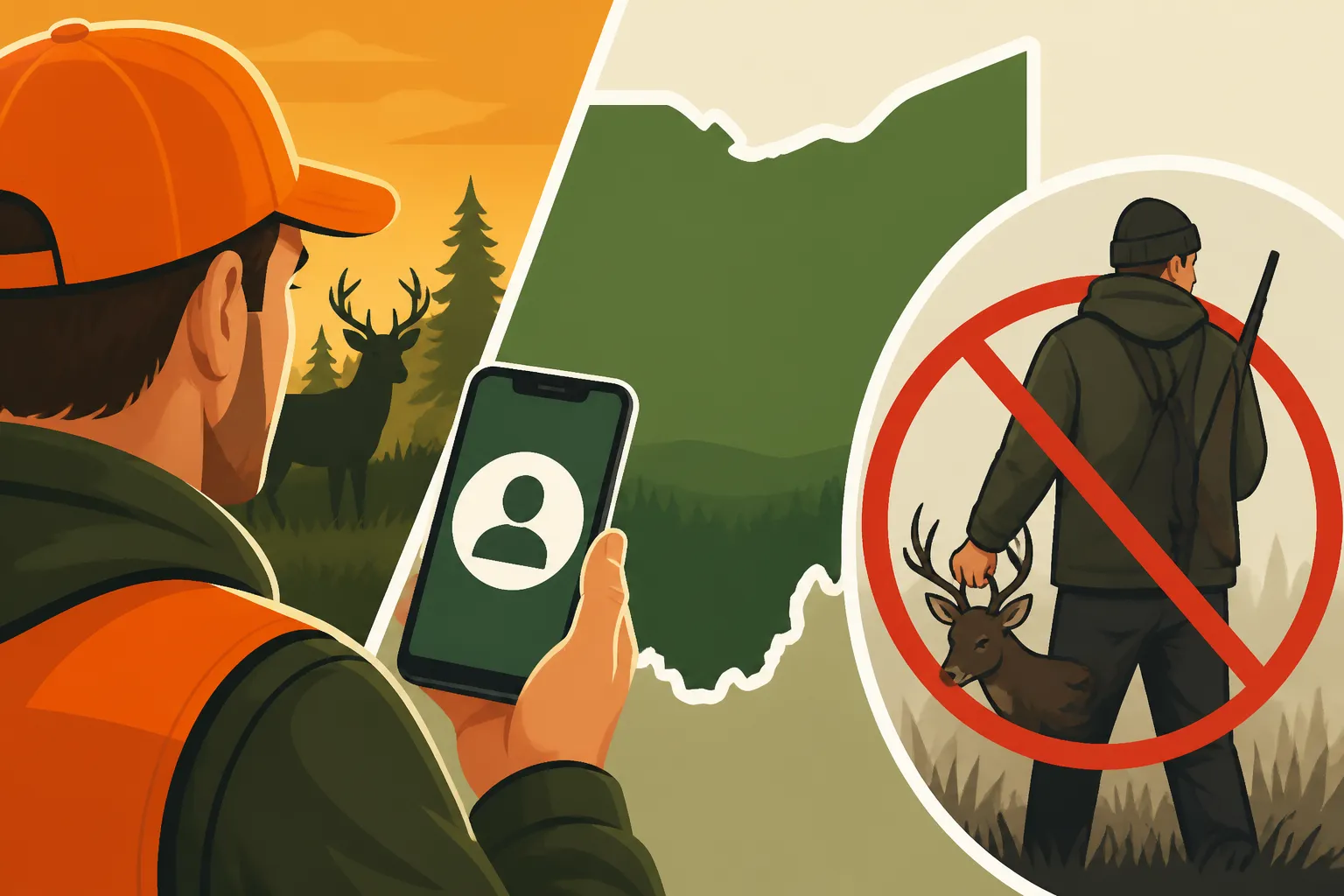
Reporting a Poacher in Ohio
It’s a truly disheartening feeling to stumble upon evidence of poaching in Ohio. Whether it’s an illegal deer kill left to waste, a turkey taken out of season, or just suspicious activity that screams "something isn't right," it cuts deep for ethical hunters who respect our wildlife resources and the rules that protect them. This guide is here to walk you through exactly how to report a poacher in Ohio, what crucial information you’ll need to provide, and what happens once you’ve made that important call.
Why Reporting Poaching Matters for Ohio Wildlife
For those of us who spend countless hours in the woods and fields of Ohio, hunting isn't just a pastime; it's a deep connection to nature and a commitment to conservation. Poaching isn't just breaking a rule; it's a blatant disrespect for our shared natural heritage and the tireless efforts made to manage and protect it.
Protecting Our Shared Resources
Ohio's wildlife populations, from our robust White-Tailed Deer Across Ohio herds to our recovering wild turkeys, are a public trust. They belong to all Ohioans, and regulated hunting seasons, bag limits, and legal methods are all carefully designed by the Ohio Department of Natural Resources (ODNR) to ensure these populations remain healthy and sustainable for future generations. When someone poaches, they are stealing from everyone. They're undermining the biological principles that guide wildlife management, potentially skewing population data, and creating a ripple effect that can harm local ecosystems. Think about a buck poached out of season: that's an animal removed from the breeding pool, and its venison, a valuable resource, is often wasted or illegally sold. It's a significant drain on our natural capital.
Upholding Fair Chase and Ethical Hunting
Every hunter understands the concept of fair chase – giving the animal a reasonable chance and respecting the spirit of the hunt. Poaching, by its very nature, completely disregards this. It often involves illegal methods like night hunting with spotlights, shooting from roads, or taking animals out of Ohio Legal Shooting Hours. These acts are not hunting; they are opportunistic, unethical, and often cruel acts that give the entire hunting community a black eye. We pay for our Ohio Hunting Licenses and What They Cost and permits, we follow the Ohio Deer Season Structure Explained and specific regulations, and we invest in our gear and time to pursue game legally and ethically. When a poacher cuts corners, it cheapens our pursuit and fuels negative stereotypes about hunting. Reporting these violations isn't just about enforcing the law; it's about safeguarding the integrity of our sport and ensuring that ethical hunting remains a respected tradition in Ohio.
How to Report Poaching in Ohio: Your Actionable Steps
Finding yourself in a situation where you suspect poaching can be stressful and you might not know what to do first. The key is to act responsibly and provide as much detail as possible to the authorities.
The Ohio Turn-In-A-Poacher (TIP) Program
The most direct and effective way to report poaching in Ohio is through the ODNR's Turn-In-A-Poacher, or TIP, program. This program is specifically designed to allow citizens to report wildlife violations confidentially. You can call their dedicated hotline: 1-800-POACHER (1-800-762-2437). This number is staffed 24 hours a day, seven days a week, making it accessible whenever you encounter an issue. The folks on the other end are trained to gather the necessary information and dispatch it to the appropriate wildlife officer. Don't hesitate to use it, even if you're not 100% sure; let the professionals investigate.
What Information to Gather Before You Call
The more information you can provide, the better. Wildlife officers are essentially detectives, and every piece of evidence helps them build a case. Before you call, try to note down as many of these details as safely possible:
- When and Where: The exact date and time of the incident is crucial. Pinpoint the location as precisely as you can. Is it on a specific Ohio State Forest Hunting tract? Near a known landmark? An intersection? GPS coordinates from a mapping app like GoHunt can be incredibly valuable here, offering pinpoint accuracy even in remote areas.
- What You Saw: Describe the violation itself. Was someone shooting out of season? Hunting at night with a spotlight? Trespassing on private property without permission, violating Ohio Trespass and Permission Law? Did you see them possess Game You Cannot Hunt in Ohio?
- Suspect Description: If you saw the individuals, note their physical appearance, clothing, and any distinguishing features. The more details, the better, but do not put yourself in harm's way to get this information.
- Vehicle Description: This is often one of the most important pieces of evidence. Get the make, model, color, and especially the license plate number of any vehicle involved. Note if it has any dents, custom features, or distinguishing decals.
- Witnesses: Were there other people present who might have seen something? If you know them, their contact information could be helpful.
- Evidence: Did you see a carcass, blood, shell casings, or anything else that could serve as evidence? Describe it and its location. If you took photos or videos safely from a distance, mention that to the dispatcher.
Other Avenues for Reporting Wildlife Violations
While the TIP line is your primary go-to, there are other ways to report if the situation calls for it or if you prefer a different method:
- ODNR Wildlife District Offices: Ohio is divided into five wildlife districts. You can find the contact information for your specific district office on the ODNR website. This might be a good option for non-emergency situations or if you have specific questions about a potential violation that isn't actively happening.
- Local Law Enforcement (Non-Emergency): If you witness a wildlife crime and can't reach the TIP line immediately, or if the situation involves a broader criminal act (like property damage associated with poaching), you can contact your local sheriff's office or police department's non-emergency line. They can then relay the information to the appropriate wildlife officer.
- Online Reporting: The ODNR website also often provides an online form for reporting wildlife violations. This can be useful if the incident isn't urgent and you have a lot of details to type out. However, for active poaching, always choose the phone option first.
Remember, the goal is to get the information to the authorities. Do not confront suspected poachers yourself. Your safety is paramount.
What Happens After You Report a Poacher?
Once you've made the call or submitted your report, it’s natural to wonder what happens next. The process involves dedicated wildlife officers and a commitment to upholding the law.
The Role of Ohio Wildlife Officers
After receiving a report, an Ohio wildlife officer will be dispatched to investigate. These officers are highly trained law enforcement professionals with specific expertise in wildlife laws and conservation. Their investigation might involve:
- Visiting the Scene: They’ll go to the reported location to look for evidence, such as tracks, shell casings, blood, or illegal baits.
- Interviewing Suspects: If a suspect is identified, officers will conduct interviews.
- Gathering Evidence: This can include forensic analysis of evidence, reviewing trail camera footage (if available and legal), and collaborating with other law enforcement agencies.
- Surveillance: In some cases, officers might conduct surveillance on an area or individuals known for suspicious activity.
The investigation process can take time. Not every report leads to an immediate arrest, as officers need to build a solid case to ensure successful prosecution. Your detailed information is the cornerstone of their work.
Anonymity and Rewards
One of the biggest concerns for people reporting poaching is their safety and privacy. The ODNR's TIP program is designed to protect you. When you call 1-800-POACHER, you have the option to remain completely anonymous. Your identity will not be shared, even if the case goes to court. This anonymity is crucial for encouraging reports without fear of retaliation.
Additionally, the TIP program offers rewards for information that leads to the arrest and conviction of wildlife violators. These rewards can range from small amounts up to several hundred dollars, depending on the severity of the violation. It's not about the money for most ethical hunters, but it's an acknowledgment of the valuable service you provide in helping to protect Ohio's wildlife.
The Legal Consequences for Poachers
The consequences for poaching in Ohio can be severe, depending on the nature and extent of the violation. Ohio Revised Code outlines a range of penalties, which can include:
- Fines: Significant monetary fines are common, often starting in the hundreds and going into the thousands of dollars.
- Jail Time: For serious or repeat offenses, poachers can face jail time.
- Forfeiture of Equipment: Vehicles, firearms, bows, and other equipment used in the commission of a wildlife crime can be seized and forfeited to the state.
- License Revocation: Perhaps one of the most impactful penalties for someone who claims to be a hunter is the permanent or temporary revocation of all hunting, fishing, and trapping licenses, not just in Ohio, but often in other states as well through interstate compacts. This could also affect their ability to legally transfer deer tags, as outlined in Ohio Deer Tag Transfer Rules.
- Restitution: Poachers may be ordered to pay restitution for the value of the poached wildlife, especially for high-value species like trophy deer or for multiple animals.
For a deeper dive into the specific legal repercussions, you can explore resources like Ohio Wildlife Violation Penalties. These consequences demonstrate that Ohio takes wildlife crime seriously, and your report plays a direct role in holding these individuals accountable.
Common Misconceptions and Ethical Considerations
While reporting poaching is vital, it's also important to understand the nuances of what constitutes a violation and to ensure our reports are accurate and based on observable facts.
When Is It Actually Poaching Versus a Mistake?
It's important to distinguish between deliberate poaching and an honest mistake. While both might result in a violation, the intent is vastly different. A poacher intentionally breaks the law, often with malice aforethought, to gain an unfair advantage or simply because they don't care about the rules. This might include hunting without a license, shooting an animal out of season, hunting at night, or exceeding bag limits knowingly.
An honest mistake, on the other hand, might be someone who misidentified a species or accidentally crossed a property line in dense cover. For instance, a hunter might accidentally shoot an extra squirrel if they miscounted or misidentified a legal bird in a dense flock. While still a violation, the intent is not malicious. Wildlife officers are trained to discern intent and will investigate accordingly. If you suspect an honest mistake, you can still report it, as officers can educate individuals and prevent future unintentional violations. However, focus your energy on clear, intentional law-breaking.
The Importance of Accurate Information
Providing accurate and detailed information is paramount when reporting. Avoid speculation, exaggeration, or assuming facts that you haven't directly observed. Stick to what you saw, heard, and know for certain. For example, instead of saying "I think they were spotlighting," say "I observed a vehicle driving slowly with a bright spotlight sweeping the field edge at 11 PM."
False accusations or reporting based on incomplete information can waste valuable resources and potentially harm innocent individuals. While the TIP program offers anonymity, it's still our responsibility as ethical stewards of the land to provide truthful accounts. If you're using a tool like GoHunt to mark locations of potential activity, double-check your pins to ensure they are precise. This attention to detail not only helps wildlife officers but also reinforces the credibility of the ethical hunting community.
Ultimately, your decision to report suspicious activity is an act of conservation. It’s a proactive step that protects Ohio's wildlife, preserves the integrity of hunting, and supports the dedicated efforts of our wildlife officers.
| Reporting Method | When to Use | Key Information to Provide | Anonymity | Potential Reward |
|---|---|---|---|---|
| 1-800-POACHER (TIP) | Active poaching, urgent situations, any time | Date, time, location, suspect/vehicle description, violation type | Yes | Yes |
| ODNR District Office | Non-urgent, specific questions, follow-ups | Detailed narrative, any photos/videos, specific location | Optional | No |
| Local Law Enforcement | If no immediate contact with ODNR, broader crime | Date, time, location, suspect/vehicle description, nature of crime | Optional | No |
| ODNR Online Form | Non-urgent, extensive details, less direct | Detailed narrative, photos, precise location, witness info | Optional | No |
Disclaimer
Please note that this guide provides general information based on current Ohio hunting regulations. Laws and regulations can change. Always consult the official Ohio Department of Natural Resources (ODNR) website or legal counsel for the most up-to-date and specific legal information regarding hunting and wildlife violations in Ohio.