Ohio Youth Gun Weekend Rules
It's no secret that taking a young hunter into the field for their first deer hunt is one of the most exciting, yet potentially stressful, experiences for a guardian. The regulations, the safety concerns, and the desire to make it a memorable success can be a lot to juggle. Ohio's dedicated Youth Gun Weekend for deer hunting offers an incredible opportunity, but understanding all the specific rules is crucial. This guide will walk you through every detail of the Ohio Youth Gun Weekend rules, ensuring you're fully prepared for a safe, legal, and truly unforgettable hunt.
Understanding the Ohio Youth Gun Weekend: Dates and Structure
For many families across the Buckeye State, the Ohio Youth Gun Weekend is a cherished annual tradition, often marking a young hunter's first serious foray into deer hunting. It’s a special time designed specifically for the next generation of sportsmen and women to experience the thrill of the hunt in a less pressured environment.
When Does It Happen? Specific Dates and Timing
The Ohio Youth Gun Weekend typically falls in November, usually a week or two before the statewide regular gun season. The exact dates shift slightly each year, so always check the current Ohio Department of Natural Resources (ODNR) hunting regulations digest or their website for the most up-to-date information. It's usually a two-day affair, running Saturday and Sunday. For instance, in recent years, it might have been the third weekend in November. This dedicated timeframe gives young hunters a head start, often when deer are still actively moving and before the woods are flooded with hunters during the main gun season. Legal shooting hours generally mirror those of the regular deer season, running from half an hour before sunrise to half an hour after sunset. Planning your hunting strategy around these precise times is critical for both safety and success. Early mornings and late evenings are often the most productive, so ensure your young hunter is ready for those chilly, low-light conditions.
Why a Dedicated Youth Weekend? Purpose and Benefits
The primary purpose of the Ohio Youth Gun Weekend is to recruit and retain young hunters, fostering a love for the outdoors and conservation. By offering a dedicated weekend, the ODNR aims to create a more focused, less competitive hunting experience for youth. Imagine the scene: fewer trucks at the public land parking lot, less pressure on deer, and more one-on-one time with a mentor. This reduced pressure can lead to higher success rates for young hunters, which in turn builds confidence and encourages continued participation. It’s also an excellent way to teach critical hunting skills, from ethical shot placement to proper field dressing, without the hustle and bustle of a crowded woods. This focused environment is perfect for mentoring, allowing you to patiently explain deer behavior, track interpretation, and the nuances of ethical hunting. It's a foundational experience that can shape a hunter for life. This dedicated time is invaluable for teaching safety protocols without distraction, setting up good habits from the start.
Eligibility and Licensing for Young Hunters
Before any young hunter can step foot in the woods, it's essential to understand the age requirements and the specific licenses and permits they'll need. Ohio has a straightforward, yet important, system designed to ensure safety and compliance.
Age Requirements and Apprentice Hunter Program
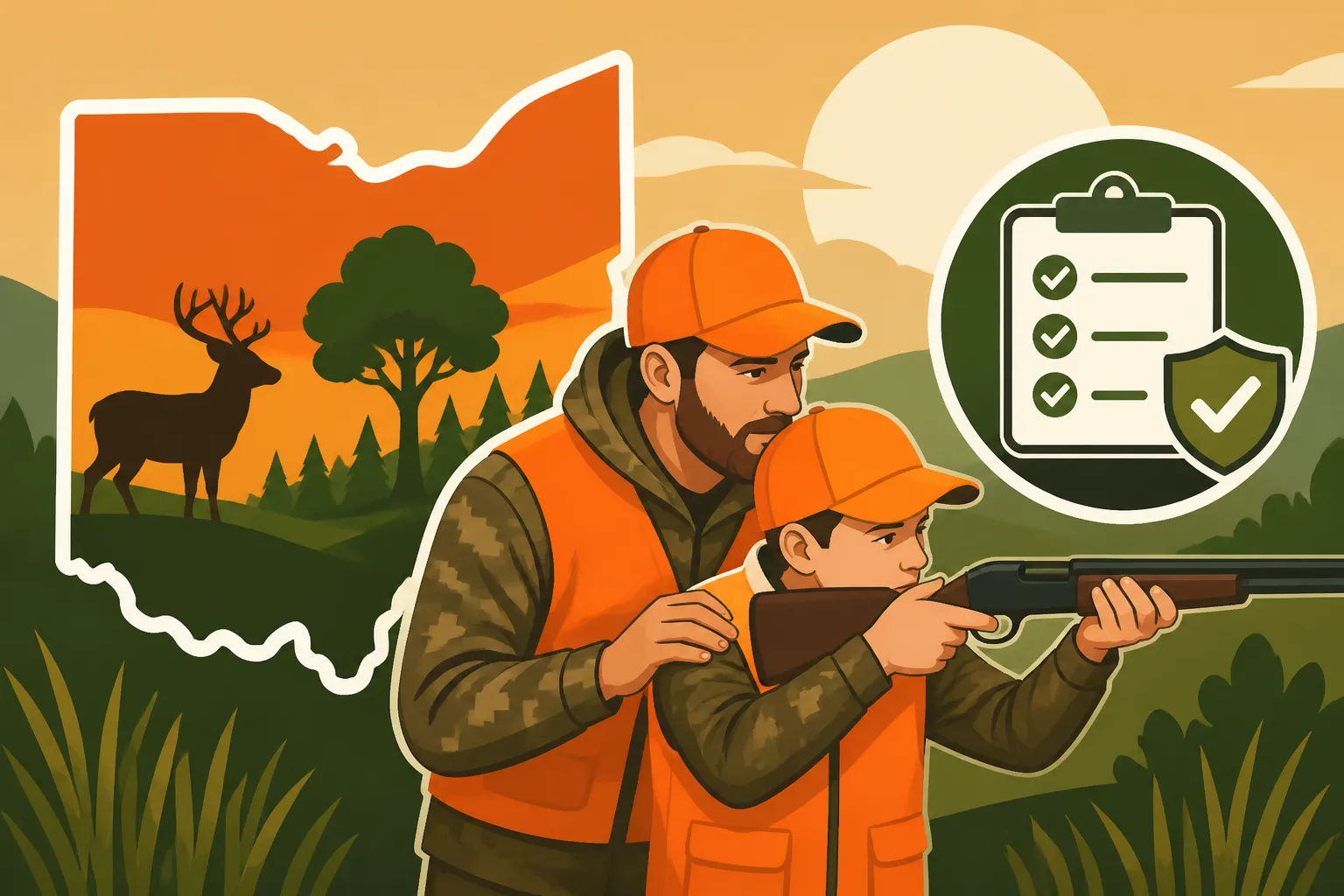
In Ohio, a youth hunter must be 17 years of age or younger to participate in the Youth Gun Weekend. There's no minimum age to hunt deer, as long as the youth is accompanied by a licensed, non-hunting adult. This is where the Apprentice Hunter Program really shines. If your child hasn't completed hunter education yet, they can participate under the Apprentice Hunter license. This program allows individuals of any age to hunt for up to one year without first completing a hunter education course, provided they are accompanied by a licensed hunter over the age of 18. This is a fantastic way to introduce new hunters to the sport, letting them experience it firsthand before committing to the full hunter education course. It’s critical that the accompanying adult, who must be at least 18 years old and possess a valid Ohio hunting license, is always in a position to take immediate control of the firearm and is close enough to provide direct supervision. For those interested in the Apprentice Hunter Program, you can find detailed information on the official ODNR website, making it easier to navigate the requirements.
Obtaining the Necessary Permits and Tags
Every hunter in Ohio, regardless of age, needs a valid hunting license and the appropriate deer permits. For the Youth Gun Weekend, your young hunter will need an Ohio hunting license (either a youth annual license or an apprentice license) and an antlerless deer permit and/or an antlered deer permit. These permits dictate what type of deer they can harvest. The cost for youth licenses and permits is generally lower than adult fees, making it more accessible for families. You can purchase these online through the Wild Ohio customer portal, at most outdoor retailers like any authorized license vendor, or by calling the ODNR. It's always a good idea to purchase these well in advance of the season to avoid any last-minute rushes or technical glitches. Remember, even if you're taking your child out for their very first time and they are using an apprentice license, they still need to have their own deer permits. For comprehensive details on what each permit covers, refer to the guide on Ohio Deer Management Permits. Having all documentation in order before you hit the field is non-negotiable.
Here's a quick reference table for common youth hunting requirements:
| Requirement | Description |
|---|---|
| Age | 17 years old or younger. No minimum age if accompanied by a properly licensed adult (18+). |
| Hunting License | Youth Annual Hunting License (if hunter education completed) OR Apprentice Hunting License (if hunter education not completed). |
| Deer Permits | Required for all deer. Can include a general deer permit (covers one antlered or antlerless deer) and/or additional deer management permits (for antlerless deer in specific zones). Check county regulations. |
| Hunter Education | Required for hunters 18 and older, and for youth once they turn 18 or after their first apprentice year. |
| Adult Supervision | Mandatory for all youth hunters under the Apprentice program and for youth hunters aged 15 and under, even if hunter education is completed. The adult must be licensed, non-hunting, and capable of immediate control of the firearm. For rules around Ohio Apprentice Hunter License Rules, check here. |
Firearms and Equipment Legalities for Youth Season
Ensuring your young hunter is using appropriate and legal equipment is paramount for safety and success. Ohio has specific regulations regarding firearms that are permissible for deer hunting, and youth season is no exception.
Approved Firearms and Ammunition
Ohio has moved to a more flexible system for firearms legal for deer hunting over the years. For the Youth Gun Weekend, hunters are generally permitted to use shotguns (10 gauge to .410 caliber) with slugs, muzzleloaders, and specific straight-walled cartridge rifles. These straight-wall cartridges are a game-changer for many Ohio hunters, offering increased accuracy and range compared to traditional shotgun slugs. Popular calibers include the .350 Legend, .450 Bushmaster, .44 Magnum, and .357 Magnum. It's crucial to check the specific legal cartridges listed by the ODNR, as not all straight-walled cartridges are allowed. For a detailed look at what's permissible, our guide on Ohio Legal Firearms for Deer Hunting can provide invaluable insights. Regardless of the firearm chosen, it must be sighted in properly and the young hunter must be proficient and comfortable shooting it. This means plenty of practice at the range beforehand, instilling confidence and ensuring ethical shots in the field. Remember, modern sporting rifles chambered in straight-wall cartridges have opened up many new possibilities, but always confirm the legality of your chosen cartridge.
Blaze Orange Requirements and Safety Gear
Safety is the absolute priority during any hunting season, and especially so during a youth gun hunt. Ohio law mandates that all hunters, including youth, wear specific amounts of blaze orange (or blaze pink) during the youth gun season. This typically means a minimum of 500 square inches of solid blaze orange or green camouflage with at least 50% blaze orange, worn on the head, back, and chest. This makes hunters highly visible to other hunters, significantly reducing the risk of accidental shootings. For a complete rundown on the specific requirements, refer to our article on Ohio Blaze Orange Requirements. Beyond visibility, other critical safety gear includes eye and ear protection at the range, and a quality safety harness if hunting from a treestand. Even if the young hunter isn't actively in a stand, the mentor might be, and teaching proper treestand safety from day one is essential. Always carry a first-aid kit, a reliable compass or GPS (many hunters use smartphone apps like GoHunt for this, which integrates land ownership and topography), and a fully charged cell phone. Dress in layers appropriate for Ohio's unpredictable November weather – it can go from chilly to surprisingly warm, or even snowy, in a single day.
Mentor Requirements and Responsibilities
The role of the mentor during Ohio's Youth Gun Weekend cannot be overstated. They are the cornerstone of a safe, educational, and ethical hunting experience for the young hunter. Their responsibilities extend far beyond simply being present.
Who Can Be a Mentor? Age and License Status
In Ohio, a mentor must be at least 18 years old and possess a valid Ohio hunting license. This means they are themselves a legal hunter and presumably understand the state's hunting regulations and safety protocols. Critically, during the Youth Gun Weekend, the mentor must be a non-hunting adult. This rule emphasizes that the focus should be entirely on guiding and supervising the youth, not on the mentor's own hunting pursuit. The mentor does not need a deer permit if they are strictly supervising, as they are not permitted to harvest a deer during this specific weekend. It’s also important to note that the mentor should not be carrying a loaded firearm for personal hunting purposes. Their firearm should be unloaded or secured, focusing completely on the youth's experience. This ensures undivided attention to safety and instruction, which is paramount when introducing new, young hunters to firearms and the woods.
Mentor's Role: Supervision, Safety, and Guidance
The mentor's responsibilities are comprehensive. First and foremost is direct supervision. The mentor must be close enough to the youth hunter to provide immediate, effective control of the firearm. This isn't just about being in the same general area; it means being within arm's reach and actively engaged in the hunting process. They are responsible for ensuring all safety rules are followed, from muzzle control to target identification and backstop awareness. Beyond safety, the mentor is the primary educator. They should teach the young hunter about deer behavior, shot placement, tracking, and the importance of ethical hunting. This includes demonstrating patience and resilience, especially when hunts don't go as planned. Imagine a scenario where a buck is spotted but doesn't offer a clean shot. The mentor's role is to explain why taking that shot would be unethical, reinforcing responsible decision-making. Using tools like GoHunt can help mentors and youth scout locations beforehand, understanding terrain and potential deer movement, making for a more informed hunting trip. The mentor also guides the young hunter through the post-harvest process, from field dressing to properly checking the deer. This holistic approach ensures the youth gains a complete understanding of what it means to be a responsible hunter. Remember, your patience and positive attitude are just as important as your knowledge of hunting tactics.
Checking and Reporting Game During Youth Season
Harvesting a deer is an exciting moment, but the hunt isn't truly over until the animal is properly checked and reported. This crucial step is not only legally required but also provides vital data for wildlife management.
Mandatory Check-In Procedures
In Ohio, all harvested deer, regardless of season or hunter age, must be checked in through the Ohio Game Check system. For the Youth Gun Weekend, this typically means the deer must be checked within 24 hours of harvest or by 11:59 PM on the final day of the season, whichever comes first. The check-in process can be completed online via the Wild Ohio website or the HuntFish OH mobile app, or by phone. You'll need specific information about the deer, including its sex, the county of harvest, and the method of take. Once checked, you'll receive a confirmation number that must be written on the tag and attached to the deer. This tag must remain with the deer until it is processed into individual cuts or received by a taxidermist or butcher. Failing to properly check a deer is a violation and can result in fines and penalties. It's a key part of the ethical hunter's responsibility. The ODNR provides clear instructions on their website, so familiarize yourself with the process beforehand. For more on the specifics, consider reading our post on Registering a Deer Through Ohio's Check-In System.
Special Considerations within the Disease Surveillance Area (DSA)
Ohio has a designated Chronic Wasting Disease (CWD) Surveillance Area (DSA) in certain counties. If your young hunter harvests a deer within one of these CWD-affected counties—currently Wyandot, Hardin, Marion, Allen, and parts of Crawford and Logan counties—there are additional mandatory testing requirements during specific periods, including potentially during the Youth Gun Weekend. Deer harvested in the DSA during mandatory testing windows must have their heads or brain stems submitted for CWD testing. The ODNR sets up sampling stations, often at wildlife areas, taxidermists, or self-serve kiosks, for this purpose. This is a critical public health and wildlife management measure. Always verify if the county you're hunting in is part of the DSA and if mandatory testing is in effect for the Youth Gun Weekend dates. Our comprehensive guide on Ohio's Chronic Wasting Disease Surveillance Area will give you all the details you need to ensure compliance and help protect Ohio's deer herd. Always check the current year's regulations for any updates to the DSA boundaries or testing protocols.
Navigating Public and Private Land During Youth Weekend
Knowing where you can hunt and understanding the specific rules for those areas is just as important as knowing the season dates and licensing requirements. Ohio offers both public and private land opportunities, each with its own set of considerations.
Public Land Access and Specific Regulations
Ohio boasts a respectable amount of public hunting land, including state forests, wildlife areas, and even portions of Wayne National Forest. These areas are open to the public and offer fantastic opportunities for youth hunters. However, they can also experience more hunting pressure, especially during popular seasons like the Youth Gun Weekend. It's crucial to scout these areas well in advance. Tools like the HuntFish OH app or online mapping services like GoHunt (or onX Hunt, another popular choice) are invaluable for identifying property boundaries, terrain features, and potential access points. Be mindful of specific rules for each public area. For instance, some wildlife areas might have restricted vehicle access, or specific regulations regarding ground blinds or treestands. Always check the signage at the entrance to any public land and consult the ODNR's public land hunting maps. For hunters exploring the Appalachian region, our guide to Hunting Southeast Ohio Appalachian Foothills offers great insights into tactics specific to that terrain. Remember that walking in further than most people are willing to go often yields better results on public land.
Hunting on Private Land: Permission and Respect
Hunting on private land can offer a more controlled and potentially less pressured experience for a young hunter. However, gaining permission is non-negotiable. Ohio law requires hunters to have written permission from the landowner to hunt on private property, unless you are the landowner or immediate family. Always secure this permission well in advance and carry it with you. When asking for permission, be polite, respectful, and willing to offer something in return, perhaps helping with chores or offering a portion of the harvest. Building a good relationship with a landowner can open doors to years of hunting opportunities. Once on private land, treat it with the utmost respect. Leave gates as you found them, avoid damaging crops or property, and clean up any litter. Discuss your hunting plan with the landowner, including where you'll be and what type of firearm you'll use. This transparency builds trust. For strategies on securing access, consider reading Getting Private Land Permission in Ohio. It's also wise to check with the landowner if other hunters have permission on the property to avoid any conflicts or safety concerns. Your respectful conduct can ensure that private land remains an option for future youth hunts.
Internal Linking Opportunities
Here are some other relevant internal links for this article:
- Ohio Youth Gun Weekend Dates
- Ohio Youth Deer Permit Cost
- Ohio Straight-Wall Cartridge Rules
- How Much Blaze Orange Ohio Requires
- Ohio Youth Gun Weekend Rules (Self-referential, careful here, let's pick another) -> Hunting the Ohio Youth Gun Weekend
- Ohio Public Land Hunting Hours
Disclaimer
Please remember that hunting regulations are subject to change. Always consult the most current Ohio Department of Natural Resources (ODNR) hunting regulations digest or their official website before heading into the field. This guide is for informational purposes only and should not be considered a substitute for the official rules and laws.