Climbing Sticks for Ohio Hardwoods
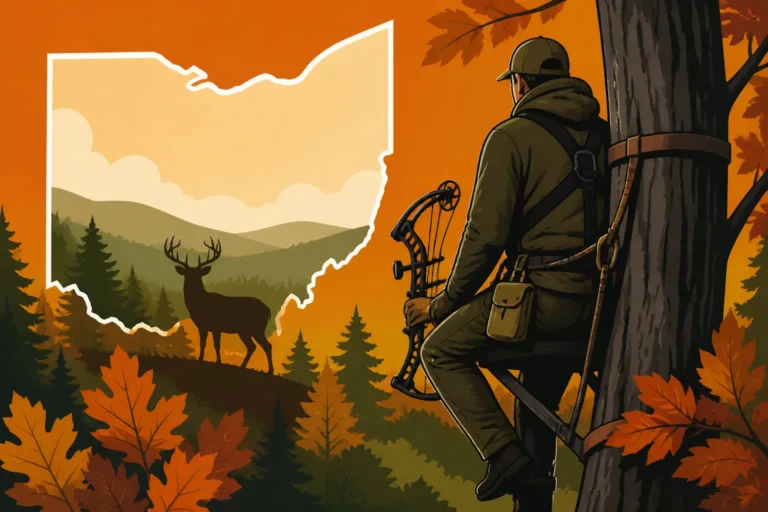
If you've spent any time at all chasing whitetails in Ohio's deep woods, especially in the rugged, steep terrain of our Appalachian foothills or the dense woodlots surrounded by farmland, you know the struggle. Dragging a bulky ladder stand or wrestling with a heavy climbing stand through thick brush and up steep inclines is enough to make you question your sanity before the sun even thinks about rising. Many of us have been there, sweating through our layers, fighting briars, and wishing for a lighter, more adaptable way to get into a tree. This guide is all about embracing the freedom and efficiency that climbing sticks offer, and how they can revolutionize your hunting in Ohio's diverse hardwood forests.
Why Climbing Sticks for Ohio Hardwoods?
Ohio's hunting landscape is incredibly varied, from the rolling hills and deep hollows of the southeast to the flat, agricultural expanse of the northwest. Each region presents its own set of challenges, but one constant remains: deer live in trees, or at least around them, and getting up high often gives you the edge. Traditional stands can be cumbersome, but climbing sticks offer a nimble solution that many hunters are now embracing to stay mobile and adaptable.
The Unique Challenges of Ohio's Woods
Think about the gnarly, crooked oaks and maples that dominate much of Ohio's public land. Many trees aren't perfectly straight, nor are they free of limbs for the first 20 feet. A traditional climbing stand, while great for smooth, branch-free trunks, often becomes a frustrating exercise in futility when faced with a typical Ohio hardwood. And if you're hunting private land where you can't leave a stand year-round, or if you're constantly adapting to deer movement, packing in a heavy stand every time is simply not practical. The weather, too, plays a huge role; wet leaves, slick mud, and even ice can make navigating our forests a tricky business. Hunting Pressure on Ohio Public Land means deer are often on the move, and your setup needs to be just as dynamic.
Consider a scenario where you've been doing some early season scouting, using tools like the Ohio HuntFish app or even GoHunt's detailed mapping features, and you've pinpointed a killer funnel or a fresh rub line deep inside Wayne National Forest. Trying to haul in a bulky, permanent stand for just a few hunts might disrupt the area too much, or simply be too much work. Climbing sticks, paired with a lightweight hang-on stand or even a saddle, allow you to slip in quietly, set up efficiently, and hunt that hotspot without leaving a heavy footprint.
Mobility and Versatility Benefits
The biggest advantage of climbing sticks is their unparalleled mobility. If you're hunting public land, the ability to pack in and out quickly and quietly is a game-changer. You're not tied to one stand location; if deer patterns shift due to weather, crop rotation, or hunting pressure, you can pick up your entire setup and move to a new tree without much fuss. This versatility extends to the types of trees you can hunt. Sticks allow you to ascend trees with irregular trunks, multiple limbs, or even slight leans that would be impossible with a traditional climber.
Imagine you're hunting a ridge system in Shawnee State Forest, and the wind unexpectedly shifts. Instead of abandoning your hunt or settling for a suboptimal setup, you can quickly relocate to a different side of the ridge, or even a different ridge entirely, and set up a new ambush. This adaptability dramatically increases your chances of success, especially when chasing mature whitetails that are notorious for detecting static setups. Treestand Setups in Appalachian Ohio Hardwoods often demand this kind of flexible thinking.
Addressing Common Hunter Frustrations
Let's be real: hunting in Ohio can be tough. We deal with variable weather, often crowded public lands, and deer that are incredibly smart. One of the most common frustrations is feeling "stuck" in a location that isn't producing, simply because moving your heavy stand is too much effort. Climbing sticks alleviate this. They also address the issue of limited tree selection. How many times have you found the perfect ambush point, only to realize the only decent tree nearby is too crooked for your climber, or has limbs too low for your hang-on? Sticks open up a whole new world of tree options, allowing you to get into the best tree, not just the easiest one.
The sheer physical exertion of hauling heavy gear can also be a deterrent for many hunters. By opting for lightweight climbing sticks, you conserve energy for the hunt itself, allowing you to walk farther, stay longer, and remain more focused. This leads to a more enjoyable and ultimately more successful hunting experience, reducing those nagging feelings of frustration when you're lugging a 30-pound stand through a swampy creek bottom.
Types of Climbing Sticks and Their Features
Just like there are different types of bows or firearms, climbing sticks come in a variety of designs, each with its own benefits and drawbacks. Understanding these differences is key to choosing the right system for your personal hunting style and the terrain you'll be navigating in Ohio.
Single-Stick Systems
Single-stick systems are exactly what they sound like: individual sticks, usually a few feet long, that you attach to the tree one at a time as you ascend. These are often favored by saddle hunters or those who prioritize minimal weight and maximum packability. You might carry three to five of these sticks, depending on how high you want to get. They excel in situations where you need to navigate around branches or irregular trunk shapes, as each stick can be placed independently. The downside is that setting them up can take a bit more time and coordination, especially when you're high up and working one-handed.
Many hunters who use single-stick systems appreciate the customizable ascent path. If a branch is in the way, you can easily shift the placement of the next stick to go around it. This is a huge benefit when dealing with the dense, often gnarly canopy of an Ohio oak forest. Brands like Lone Wolf, Out on a Limb, and Hawk make popular single-stick options. These often pair exceptionally well with a mobile setup, allowing you to scout a new area, find fresh sign, and then quickly deploy without a massive gear commitment.
Sectional and Stacking Sticks
Sectional sticks are designed to connect to each other, forming a longer, more stable ladder-like structure as you climb. These are generally quicker to deploy than single sticks once you get the hang of it, as you're attaching sections rather than individual sticks. Stacking sticks take this a step further, designed to nest together tightly for transport, creating a compact package that's easy to carry on your pack. This design is popular for hunters who want the benefits of sticks but also value a faster setup and a more rigid feel when ascending.
The convenience of sectional and stacking sticks is undeniable. When you're trying to quietly get into a stand before first light on a cold November morning, fumbling with individual sticks can be less efficient. A well-designed stacking system from a company like Muddy or XOP can be assembled quickly, and the interconnectedness often provides a feeling of security as you climb. This can be especially appealing when you're rushing to get into a prime location during Hunting the Rut in Early November.
Material Matters: Aluminum vs. Steel
The primary materials used for climbing sticks are aluminum and steel, and each has distinct characteristics that impact weight, durability, and cost.
- Aluminum Sticks: These are the lightweight champions. If you're hiking deep into public land, covering miles to Finding Ground That Sees Fewer Hunters, every ounce matters, and aluminum sticks will save your back. They are typically more expensive than steel, but the weight savings are often worth it for the serious mobile hunter. The trade-off is that aluminum can sometimes be perceived as less robust, though modern designs are incredibly strong. They can also be a bit noisier if they clank together during transport, which is why proper packing is crucial.
- Steel Sticks: Steel sticks are incredibly durable and usually more affordable. They can withstand more abuse and are less prone to bending or denting. However, they are significantly heavier. If your hunting involves shorter walks from the truck or you prioritize ruggedness over ultra-lightweight, steel might be a good option. The extra weight can be a significant factor if you're planning an all-day sit deep in a remote area, making that walk in and out even more strenuous.
Here's a quick comparison:
| Feature | Aluminum Sticks | Steel Sticks |
|---|---|---|
| Weight | Lightweight (ideal for long hikes) | Heavy (more fatiguing for long carries) |
| Durability | Good, but can bend/dent under extreme abuse | Excellent, very robust and resistant to damage |
| Cost | Generally higher | Generally lower |
| Packability | Excellent, often nest tightly | Good, but bulkier and heavier as a package |
| Noise (transport) | Can be noisy if not packed properly (clanking) | Can be noisy if not packed properly (clanking) |
| Ideal Use | Mobile, public land, long hikes, saddle hunting | Shorter walks, private land, budget-conscious |
Essential Considerations for Choosing Climbing Sticks
When you're ready to invest in climbing sticks for your Ohio hunting adventures, it's not just about picking the first set you see. Several factors should weigh heavily on your decision, aligning the gear with your hunting style and the environment you'll be in.
Weight, Portability, and Packability
These three go hand-in-hand, especially for the mobile hunter. As mentioned, aluminum sticks are typically lighter, which makes a huge difference if you're covering significant distances or climbing steep ravines common in southern Ohio. "Portability" refers to how easy they are to carry, often influencing features like integrated carrying straps or how well they attach to a Packs for a Day on Wayne National Forest. "Packability" considers how compactly they store, whether they stack or nest, and how streamlined they are against your pack to avoid snagging on brush.
A set of sticks that's unwieldy or constantly catching on briars will quickly become a frustration, regardless of how light they are. Look for designs that minimize protrusions and offer secure attachment points to your pack. Some hunters even customize their carry systems with bungee cords or aftermarket straps to keep everything tight and quiet. When you're trying to slip silently into your spot before a Hunting the Second Gun Weekend in December morning hunt, silence is golden, and clanking sticks can ruin your approach.
Attachment Methods and Stability
How a climbing stick attaches to the tree is critical for both safety and ease of use. Most systems use a strap and cam buckle, or a rope and cleat system.
- Cam Buckle Straps: These are quick and relatively easy to use. The strap wraps around the tree, and the cam buckle allows for quick tightening. Ensure the buckles are robust and don't slip, especially on wet or icy bark. The main advantage is speed and simplicity.
- Rope and Cleat Systems: Often seen on lighter, more minimalist sticks, these systems use a rope that threads through a cleat or a series of holes to create tension. They can be incredibly secure and quiet, but sometimes take a little more practice to master for quick, efficient setup. They also tend to be less prone to slipping on smoother bark once properly tensioned.
Regardless of the method, the stick should feel absolutely rock-solid once attached. Any wobbling or creaking can be alarming and unsafe. Look for sticks with aggressive stand-offs (the part that pushes against the tree) that bite into the bark, preventing rotation. The goal is to ascend with confidence, knowing each step is secure. This stability is particularly important when you're setting up on a less-than-perfect tree, which is often the reality in Ohio's mixed hardwood forests. Treestand Safety Gear for Steep Ground is paramount, and secure stick attachment is foundational to that.
Step Design and Comfort
While you're not going to be lounging on your climbing sticks, the design of the steps themselves can impact your ascent. Are they wide enough for a comfortable boot placement? Are they angled to provide good grip, especially in wet or muddy conditions? Do they have any anti-slip features? Some sticks offer double steps, allowing you to alternate feet or even pause and rest more comfortably. Others are single-step designs, prioritizing weight savings.
The spacing between steps is also a factor. Too far apart, and it feels like a strenuous climb, especially when wearing heavy winter gear. Too close, and you're taking too many small steps. Most sticks are designed with a consistent step interval, but personal preference and leg length can play a role. If possible, try a few different models out before committing. Remember, you'll be wearing hunting boots, which can be bulky, so ensure there's enough room and traction to climb safely and confidently, even if your boots are covered in mud.
Setting Up and Using Climbing Sticks Safely
Getting into a tree confidently and safely with climbing sticks requires practice and attention to detail. It's not something you want to figure out for the first time in the dark on opening morning. Safety should always be your number one priority.
Pre-Hunt Preparations and Practice
Before you ever head out for a hunt with climbing sticks, you need to be intimately familiar with your gear. Set up your sticks and hang-on stand (or saddle) in your backyard or a nearby woodlot. Practice ascending and descending multiple times, both in daylight and in low-light conditions. Pay attention to how your body moves, how to attach each stick securely, and how to transition from the sticks to your stand platform. This practice will build muscle memory and confidence.
Ensure all your straps, buckles, and ropes are in good working order. Check for fraying, cracks, or any signs of wear. Never skip wearing your full-body safety harness during practice, just as you never should in the field. Safety Harnesses and Lifelines are non-negotiable when hunting from an elevated position. Practicing also helps you identify any potential noise issues with your setup; maybe a buckle clanks against a metal step, or a strap rubs awkwardly. Address these in advance to maintain stealth during a real hunt.
Step-by-Step Deployment in the Field
When you're ready to deploy in the field, here's a general sequence to follow, keeping safety and stealth in mind:
- Select Your Tree: Choose a healthy, live tree that's appropriate for your stand and offers the desired concealment and shooting lanes. Use a rangefinder to ensure your shooting lanes are clear.
- Safety First: Put on your safety harness. Attach your lifeline (if using one) or a separate safety rope to the tree before you even start placing your first stick.
- Clear the Base: Clear away any brush, leaves, or debris from around the base of your tree. This reduces ground noise and gives you a clean workspace.
- Attach First Stick: Secure your first climbing stick to the tree at a comfortable height, ensuring it's level and stable. Step on it gently to test its security.
- Ascend and Attach Next Stick: Climb onto the first stick. While standing securely, reach up and attach the second stick above you. Repeat this process, working your way up the tree. Always maintain three points of contact (two hands, one foot; or two feet, one hand) as you climb.
- Hang Your Stand: Once you've reached your desired height (or have enough sticks to comfortably reach your hang-on stand), attach your stand securely to the tree. Make sure it's level.
- Transition to Stand: Carefully transition from your top climbing stick to your stand platform. Stay connected to your safety harness lifeline throughout this entire process.
- Pull Up Bow/Gun: Once you're safely in your stand, pull up your bow or firearm using a hoist rope. Never climb with a loaded firearm or bow in hand.
Remember, quiet operation is key. Avoid clanking sticks together, and take your time. Rushing leads to mistakes and noise.
Retrieval and Packing Up
Retrieving your climbing sticks involves reversing the deployment process, but with equal attention to safety. Once you're done hunting and have lowered your gear, carefully descend your sticks. As you remove each stick, make sure you have a secure footing on the stick below it. Pack them away quietly and efficiently.
One common mistake hunters make is not securing their sticks tightly to their pack for the walk out. Loose sticks will clank, rub, and make noise, potentially alerting animals you might encounter on your walk, or simply frustrating you. Use bungee cords, compression straps on your pack, or integrated stick-carrying systems to ensure they are snug and silent for the journey back to the truck. This is especially important if you're Hunting Ohio's Early-January Muzzleloader Week when crunching snow can already make stealth challenging.
Integrating Climbing Sticks into Your Ohio Hunting Strategy
Climbing sticks aren't just a means to an end; they're a strategic tool that can significantly enhance your hunting success in Ohio by increasing your adaptability and allowing you to access prime spots.
Public Land Advantages and Scouting
Ohio's public lands can be fantastic, but they often see significant hunting pressure. Being able to move and hunt different areas, or even different trees within the same area, can make all the difference. Climbing sticks shine here because they allow you to go deeper, access steeper terrain, and quickly set up in areas that others might overlook due to their difficulty. This is where a detailed mapping system like the one offered by GoHunt comes in handy, allowing you to identify remote access points and potential bedding areas.
When Scouting Ohio Public Land Before Season, you can pinpoint multiple potential trees and then, come hunting day, choose the best one based on wind, deer sign, and current conditions. This flexible approach means you're always hunting the "hottest" sign, rather than being stuck with a setup that's no longer ideal. For public land hunters, this adaptability is crucial for consistent success. You aren't committed to a single location, which gives you a huge tactical advantage over less mobile hunters.
Hunting Pressure and Adaptability
Deer are smart, and they quickly learn to avoid areas with high human activity. On Ohio's heavily hunted public lands, deer often become nocturnal or shift their patterns to escape pressure. Climbing sticks allow you to react to these changes. If your preferred spot isn't producing, you can easily relocate to a different part of the property, perhaps even deeper in, to escape the crowds and find undisturbed deer. This means you can stay one step ahead of the deer and other hunters.
Imagine the scenario: opening weekend of gun season, and your usual spot is crawling with orange. Instead of packing it in, you can consult your mapping tool, find an overlooked thicket or a steep hillside that's harder to access, grab your light stick setup, and hike in. You might just find that overlooked mature buck that skirted the main pressure. This dynamic approach to hunting, enabled by climbing sticks, transforms you from a static target to a proactive predator. Hunting the Ohio Youth Gun Weekend can also see a lot of pressure, making adaptability key for young hunters to find success.
Matching Sticks with Your Treestand
While sticks can be used alone for saddle hunting, most hunters pair them with a hang-on treestand. It's crucial that your sticks and stand complement each other. A heavy stand paired with ultra-light sticks defeats the purpose of being mobile. Conversely, a minimalist stand with bulky, heavy sticks also misses the mark. Aim for a balanced system where both components are lightweight and packable.
Consider the platform size and weight of your hang-on stand. If you're using a micro-stand for ultimate mobility, you don't need five giant sticks; perhaps three or four compact, lightweight sticks will suffice. Ensure the stand attaches easily and quietly to the tree. Some hang-on stands are designed specifically to integrate with certain climbing stick brands, allowing for seamless packing and deployment. Test this combination at home before your hunt. The goal is a cohesive, efficient, and silent system that gets you into the tree and hunting quickly and safely. Crossbow Versus Vertical Bow in Ohio hunters will find this combination equally useful.
Maintenance and Storage for Longevity
Your climbing sticks are an investment in your hunting success and safety. Proper maintenance and storage aren't just about making them last; they're about ensuring they perform reliably when you need them most, year after year.
Routine Cleaning and Inspection
After every hunt, especially in Ohio's sometimes muddy and wet conditions, take the time to clean your sticks. A simple wipe-down with a damp cloth to remove dirt, mud, and debris is usually sufficient. Pay special attention to any moving parts, cam buckles, or rope cleats to ensure they are free of grit that could impede their function. Inspect all straps, ropes, and metal components for any signs of wear, fraying, cracks, or corrosion.
Rust is the enemy of steel sticks, so if yours are steel, ensure they are thoroughly dried before storage. For aluminum sticks, look for any dents or bends that could compromise their structural integrity. Even small nicks or deep scratches should be noted. If you find anything concerning, consult the manufacturer or consider replacing the affected component. Regularly checking your gear is a non-negotiable part of safe hunting. It's also a great time to ensure that your Wool Versus Synthetics in Wet Cold clothing is clean and ready for the next outing.
Winter Storage and Off-Season Care
Once the season wraps up, don't just toss your sticks in the corner of the garage. Proper off-season storage will extend their life and ensure they're ready to go next season. Store them in a dry, cool place, away from direct sunlight and extreme temperatures. If you have straps, consider removing them and storing them separately or inspecting them thoroughly for any damage. Rodents can chew on straps and ropes, so a secure storage location is important.
If your sticks have any pivot points or moving parts, a light lubrication with a silicone-based spray can prevent seizing and keep them operating smoothly. Some hunters like to store their sticks in a breathable bag to keep dust and dirt off them, while still allowing air circulation. A thorough inspection at the beginning of the next season, well before opening day, will give you peace of mind and allow time for any necessary repairs or replacements. This proactive approach ensures your climbing sticks are a reliable partner in your Ohio hunting adventures for many years to come.
Disclaimer
This article is for general informational purposes only and does not constitute professional advice. Laws, prices and regulations vary by location and change over time. Consult a qualified professional for guidance on your specific situation.