Ground Blinds on Ohio Field Edges
Hunting those wide-open Ohio field edges can feel like you’re trying to hide an elephant in a bathtub. You scouted, you found the perfect funnel or scrape line, but the only "tree stand" option is a lone, scraggly sapling with zero cover. It's a common frustration across much of Ohio's farm country, leaving many hunters feeling exposed and out of options. This guide is here to walk you through how to master hunting these challenging field edges using ground blinds, turning those exposed frustrations into successful strategies.
Why Ground Blinds Shine on Ohio Field Edges
Hunting the deer that skirt the edges of vast agricultural fields in Ohio offers incredible opportunities, but it also presents unique challenges. Unlike the dense hardwoods of our Appalachian foothills, many areas are characterized by expansive open ground, small woodlots, and fencerows. This often means traditional treestand hunting simply isn't feasible, or it leaves you feeling far too exposed for comfort.
The Open Country Challenge
Ohio's agricultural landscape, particularly in the central and northern regions, is defined by huge fields of corn and soybeans, interspersed with modest woodlots and winding fencerows. When you're scouting these areas, you'll often pinpoint prime deer movement along the transition lines where the woods meet the fields, or where fencerows create natural travel corridors. The challenge, however, comes when you look for a suitable tree to hang a stand. Often, the ideal spot for intercepting deer has no mature trees, or the only trees available are too isolated, too small, or too sparse to offer adequate concealment. You’re left with the disheartening choice of setting up in a less-than-ideal spot or abandoning the area altogether.
It's a frustrating scenario many of us have faced. You see the deer sign – fresh tracks, rubs, maybe even a promising scrape line along a field edge – but the thought of trying to sit on an exposed treestand, hoping the deer don't spot your silhouette against the skyline, just doesn't sit right. The wind swirls, your scent gets carried across the open expanse, and any slight movement feels amplified in the wide-open. This lack of natural concealment can make even the most promising spots seem unhuntable, leading to missed opportunities and cold, unproductive sits.
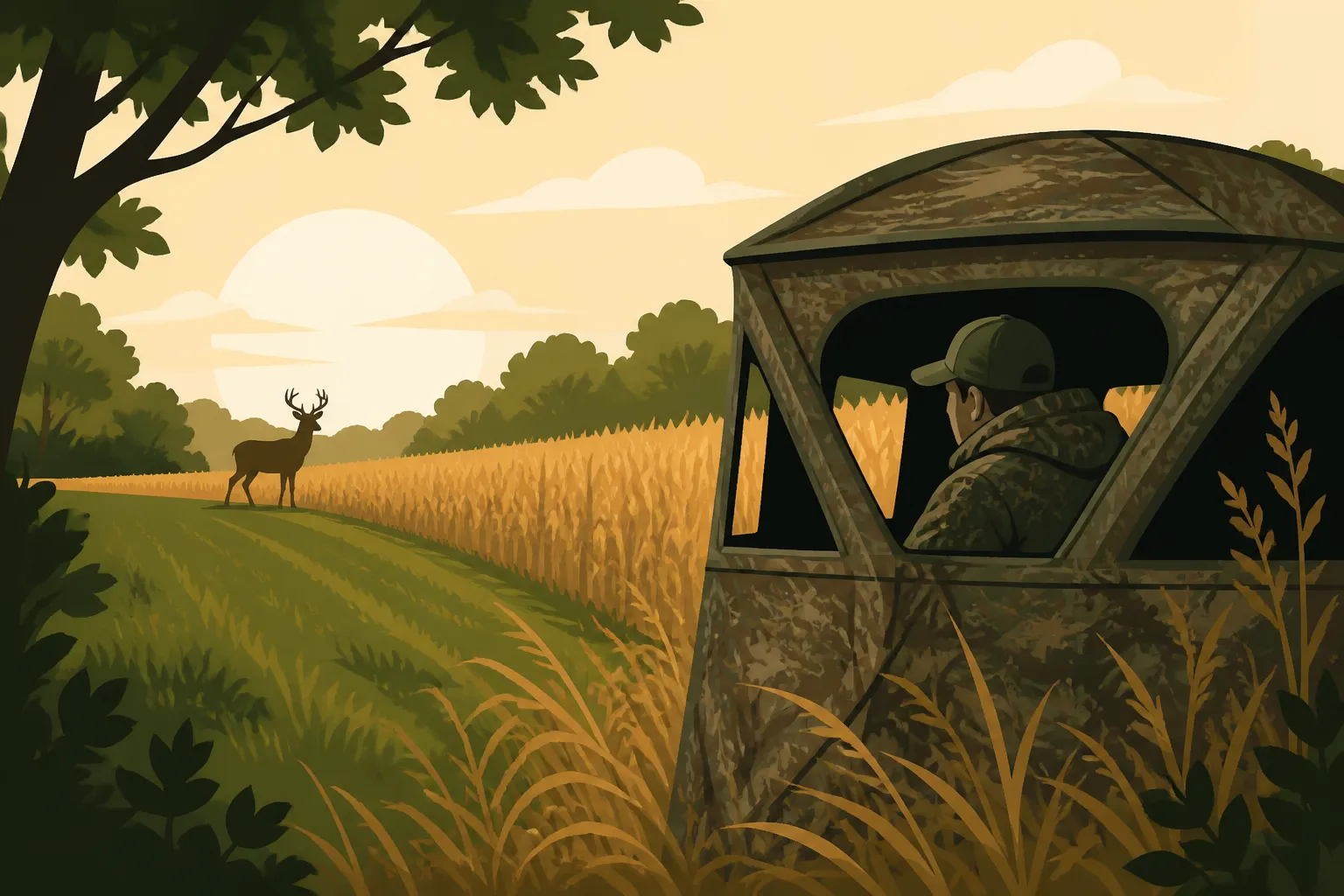
This is where ground blinds truly come into their own. They provide an instant, portable solution to the concealment problem. Instead of being at the mercy of sparse natural cover, you bring your own. A well-placed and properly brushed-in ground blind can transform an otherwise unhuntable field edge into a prime hunting location, allowing you to get in position where the deer are actually moving. They create a "bubble" of invisibility, allowing you to wait out deer movement with confidence, regardless of the available trees.
Concealment and Comfort
The primary benefit of a ground blind is, of course, the unparalleled concealment it offers. Unlike a treestand, which relies on elevation and natural breaks in the canopy to hide your form, a ground blind entirely encases you. This means your silhouette is completely broken up, your movements are largely contained, and your scent cone is significantly reduced, especially with careful placement and good wind discipline. You can shift, stretch, or even check your phone (quietly, of course!) without the fear of being instantly spotted by a wary whitetail. This level of confidence in your concealment allows you to focus on the hunt itself, rather than constantly worrying about being detected.
Beyond pure concealment, the comfort factor of a ground blind cannot be overstated, particularly during Ohio's often unpredictable hunting seasons. Think about those early archery mornings with a biting damp chill, or a late-season sit when the December winds whip across an open field. Inside a blind, you're protected from the elements – rain, snow, wind, and even the harshest sun. Many blinds offer enough room to sit comfortably on a chair, keep your gear organized, and even stand up to stretch your legs without spooking game. This protection translates directly into longer, more effective sits, as you're not constantly battling the weather or shivering your way out of the stand early.
This extended sit time is crucial for success, especially when targeting mature deer that might not move until midday or just before dark. If you're cold, wet, or uncomfortable, your patience wears thin, and you're more likely to pack up prematurely, missing that crucial window of activity. A ground blind allows you to stay warm, dry, and alert, ready to seize the moment when a buck finally steps out of the timber. It truly makes those long, cold days more bearable and your chances of success significantly higher. Plus, if you're introducing a new hunter or a youth hunter, the comfort and contained space of a blind can make their experience much more enjoyable and positive.
Choosing the Right Ground Blind for Ohio Conditions
Picking out a ground blind isn't like grabbing a tent off the shelf. You need one that can stand up to Ohio's unpredictable weather, blend into our diverse landscapes, and fit your specific hunting style. There are so many options out there, and it can feel a bit overwhelming trying to figure out which features really matter.
Size and Shoot-Through Options
When you're looking at ground blinds, one of the first things to consider is size. Are you a solo hunter who likes to keep things minimal and mobile? Or do you plan on hunting with a partner, a child, or carrying a lot of gear for all-day sits? Blinds come in various dimensions, from compact one-person models that are easy to carry and set up quickly, to spacious two or even three-person blinds that offer ample room for chairs, heaters, and camera equipment. A larger blind offers more comfort and space to maneuver, which can be a huge plus for those long, cold hunts or when you need to draw a bow, but it also means more weight and bulk to transport.
For archery hunters, the "shoot-through" mesh is an absolute game-changer. This specialized fabric allows arrows to pass cleanly through it, meaning you can keep your windows closed, maintaining maximum concealment without having to open a noisy flap when game approaches. The mesh essentially makes your blind an opaque wall to the deer, while still allowing you to see out and shoot. For gun hunters, while not strictly necessary for the shot itself, closed windows still offer better concealment and protection from the elements. Always test your broadheads or bullets through the mesh before hunting, just to be absolutely sure of your setup.
Beyond size and mesh, the overall durability and weather resistance of a ground blind are paramount for hunting in Ohio. We get all four seasons, often in a single week! You need a blind with robust fabric that can withstand wind, rain, and snow, and sturdy poles that won't buckle under pressure. Look for reinforced stitching, strong zippers, and a waterproof or highly water-resistant shell. Investing in a quality blind means it will last for many seasons, holding up to the wear and tear of being deployed in the field and providing reliable protection when that sudden Ohio downpour hits.
Camouflage Patterns and Portability
Matching your ground blind's camouflage pattern to the specific environment you'll be hunting in Ohio is crucial. While a generic woodland pattern might work in some spots, a corn-specific camo will disappear beautifully along a standing cornfield, and a more open-country pattern might be better suited for a cut bean field or a sparse fencerow. Some blinds even come with loops sewn into the fabric, allowing you to weave in local vegetation for an even more custom and natural appearance. The goal is for your blind to look like a natural part of the landscape, not a foreign object.
Portability is another major consideration, especially if you plan to move your blind frequently or hike it into more remote public land spots. Many quality blinds feature lightweight construction, comfortable carry straps, and a simple pop-up design that allows for quick setup and takedown. Brands like GoHunt offer a variety of gear reviews and scouting tools that can help you research different blind models and assess their portability ratings, often based on hunter feedback. Think about how far you typically walk to your hunting spots; a heavier, larger blind might be fine if you're dropping it out of a truck on private land, but it will quickly become a burden on a long hike into a public hunting area.
Ultimately, choosing the right blind involves finding a balance between features. A blind that's robust and spacious might be heavier, while a super-light, portable one might sacrifice some interior space or weather resistance. Consider your primary hunting scenarios. Will you be setting it up once for the season and leaving it? Or will you be moving it every few days based on changing deer patterns or wind directions? Your answers to these questions will guide you toward the ideal ground blind that serves your Ohio hunting needs effectively, helping you conceal yourself on those challenging field edges.
Strategic Placement and Brushing-In for Success
A ground blind is only as good as its placement and how well it blends into the environment. You can have the most expensive, feature-rich blind on the market, but if it sticks out like a sore thumb or is in the wrong spot, it's nothing more than a glorified tent. This is where scouting and attention to detail truly pay off in Ohio.
Reading the Field Edge for Deer Movement
The key to successful ground blind hunting on a field edge begins long before you ever set up your blind. It starts with meticulous scouting to understand exactly how deer are using that particular area. Look for well-worn trails leading from timber edges into fields, especially where two woodlots pinch together or a creek bottom offers a natural corridor. These are your travel routes. Also, pay close attention to signs like fresh droppings, rubs, and scrapes along the transition lines. These indicate primary activity zones where deer are likely to be present during legal shooting hours. Hunting a Funnel Between Two Woodlots is a perfect scenario for a ground blind.
Wind direction is paramount when choosing a blind location. Deer almost always approach open areas with the wind in their favor, circling to scent-check potential dangers before committing. You want to place your blind where your scent cone will be carried away from the most likely approach routes, or better yet, across an open field where deer are less likely to be. On field edges, thermals can also play a role, especially in the mornings and evenings when the air heats and cools. Use tools like the Ohio HuntFish App or aerial mapping features from platforms like GoHunt to analyze terrain features and predict wind and thermal currents specific to your chosen spot. Understanding these factors will allow you to position your blind for maximum concealment and minimal scent detection.
Consider the prevailing food source. Are the deer hitting a standing soybean field in the early season, or have they moved to a cut cornfield later on? Their preferred food source will dictate where they enter and exit the field. Also, look for natural pinch points or bottlenecks created by terrain, fences, or changes in vegetation. A ground blind strategically placed near one of these features, with a clear shooting lane down a primary travel route, can be deadly effective. Think about where a mature buck might feel safe enough to step out during daylight. Hunting a Standing Soybean Field or Late-Season Food Sources for Ohio Whitetails are excellent examples of needing careful placement.
The Art of Brushing In Your Blind
Once you've identified that perfect spot, simply popping up your blind isn't enough. It's imperative that you "brush in" your blind, making it an integral part of the natural environment, rather than a conspicuously new object. A brand-new, brightly camouflaged blind, no matter how good the pattern, will stick out like a sore thumb to wary deer if not properly disguised. Deer are incredibly observant, and any sudden change in their environment will immediately put them on high alert. The goal is to break up the blind's distinct outline and make it disappear.
The best way to brush in your blind is to use local, natural vegetation. If you're along a cornfield, cut some corn stalks and lean them against the blind. If you're on a timber edge, gather fallen branches, dead leaves, and tall grasses. Arrange these materials around the blind, focusing on the corners and edges to break up the hard lines. You don't need to completely cover the blind, but rather disrupt its shape and volume. Think of it as adding natural texture that helps it blend into its surroundings. The more it looks like a natural brush pile or an overgrown bush, the better. Brushing In a Blind on a Field Edge is an art form that pays dividends.
Ideally, you want to set up and brush in your blind well in advance of your hunt, if possible. This gives the deer in the area time to become accustomed to its presence. Even if it initially looks out of place, after a few days or a week, they'll often begin to accept it as part of the landscape. If pre-setting isn't an option, or if you're moving it frequently, make a strong effort to brush it in thoroughly each time you deploy it. A little extra time spent on concealment can make the difference between a deer walking right by your setup and one snorting and bounding away at the first sight of your unnatural hide.
Hunting Techniques and Considerations from a Blind
Hunting from a ground blind offers a fantastic advantage in concealment, but it also introduces some unique considerations for maximizing your success. It’s not just about hiding; it’s about hunting effectively from that hidden vantage point.
Staying Concealed Inside the Blind
Just because you're inside a blind doesn't mean you're invisible. To truly capitalize on the concealment a ground blind offers, you need to be mindful of what you do inside it. Firstly, always wear dark clothing, especially on your upper body and face. Even with shoot-through mesh or small window openings, light-colored clothing can create a "hot spot" that's easily visible to deer, especially when silhouetted against an open window. A black or dark green hoodie is far better than a bright camo pattern inside a blind.
Secondly, minimize all unnecessary movement. While the blind contains your larger movements, quick, jerky motions can still catch a deer's eye through mesh or open windows. Practice slow, deliberate movements. When reaching for your bow or rifle, do so with purpose and without drawing attention. If using a gun, try to have it rested or in position long before a deer is in range. For archery, drawing your bow inside a blind requires even more precision and often means orienting your chair and body for specific shooting lanes before a deer arrives.
Finally, manage your windows wisely. Most blinds have multiple windows. While it's tempting to open them all for maximum visibility, this also increases your chances of being seen. Only open the windows you absolutely need for scanning and shooting, and try to keep the windows behind you closed to prevent backlighting your silhouette. If you have shoot-through mesh, utilize it to its fullest. And speaking of being prepared, using GoHunt's mapping features can help you anticipate common deer approach routes, allowing you to have those critical windows pre-staged for action.
Ethical Considerations and Shot Angles
Hunting from a ground blind, especially with a bow, can present some different shot angle challenges compared to an elevated treestand. From a treestand, most shots are downward, creating a steeper angle that often leads to both lungs. From a ground blind, you're at eye level or slightly below, which means your shot angles will be much flatter. This requires a deeper understanding of deer anatomy and careful shot placement to ensure a clean, ethical kill. A marginal shot from the ground can be far riskier than a slightly off shot from above, as the arrow or bullet may exit on the opposite side without hitting vital organs.
It’s crucial to practice shooting from a seated position, exactly as you would in your blind. Set up a target at various distances, mimicking the limited window openings and awkward body contortions that might occur. Pay attention to how the blind walls or window frames might interfere with your draw or follow-through. For bowhunters, ensure your broadheads clear the mesh cleanly, and that your limbs don't strike the blind during the shot. For gun hunters, practice bracing your firearm on a shooting stick or bipod from your seated position for maximum stability.
Patience is perhaps the most important virtue when hunting from a ground blind on a field edge. You might have deer pass by at close range, but if the shot angle isn't perfect, or if another deer is positioned to spot your movement, wait. Don't rush. Wait for the deer to present a broadside or slightly quartering-away shot, and ensure there are no obstructions. If you feel uncomfortable with the shot, let the deer walk. A missed opportunity is always better than a wounded animal. A well-placed shot from a comfortable, concealed ground blind is one of the most satisfying experiences in Ohio hunting.
Ground Blind Maintenance and Off-Season Storage
You’ve invested time, effort, and money into your ground blind, so taking care of it is essential. Proper maintenance and off-season storage will ensure your blind lasts for many seasons, always ready for those crucial sits on Ohio's field edges. Neglecting it after a long, muddy season can lead to expensive replacements.
Post-Season Care and Cleaning
Once the season wraps up, or even after a particularly dirty or wet hunt, don't just toss your ground blind in the corner of the garage. The first step in post-season care is a thorough cleaning. Pop the blind up in your yard on a dry, sunny day and give it a good shake to remove any loose leaves, dirt, or debris. Use a soft brush or a damp cloth to wipe down the interior and exterior surfaces. Pay special attention to any muddy spots or areas where blood might have gotten on the fabric. A mild soap and water solution can be used for stubborn stains, but always check the manufacturer’s recommendations to avoid damaging any waterproof coatings.
As you clean, take the opportunity to inspect your blind for any wear and tear. Small tears in the fabric, frayed stitching, or bent poles are much easier and cheaper to fix when they’re minor problems. Many blinds come with repair patches, or you can often find patching kits at outdoor stores. Addressing these issues promptly prevents them from becoming larger, more debilitating problems down the road. Check all zippers to ensure they open and close smoothly; a little silicone spray can work wonders on sticky zippers.
Proper cleaning and inspection are vital for preventing mold and mildew, which can quickly ruin a blind, especially after Ohio's notoriously wet seasons. Even if the blind felt dry when you packed it away, a tiny bit of residual moisture can be enough to start mold growth. Make absolutely certain your blind is completely, thoroughly dry before folding and storing it. Air it out for several days in a well-ventilated area, preferably in direct sunlight, to kill any lingering spores and evaporate all moisture.
Storage for Longevity
Once your ground blind is clean, dry, and inspected, how you store it for the off-season will significantly impact its longevity. Never store a blind wet or in a crumpled heap. Always fold it according to the manufacturer's instructions. This usually involves collapsing the poles in a specific sequence to avoid putting undue stress on the fabric and pole hubs. Improper folding can lead to weakened poles, fabric creases that turn into tears, and stretched areas that compromise the blind's structure.
Store your blind in a dry, cool place where it's protected from extreme temperatures and humidity fluctuations. A garage, basement, or storage shed is usually ideal, as long as it's not prone to dampness. Avoid storing it in direct sunlight for extended periods, as UV rays can degrade fabric over time, making it brittle and faded. Protecting it from rodents is also crucial; mice and other critters love to chew through fabric to nest, so consider a rodent-proof container or a sealed storage bag if you have issues in your storage area.
Before the next hunting season rolls around, give your stored blind a quick once-over. Pop it up in the yard again to ensure everything is still in working order. Check all zippers, stakes, and poles. Make sure no unwelcome critters have taken up residence. This pre-season check allows you to address any issues well before opening day, ensuring that when it's time to hit those Ohio field edges, your ground blind is ready to provide reliable concealment and comfort, helping you make the most of your hunting opportunities.
| Feature / Type | Benefits for Ohio Field Edges | Considerations | Best Use Case |
|---|---|---|---|
| Pop-Up Hub Blind | Quick setup, sturdy, good concealment, withstands weather. | Can be bulky/heavy, requires brushing in for natural look. | Stationary setups, hunting with partners, all-day sits. |
| Backpack Blind | Lightweight, extremely portable, quick to move spots. | Less interior room, may offer less weather protection than larger blinds. | Run-and-gun tactics, deep public land hikes, solo hunter. |
| Panel Blind / Screen | Very lightweight, minimal profile, easy to set up on the fly. | Limited concealment (only a screen), no roof/floor, no scent containment. | Quick ambush points, adding cover to existing sparse brush, gun hunting. |
| Chair Blind | Integrated seat, very portable, simple. | Limited internal space, primarily for solo hunters, minimal gear storage. | Short sits, stalking, youth hunting, minimal gear. |
| Shoot-Through Mesh | Allows full concealment, silent shooting for archery, bug protection. | Can slightly reduce visibility in low light, needs to be tested with broadheads. | Archery hunting in all conditions, maximum concealment for gun hunting. |
Disclaimer
This article is for general informational purposes only and does not constitute professional advice. Laws, prices and regulations vary by location and change over time. Consult a qualified professional for guidance on your specific situation.