Climber Stands on Straight Trunks
For many Ohio deer hunters, the endless search for that perfect tree can feel like a game of hide-and-seek with Mother Nature. You've found the ideal deer sign, the fresh rubs, the well-worn trail, only to look up and see nothing but crooked, limby trees or trunks too wide to even hug. This guide is all about one of the most versatile tools for tackling Ohio's diverse timber: the climber stand, specifically how to maximize its use on those coveted straight trunks.
The Appeal of Climber Stands in Ohio's Diverse Timber
There's a reason why so many experienced hunters, especially those who prefer to remain mobile, swear by climber stands. They offer a unique blend of portability and stealth that can be incredibly effective when used correctly, particularly here in Ohio where our woods can range from dense, multi-species hardwoods to scattered pine plantations. However, their effectiveness hinges on one critical factor: finding the right tree.
Why Straight Trunks are Ideal for Climbers
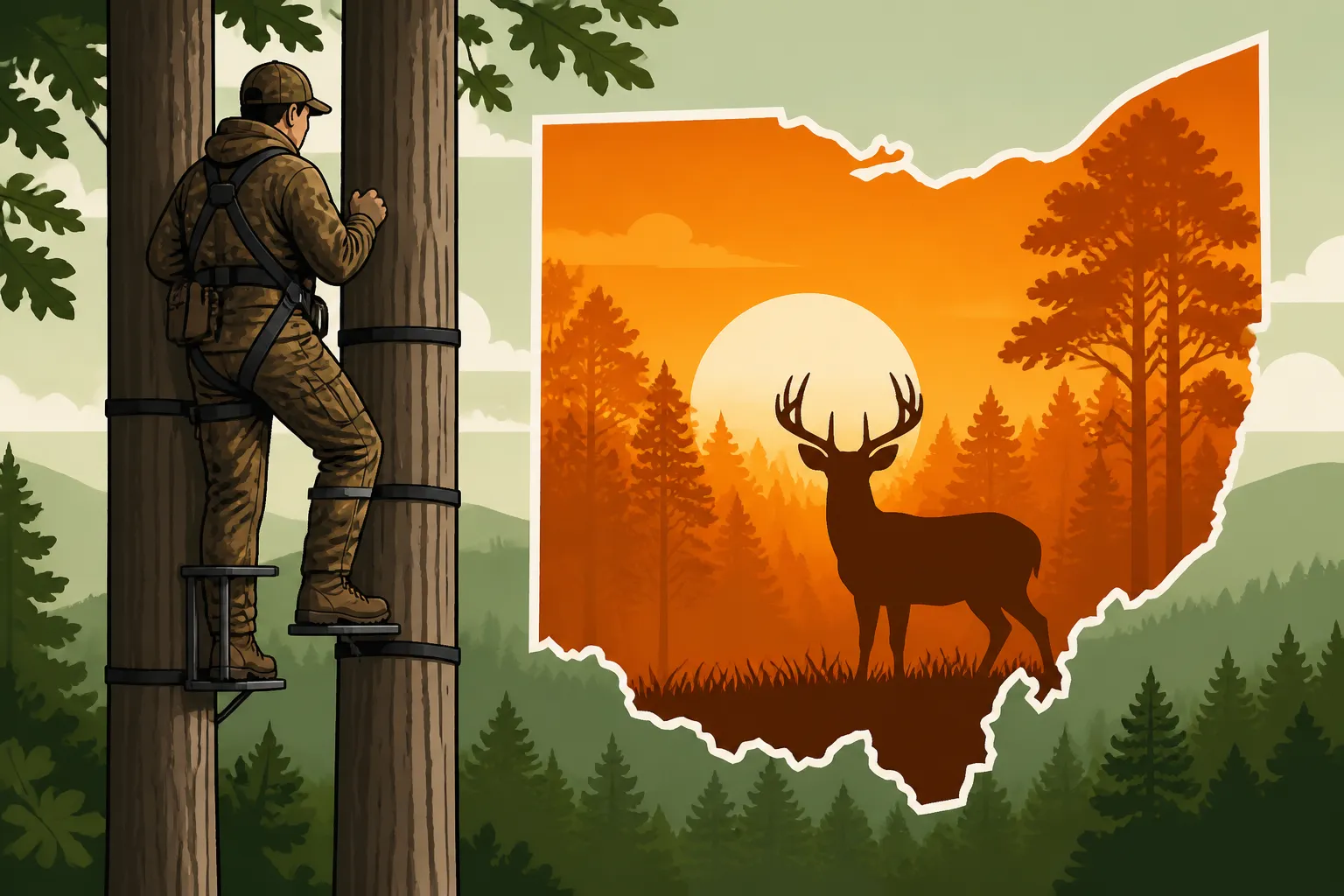
Climber stands, by their very design, need a tree with a relatively straight, limbless section. Think about it: the upper and lower sections of your stand need to grip the tree simultaneously and slide upwards with each step you take. If there’s a branch sticking out, a significant bend in the trunk, or an irregular growth pattern, your climb becomes difficult, dangerous, or even impossible.
In Ohio, we're blessed with a wide variety of tree species. Our southern and eastern regions are dominated by hardwoods like various oaks, maples, and poplars, many of which can grow tall and straight, especially in mature timber. Finding a perfectly limbless section for 20-30 feet can sometimes be a challenge, but these areas often provide good candidates. Even in the more agricultural northern and western parts of the state, woodlots might contain pockets of straight-trunked trees like some of the faster-growing poplars or even some of the more uniform pine species that have been planted. The key is to look for those uniform sections, free of knots, bumps, and especially, low-hanging branches that will impede your climb and prevent the stand from getting a secure grip. This is where scouting ahead of time really pays off; don't just look for deer sign, look for stand-friendly trees.
Portability and Adaptability for Mobile Hunters
One of the biggest advantages of a climber stand is its sheer portability. Unlike heavy ladder stands that are often left in place for an entire season, or even hang-on stands that require a separate set of climbing sticks, a climber is a self-contained unit. You pack it in, you climb the tree, you hunt, and you pack it out – all in one go. This makes it an incredibly adaptable tool for the truly mobile hunter in Ohio.
Imagine you've been doing some early season scouting, maybe checking out some new public land near the Wayne National Forest. You might find a fresh rub line one afternoon, or a hot food source that wasn't active just a few days prior. With a climber, you can react quickly. You don't need to worry about having pre-set stands or carrying multiple bulky pieces of equipment. This flexibility is invaluable, especially when you're Hunting the Rut in Early November and deer movement is dynamic, or if you're engaging in a true Bowhunting Ohio's Long Archery Season approach, constantly adjusting to changing conditions. A good climber stand lets you get in and out silently, setting up wherever the deer sign tells you to be, rather than being confined to a static setup. This mobile approach can often mean the difference between seeing consistent deer and just hoping they pass by your pre-picked spot.
Essential Features and Considerations for Ohio Climber Stands
Choosing the right climber stand isn't just about picking one off the shelf; it's about understanding the features that will make your hunting experience in Ohio safer, more comfortable, and more effective. You want a stand that disappears on your back during the hike in, and then feels like a rock-solid perch once you're aloft.
Weight, Noise, and Packability
For hunters who trek deep into public land or across long stretches of private property, the weight of your stand is paramount. A few extra pounds on your back can feel like a ton after a mile or two, especially if you're also carrying your bow, a pack, and other essentials. This is why many experienced Ohio hunters lean towards aluminum climber stands, which are significantly lighter than their steel counterparts. Every ounce saved on the walk in is more energy you can spend actually hunting.
Equally important is a stand's noise profile. Metal-on-metal squeaks or rattles can shatter the silence of the woods and alert deer to your presence long before you're in position. Look for stands with quiet-coating finishes, rubberized straps, or integrated dampeners that prevent components from clanging together during transport or setup. Consider how the stand packs down as well. Does it nest tightly together, eliminating loose parts? Are the straps comfortable and robust enough for a long hike? A stand that's easy to pack, quiet on the move, and comfortable to carry, perhaps alongside your Packs for a Day on Wayne National Forest, makes the whole experience much more enjoyable and effective. You want to focus on the hunt, not on a stand that's constantly reminding you it's there.
Platform Size, Seat Comfort, and Safety
Once you're in the tree, the stand's platform size and seat comfort become critical. A larger platform offers more room to maneuver, allowing you to stretch, adjust your shooting lanes, and even turn for a shot if necessary. However, a larger platform usually means more weight and a bulkier profile, so it's always a trade-off. For bowhunters, having enough room to draw comfortably without hitting your knees or the stand itself is essential.
Seat comfort, especially for those long, cold sits during the late season, cannot be overstated. A thin mesh seat might be light, but it won't keep you warm or comfortable for hours on end. Look for padded seats or options that allow you to bring in a cushion. And most importantly, always, always, always prioritize safety. Every climber stand must be used with a full-body safety harness from the moment your feet leave the ground until they touch back down. It's not just a recommendation; it's a non-negotiable rule. Check the stand's strapping and cabling mechanisms for wear, and ensure everything is functioning perfectly before each use. Good safety features, like strong cables and reliable pin systems, are just as important as good Treestand Safety Gear for Steep Ground in general.
Jaw Design and Tree Gripping Mechanisms
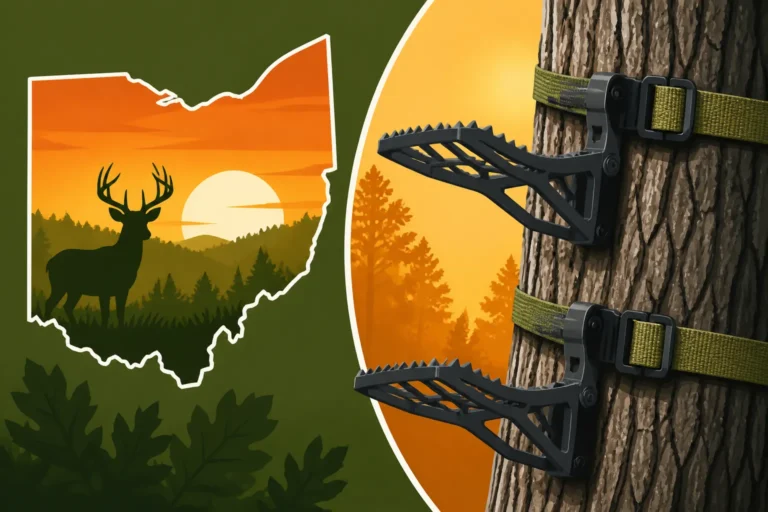
The part of your climber stand that actually grips the tree is its "jaws" or climbing arms. Different stands have different designs, and understanding these can help you choose the right stand for the types of trees you typically hunt in Ohio. Some stands feature a more aggressive V-bar design, which excels at biting into softer bark or slightly irregular trunks. Others might have wider, more curved sections that distribute pressure over a larger area, reducing damage to softer bark and providing a stable grip on a wider range of trunk diameters.
Consider the diameter range your stand is designed for. Many climbers are built for trees between 8 and 20 inches in diameter, but some can accommodate larger or smaller trunks. If you frequently hunt areas with mature, large-diameter oaks, ensure your stand can securely grip them. The type of bark also matters. A stand that grips well on smooth-barked beech trees might perform differently on rough-barked shagbark hickory. Always test your stand on various tree types in a safe, low-to-the-ground setting before taking it into the hunting woods. A secure, stable grip is the foundation of a safe and confident climb, allowing you to focus on the hunt instead of worrying about your stand.
Mastering the Climb: Techniques and Safety for Ohio Hunters
Using a climber stand effectively isn't just about owning one; it's about mastering the art of the climb and descent, prioritizing safety every step of the way. Like any skill in hunting, practice makes perfect, and understanding the nuances will significantly boost your confidence and success in the Ohio woods.
Pre-Season Practice and Site Selection
Before you ever take your climber stand into the woods for an actual hunt, spend dedicated time practicing at home. Find a suitable tree in your backyard or a safe, secluded spot – ideally, one that mimics the straight, limbless trunks you’ll be seeking in the field. Practice ascending and descending multiple times, getting a feel for the rhythm, the weight distribution, and how your gear interacts with the stand. This builds muscle memory and confidence, which are crucial when you’re facing a cold, dark morning climb before sunrise.
When it comes to site selection in the field, don't just pick the first straight tree you see. Think strategically. Consider the prevailing wind direction, the sun's position throughout the day, and most importantly, the expected travel routes of the deer. Look for natural funnels, pinch points, or food sources where deer are likely to pass within shooting range. Using advanced mapping tools, like those available on GoHunt, can help you analyze topo maps, identify potential funnels, and even visualize tree cover, assisting you in pinpointing ideal locations for a straight-trunked tree that aligns with deer movement. Scouting Ohio Public Land Before Season with your climber in mind means identifying several potential trees in different areas, giving you options when you finally hit the woods.
The Ascent and Descent Process
The ascent and descent are the most critical phases of using a climber stand. Safety always comes first. Before you even begin, attach your safety harness and tether to the tree. As you climb, the goal is to move the top section, then the bottom section, in a smooth, controlled motion. Start by pushing the top section up a comfortable distance, then lift your feet and slide the bottom section up. Maintain three points of contact (two hands and one foot, or two feet and one hand) at all times.
Managing your gear during the climb is also important. Many hunters use a haul rope to pull up their bow or firearm after they've reached their desired height. This prevents accidental discharges and keeps your hands free for the climb. The descent is essentially the reverse process, but often feels a bit more awkward. Take your time, maintain control, and ensure your stand sections are securely gripping the tree before shifting your weight. Rushing can lead to mistakes, and a fall from any height can be serious. Always check your footing and the stand's grip as you go, especially when working your way down a tree.
Advanced Tips and Troubleshooting Common Issues
Even with practice, you might encounter a few quirks when using your climber. If you hit a patch of tricky bark, or a very slight angle in the tree, sometimes applying a bit more downward pressure on the stand sections as you climb can help them grip. If you notice your stand slipping just a tiny bit, reassess your grip and adjust your weight slowly and deliberately. Never try to make a quick, jerky recovery. It's often better to slowly descend a few feet to a better section of the trunk than to risk a major slip.
Staying warm and quiet while stationary in your stand is another key aspect. Layer your clothing effectively, paying special attention to your core, hands, and feet. Good Insulated Boots for All-Day Sits can make a huge difference in comfort. Keep your gear organized and within easy reach, minimizing unnecessary movement that could create noise. For those extra long sits, a comfortable seat cushion or a back pad can be a game-changer. Finally, always have a reliable GPS unit or a mapping app like the one offered by GoHunt on your phone. This is not just for navigation on Wayne National Forest Hunting ground, but also for marking your stand location, especially when you are trying to make it back to your vehicle after dark. Knowing your precise location can be invaluable for safety and efficiency.
Integrating Climber Stands into Your Ohio Hunting Strategy
Climber stands aren't a universal solution for every hunting scenario, but when used in the right situations and locations in Ohio, they can be incredibly effective. Understanding where and when they shine can elevate your hunting game and help you access areas that other hunters might overlook.
Ideal Scenarios for Climber Use
One of the prime times to leverage a climber stand is during the early archery season when deer patterns are heavily tied to specific food sources. As acorn crops drop or particular agricultural fields become ripe, you can quickly move your stand to capitalize on fresh sign. This also extends to Hunting the Late-Season Rut Lull, where deer patterns can change rapidly. If you've been monitoring a specific area and suddenly see increased activity on a fresh rub line or scrape, a climber allows for a quick, tactical setup.
Climbers are also fantastic for spot-and-stalk archery hunting, especially in the thick, rolling timber of Appalachian Ohio. You might hike in, spot a promising area with fresh tracks or droppings, and then quickly find a suitable tree to ascend for an ambush. They excel in situations where you might not want to leave an expensive stand out overnight or for extended periods. If you're targeting a specific bedding area edge for a morning hunt and then want to reposition for an evening food plot vigil, a climber makes that nimble transition possible. They are also incredibly valuable when Hunting Small Private Tracts in Ohio, where you might have limited space but can find those prime, isolated trees.
Climbers on Ohio Public Land
Ohio's public lands, from sprawling state forests to numerous wildlife areas, offer fantastic opportunities for hunters willing to put in the effort. Climber stands are perfectly suited for these environments because they embrace the "leave no trace" ethos. You pack your stand in and pack it out, minimizing your impact on the land and adhering to most public land rules which often prohibit leaving stands unattended for long periods or damaging trees.
The ability to access remote, less-pressured areas of public land is where climbers truly shine. While many hunters stick to areas close to parking lots or marked trails, you can sling your climber on your back and hike deeper, finding those untouched pockets of timber where mature bucks might feel safer. This often involves navigating challenging terrain, but the reward can be significant. Finding those remote, straight-trunked trees away from the crowds can be the ticket to Finding Ground That Sees Fewer Hunters. Always double-check the specific regulations for the public land you plan to hunt, as rules can vary regarding stand placement, especially if you're venturing into unique management zones.
Maximizing Success with Your Climber
To truly maximize your success with a climber stand, it goes beyond just getting into the tree. It involves a holistic approach to the hunt. Scent control is paramount; even elevated, deer can pick up your scent if the wind shifts. Always apply rigorous scent control measures, from showering with scent-free soap to storing your hunting clothes in airtight containers. Once in the stand, practice drawing your bow or shouldering your gun from various positions to ensure you can make a clean shot when the moment arises.
Be prepared to adjust your position slightly if the wind changes direction or if deer approach from an unexpected angle. Sometimes a subtle shift in your body or adjusting your bow hanger can make all the difference. Finally, leverage all available resources. Keep an eye on weather patterns, consult a reliable hunting app for current wind forecasts, and consider how changing conditions might affect deer movement. Tools like the GoHunt app can provide invaluable real-time intel and mapping features that help you adjust your strategy, ensuring your climber stand is positioned for optimal success on every Ohio hunt.
| Feature / Consideration | Importance for Ohio Climber Hunters | Key Takeaways |
|---|---|---|
| Tree Suitability | Essential for safe and effective use | Look for straight, limbless trunks 8-20+ inches in diameter. |
| Weight | High, especially for public land | Opt for lightweight aluminum models for easier transport over long distances. |
| Noise | Critical for stealth | Choose stands with quiet finishes, padded straps, and secure nesting to minimize sound. |
| Packability | High, for mobility | Look for designs that fold down compactly and have comfortable carry straps. |
| Platform Size | Moderate to High | Balance shooting comfort/maneuverability with overall stand weight and bulk. |
| Seat Comfort | High, for long sits | Prioritize padded seats or bring a cushion, especially for cold-weather hunting. |
| Safety Harness | ABSOLUTELY ESSENTIAL | Always use a full-body harness from the moment your feet leave the ground. |
| Jaw Design | Moderate | Match design (V-bar, curved) to typical tree types and diameters in your hunting area. |
| Practice | Mandatory | Practice climbing and descending at home in a safe environment before hunting. |
| Scouting | High | Identify multiple suitable trees ahead of time, considering deer sign, wind, and terrain. |
Disclaimer
This article is for general informational purposes only and does not constitute professional advice. Laws, prices and regulations vary by location and change over time. Consult a qualified professional for guidance on your specific situation.