Rangefinders Under 100 Yards
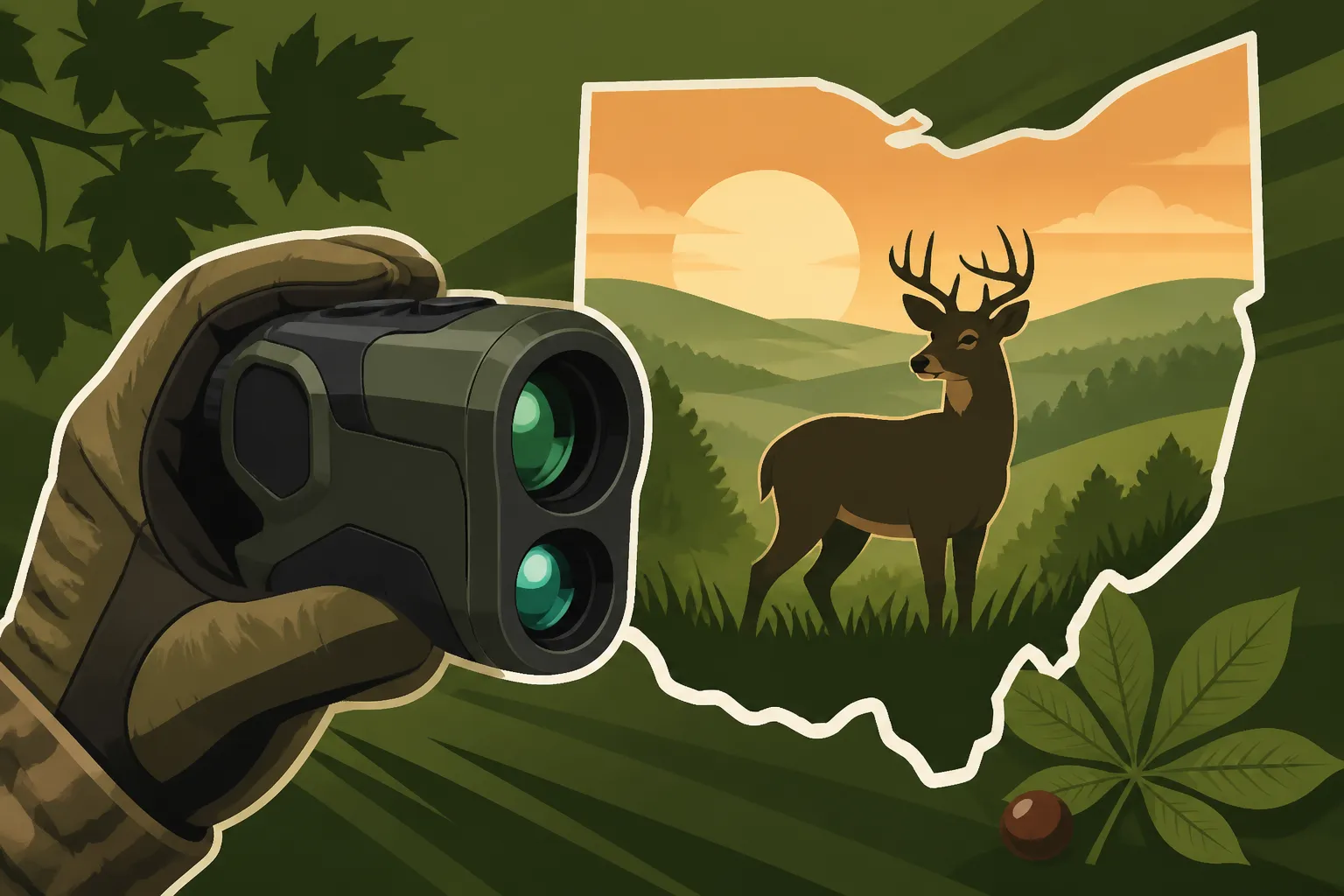
The moment a deer steps out into that perfect shooting lane, your heart starts pounding. In the flurry of excitement, judging distance accurately can feel like an impossible task, especially when you're hunting in the thick timber or along those winding creek bottoms common throughout Ohio. Even if that deer is "only" 30 or 50 yards away, a few yards off in your estimation can mean the difference between a clean, ethical shot and a heartbreaking miss or worse. That's why having a reliable rangefinder, even a budget-friendly one, is an absolute game-changer for short-range hunting in our beautiful Buckeye State. This guide will walk you through everything you need to know about finding and using a rangefinder effectively, all without breaking the bank.
Why You Need a Rangefinder for Short Distances (Even Under 100 Yards)
It's easy to dismiss a rangefinder for what you consider "close" shots. After all, if a deer is within spitting distance, can't you just eyeball it? The truth is, our perception of distance can be wildly inaccurate, especially when the adrenaline is pumping, or you're looking through dense cover.
The Illusion of "Close Enough" in Ohio Timber
Think about it: you're sitting in your stand, tucked into an old oak in the Wayne National Forest, and a nice buck steps out at what you think is 25 yards. But is it really 25? Or is it 35? In open fields, it might be easier to judge, but when you're surrounded by trees, shadows, and undulating terrain, those visual cues can play tricks on your eyes. That 10-yard difference, especially for a bowhunter, can dramatically alter your arrow's point of impact. What looks like a clear shot at 20 yards might actually be 30, and suddenly your pin is off. This isn't just about missing; it's about making sure your shot placement is as precise as possible for a quick, humane harvest. Ohio's hardwoods, from the steep ridges of the southeast to the scattered woodlots of the northwest, are full of these deceptive distances.
Critical for Bowhunters and Straight-Wall Cartridges
For archers, every single yard matters. An arrow's trajectory is far more pronounced than a bullet's, and knowing the exact distance to the target is paramount. If you're sighted in at 20 and 30 yards, and that buck stands at 27, you need to know whether to hold a little high on your 20-yard pin or a little low on your 30. There's no room for guessing games, especially when a deer might only offer a small window of opportunity. Similarly, hunters using Straight-Wall Rifles for Ohio Deer or Shotgun Slug Guns for Ohio Deer might be tempted to think their flatter trajectory negates the need for a rangefinder at close range. However, even with these firearms, understanding your bullet drop or slug trajectory at precise distances ensures you're placing your shot exactly where you intend. Those shorter effective ranges mean that maximizing accuracy within 100 yards is crucial. A rangefinder ensures you're not pushing the limits of your setup or your comfort zone.
Ethical Shots and Confidence in the Field
At the end of the day, hunting is about being an ethical steward of the land and the animals we pursue. A poorly placed shot, even at close range, can lead to a wounded animal and a difficult, if not impossible, recovery. Using a rangefinder removes the guesswork, giving you the confidence to know that when you release that arrow or squeeze that trigger, you've done everything in your power to make the most accurate shot possible. This isn't just about success; it's about respecting the animal and upholding the values of fair chase. That boost of confidence, knowing you've precisely measured the distance, can settle your nerves and help you execute the shot when it counts, whether you're hunting Roost Hunting Ohio Gobblers or waiting on a late-season whitetail. It’s also incredibly useful when hunting pressured birds who might be skittish and offer only fleeting opportunities within range.
What to Look for in a Budget-Friendly Rangefinder (Under $100)
When you're shopping for a rangefinder in the sub-$100 category, you're not going to get all the bells and whistles of a top-tier model, and that's perfectly fine for most Ohio hunters focused on short to moderate distances. The key is to prioritize the features that genuinely impact your ability to get an accurate reading quickly and reliably.
Essential Features for Close-Range Accuracy
The most important thing for a rangefinder under a hundred bucks is that it consistently gives you accurate distances out to at least 100-200 yards. Look for models that boast accuracy within +/- 1 yard. At these price points, you'll typically find simple LCD displays with black reticles. Ensure the display is clear and easy to read, even in low light or against a dark background, which is a common scenario in Ohio's dense woods during prime hunting hours. The device should be quick to give a reading – you don't want to be fumbling with buttons while a deer is on the move. Most basic models will give you a reading with a single, quick press of a button. While angle compensation (which tells you the "shoot-at" distance for angled shots, like from a treestand) isn't always standard at this price point, some entry-level models might offer a basic version. If you do a lot of Hanging a Stand on an Appalachian Ridge or hunt steep terrain, this can be a valuable addition, even if it's not as sophisticated as higher-end models.
Durability and Weather Resistance for Ohio's Conditions
Ohio weather is, shall we say, character-building. One minute it's crisp and clear, the next you're getting soaked by a sudden downpour or dealing with heavy fog. Your rangefinder needs to be able to handle it. Look for terms like "water-resistant" or a basic IPX rating (like IPX4) to indicate it can shrug off light rain or a splash. Don't expect full submersion protection, but anything that offers some resistance to moisture is a big plus. Beyond water, consider general durability. It's bound to get bumped, dropped, or snagged on a branch while you're navigating through brush. A rubberized housing or a solid, compact build can help it withstand the rigors of a hunting season. You want something that feels solid in your hand, not flimsy. Remember, a broken piece of gear is useless, no matter how cheap it was.
User Experience and Ergonomics
A rangefinder should be an extension of your hand, not a complicated gadget that slows you down. Look for a design that allows for one-hand operation. Can you easily press the range button with your thumb while holding it? Are the buttons intuitive, or will you need to consult a manual every time? This is particularly important when wearing gloves in colder Ohio weather. A compact size is also key. It should slip easily into a jacket pocket, a bino harness, or a small pouch on your pack. If it's too bulky, you're less likely to carry it or use it quickly when a shot opportunity arises. Many hunters appreciate a lightweight design that doesn't add noticeable bulk to their setup, especially if they're already carrying Packs for a Day on Wayne National Forest. When scouting new areas or just navigating familiar ones, tools like the GoHunt app can help you identify ideal locations, and having a rangefinder that’s easy to grab and use complements that scouting perfectly for precise measurements once you’re in the field.
Here's a quick comparison of what to expect from budget rangefinders versus more premium options:
| Feature | Budget-Friendly (~$100) | Higher-End (>$200) | Why it matters for Ohio Hunting |
|---|---|---|---|
| Max Range | 400-600 yards (reflective targets) | 1,000+ yards (reflective targets) | You're mostly concerned with targets under 100-200 yards in Ohio timber, so budget models are sufficient. |
| Accuracy | +/- 1 yard | +/- 0.5 yard, more consistent | Critical for precise arrow/bullet placement at close range, especially for bowhunting. |
| Angle Compensation | Basic line-of-sight equivalent (some models) | True horizontal distance, advanced algorithms | Essential for Treestand Safety Gear for Steep Ground or hill country hunting. |
| Display Type | Black LCD | Red/OLED display, adjustable brightness | Visibility in low light, against dark backgrounds, or in bright sunlight. |
| Speed | Quick, single-button press | Near-instantaneous, scan mode | Crucial for fleeting shot opportunities on moving game. |
| Weatherproofing | Water-resistant (IPX4) | Fully waterproof (IPX7/submersible) | Ohio weather is unpredictable; protection from rain, snow, heavy dew. |
| Size & Weight | Compact, easy to handle | Very lightweight, ergonomic, sometimes smaller | Less bulk, easy to retrieve quickly from a Binocular Harnesses Worth Wearing or pocket. |
| Scan Mode | Rarely present | Yes, for ranging moving animals or multiple targets | Useful for tracking moving game or quickly ranging several spots from your stand. |
Practical Applications of Sub-$100 Rangefinders in Ohio Hunting Scenarios
Even a basic rangefinder becomes an invaluable tool in a variety of real-world Ohio hunting situations. It's not just for confirming distance when a deer walks out; it's a scouting tool, a confidence builder, and a precision instrument all rolled into one.
Archery Stand Setup and Shot Lanes
Before you even think about a deer appearing, your rangefinder should be out and working. When you hang your Treestand Setups in Appalachian Ohio Hardwoods, or set up your ground blind, take the time to range every potential shooting lane, every major tree, and any key landmarks in your kill zone. Know that the big oak is 25 yards, the small sapling is 32, and that opening in the brush is 40. Write these distances down or memorize them. This pre-ranging drastically cuts down on movement and noise when a deer is approaching. Instead of reaching for your rangefinder, trying to acquire a target, and making a reading when a buck is staring at you, you can simply glance at your mental map and know the distance instantly. This practice is crucial for any bowhunter, especially in the tight quarters often found on Ohio public lands. GoHunt's mapping tools can help you mark your stand locations, and then you can confirm those critical distances with your rangefinder once you're on site.
Shotgun and Muzzleloader Hunting in Dense Cover
While shotguns and muzzleloaders are often thought of as "close-range" weapons, precision is still key. Imagine you're still-hunting a ridge in Shawnee State Forest, pushing slowly through thick cover. A deer jumps up and pauses momentarily in a small opening at what looks like 60 yards. Is that within your comfortable, ethical range for your Muzzleloader Tactics in January Cold or your slug gun? A quick rangefinder reading confirms the exact distance, allowing you to decide confidently whether to take the shot or let the deer walk. In dense woods, where visibility can be limited, quickly confirming distances helps prevent pushing the effective range of your firearm and ammunition. It's also excellent for Scouting Ohio Public Land Before Season to get a feel for the terrain and estimate potential shot distances in areas where deer are likely to travel.
Turkey and Small Game Scenarios
Turkey hunting often involves precise setups and decoy placement. With your budget rangefinder, you can measure the exact distance to your turkey decoys from your position. Knowing your decoys are, say, 25 yards out ensures that when a gobbler comes strutting in, he's at a perfect, ethical range for your shotgun. You've patterned your Turkey Shotgun Gauge Choice and know its effective range; the rangefinder helps you put birds in that sweet spot. For small game like squirrels, while you might not range every individual bushy-tail, it's incredibly useful for confirming distances when using a .22 rifle. Is that squirrel at 30 yards or 50? That difference can matter for bullet drop and accuracy, especially if you're trying to make a clean headshot. Whether you're Squirrel Hunting Ohio Oak Ridges or sitting on a field edge waiting for a spring gobbler, a rangefinder brings an added layer of precision to your hunt.
Maximizing Your Sub-$100 Rangefinder's Performance
Buying a rangefinder is just the first step. To truly get the most out of your investment, regardless of its price point, you need to practice with it, understand its limitations, and integrate it into your overall hunting strategy.
Pre-Season Practice and Familiarity
Don't wait until opening day to pull your rangefinder out of the box. Spend time with it in your backyard, ranging objects at various distances. Get a feel for how quickly it gives readings, how the display looks in different lighting conditions, and how far its effective range truly is on non-reflective targets like trees and bushes. This practice builds muscle memory and confidence. Take it with you on scouting trips to your Public Hunting Land in Ohio or local woodlot. Range trees, rocks, fencerows—anything that could be a landmark or a potential target. The more familiar you are with its operation, the more instinctively you'll use it in the field when it really counts. You'll learn its quirks, like how it might struggle to range very small, dark objects at long distances compared to larger, brighter ones.
Battery Life and Maintenance
Even the best rangefinder is useless with dead batteries. Most budget rangefinders use common CR2 lithium batteries, which are typically long-lasting but can drain faster in cold weather. Always carry a spare set in your pack. Make it a routine to check your batteries before each major hunt. Beyond batteries, keep the lenses clean. Dirt, dust, or smudges on the objective or ocular lenses will degrade performance, making it harder to get a clear reading or acquire a target, especially in low light. A soft lens cloth (not your sleeve!) is all you need. Store your rangefinder in a protective case or a dedicated pocket to prevent scratches and dings, prolonging its life and ensuring it's ready when you need it.
Pairing with Other Tools and Techniques
Your rangefinder isn't a standalone tool; it's part of a larger hunting system. Use it in conjunction with mapping apps and aerial photos to better understand the terrain and distances. For instance, when using a platform like GoHunt, you can identify potential stand locations or pinch points, and then physically range those spots when you're on the ground. This combination of digital scouting and on-the-ground confirmation is incredibly powerful. Furthermore, while the rangefinder is your primary tool for precise measurements, don't neglect your ability to estimate distances. Practice judging distances by eye, then confirm with your rangefinder. This builds your natural ability to estimate, which can be a lifesaver if your rangefinder battery dies or you don't have time to pull it out. Knowing roughly how far a certain tree is can help you narrow down your rangefinder's reading quickly. Mastering both estimation and precise ranging makes you a more versatile and prepared hunter.
Disclaimer
This article is for general informational purposes only and does not constitute professional advice. Laws, prices and regulations vary by location and change over time. Consult a qualified professional for guidance on your specific situation.