Field Dressing Knives Worth Carrying
There's nothing quite as deflating as finally connecting with a deer after all your hard work, only to realize your field dressing knife is dull, flimsy, or just plain unreliable. You're out there, hands already getting cold or sticky, and the last thing you need is a tool that fights you every step of the way. It's a frustrating situation that can quickly turn a moment of triumph into a messy, drawn-out chore. This guide is all about helping you avoid that headache by exploring the best field dressing knives worth carrying, ensuring you're always prepared for the crucial task of processing your harvest efficiently and cleanly.
The Undeniable Importance of a Quality Field Dressing Knife
When you're standing over a harvested deer, the clock starts ticking. Especially during Ohio's warmer early archery season or even a mild day during gun season, getting that animal field-dressed quickly is paramount to preserving the meat. A quality knife isn't just about making the job easier; it's about respecting the animal, ensuring a clean process, and ultimately, delivering the best possible venison to your table.
Speed and Efficiency in the Field
Imagine this scenario: you've just taken a beautiful buck deep in the Wayne National Forest. It's a long drag back to the truck, and the afternoon sun is still high. Every minute counts. Trying to field dress with a dull blade is not only frustrating, but it also takes precious time. You're sawing, tearing, and generally struggling, making multiple passes where one sharp cut should suffice. A truly sharp, well-designed field dressing knife slices through hide, muscle, and membrane with minimal effort, allowing you to complete the task swiftly. This efficiency is critical for cooling the carcass down as quickly as possible, especially before you start the long process of Dragging a Deer Off a Steep Ridge back to your vehicle. The quicker you get the internal organs out, the faster the body heat dissipates, which is vital for meat quality.
Beyond just speed, an efficient knife reduces the physical strain on you. Field dressing is already hard work, and doing it with a subpar tool just adds to the fatigue. When your hands are cold or numb, a knife that requires excessive force becomes a safety hazard, increasing the risk of slips and cuts.
Hygiene and Meat Care
This might not be the most glamorous part of hunting, but it's arguably one of the most important for turning your harvest into delicious meals. A clean, sharp knife allows for precise cuts, minimizing the risk of accidentally puncturing organs and spilling their contents onto the meat. Nobody wants hair, dirt, or gut material on their venison. A sharp blade means fewer ragged edges and less chance of dragging unwanted material into the body cavity.
Think about the difference between a clean incision and a torn, jagged one. The clean cut made by a sharp blade is less likely to harbor bacteria and is easier to wipe down. This attention to detail during the initial field dressing stages contributes significantly to the overall hygiene of your meat, reducing the need for excessive trimming later on. Proper hygiene extends to your personal safety too; reducing exposure to contaminants from the animal is always a good practice. Just as you’d plan your access routes using resources like GoHunt, planning your field dressing process with the right tools is part of a successful hunt.
Navigating the World of Field Dressing Knives: Types and Their Strengths
The market is flooded with hunting knives, and it can be overwhelming to choose. From fixed blades to folders, and those with replaceable razor-sharp edges, each type has its advantages and trade-offs. Understanding these differences will help you pick the knife that best suits your hunting style and preferences.
Fixed Blade Knives: The Traditional Workhorse
When most hunters think of a reliable field knife, a fixed blade often comes to mind. These knives are renowned for their durability, strength, and ease of cleaning. Because the blade extends directly through the handle (full tang), there are no moving parts to break or get gunked up with blood and hair. This makes them incredibly robust, able to handle tough tasks from opening a deer's cavity to splitting the pelvis if you choose to.
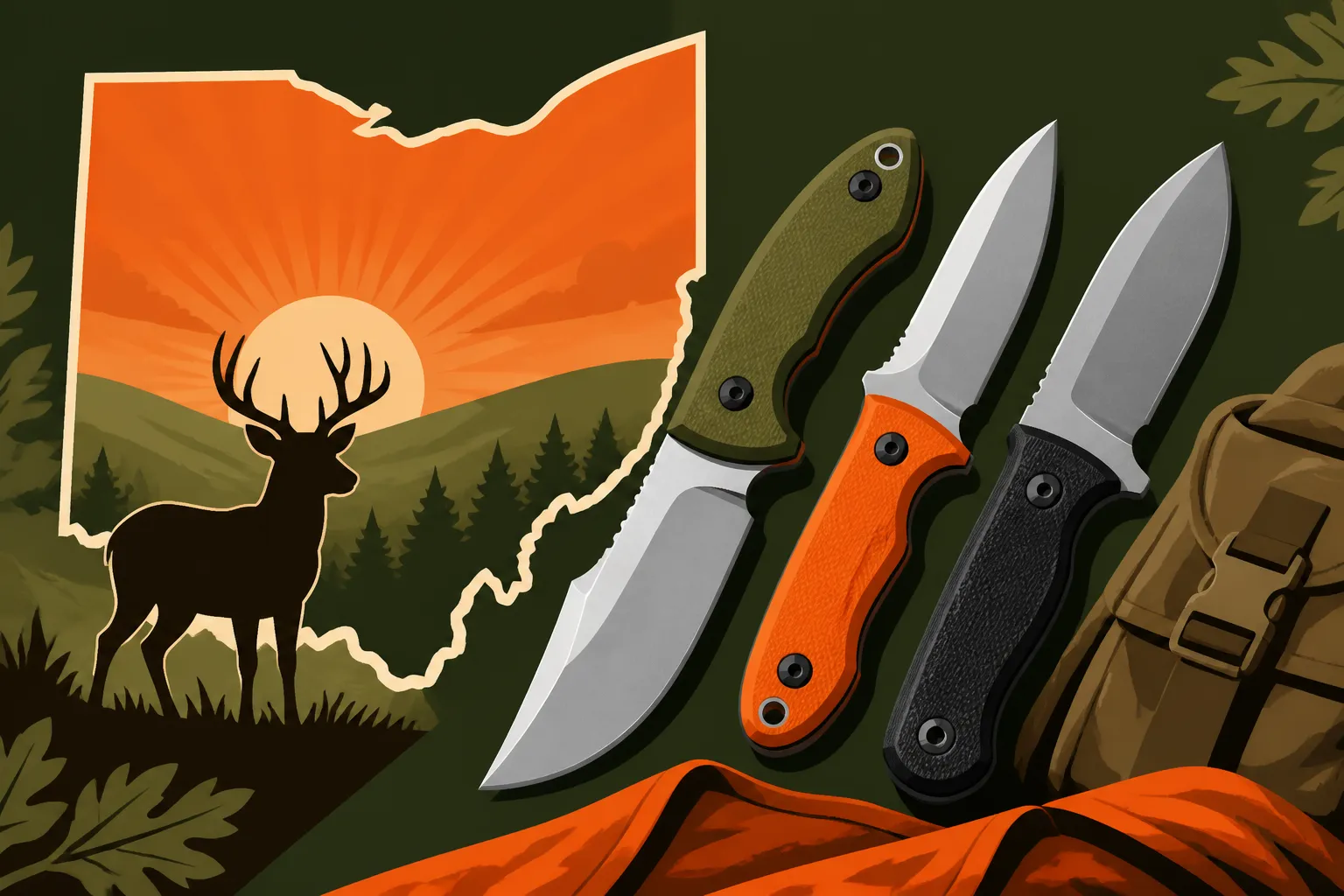
The lack of hinges or crevices also means fixed blades are much easier to clean thoroughly. After a messy field dressing, a quick rinse and wipe-down is often all it takes to get them hygienic again. This is a huge advantage for maintaining meat quality and preventing bacterial growth. Common blade shapes for fixed blades include drop-point and skinning patterns. Drop-point blades are versatile, with a strong tip and ample belly for slicing. Skinning knives, as the name suggests, are designed with a curved, often wider blade, perfect for separating hide from meat without nicking the carcass. For a truly versatile tool, many Ohio hunters lean towards a quality fixed blade for their primary field dressing needs.
Folding and Replaceable Blade Knives: Convenience vs. Practicality
Folding knives offer undeniable convenience. They're compact, easy to carry in a pack or pocket, and often feature locking mechanisms for safety during use. However, their design can be a double-edged sword when it comes to field dressing. The pivot point and handle crevices can quickly become packed with blood, hair, and fat, making them notoriously difficult to clean properly. This can lead to hygiene issues if not meticulously addressed after each use.
Replaceable blade knives, on the other hand, have surged in popularity precisely because they address the sharpness issue head-on. These knives use readily available, surgical-grade razor blades that are incredibly sharp. When a blade dulls, you simply pop it out and replace it with a fresh one. This means you always have a razor-sharp edge without needing to carry sharpening tools. They excel at precision cuts and skinning. The downsides typically involve the cost of replacement blades, the potential for blades to break if twisted or leveraged improperly, and the careful handling required for changing blades in the field. Despite these considerations, many hunters, particularly those who prefer a constantly sharp edge for detail work or have specific game like smaller deer in mind, find them invaluable.
The Role of Gut Hooks and Specialized Tools
Beyond the main cutting blade, some field dressing knives incorporate a gut hook or come as part of a multi-tool kit. A gut hook is a sharpened, curved hook on the spine of the blade designed to open the abdominal cavity without puncturing internal organs. The idea is that you hook it under the skin and pull, and the rounded tip prevents it from going too deep. For many, it's a convenient tool that makes the initial cut faster and cleaner. For others, it's an unnecessary gadget that adds weight and another area to clean, and a skilled hand with a standard knife can achieve the same result with a reverse cut.
Specialized tools like small bone saws (either integrated into a knife or carried separately) can be incredibly useful for splitting the sternum or pelvis, making it easier to access the internal organs and cool the carcass down faster. Some hunters prefer to carry a dedicated small bone saw or even use the gutless method, which can make Butchering a Deer at Camp or even in the field much more efficient without needing to split bone. When you're packing your Packs for a Day on Wayne National Forest, you have to weigh the utility of each tool against its weight and bulk.
What Makes a Field Dressing Knife Truly "Worth Carrying"? Key Features to Prioritize
Choosing a field dressing knife isn't just about the type; it's about the details. The materials, design, and ergonomics all play a crucial role in how effective, safe, and pleasant the knife is to use in the often demanding conditions of a field dressing situation.
Blade Material and Edge Retention
This is where the rubber meets the road. A great knife starts with great steel. You want a blade that can hold a sharp edge through the entire field dressing process, even if you're processing a large buck. Generally, knife steels fall into two broad categories: carbon steel and stainless steel.
- Stainless Steel: Most modern hunting knives use some form of stainless steel. It's highly resistant to rust and corrosion, which is a massive plus when dealing with blood and moisture. Higher-end stainless steels, like those found in premium hunting knives, offer excellent edge retention and can be sharpened to a razor edge. While generally harder to sharpen than carbon steel, they keep that edge longer, meaning less touch-up work in the field. This corrosion resistance is key for longevity and hygiene, particularly in Ohio's often damp hunting conditions.
- Carbon Steel: Historically, many knives were made from carbon steel. It's known for taking a very keen edge and being relatively easy to sharpen. The downside is its susceptibility to rust and corrosion. If you choose a carbon steel blade, you'll need to be diligent about cleaning and oiling it immediately after use to prevent rust from forming. For many, the low maintenance of stainless steel makes it the preferred choice for field dressing.
Regardless of the steel type, look for a blade that balances sharpness, edge retention, and ease of sharpening. A knife that can be quickly touched up with a small field sharpener is more practical than one that requires specialized equipment after every use.
Handle Ergonomics and Grip
A knife is only as good as your ability to hold onto it safely and securely. Field dressing often involves slippery hands due to blood, fat, and cold temperatures. A well-designed handle is critical for both control and safety.
- Non-Slip Materials: Look for handles made from materials that offer a secure grip even when wet or bloody. Textured rubber, G10, Micarta, or even certain synthetic polymers with aggressive texturing are excellent choices. Smooth, polished wood or slick plastic handles might look pretty, but they can become dangerous when you're knee-deep in field dressing a deer.
- Ergonomic Shape: The handle should fit comfortably in your hand, allowing for a firm, controlled grip without causing hotspots or cramping during extended use. Finger grooves, a slight belly, and a guard to prevent your hand from sliding onto the blade are all important features. Consider how the knife feels in your hand when wet or with gloves on, as these are often the conditions you'll be working in. A secure grip prevents accidental slips and cuts, making the job safer and more efficient.
Sheath Design and Safety
Often overlooked, the sheath is an integral part of your field dressing knife system. A good sheath protects both the blade and you.
- Secure Retention: The knife should fit snugly in the sheath, preventing it from falling out accidentally while you're moving through the woods. A lost knife in the brush is a massive inconvenience and a potential safety hazard.
- Drainage and Cleanability: Since the knife will be used in messy conditions, the sheath should be easy to clean and allow for drainage. Kydex or molded plastic sheaths often have drain holes and can be rinsed out. Leather sheaths, while traditional, can absorb moisture and blood, making them harder to keep truly hygienic and potentially leading to rust on the blade if not dried thoroughly.
- Attachment Options: How will you carry your knife? Belt loops, Molle attachments, or even a pouch in your pack (provided it's easily accessible) are all options. Choose a system that keeps the knife within easy reach but out of the way when you're hunting. When you're focused on tracking a deer in fresh Ohio snow, you don't want to worry about your knife getting caught on brush or falling out of its sheath.
| Knife Type | Pros | Cons | Ideal Use Case |
|---|---|---|---|
| Fixed Blade | Durable, strong, easy to clean | Bulkier to carry | All-around field dressing, heavy-duty tasks |
| Folding (Lockback) | Compact, portable | Harder to clean, potential for hinge failure | Light field dressing, general utility |
| Replaceable Blade | Always razor-sharp, lightweight | Blades can break, ongoing cost, need spares | Precision work, skinning, light field dressing |
| Fixed Blade w/ Gut Hook | Efficient for opening cavity | Extra cleaning area, not always necessary | Hunters preferring a dedicated tool for initial cut |
| Multi-tool (e.g. saw) | Versatile, combined functions | Can be bulky, individual tools might be better | Hunters wanting an all-in-one solution for processing |
Keeping Your Edge: Maintenance for Longevity and Performance
Even the best knife is useless if it's dull or dirty. Proper care and maintenance are non-negotiable for any tool you rely on in the field. This goes beyond just sharpening; it's about preserving your investment and ensuring peak performance whenever you need it.
Sharpening and Honing
A sharp knife is a safe knife. Dull blades require more force, increasing the chance of slippage and injury. Regular sharpening is crucial. For field dressing, you want a truly razor-sharp edge, not just something that feels "sharp enough."
- Sharpening: This involves removing material from the blade to create a new, keen edge. There are many methods: whetstones, ceramic rods, pull-through sharpeners, and guided sharpening systems. Practice makes perfect, and understanding the correct angle for your blade is key. Many hunters choose a versatile system that allows them to maintain a good edge at home and perform quick touch-ups in the field. Keeping a small, fine-grit diamond stone or ceramic rod in your pack is an excellent idea for field touch-ups before or after a long hunt.
- Honing: This is distinct from sharpening. Honing realigns the microscopic edge of a blade that has been rolled or bent from use. A quick honing pass with a ceramic rod or a stropping block can bring a slightly dulled edge back to life without removing much material. This is a great way to maintain sharpness between full sharpening sessions.
Don't wait until your knife is completely dull to sharpen it. Little and often is the best approach. A knife that stays sharp is always ready for whatever comes next, from preparing camp food to the critical task of field dressing.
Post-Field Care: Immediate Cleaning and Preventing Rust
The moment you've finished field dressing, your knife needs attention. Neglecting it, even for a few hours, can lead to serious problems, especially with blood and other organic materials drying onto the blade.
- Immediate Cleaning: As soon as possible, rinse the knife thoroughly with water. If potable water isn't available, even snow or dew can help remove the bulk of the blood and debris. Use a small brush or a rag to scrub away any clinging material from the blade and handle. For folding knives, pay extra attention to the pivot area and any crevices. While there are some debates around using materials like hydrogen peroxide to further sanitize, simple, thorough cleaning with water and soap is often sufficient. Just as you’d properly dispose of a deer after Submitting a Deer Head at a Sampling Kiosk, proper cleaning of your gear is part of responsible hunting.
- Drying and Oiling: After cleaning, dry the knife completely. Moisture is the enemy of steel, even stainless steel can pit and stain over time. A quick wipe down with a towel is usually enough. For carbon steel knives, or if you're storing the knife for an extended period, apply a thin coat of food-grade mineral oil to the blade to prevent rust. Even stainless steel benefits from a light oiling to protect against staining. Store the knife in its clean, dry sheath, away from excessive humidity. Taking the time to properly care for your knife ensures it will be ready and reliable for many seasons to come.
By prioritizing a quality field dressing knife and taking the time for proper maintenance, you're not just buying a tool; you're investing in efficiency, hygiene, and the overall success of your hunt. A sharp, clean, and reliable knife makes the crucial task of field dressing a much smoother, more respectful part of the hunting experience.
Disclaimer
This article is for general informational purposes only and does not constitute professional advice. Laws, prices and regulations vary by location and change over time. Consult a qualified professional for guidance on your specific situation.