Bone Saws Versus the Gutless Method
Finding yourself with a downed deer, especially a big Ohio whitetail deep in the backcountry, often brings on a mix of elation and immediate dread about the work ahead. Getting that animal processed quickly and efficiently in the field can be a real physical and mental challenge, particularly when you're miles from your truck or the weather isn't cooperating. This guide will cut through the uncertainty, offering a detailed look at two primary field processing methods – the traditional bone saw approach and the increasingly popular gutless method – to help you choose the best strategy for your specific Ohio hunting situation.
The Traditional Approach: Field Dressing with a Bone Saw
For generations, hunters have relied on a combination of sharp knives and a trusty bone saw to field dress their deer. This method involves opening the body cavity, removing the entrails, and often splitting the sternum and pelvis to facilitate a thorough clean-out and faster cooling. It's a tried-and-true technique that many of us grew up learning.
When a Bone Saw Shines: Efficiency and Cleanliness
The traditional field dressing method, especially when paired with a bone saw, can be incredibly effective when circumstances align. Imagine you've dropped a deer relatively close to your vehicle, perhaps on the edge of an agricultural field in Northwest Ohio, or on gently rolling public ground. In such scenarios, the extra weight of a bone saw and the time it takes to use it might be negligible. A key advantage here is the ability to thoroughly clean out the body cavity. By splitting the sternum, you can easily reach up into the chest to sever the windpipe and esophagus, ensuring all organs are removed cleanly. Splitting the pelvis likewise aids in removing the colon and bladder, minimizing contamination of the meat with digestive waste.
When the weather is on your side, particularly during a crisp late-season hunt in December, Field Dressing a Deer in Cold Weather allows for slower, more meticulous work. The cold air acts as a natural refrigerator, giving you a bit more leeway if the process takes longer. With a bone saw, you can achieve a very clean carcass that's ready to be hung whole, either at camp or a processing facility. This can be especially appealing if you plan to transport the deer whole for hanging and aging, as is common in many hunting traditions. The feeling of seeing a perfectly eviscerated deer, ready for its next steps, is satisfying in itself.
The Tools of the Trade and Their Challenges
When opting for a bone saw, you're looking at a few different tool choices. There are compact folding saws, often resembling a pruning saw, that tuck neatly into a pack. Then you have larger, fixed-blade game saws specifically designed for breaking down big game. Many hunters also carry a smaller, finer-toothed saw for precise cuts. The primary purpose of these saws in field dressing is to cut through the sternum (breast bone) and the pelvic bone. Cutting these bones allows the body cavity to open wider, making it easier to reach and remove organs, and to clean the cavity thoroughly. Without a saw, these areas can be incredibly tough to get through, often leading to a jagged, less clean result if you try to force it with a knife.
While a bone saw offers precision and ease in bone-cutting, it comes with its own set of challenges. Firstly, it adds extra weight to your pack, which might not seem like much until you're huffing it up a steep ridge in Wayne National Forest. Secondly, sawing bone can be a messy business. Bone fragments can get into the meat, and the process itself can spread hair and debris, necessitating careful cleanup. Keeping the saw clean during and after use is crucial to prevent contamination and to maintain the tool itself. Many hunters find that in truly remote or rugged situations, or during warmer parts of the early archery season, the benefits of a bone saw might be outweighed by its drawbacks. It's a commitment to a certain style of field dressing that often requires a more organized, less rushed environment.
Embracing Modernity: The Gutless Method
The gutless method has surged in popularity over the last decade, particularly among backcountry hunters and those facing challenging retrieval situations. This technique, as its name suggests, involves removing the valuable meat from the animal without ever opening the body cavity to remove the entrails. It's a game-changer for many, shifting the focus from internal cleaning to external butchering in the field.
How the Gutless Method Revolutionizes Field Processing
The gutless method truly shines when you're faced with difficult recovery scenarios. Picture dropping a mature buck far off a trail in the deep ravines of Shawnee State Forest, or miles back on public land where Hunting Pressure on Ohio Public Land means you've hiked a long way in. The thought of dragging an entire deer, or even traditionally gutting one and then dragging it, can be utterly exhausting and potentially damaging to the meat. This is where the gutless method comes into its own.
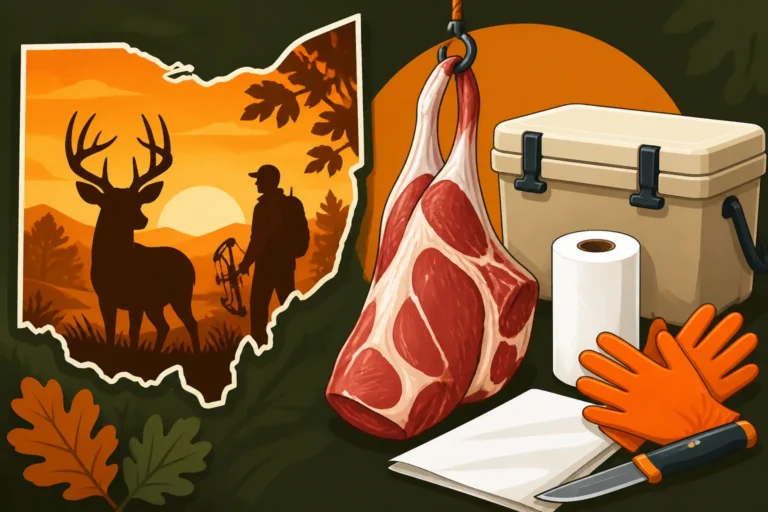
Instead of removing the guts, you focus on removing the four quarters, the backstraps, the tenderloins, and sometimes the neck meat and rib meat. You start by skinning one side of the animal, then carefully separating the large muscle groups that make up the quarters. The backstraps are removed from the outside of the spine, and if you flip the animal, you can access the tenderloins from the inside without opening the gut cavity. This method drastically reduces the weight you need to pack out, as all the non-meat portions – the guts, hide, and bones – are left in the field. This is particularly crucial during warmer periods, like the opening week of archery season in Ohio, where getting meat cooled down quickly is paramount. Game Bags for Warm October Days become your best friend, allowing air circulation around the meat as you pack it out. The clean, un-gutted carcass is left for scavengers, and you're left with a manageable load of pure protein.
Essential Gear and Technique for Going Gutless
The core of the gutless method relies almost entirely on having a few key pieces of gear and developing solid knife skills. First and foremost, you need exceptionally sharp knives. Many hunters opt for replaceable blade knives, like those from companies like Havalon or Outdoor Edge, as they ensure a razor-sharp edge throughout the entire process. A good fixed-blade knife is also invaluable for general tasks and tougher cuts. You'll want several blades if using a replaceable system, as they dull quickly when skinning or making cuts near bone. Field Dressing Knives Worth Carrying are not just a luxury, they're a necessity.
Beyond knives, game bags are absolutely essential. Not just any bags, but breathable, durable game bags that protect your meat from flies, dirt, and hair while allowing it to cool. A roll of rope can be handy for hanging quarters in a tree or securing them for transport. Gloves are a must for hygiene, and a small bottle of hand sanitizer can go a long way. Some hunters also bring a lightweight tarp to lay the meat on, keeping it off the ground.
The technique itself is something that takes practice. Watching videos and even practicing on a downed deer near a vehicle before venturing deep into the woods can be incredibly beneficial. Mapping tools, such as the GoHunt app, can be invaluable for marking your kill site and planning the most efficient, safest route to pack out your precious cargo, helping you visualize the terrain and potential obstacles long before you ever pull the trigger or release an arrow.
Bone Saw Versus Gutless: Choosing Your Method in Ohio
Deciding between a bone saw and the gutless method isn't about one being inherently "better" than the other, but rather which method is best suited for your particular hunting situation in Ohio. Each has distinct advantages and disadvantages that become more pronounced depending on a variety of factors.
Factors Influencing Your Decision
Several elements should weigh into your choice when you're preparing for a hunt and considering your field processing strategy:
- Terrain and Distance to Vehicle: This is often the biggest deciding factor. If you're hunting the steep, rugged hills of Appalachian Ohio and successfully drop a deer a mile or more from the nearest road, then Dragging a Deer Off a Steep Ridge is a monumental task. In such a scenario, the gutless method becomes incredibly attractive, as it allows you to break the deer down into manageable, lighter loads. Conversely, if your deer drops 100 yards from your truck on flat farmland, a traditional gut job with a bone saw might be quicker and easier, allowing you to load the whole carcass.
- Temperature and Weather Conditions: Warm weather is the enemy of fresh venison. In early archery season or during an unseasonably warm spell in November, getting that meat cooled as fast as possible is critical. The gutless method excels here because it allows for immediate removal of large muscle groups from the carcass, which can then be placed into game bags and quickly spread out to cool or rushed to ice. A traditionally gutted deer still has a large mass that takes longer to cool internally.
- Personal Preference and Experience: Some hunters are simply more comfortable with one method over the other, based on years of practice. There's no shame in sticking with what you know works, especially under pressure. However, it's always good to learn new skills. You might find that practicing the gutless method at home or on a deer close to the truck gives you the confidence to use it when it really counts.
- CWD Regulations: Ohio has specific rules regarding carcass movement, especially within or when leaving a Chronic Wasting Disease (CWD) Surveillance Area (DSA). Moving a Deer Carcass Out of the DSA means you can only transport certain parts, specifically boned-out meat, capes, and clean skull plates. In these areas, the gutless method is not just convenient, it often becomes a practical necessity to comply with regulations. It removes the potentially infectious spinal column and brain material that you might otherwise transport if taking a whole carcass. Using resources like the GoHunt app can help you identify if your hunting area falls within such a zone, allowing you to plan your field processing method accordingly.
A Comparison of Efficiency and Practicality
Let's break down the practical differences in a quick comparison table:
| Feature | Bone Saw / Traditional Gutting | Gutless Method |
|---|---|---|
| Weight for Pack Out | Heavy, entire carcass moved (or quartered after gutting) | Significantly lighter (meat only, no hide/guts/major bones) |
| Speed | Can be faster if close to vehicle and proficient | Potentially slower initial breakdown, but faster overall cooling and pack out |
| Cleanliness | Very clean internal cavity, potential bone fragments if not careful | Minimal internal contamination, focus on clean meat removal from outside |
| Mess Factor | Significant blood and organ mess on ground | Less blood and organ mess, guts remain intact, less visible mess |
| Cooling Rate | Good once cavity is open, but large mass cools slowly | Excellent, meat removed in smaller pieces cools rapidly |
| Required Tools | Sharp knives, bone saw, gloves | Razor-sharp knives (often replaceable blade), game bags, gloves, rope |
| Ideal Scenarios | Close to vehicle, cold weather, desire for whole carcass transport | Remote locations, warm weather, rugged terrain, CWD areas, light pack out needed |
For many Ohio hunters, especially those exploring public lands like Woodbury Wildlife Area or the various units of Wayne National Forest, the gutless method offers undeniable advantages in weight reduction and efficient cooling. This means you can get your deer meat back to the truck and on ice faster, mitigating spoilage risks, particularly during those warm early season days. Conversely, if you're hunting a small private tract in Ohio where vehicle access is easy, or you have a well-established camp with a hoist, the bone saw method might still be your preferred choice for its traditional appeal and the ability to process the animal whole at your leisure. The GoHunt app can even assist here by allowing you to mark the exact location of your kill, ensuring you can return efficiently with the right tools or for subsequent meat retrieval.
Practical Considerations for Either Method in the Ohio Backcountry
No matter which method you choose, the ultimate goal is to get clean, quality meat from the field to your freezer. There are universal best practices that apply to both bone saw and gutless methods when you're hunting the Ohio backcountry.
Keeping Your Meat Clean and Cool
The immediate priority after the animal is down and safe is to start the cooling process and protect the meat. With the gutless method, once the quarters and other prime cuts are removed, they should immediately go into clean, breathable game bags. Don't skimp on these; quality game bags prevent flies, dirt, and leaves from contaminating your meat while allowing air to circulate. Hang the bags in the shade, if possible, allowing convection to help cool the meat. If you're still miles from the truck, consider how you’ll manage the cooling during the pack out. Even a slight breeze can make a difference.
For traditional field dressing, once the organs are removed, ensure the cavity is as clean as possible. Wiping it out with clean cloths or even a bit of snow (if available) can help. Again, getting the animal moved to a shaded area is crucial. The larger mass of a traditionally gutted deer means it will take longer to cool, so air circulation is key. If possible, prop the cavity open. Once at the vehicle, or a designated drop-off point, get that meat on ice as quickly as you can. Whether in quarters or as a whole carcass, Coolers for an Early Archery Kill should be prepped and waiting. Proper meat care in the field can mean the difference between delicious venison and spoiled meat.
Packing Out and Ethical Considerations
The act of packing out a deer, particularly from remote areas, is often the most physically demanding part of the hunt. This is where the gutless method offers a distinct advantage, turning a single heavy load into multiple lighter, more manageable ones. You can use a dedicated frame pack to distribute the weight of the quarters on your back, making the long hike out of a steep ravine much more bearable. When you have to Sleds and Drags for Hill Country, even a gutted deer can be a monster task, especially if you’re navigating timber or thick brush.
Regardless of your field processing choice, always ensure you leave the site ethically. This means being mindful of what you leave behind. With the gutless method, the remaining carcass will be cleaned up by scavengers relatively quickly. With traditional gutting, ensure the entrails are disbursed or covered if possible, to minimize attracting predators or causing a visible nuisance. Using mapping applications, like the integrated system within the GoHunt platform, is invaluable for marking your kill site, planning the most efficient egress, and ensuring you don't leave any gear behind. These tools help you confidently navigate public land, even in challenging conditions, ensuring a successful and responsible hunt from shot to freezer. A well-planned and executed field processing strategy is a testament to respect for the animal and a commitment to utilizing its bounty.
Disclaimer
This article is for general informational purposes only and does not constitute professional advice. Laws, prices and regulations vary by location and change over time. Consult a qualified professional for guidance on your specific situation.