Layout Blinds for Ohio Cut Corn
There's nothing quite like the sight of a flock of Canada geese cupping their wings, preparing to commit to your spread over a vast Ohio cut cornfield. It's a moment that sends a shiver down every waterfowl hunter's spine. But let's be honest, hunting these intelligent birds in such an open environment comes with its own set of frustrations. You can't just throw on some camo and hide behind a solitary cornstalk. Geese and ducks, especially the seasoned ones, have an uncanny ability to spot anything out of place from hundreds of yards up. This guide is all about tackling that challenge head-on, showing you how to effectively use layout blinds to become virtually invisible in Ohio's harvested fields, bringing those wary birds right into your lap.
The Undeniable Need for Layout Blinds in Ohio's Cut Corn
You know the drill. You've scouted a field, watched the birds feed, and picked your spot. But then reality hits: there's barely a ditch or a fence row to offer natural concealment. That's where the magic of a good layout blind truly shines. Without one, you're essentially painting a target on yourself in an environment where the birds have all the high ground.
Why Open Fields Demand Superior Concealment
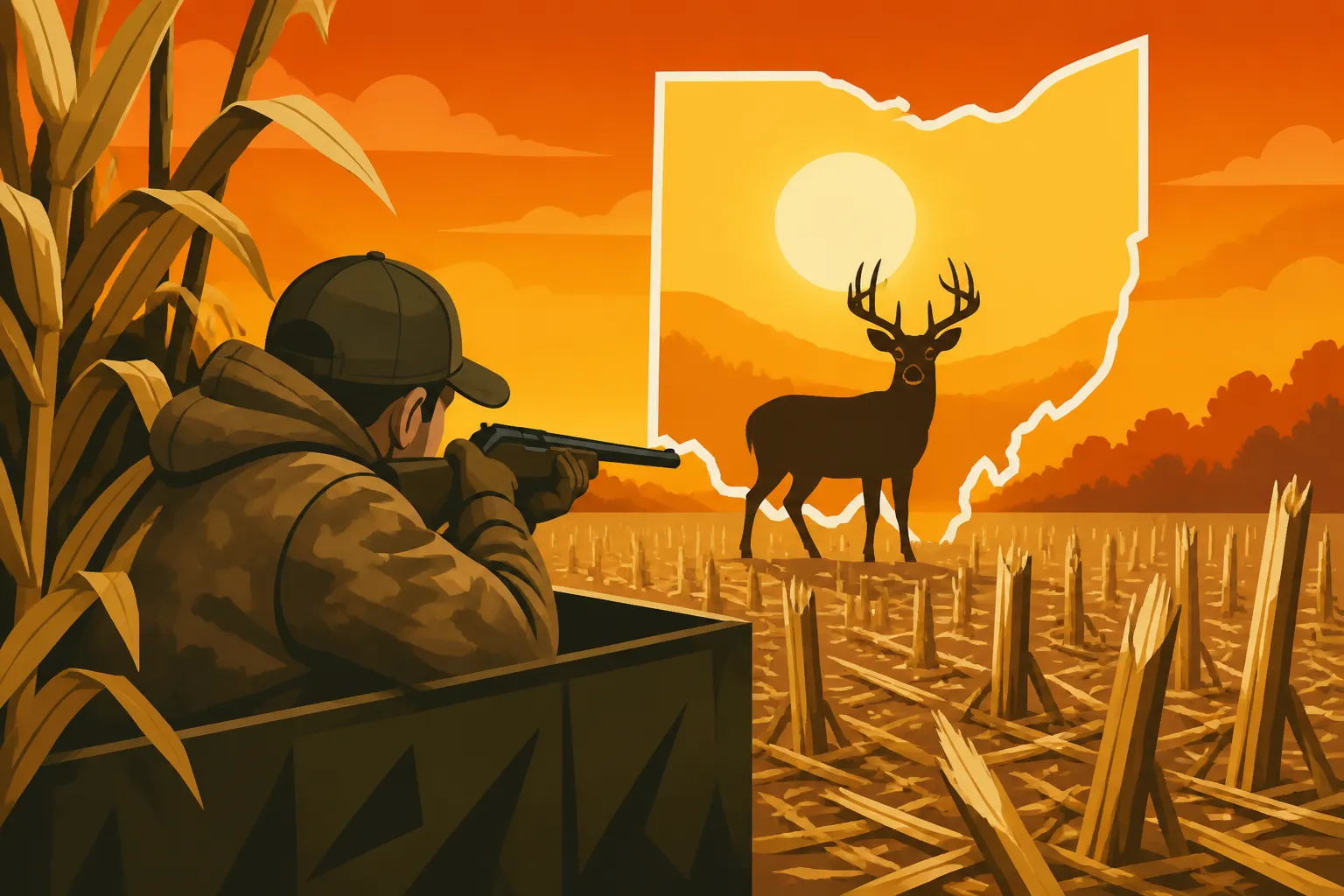
Ohio's agricultural landscape, particularly after the corn harvest, is a wide-open canvas. There are no thick woods, no towering cattails, no deep ravines to tuck yourself into. When you're out there, flattened against the earth, every single detail matters. Geese, with their incredible eyesight, can pick out a human form, even one attempting to lay flat, from distances that would astound you. They see that unnatural lump, that tell-tale shine, and they flair. It's not just about hiding; it's about disappearing. Your success hinges on becoming part of the field, an extension of the stubble and dirt, and that's precisely what a well-chosen and properly brushed-in layout blind helps you achieve. It's the difference between watching birds fly by at 100 yards and having them commit to your decoys at 20. Hunting Northwest Ohio Farmland Deer often presents similar challenges with limited cover, albeit for a different species.
The Waterfowl's Perspective: What Spooks Them
Put yourself in a goose's shoes, or rather, webbed feet. They've spent their lives avoiding predators, and that instinct is finely tuned. From high above, they see patterns. They see movement. They see anything that breaks the natural contour of the land. A hunter laying directly on the ground, even in full camo, still presents a distinct human silhouette against the sky. The glint of a face, the curve of a back, the slight movement of a head turning to watch them – all these are alarm signals. A layout blind, by design, breaks up that human form. It provides a low-profile, structured shell that you can cover with natural materials, effectively eliminating the human shape and blending you seamlessly into the field. This understanding is critical, especially when Canada Geese on Ohio Farmland are the target, as these birds can be incredibly wary.
Overcoming Ohio's Limited Natural Cover
Unlike hunting marshes or river bottoms where you might find ample reeds, willows, or brush to hide in, Ohio's cut cornfields often offer sparse cover. You might get a few inches of corn stubble, some downed stalks, and maybe a smattering of dried weeds. That's it. Trying to make a natural blind out of this meager offering is a losing battle against the sharp eyes of waterfowl. This is where the layout blind becomes your best friend. It acts as a portable, personal fort, allowing you to create the necessary concealment no matter how barren the field appears. It effectively brings the "cover" with you, giving you a fighting chance even in the most exposed situations. Many hunters struggle with this lack of cover, making specific gear like a layout blind absolutely essential for effective Layout Blind Hunting a Cut Cornfield.
Selecting the Perfect Layout Blind for Your Ohio Cornfield Adventures
Choosing the right layout blind isn't just about picking one off the shelf. It's about matching the blind to the unique demands of hunting Ohio's cut cornfields – from the specific field conditions to your personal comfort and hunting style. A little research into what's available and what serious waterfowl hunters recommend can go a long way. This is where resources from companies like GoHunt, which often review and compare various hunting gear, can be invaluable in helping you make an informed decision.
Key Features to Look For in a Quality Blind
When you're investing in a layout blind, you want something that's built to last and performs well under typical Ohio conditions. Here are some features to prioritize:
- Durability: Look for rugged materials like heavy-duty polyester or Cordura. Zippers should be robust and resist snagging, and the frame should be sturdy, often made of aluminum or fiberglass, to withstand repeated setups and pack-downs. You'll be dragging it, stepping on it, and brushing it in, so it needs to hold up.
- Comfort: You'll be spending hours in this thing, often in cold, damp conditions. A comfortable backrest and adequate padding are crucial. Some blinds offer adjustable backrests, which can be a game-changer for long waits. You don't want to be squirming and adjusting, as that creates movement that spooks birds.
- Ease of Entry/Exit: When birds commit, you need to sit up quickly and smoothly. Look for blinds with large, easily accessible doors that open silently and don't get tangled in stubble. Quick-release mechanisms are a huge plus.
- Flagging Ports: These are small openings, usually near your hands, that allow you to operate a "flapper" or "mojo wing" decoy without exposing yourself. This subtle motion can be incredibly effective in bringing birds closer.
- Storage Pockets: Having internal pockets for calls, shells, snacks, and water keeps essential gear organized and within reach, reducing unnecessary movement.
- Stubble Straps/Pockets: These are loops or pockets on the exterior of the blind designed to hold natural vegetation, making brushing in much easier and more effective.
Material and Camouflage: Blending with Ohio's Harvested Fields
The right camouflage pattern is paramount for a layout blind. You need a pattern that mimics the browns, tans, and faded greens of a post-harvest cornfield. Many manufacturers offer patterns specifically designed for agricultural settings, often featuring cornstalks, stubble, and dried grasses. Popular patterns from brands that focus on waterfowl hunting, like those you might find recommended by GoHunt, typically excel in these environments. Consider the dominant colors of the fields you hunt most often. Is it mostly dried corn, or are there patches of green winter wheat coming up? Some blinds even offer interchangeable covers, allowing you to switch patterns based on the specific field conditions. The material itself should be matte, to prevent any glare that could alert birds.
Comfort and Portability: Balancing the Essentials
Hunting in a layout blind means spending extended periods in a prone or semi-prone position, often in cold, damp conditions. Comfort is not a luxury; it's a necessity for staying focused and still. Look for a blind that offers a well-padded seat and backrest, and perhaps even some insulation from the ground. Many blinds use a slightly elevated seat to keep you off the coldest, wettest ground.
Portability is another crucial factor, especially if you're hunting public land or frequently moving between fields. A blind that folds down compactly and has comfortable shoulder straps for carrying can save you a lot of grief. Some blinds are designed to be backpackable, while others might be a bit bulkier but offer more internal space and comfort. It's a trade-off you need to consider based on how far you typically hike into your hunting spots. For example, if you're hunting small, private tracts in Ohio, portability might be less of a concern than on vast public areas where you're covering significant ground.
Here’s a quick comparison of common layout blind types:
| Blind Type | Key Features | Pros | Cons | Ideal for |
|---|---|---|---|---|
| Low-Profile | Minimal height, very flat | Excellent concealment, disappears easily | Less comfortable, can feel cramped | Highly wary birds, minimal stubble fields |
| Backpackable | Lightweight, folds small, shoulder straps | Easy to carry long distances | Often less durable, can lack comfort | Mobile hunters, long walks to spots |
| Hybrid/Mid-Size | Good balance of height and comfort, moderate | Good all-around, better comfort | Still visible in very short stubble | Most general Ohio cut corn scenarios |
| Large/Deluxe | Max comfort, spacious interior, extra features | Very comfortable, lots of storage | Bulkier, heavier, higher profile | Long sits, less need for portability, abundant stubble |
Mastering the Art of Setup and Concealment
Having the best layout blind won't do you much good if you don't know how to set it up properly and, more importantly, disappear within it. This is where art meets science, and a little effort goes a long way to fooling those sharp-eyed birds. The goal is complete invisibility, making your blind look like just another piece of field debris.
Strategic Placement: Where to Position Your Blind
Choosing the right spot for your layout blind is as important as the blind itself. Don't just plop it down anywhere. Think about the birds' flight path, the wind direction, and the natural contours of the field.
- Understand Flight Paths: Observe where the birds are naturally flying into the field. Are they coming from a specific direction, perhaps following a creek or a hedgerow? Place your blinds along these natural flight corridors.
- Wind is Your Friend: Waterfowl almost always land into the wind. Set your blind up so that the birds will be landing facing away from you, directly into the wind, presenting easy shots as they commit.
- Field Contours: Look for subtle depressions, slight rises, or areas with denser stubble. Even a few extra inches of cover can make a big difference in concealment. Avoid placing your blind on the absolute highest point in the field unless absolutely necessary and you can brush it in impeccably.
- Decoy Interaction: Position your blind within your decoy spread, typically at the "kill hole" where you want the birds to land. Make sure you have clear shooting lanes. You'll often be at the downwind edge of your spread.
- Sun Position: Whenever possible, try to position your blind so the sun is in the birds' eyes, not yours. This helps with concealment and reduces glare on your face when you sit up. Scouting Ohio Public Land Before Season is crucial for finding these ideal spots ahead of time.
Brushing It In: Becoming One with the Landscape
This is arguably the most critical step. A brand-new layout blind, no matter how good the camo pattern, will stick out like a sore thumb if it's not properly brushed in.
- Use Natural Materials: The best material for brushing in your blind is the material found in the very field you're hunting. Grab cornstalks, dried grass, weeds, and anything else that matches the immediate surroundings. Don't bring in green vegetation if the field is brown, and vice-versa.
- Layer, Don't Pile: The goal isn't to create a huge mound. Instead, layer the natural materials into the stubble straps and pockets of your blind, working from the bottom up. Break up the hard lines of the blind's frame. Make it look haphazard, like natural debris.
- Check from All Angles: Once you think you're done, walk 50-100 yards out in different directions, especially from the direction the birds will be approaching. Get down low and look at your blind. Does it blend in? Can you see any unnatural shadows or shapes? Pay special attention to the head and foot ends, as these can often be the most visible.
- The "Hole": Remember the opening where you pop up? Make sure the material around this opening is loose enough to allow for a quick, unobstructed sit-up, but still provides concealment when closed.
- Don't Forget the Edges: Pay extra attention to the edges of the blind where it meets the ground. Push dirt or stubble up against the blind's skirt to eliminate any gaps or shadows that could reveal its outline. For specific advice on different types of ground, you might consult resources on Brushing In a Blind on a Field Edge.
Minimizing Movement and Silhouettes
Even a perfectly brushed-in blind can be compromised by poor hunter etiquette. Waterfowl are masters at spotting movement.
- Stay Still: Once you're in the blind, minimize all movement. Resist the urge to peek out constantly. Use the mesh viewing ports (if your blind has them) or wait for a call from a hunting partner.
- Wear a Facemask and Gloves: Your exposed skin will glow against the drab field. A good facemask and gloves are non-negotiable for complete concealment.
- Keep Gear Covered: Any shiny objects – calls, guns, thermos – need to be covered or tucked away until needed. The glint of sunlight off a gun barrel is a dead giveaway.
- Sit Up Slowly: When it's time to shoot, wait until the birds are committed and within range. Then, in one smooth, deliberate motion, sit up and shoulder your gun. Rushing or jerking movements will send them flaring.
- Communication is Key: If hunting with partners, establish clear signals for when to call, when to be quiet, and when to sit up. This coordinated effort helps maintain concealment and maximizes your chances.
Effective Decoying and Calling Strategies from a Layout Blind
Your layout blind is the ultimate concealment tool, but it's just one piece of the puzzle. To truly bring in those wary Ohio geese and ducks, you need to combine it with a convincing decoy spread and effective calling. This integrated approach is what separates a successful hunt from just watching birds fly by.
Building a Realistic Decoy Spread Around Your Blind
The decoy spread is designed to attract attention and give approaching birds the confidence to commit. When hunting from layout blinds in cut corn, your spread needs to look natural and inviting.
- The "Kill Hole": This is the open area within your spread where you want the birds to land. Your layout blinds should be positioned on the downwind side of this kill hole, giving you clear shots as the birds come in to land against the wind.
- Mix Your Decoys: Use a combination of full-body, shell, and silhouette decoys. Full-bodies offer realism, shells add bulk, and silhouettes are great for conveying numbers. Consider adding some feeder and sentry poses to create a dynamic, natural scene.
- Species Specificity: If you're targeting Canada geese, a spread predominantly of goose decoys is appropriate. If you're after ducks, especially early season mallards or pintails, incorporate a good number of duck decoys. Often, a mixed spread works well, especially during Early Goose Season Tactics in Ohio when different species might be present.
- Asymmetrical is Best: Nature isn't perfectly organized. Avoid perfectly symmetrical lines or circles. Create a more natural, asymmetrical J or U-shaped spread, with the open part of the letter forming your kill hole.
- Flock Interaction: Place small clusters of decoys together, as if they're feeding or resting. Leave ample space between these clusters to simulate a natural flock and provide landing zones.
- Movement Decoys: Incorporate a few motion decoys, like a spinner wing or a feeder butt decoy, to add life to your spread. Movement is a huge attractant, especially on calm days. Just be mindful of legal restrictions on electronic decoys in your specific hunting zone. You can find excellent discussions and product comparisons on decoys through sites like GoHunt, helping you choose the best options for Ohio’s migratory patterns.
Calling with Confidence: Luring Birds Into Range
Calling from a layout blind requires a slightly different approach than calling from a standing blind or a pit. The goal is to draw birds closer without revealing your position.
- Variety of Calls: Carry a range of calls – short-reed goose calls for honks and clucks, and duck calls for quacks and greetings. Adjust your calling to what the birds are responding to.
- Subtlety is Key: Especially as birds get closer, scale back your calling. A single, soft cluck or a contented feed call can be more effective than loud, aggressive hailing. You want to sound like a contented flock, not a desperate one.
- Watch the Birds: Pay close attention to how the birds react to your calling. If they turn and head your way, keep calling. If they ignore you or flare, try a different call or go silent for a bit. Sometimes less is more.
- Volume Control: Learn to vary your calling volume. Use louder calls to get distant birds' attention, and softer, more enticing calls as they get within range of your spread. Think about how a flock communicates naturally – it's not always a cacophony. Grunt Calls in Mature Ohio Timber might work for deer, but for waterfowl, it's all about realistic flock chatter.
- Practice, Practice, Practice: The more you practice your calling, the more natural and effective you'll become. A realistic call, even a simple one, is far better than a loud, unrealistic one.
Safety First: Positioning and Field of Fire
Safety is paramount in any hunting situation, but especially when hunting from layout blinds with multiple hunters.
- Establish Zones of Fire: Before the hunt begins, clearly define each hunter's safe zone of fire. Typically, this means everyone shoots straight out in front of them, avoiding any cross-shooting. Pointing your gun down the line at a low-flying bird is extremely dangerous.
- Decoy Placement and Spacing: Make sure your decoys are placed far enough away from your blinds that you can safely shoot over them without hitting them. Also, ensure there's enough space between blinds for safe operation and comfortable shooting.
- Loading and Unloading: Load your shotgun only when you're in the blind and ready to hunt. Unload it before getting out of the blind for any reason.
- Communication on Incoming Birds: Use clear, concise communication about incoming birds ("Right side!", "Coming in low!"). This prevents confusion and ensures everyone is aware and ready.
- Eyes Up, But Covered: While it's crucial to watch the birds, make sure your facemask and hood are always in place when birds are working. Only expose your face and sit up when you are ready to shoot.
- Know Your Target and Beyond: Always be aware of what is behind your target. Never shoot at low-flying birds if there are homes, roads, or other hunters in the line of fire. Given that many Ohio cut cornfields are surrounded by agricultural structures or even residences, this awareness is critical. Remember to always consult Ohio Legal Shooting Hours for when you can begin your hunt.
By combining the unparalleled concealment of a well-placed and brushed-in layout blind with a realistic decoy spread and confident calling, you'll dramatically increase your chances of success when chasing waterfowl across Ohio's expansive cut cornfields. It takes effort, patience, and attention to detail, but the reward of geese finishing perfectly in your spread is absolutely worth it.
Disclaimer
This article is for general informational purposes only and does not constitute professional advice. Laws, prices and regulations vary by location and change over time. Consult a qualified professional for guidance on your specific situation.