Mallards and Wood Ducks in Ohio Marshes
The crisp air of a fall morning, the rhythmic thwack-thwack-thwack of unseen wings cutting through the pre-dawn gloom, and the excited chatter of ducks as they circle overhead – these are the moments waterfowlers live for. But hunting the shallow, often dense cover of Ohio's marshes presents unique challenges, especially when you're targeting those prized mallards and elusive wood ducks. This guide is here to help you unravel the mysteries of marsh hunting, offering insights into these magnificent birds and practical strategies to help you fill your strap when those prime hunting windows open.
The Allure of Ohio Marshes for Waterfowl Hunters
There's something incredibly wild and primal about hunting in a marsh. It's not like hunting a cornfield, where you might set up along a cut row and wait. Marshes are dynamic, often unpredictable ecosystems that demand a different kind of hunter – one who is patient, observant, and willing to get a little (or a lot) wet. For those of us who grew up in Ohio, these wetlands are etched into our hunting memories, offering diverse opportunities and a unique brand of challenge.
Why Marshes Are a Waterfowler's Paradise
Ohio's marshes, from the expansive coastal wetlands bordering Lake Erie to the countless inland pockets scattered across the state, are vital havens for migratory birds. They offer everything a duck needs: food in abundance, sanctuary from predators, and freshwater to rest and preen. Think about the rich tapestry of vegetation – cattails, smartweed, wild rice, duck potato, and submerged aquatic plants – all providing sustenance and cover. This diverse buffet is what pulls mallards and wood ducks in, making these areas prime hunting grounds. For an overview of the broader landscape, check out our guide on Ohio Waterfowl Hunting on Lake Erie and Inland.
When the first cold fronts of autumn sweep down from the north, pushing new flights of ducks ahead of them, these marshes become bustling waterfowl hubs. The water itself acts as a natural barrier against many land predators, giving ducks a sense of security. Hunters who take the time to learn the intricacies of these watery landscapes, understanding the currents, the depths, and the feeding areas, often find the most consistent success. It’s a place where stealth and detailed scouting really pay off, allowing you to intercept birds in their natural environment.
Navigating the Unique Challenges of Marsh Environments
Hunting a marsh is a far cry from a dry-land deer hunt. You're dealing with water, mud, often dense vegetation, and rapidly changing conditions. Access can be tricky, requiring specialized gear like waders or even a small marsh boat. It's not uncommon to push through chest-deep water, dragging a sled full of decoys, or wading through thick cattails that seem to stretch for miles. The footing can be treacherous, with hidden holes and soft mud threatening to pull your boots right off.
Moreover, the sheer density of cover means visibility can be limited, both for you and for the incoming birds. This makes decoy placement and calling all the more critical. You need to be mindful of wind direction, not just for concealment, but because it dictates how ducks will approach your spread. Weather can also turn on a dime, especially near larger bodies of water, bringing rain, snow, or sudden strong winds that can make for a miserable or even dangerous outing if you're not prepared. For tips on battling the elements, our piece on Waders for Ohio Marsh Hunting can be invaluable, especially when you're looking at spending hours knee-deep.
Understanding Ohio's Mallards: The Green-Headed Kings
The mallard is, without a doubt, the quintessential duck. Even non-hunters can identify that iridescent green head on the drakes. In Ohio, they are a staple for waterfowlers, offering consistent opportunities throughout the season, from the earliest chilly mornings to the late-season freezes. They are adaptable, intelligent, and, when fooled, incredibly rewarding to hunt.
Mallard Behavior and Habitat Preferences in Ohio
Mallards are dabbling ducks, meaning they "tip up" to feed on submerged vegetation and invertebrates rather than diving completely. They absolutely thrive in Ohio's marshes, finding ample food in the shallow waters. While they love the marshes, they are also highly adaptable and will readily use flooded timber, agricultural fields (especially corn and soybeans), and open water. Their diet is incredibly varied, consuming seeds, grains, aquatic plants, and insects. This flexibility means they can adjust their patterns based on food availability and hunting pressure.
Early in the season, mallards are often found in smaller groups, but as migration progresses and colder weather sets in, they begin to congregate in larger flocks. They're often creatures of habit, establishing clear flight paths between roosting areas, feeding grounds, and loafing spots. Scouting these patterns is crucial for consistent success. You might see them pouring out of a large marsh at dawn, heading to a nearby cornfield, only to return to the safety of the marsh to roost in the evening. Understanding this routine is key, and tools like the GoHunt app can be a real game-changer for identifying potential flyways and public land boundaries around these crucial areas.
Decoy Spreads and Calling Tactics for Mallards
Hunting mallards often revolves around effective decoying and calling. A good spread creates the illusion of a safe, inviting feeding or resting area, drawing passing birds within gun range. For marsh hunting, a mix of feeding and resting mallard decoys works well. Motion decoys, like spinning wing models or jerk cords, can add a realistic flicker to your spread, mimicking actively feeding birds and catching the attention of ducks from a distance. Consider how your decoys look from above, especially if you're in open water or a clearing in the cattails.
Calling is another critical component. A skilled caller can imitate the various vocalizations of mallards – the classic quack-quack-quack of a hen, contented feeding chuckles, and excited comeback calls. Knowing when to call and how loud to call is as important as the call itself. Early in the morning, a loud hail call might grab distant birds, but as they get closer, softer, more realistic calling is usually more effective. Don't be afraid to experiment; sometimes less is more. Our article on Decoy Spreads for Lake Erie Divers might offer some transferable tips, even if the species are different, as the principles of enticing birds are similar.
Wood Ducks: The Forest Dwellers of Ohio Wetlands
While mallards are bold and boisterous, wood ducks are often described as secretive and elegant. With their striking plumage and preference for wooded wetlands, they offer a different, but equally thrilling, challenge to the Ohio waterfowler. Often found in smaller pockets and in more secluded areas, harvesting a wood duck feels like a special accomplishment.
Wood Duck Characteristics and Their Niche in the Marsh
Wood ducks are truly stunning birds, the drakes boasting a kaleidoscope of colors that make them instantly recognizable. Unlike mallards, wood ducks prefer wooded swamps, beaver ponds, and slow-moving rivers or creeks adjacent to forests. They're unique among North American ducks for nesting in tree cavities, often quite high off the ground, a behavior that earns them their "wood duck" moniker. In Ohio, you'll find them in marshes that have stands of mature trees nearby, providing both nesting sites and protective cover.
Their diet consists mainly of acorns, seeds, and aquatic invertebrates. This preference for hard mast means that marshes with oak or other mast-producing trees nearby are gold mines for wood duck hunters. They often feed in very shallow water, dabbling among fallen leaves and woody debris. Wood ducks are notoriously fast and agile fliers, darting through timber with incredible precision, which makes them a challenging target. They tend to be most active at dawn and dusk, making early morning or late afternoon hunts particularly effective.
Stealth and Setup Strategies for Woodies
Because wood ducks are often found in tighter, more confined spaces, stealth is paramount. You can't just set up a massive spread and expect them to come barreling in. Instead, focus on small, natural-looking spreads of 6-12 wood duck decoys, often placed close to cover or along a natural flight path. Positioning yourself against a large tree or within dense brush is key to breaking up your silhouette. The goal is to blend seamlessly into their natural habitat.
Calling for wood ducks is different than for mallards. While they do have a distinctive peet-wheet call, many hunters find success by simply being in the right place at the right time. A quiet approach, camouflaged well, and positioned where you can intercept them flying into or out of a small pocket of water, is often more effective than aggressive calling. They are known for their spectacular, almost vertical takeoffs, so be ready for quick shots when they flush. For a deeper understanding of bird behavior, reading a post like Reading a Marsh for a Morning Flight will highlight how subtle cues can lead to success with these wary birds.
Key Differences and Overlap: Mallards vs. Wood Ducks
While both mallards and wood ducks share the Ohio marshes, they are distinct species with different preferences and behaviors. Understanding these nuances is key to becoming a more versatile and successful waterfowler. Sometimes, you'll find them using the same marsh, but often in different sections, or at different times of the day, depending on the available resources.
Distinguishing Characteristics in the Field
Identifying ducks quickly and accurately is a fundamental skill for any waterfowler, especially with bag limits often varying by species.
Mallards:
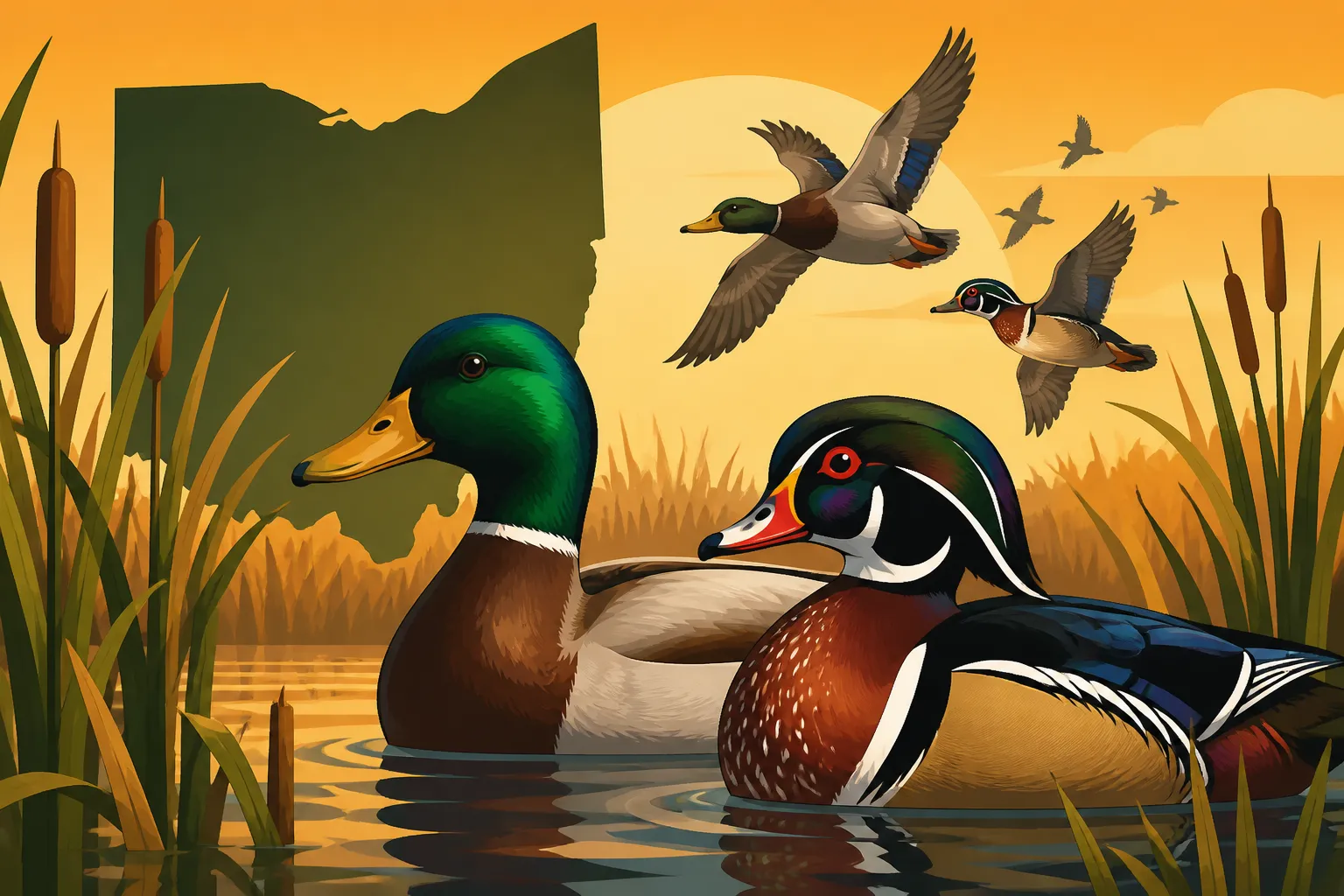
- Drakes: Bright green head, white neck ring, chestnut breast, gray body, yellow bill.
- Hens: Mottled brown body, orange bill with black markings, often a subtle eye line.
- Both: Blue speculum (a patch of colored feathers on the secondary flight feathers) bordered by white.
- Flight: Strong, direct flight, often in V-formations or loose groups.
- Size: Larger than wood ducks.
Wood Ducks:
- Drakes: Highly ornate, iridescent green/purple crested head, white eye line, red eyes, ornate body plumage, dark bill.
- Hens: Gray-brown body with a distinctive white tear-drop shaped eye patch, dark bill.
- Both: Iridescent speculum, often with a white trailing edge, but less prominent than a mallard's.
- Flight: Fast, agile, often twisting and turning through timber.
- Size: Smaller and more compact than mallards.
Knowing these features allows you to make quick decisions, ensuring you're targeting legal birds and staying within the Ohio Duck and Goose Bag Limits.
Hunting Both Species Effectively in the Same Waters
It's entirely possible, and often desirable, to target both mallards and wood ducks on the same hunt, especially in marshes that offer a mix of open water, dense cover, and adjacent wooded areas. The trick is to understand their preferred micro-habitats within the larger marsh and adjust your setup accordingly.
Here's a strategic approach:
- Early Morning for Woodies: Focus on the wooded edges or small, secluded pockets of water at first light. Woodies are often the first to move. Set up a small wood duck spread here and be ready for fast action.
- Transition to Mallard Water: As the sun rises and wood duck activity wanes, shift your focus (or have a secondary setup) to more open water or larger feeding flats within the marsh that mallards prefer. You might use a larger mallard spread and more aggressive calling here.
- Combination Spreads: In areas where both species are known to frequent, a mixed spread can be effective. Place your wood duck decoys closer to the timberline or denser cover, and your mallard decoys in more open pockets.
- Calling Diversity: Carry both a mallard call and a wood duck whistle. Use the appropriate call for the birds you're seeing or expecting.
This adaptive strategy allows you to maximize your opportunities throughout the morning. Remember, understanding Duck Migration Timing Through Ohio can help predict when these mixed opportunities are most likely.
Essential Gear and Scouting for Marsh Hunting Success
Stepping into an Ohio marsh unprepared is a recipe for a cold, wet, and unsuccessful day. The right gear not only keeps you comfortable but also significantly improves your chances of success. Beyond equipment, intelligent scouting is the ultimate secret weapon for consistent waterfowl hunting.
Must-Have Equipment for Ohio Marsh Hunters
Your gear list for marsh hunting will look different than for other types of hunting. Here’s a breakdown of what you'll need:
- Waders: Chest waders are non-negotiable. Look for durable, insulated options for colder weather. Neoprene or breathable waders depending on the temperature.
- Waterproof Outerwear: A good quality, waterproof and windproof jacket and pants are essential. You'll be exposed to the elements.
- Decoys: A mix of mallard and wood duck decoys, perhaps a dozen of each, with a few motion decoys. Consider weight if you're packing them in.
- Decoy Bag/Sled: To haul your decoys, especially if you're walking a distance through mud and water. A dedicated sled can save your back.
- Marsh Seat/Bucket: Something waterproof to sit on. A five-gallon bucket with a padded lid works great and can double as storage.
- Shotgun: A reliable 12-gauge shotgun is standard. Ensure it's clean and well-maintained to handle the wet environment.
- Ammunition: Non-toxic shot is required for waterfowl. Steel, bismuth, or tungsten are common choices. Our guide on Waterfowl Loads for Lake Erie Divers has more information on this.
- Dog (Optional but Recommended): A well-trained retriever is a huge asset in marsh environments, reducing lost birds and making retrieves much easier.
- Headlamp/Flashlight: Essential for navigating in the dark before dawn and after dusk.
- First-Aid Kit: Accidents happen, especially in tricky terrain.
- Navigation: A GPS unit or a reliable mapping app like the GoHunt app on your phone is critical for finding your spot in the dark and navigating complex marsh systems. You can use it to pinpoint specific features like pockets of open water or dense cover where ducks might be.
- Calls: Mallard calls (hail, feed, comeback) and a wood duck whistle.
- Thermos: Hot coffee or cocoa can make a huge difference on a cold morning.
- Knife/Multi-tool: Always handy.
- Federal Duck Stamp & HIP Certification: Don't forget these legal requirements! More details can be found in Ohio Federal Duck Stamp Requirement and Ohio HIP Certification for Bird Hunters.
For organization and warmth, you might also want to consult our article on Blind Bags and Cold-Weather Gear, as keeping your essential items dry and accessible is paramount in a marsh.
Pre-Season Scouting and In-Season Adaptations
Scouting is where good waterfowl hunters become great ones. It's not just about finding water; it's about finding where the ducks want to be.
Pre-Season:
- Aerial Maps: Utilize online mapping tools to identify potential marsh areas, open water pockets, dense cover, and access points. The GoHunt app's satellite imagery can show water levels, vegetation density, and potential flight corridors even before you step foot in the marsh.
- Boots on the Ground (or Waders in the Water): Once you've identified potential spots, visit them well before the season. Look for duck sign: droppings, feathers, feeding areas, and disturbed vegetation. Note water depths and bottom conditions.
- Observe Flyways: Watch at dawn and dusk to see where ducks are flying into and out of the marsh. This helps you identify natural funnels or preferred entry/exit points.
- Talk to Locals: Local bait shops or outdoor stores can be a goldmine of information about recent duck activity.
In-Season:
- Adapt to Pressure: Ducks quickly learn to avoid pressured areas. If your spot is consistently empty, it might be time to move.
- Monitor Weather: Cold fronts push new birds south. Rain and wind can change duck behavior and flight patterns dramatically. Be prepared to adjust your setup based on the day's conditions.
- Scout Between Hunts: A quick drive by a marsh or an evening observation session can reveal new patterns or shifts in bird use. Ducks are dynamic; your hunting strategy should be too.
- Check Water Levels: High or low water can completely change where ducks feed and loaf within a marsh. A pocket that was productive last week might be bone dry (or too deep) this week.
Areas like Magee Marsh Area Waterfowl Access and Ottawa National Wildlife Refuge Hunting Rules offer fantastic opportunities, but they also highlight the importance of understanding specific area regulations and adapting to varying levels of hunting pressure.
Conservation Efforts and the Future of Ohio's Waterfowl
As waterfowlers, we have a vested interest in the health of duck populations and the habitats they rely on. Ohio's marshes are not just hunting grounds; they are critical ecosystems that support a vast array of wildlife. Our passion for the hunt fuels a strong commitment to conservation, ensuring that future generations can experience the same thrilling mornings we do.
The Importance of Habitat Preservation
The biggest threat to mallards, wood ducks, and all waterfowl is habitat loss. Marshes and wetlands are often seen as unproductive land and are drained or developed. However, these areas are ecological powerhouses, filtering water, preventing floods, and providing crucial breeding, nesting, and migration habitat. Organizations like Ducks Unlimited, Ohio Department of Natural Resources (ODNR), and various local conservation groups work tirelessly to acquire, restore, and manage wetlands across the state.
These efforts directly benefit the birds we hunt. When a marsh is restored, it provides more food and cover, which leads to healthier, more robust duck populations. As hunters, we contribute significantly to these efforts through the purchase of hunting licenses, stamps like the Federal Duck Stamp, and excise taxes on firearms and ammunition, all of which fund conservation projects. It's a prime example of hunters being the original conservationists. Without healthy marshes, there would be no mallards or wood ducks for us to pursue.
Hunter's Role in Sustainable Waterfowl Populations
Every time we step into the marsh with our shotgun, we become part of a larger conservation system. Adhering to regulations, respecting bag limits, and accurately identifying birds are not just legal obligations; they are ethical responsibilities that ensure sustainable hunting opportunities. The data collected from hunter harvest surveys helps biologists manage populations effectively, setting seasons and limits that ensure ducks can reproduce and thrive.
Beyond regulations, responsible hunting practices contribute to the health of the resource. This includes picking up spent shells, avoiding undue disturbance to non-target wildlife, and ensuring proper game retrieval (where a good dog truly shines). By being stewards of the land and water, we safeguard the future of Ohio's New Waterfowl Zone Map and the incredible diversity of ducks it supports. It's a legacy we pass on, one marsh at a time, so that the quack of a mallard and the peet-wheet of a wood duck will echo across Ohio for generations to come.
| Species | Average Size (Weight) | Primary Habitat | Diet Preferences | Flight Characteristics | Common Calls (Drakes/Hens) |
|---|---|---|---|---|---|
| Mallard | 2.5-3 lbs | Marshes, open water, ag fields, flooded timber | Seeds, grains, aquatic plants, invertebrates | Strong, direct, often in V-formation | Quack (hen), Raaab (drake) |
| Wood Duck | 1.5 lbs | Wooded swamps, beaver ponds, forested creeks | Acorns, seeds, aquatic invertebrates | Fast, agile, darting through timber | Peet-wheet (hen), Jeee (drake) |
Disclaimer
This article is for general informational purposes only and does not constitute professional advice. Laws, prices and regulations vary by location and change over time. Consult a qualified professional for guidance on your specific situation.