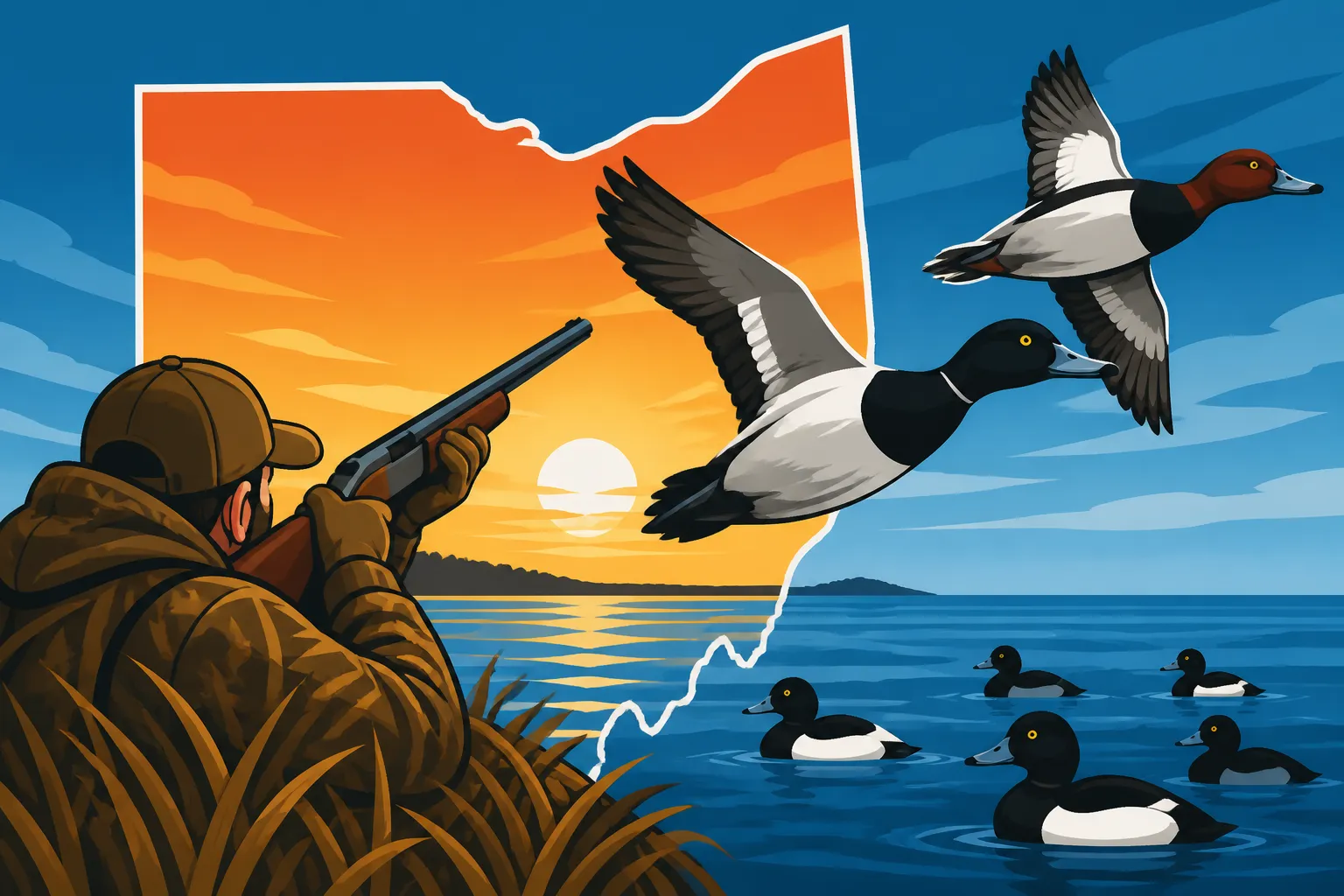
Diver Ducks on Western Lake Erie
For many Ohio waterfowl hunters, the thought of tackling Western Lake Erie for diver ducks can feel like an entirely different world from jump-shooting a creek or setting up in a flooded timber hole. The sheer scale of the lake, coupled with its often unforgiving weather and the unique behaviors of birds like bluebills, redheads, and canvasbacks, presents a set of challenges that can make even seasoned hunters feel a bit overwhelmed. This guide is here to demystify diver duck hunting on Ohio's largest body of water, offering practical advice and insights to help you understand these magnificent birds and how to successfully pursue them.
Understanding Diver Duck Behavior on Lake Erie
Diver ducks are a fascinating group of waterfowl, distinctly different from their puddle duck cousins. On Western Lake Erie, you'll encounter a variety of these birds, each with its own preferences and habits that dictate how and where you'll find them. They earn their name by diving deep to feed, often preferring larger, open bodies of water where they can find submerged vegetation, mollusks, and small fish. Lake Erie, with its vast expanse and abundant food sources, is a prime destination for many diver species during migration.
Key Diver Species and Their Preferences
When you're out on Lake Erie, you'll primarily be targeting a few common diver species. Understanding what makes each tick is crucial for successful hunting.
- Greater and Lesser Scaup (Bluebills): These are perhaps the most common divers on Lake Erie. Greater scaup tend to prefer deeper, more open water, while lesser scaup might be found in slightly shallower areas or larger bays, though there's often overlap. Both are known for forming massive rafts, sometimes numbering in the thousands. They feed heavily on mollusks and aquatic insects, often found over gravelly or sandy bottoms. Their fast, erratic flight patterns can be challenging but incredibly rewarding. You'll often see them flying in long lines or irregular V-formations, low over the water.
- Redheads: Redheads are beautiful birds, and a favorite among many diver hunters. They are strong swimmers and divers, feeding mainly on submerged aquatic vegetation. On Lake Erie, you'll often find them in shallower bays and protected areas with abundant plant growth, though they won't shy away from open water. They fly swiftly and often in smaller, tighter flocks than scaup. Their preference for certain types of vegetation means that finding their preferred feeding grounds is key.
- Canvasbacks: Often called the "King of Ducks" by divers, the canvasback is a prize. They are the largest of the diving ducks and possess a powerful, direct flight. Canvasbacks primarily eat tubers and rhizomes of aquatic plants, particularly wild celery. Their presence on Lake Erie is often tied to the availability of these specific food sources. They typically fly in V-formations or straight lines, moving with purpose. Finding a feeding ground with wild celery can be like hitting the jackpot, and can definitely contribute to filling an Ohio Duck Daily Bag Limit.
- Ring-Necked Ducks: While technically a "pochard" and often found in shallower, more vegetated areas, ring-necked ducks are still divers and common on Lake Erie. They are smaller than scaup and often prefer marshes and calmer waters. They feed on seeds, aquatic insects, and vegetation. While you might encounter them in protected Lake Erie bays, they're less of a true "big water" diver than the others.
Understanding these preferences allows you to focus your scouting and efforts. If you're looking for canvasbacks, you'll be keying in on areas known for wild celery. If bluebills are your target, deeper, more open water with mollusk beds is where you'll want to concentrate.
Migration Patterns and Timing
The timing of diver duck migrations through Western Lake Erie is heavily influenced by weather and food availability further north. Generally, you'll see the earliest flights of divers as early as late October, with the numbers building significantly through November and peaking in early to mid-December. Colder temperatures to the north push birds south, and strong northwesterly winds can often bring in fresh waves of ducks.
These birds are constantly on the move, following food and open water. A major cold front can freeze up smaller, shallower bodies of water, forcing divers onto the vastness of Lake Erie. Conversely, a prolonged warm spell might delay their full arrival. Keeping an eye on weather patterns across the Great Lakes region and especially the northern parts of Ohio can give you a major advantage. Resources like the ODNR's weekly waterfowl reports can be invaluable for understanding Duck Migration Timing Through Ohio. It's a game of patience and timing, often requiring you to be ready to go when conditions are just right.
Essential Gear for Western Lake Erie Diver Hunting
Hunting diver ducks on Western Lake Erie isn't your typical marsh hunt. The environment demands specialized gear, not just for success, but for safety. The open water, unpredictable weather, and the sheer number of decoys needed mean you'll be making some significant investments in your equipment.
Boat Requirements and Safety Gear
First and foremost, you need a boat capable of handling big water. This isn't the place for a small johnboat. You'll need a stable, sea-worthy vessel, typically 16 feet or longer, with adequate freeboard and a reliable motor. Many serious diver hunters opt for larger, deeper-V aluminum or fiberglass boats designed for rough water. A kicker motor is not just a luxury; it's a critical safety item on Lake Erie. If your main motor fails miles from shore, that kicker could save your life.
Safety gear goes beyond just life jackets, though everyone on board absolutely needs to wear one, even if you're an experienced boater. Consider a marine-band radio or satellite communication device, a full first-aid kit, flares, a horn or whistle, an anchor with plenty of line, and spare parts/tools for your engine. The weather on Lake Erie can change rapidly, turning calm waters into treacherous waves in a matter of minutes. Always check the marine forecast before heading out, and be prepared to cut your hunt short if conditions deteriorate. Knowing Ohio Public Land Hunting Hours is important, but marine safety is paramount.
Decoy Spreads and Types
Diver ducks are highly social birds, and they respond incredibly well to large, realistic decoy spreads. Forget the dozen decoys you use for puddle ducks; on Lake Erie, you're talking about spreads of 50, 100, or even several hundred decoys. The goal is to create a massive, visible "raft" of ducks that looks inviting to passing birds.
- Decoy Selection: Focus on durable, large-sized diver decoys. Canvasbacks, redheads, and scaup are your primary birds. Many hunters use a mix, with a higher proportion of scaup due to their sheer numbers. Magnums or super magnums are often preferred for their visibility on big water.
- Rigging: Diver decoys are typically rigged on long lines or gang rigs. This allows you to deploy and retrieve many decoys quickly and efficiently. Each decoy needs sufficient weight to keep it stable in waves. Some hunters use individual weights for each decoy, while others prefer heavy main line weights on a gang rig.
- Spreader Setup: The classic diver spread is an "J" or "U" shape, with a large, open landing zone for birds to cup into. The long arm of the "J" extends downwind, drawing birds in, while the blind is positioned at the bend, allowing for shots over the open water. Often, a few "confidence" decoys, like coots or even a goose, are placed near the blind or at the edge of the spread. Experiment with different decoy patterns, but the key is visibility and creating an inviting landing zone. Keep in mind that Decoy Placement for Pressured Birds is often about making it look natural and unthreatening.
Clothing and Optics
Staying warm and dry is absolutely critical on Lake Erie. The wind off the water, even on a seemingly mild day, can be brutal. Layering is key, with a good waterproof and windproof outer shell. Wool or high-quality synthetics are essential for base and mid-layers, as they retain warmth even when damp. Insulated, waterproof waders or bibs are a must, paired with equally insulated and waterproof boots. Neoprene waders are a popular choice for warmth.
Optics are invaluable for spotting distant rafts of birds or checking for incoming flocks. A good pair of waterproof binoculars, preferably 8x or 10x magnification, will be your best friend. A rangefinder can also be helpful for judging distances in the open water, especially when setting your decoy spread or anticipating shots. These tools help you to better understand bird movement and identify species at a distance.
Tactics and Challenges for Diver Hunting Success
Hunting divers on Lake Erie is about more than just having the right gear; it's about understanding the specific tactics that work in this unique environment and being prepared for its inherent challenges.
Scouting and Location
Unlike land-based hunting, scouting on Lake Erie often involves boating. You'll spend time cruising known areas, looking for rafts of birds, identifying feeding areas, and noting current lines or points that might funnel birds. Pay close attention to current conditions, wind direction, and wave action, as these will directly impact where birds prefer to rest and feed. Using mapping tools, such as the layers available on platforms like GoHunt, can help you identify depth changes, structure, and potential weed beds even before you launch your boat. These digital tools can literally save you hours on the water.
Prime locations often include points or islands that break the wind, creating calmer water for birds to rest, or expansive shallow flats where submerged vegetation thrives. Look for changes in water depth, particularly drop-offs where currents might bring food to the surface. Sometimes, birds will raft up in specific areas during the day and move to different feeding grounds at dawn and dusk. Understanding these patterns is part of the puzzle. Scouting Ohio Public Land Before Season is just as important for waterfowl as it is for deer.
Setting Up Your Blind and Spread
Choosing your setup location requires a keen understanding of wind, waves, and bird flight paths. Most diver hunting on Lake Erie is done from a boat blind, often anchored in a strategic position near a point or shoal. The key is to position your boat and decoys so that incoming birds are naturally drawn to your landing zone, presenting you with ethical shots.
- Wind and Waves: Always set up with the wind at your back, if possible. This allows ducks to finish their approach directly into the wind, slowing them down and giving you a better shot opportunity. However, safety must always come first. If the wind creates dangerous waves in your desired spot, you may need to adjust your location or postpone your hunt.
- Decoy Positioning: The traditional "J" or "U" spread aims to create an open area directly in front of your blind. The long arm of the spread should extend into the wind, leading birds towards the pocket. You want to make it look like a safe, inviting place for tired birds to join their "friends." Don't be afraid to adjust your spread throughout the day if birds aren't working it correctly. Sometimes just a small change can make a big difference. Think about creating a "hole" that birds want to drop into.
- Concealment: Even on open water, concealment is important. Your boat blind needs to blend in with the surroundings as much as possible. Camouflage netting, natural vegetation, or even painted panels can help break up the outline of your boat. Minimizing movement in the blind is also crucial, especially as birds make their final approach. Remember, these birds have seen a lot of hunting pressure.
Dealing with Weather and Water Conditions
Lake Erie's weather is notoriously fickle. You can start the day with calm, glassy water and end it fighting whitecaps and driving rain or snow. Always be prepared for the worst-case scenario. This means having extra warm, dry clothes, a hot thermos, and emergency supplies. Knowing when to call it a day is a sign of a wise and experienced hunter. No duck is worth risking your life over. Strong winds and waves can make shooting difficult, but they can also bring in birds. Learning to shoot from a rocking boat takes practice, but the rewards are often worth it.
Ice is another major factor. As winter progresses, ice can push divers further south or into the limited open water areas. While it can concentrate birds, navigating through ice floes is incredibly dangerous and should only be attempted by experienced individuals with appropriate ice-breaking capabilities. Always err on the side of caution. Conditions that might be fine for Hunting Lake Erie Marsh Zone Waterfowl can be deadly on the open lake.
Shooting and Retrieval
Diver ducks are fast, tough birds. They fly with incredible speed and have thick plumage. This means you need to be on your game with your shotgun and shooting skills. Many hunters prefer a 12-gauge shotgun with steel shot, typically in sizes BB, 1, or 2, loaded with plenty of knock-down power. Good choke selection is also important; modified or improved modified chokes are popular choices. Patterning your shotgun with your chosen loads is critical to ensure you know your effective range.
Retrieving downed birds on open water can be a challenge. A good retriever dog is an invaluable asset, but they need to be well-trained and capable of handling cold water and waves. Without a dog, a long-handled boat hook can be useful, but you must be able to maneuver your boat quickly and safely to retrieve birds before they drift away or are lost to the waves. Always retrieve downed birds immediately; don't wait for more ducks to come in if you risk losing a bird. Ethical hunting demands diligent retrieval.
Here’s a quick overview of some common diver species you might encounter:
| Species Name | Primary Food Source | Preferred Habitat on Lake Erie | Flight Characteristics | Identifying Features (Males) |
|---|---|---|---|---|
| Canvasback | Submerged aquatic vegetation (wild celery) | Large, open water; shallow bays with plants | Fast, powerful, direct; often in V | Rusty red head, black chest, white body |
| Redhead | Submerged aquatic vegetation | Shallow bays, protected open water | Fast, strong, often in tight flocks | Red head, gray body, black chest, yellow eye |
| Greater Scaup (Bluebill) | Mollusks, aquatic insects | Deep, open water | Fast, erratic, often in large rafts | Black head (green sheen), gray back, white sides |
| Lesser Scaup (Bluebill) | Mollusks, aquatic insects, some vegetation | Slightly shallower open water, larger bays | Fast, erratic, often in large rafts | Black head (purple sheen), gray back, white sides |
| Ring-Necked Duck | Seeds, aquatic insects, submerged vegetation | Marshes, calmer bays, sheltered waters | Quick, agile, often in smaller groups | Black back, white ring on bill, chest band |
Remember, accurate identification is important, both for adhering to bag limits and truly appreciating the diversity of waterfowl you're encountering on Lake Erie. Using a reliable app like GoHunt for identification and mapping can enhance your experience on the water.
Maximizing Your Success on the Big Water
Hunting diver ducks on Western Lake Erie is a rewarding experience, but it takes patience, preparation, and a willingness to learn from every outing. There are always ways to refine your approach and improve your chances.
Adapting to Conditions
Lake Erie is a dynamic environment. What worked last week might not work today. Be flexible and willing to adapt. If the birds aren't working your open water spread, consider moving to a more protected bay or a different point. Pay attention to how the ducks are reacting to your spread and your calling. Sometimes, a subtle change in decoy placement or calling cadence can make all the difference.
Strong winds might be uncomfortable, but they can push birds around and make them more vulnerable. Conversely, calm, sunny days can make birds wary and harder to decoy. Learning to read the weather and predict how it will affect bird movement is a skill that comes with experience. Don't be afraid to experiment. Reading a Marsh for a Morning Flight involves similar principles of observation and adaptation.
Calling Divers
While not as nuanced as calling mallards, diver calling can absolutely play a role. The primary call for scaup is a simple "purr" or "whirring" sound. Redheads have a distinctive "meow" or "cat" call. Canvasbacks are less vocal, but a deep growl or croak can sometimes entice them. The key is to use calls sparingly and realistically. Overcalling can often spook wary birds.
Often, simply seeing a large, inviting spread is enough for divers. Use your calls to get their attention if they're passing wide, or to calm them down and encourage them to commit to your spread. A few contented "purrs" from a bluebill call can sound incredibly inviting to a passing flock. Combining visual appeal with just the right amount of vocalization is a powerful combination.
Legal Considerations and Regulations
Before heading out, always ensure you are familiar with all current Ohio waterfowl hunting regulations. This includes understanding the specific daily bag limits for each species, possession limits, and any special regulations concerning the Lake Erie waterfowl zone. You'll need an Ohio hunting license, an Ohio Migratory Bird Hunting Stamp, and a Federal Duck Stamp. Don't forget your Ohio HIP Certification for Bird Hunters too. Check for any specific restrictions on boat blinds or decoy use in certain areas. Regulations can change, so a quick review of the current hunting digest is always a good idea.
Lake Erie, being such a large and shared resource, sometimes has specific local rules or restrictions, so be aware of those too. Responsible hunting means understanding and adhering to all legal requirements.
Post-Hunt Care and Enjoyment
After a successful hunt, proper care of your harvest is crucial. Diver ducks, especially scaup, have a reputation for not being the best table fare. However, proper preparation can make a huge difference. Field dressing immediately and cooling the birds quickly can minimize any "fishy" taste. Skinning the birds instead of plucking can also help, as much of the strong flavor can reside in the fat and skin. Soaking the breasts in saltwater or buttermilk overnight can also improve the flavor.
Many hunters find diver meat excellent when prepared correctly, such as ground for sausage, made into jerky, or in slow-cooked stews. Don't let old rumors deter you from enjoying the fruits of your labor. The hard-earned reward of a Lake Erie diver hunt is truly special, a testament to facing the challenges of the big water and coming home with a wild meal.
Disclaimer
This article is for general informational purposes only and does not constitute professional advice. Laws, prices and regulations vary by location and change over time. Consult a qualified professional for guidance on your specific situation.