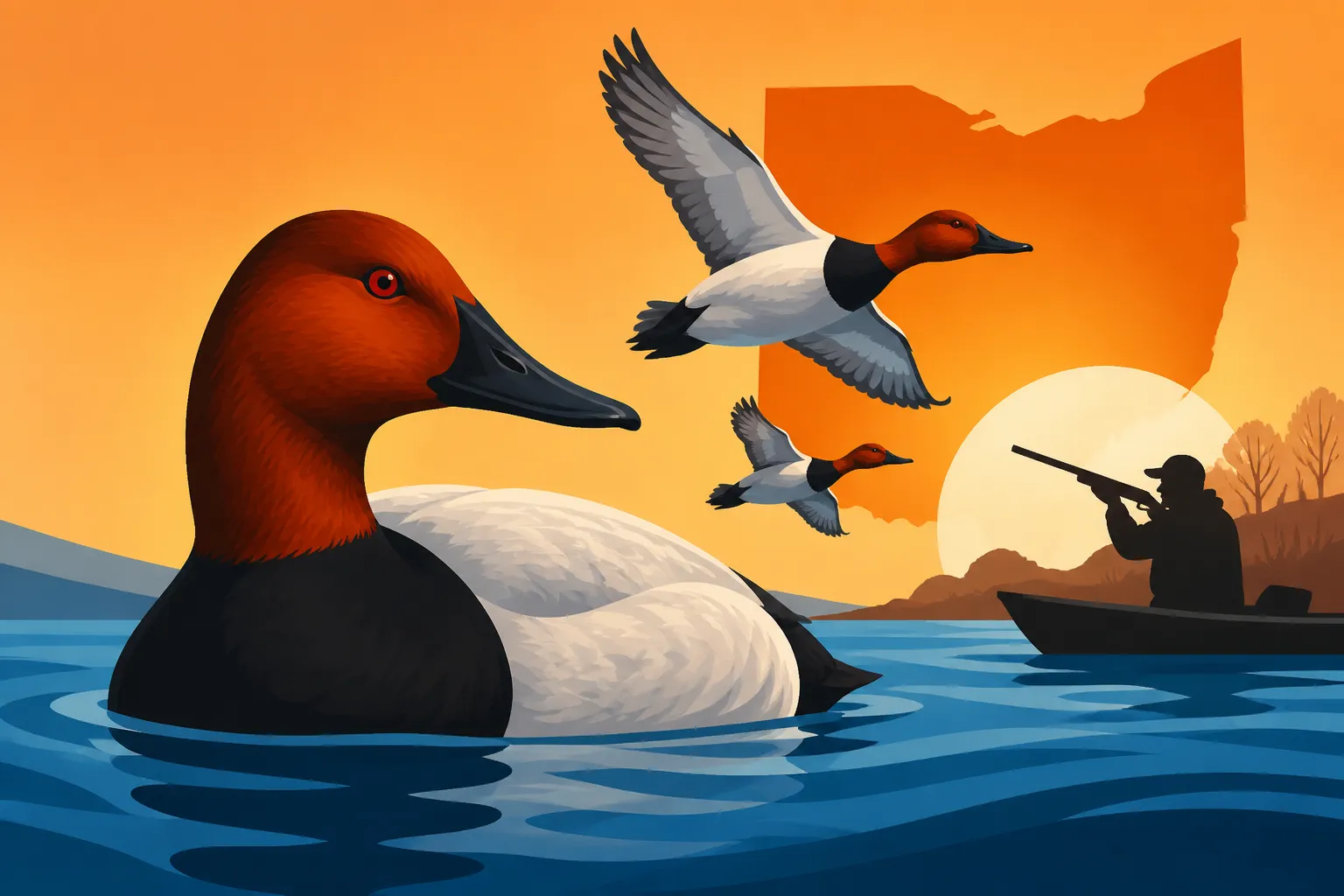
Canvasbacks on Lake Erie
There's nothing quite like the sight of a flock of canvasbacks, those majestic "kings of ducks," barreling across the big water of Lake Erie. For many Ohio waterfowl hunters, pursuing these magnificent diving ducks isn't just a hunt; it's an obsession, a test of skill, and a deep appreciation for one of North America's most iconic ducks. But let's be honest, hunting open water divers on a massive lake like Erie presents its own unique set of frustrations and challenges that can leave even seasoned hunters scratching their heads. This guide will walk you through everything you need to know, from identifying canvasbacks and understanding their habits on Lake Erie to the specialized gear, tactics, and crucial safety measures required to successfully and ethically hunt these incredible birds.
The Canvasback's Allure on Ohio's Lake Erie
The canvasback holds a special place in the hearts of waterfowl hunters. They're big, fast, and often require a different approach than your typical puddle duck. Their presence on Lake Erie adds another layer of excitement and challenge to the Ohio hunting landscape.
Identifying the King of Ducks on the Water
Canvasbacks are unmistakable once you get a good look at them, but from a distance, especially on choppy Lake Erie waters, it can be tricky. Males, or drakes, are particularly striking with their reddish-brown heads and necks, a stark black breast, and a pristine white body that gives them their regal nickname. Their most defining feature, however, is that long, sloping profile of their head and bill. It looks almost wedge-shaped, flowing seamlessly from the crown of their head to the tip of their dark bill. Females, or hens, are a bit more subdued, with a grayish-brown head and body, but they retain that distinctive head-and-bill profile.
In flight, canvasbacks are powerful and fast, often flying in V-formations or long, undulating lines. Their wingbeats are strong and rapid, and they can cover incredible distances quickly. When they commit to a decoy spread, they often drop from high altitudes with a controlled descent, wings cupped, before hitting the water with a splash. They are master divers, capable of staying underwater for extended periods, feeding on submerged vegetation. This diving ability is key to understanding their behavior and why they favor certain habitats.
Why Lake Erie Draws the Canvasback Crowds
Lake Erie isn't just another body of water for canvasbacks; it's a critical stopover and wintering ground, particularly the western basin. These birds are primarily vegetarians, and they flock to areas rich in submerged aquatic vegetation, especially wild celery and sago pondweed. The shallow, fertile waters of western Lake Erie and its associated marshes provide an abundant buffet of these preferred foods. As colder weather pushes south, canvasbacks migrate from their breeding grounds in the prairie potholes, seeking out large, open bodies of water that offer both food and sanctuary.
The sheer size of Lake Erie also provides safety. Canvasbacks feel secure on vast expanses of water, away from shore-based predators and human disturbance. They'll raft up in huge numbers out in the open, only moving closer to shore to feed or if pushed by severe weather. This preference for open water and specific food sources dictates where you'll find them and, consequently, how you'll need to hunt them. Understanding these habits is the first step to becoming a successful canvasback hunter on this magnificent lake.
Finding Canvasbacks: Prime Locations and Timing
Successfully hunting canvasbacks on Lake Erie requires more than just showing up. It demands careful planning, diligent scouting, and an understanding of their seasonal movements and preferred habitats on this massive body of water.
Navigating Lake Erie's Hotspots
While canvasbacks can be found across various parts of Lake Erie, certain regions consistently hold more birds. The western basin, particularly around the Sandusky Bay complex, the islands, and the vast marsh systems like Magee Marsh and Ottawa National Wildlife Refuge, are prime locations. While many of these areas are public Hunting the Lake Erie Marsh Region, the canvasbacks themselves will often be found just outside the managed marshes, or in the open waters of the lake where submerged vegetation is plentiful. Deeper bays and expansive flats that transition from shallow feeding areas to deeper, secure loafing zones are ideal.
These areas provide the perfect combination of food and security. The birds will move between feeding areas and resting areas throughout the day, often spending their nights in open water rafts. Knowing where these "rafts" of birds tend to congregate from year to year is crucial. Local knowledge is invaluable here, but careful observation and using mapping resources can also reveal patterns. Look for areas with a history of good water quality and productive aquatic plant growth.
The Calendar and Weather's Influence
Canvasback hunting on Lake Erie is highly seasonal and heavily influenced by weather. The birds typically begin arriving in Ohio during the late fall migration, with peak numbers often seen from mid-November through December, depending on the severity of the weather up north. As winter progresses, ice formation becomes a major factor. If Lake Erie freezes solid, canvasbacks will often push further south, but milder winters can keep them around longer.
Cold fronts and strong winds, especially those out of the north or northwest, can drastically change bird distribution. These conditions often concentrate birds into more sheltered bays or push them closer to shorelines, offering hunters better opportunities. However, these same conditions can also make open water hunting incredibly dangerous. Conversely, mild, calm days might see birds spread out across vast expanses, making them harder to find and attract. Keep a close eye on long-range weather forecasts and pay attention to Ohio Waterfowl Hunting on Lake Erie and Inland reports to plan your hunts strategically.
Scouting the Vastness of Lake Erie
Scouting for canvasbacks on Lake Erie is a whole different ballgame compared to scouting a small pond. You're dealing with immense distances and often challenging conditions. Binoculars and spotting scopes are indispensable tools. From high vantage points along the shoreline or from a boat, you can glass large areas to locate rafts of birds. Look for concentrations of ducks, paying attention to their behavior – are they feeding, resting, or actively flying? Many dedicated diver hunters spend hours, sometimes days, simply observing birds before ever setting out decoys.
Modern mapping applications can be a huge asset in this process. Tools like GoHunt can provide detailed satellite imagery showing bottom contours, submerged vegetation patterns, and potential access points. Before you even launch the boat, a good mapping app like GoHunt can save you hours by helping you identify promising areas based on habitat features. Combine this digital scouting with real-world observations. Note prevailing wind directions, how birds react to pressure, and where they seem to feel most secure. The more intel you gather, the higher your chances of success.
Essential Gear and Tactics for Open Water Success
Hunting canvasbacks on Lake Erie isn't a casual affair; it demands specialized gear and tactics tailored to the challenges of big water and deep-diving ducks. Skimping on preparation here can lead to frustration or, worse, dangerous situations.
Specialized Boats and Decoy Spreads
The right boat is paramount for Lake Erie diver hunting. You need a sturdy, stable vessel capable of handling chop and unexpected squalls. A well-maintained boat with a reliable motor is non-negotiable, along with all mandatory safety equipment. Many dedicated diver hunters use heavy-duty aluminum boats, often referred to as " layout boats" or larger "tender boats" that can carry decoys and retrieve birds. Given Lake Erie's notorious unpredictability, never underestimate the power of the water.
Decoy spreads for canvasbacks need to be substantial and realistic to attract these wary birds. Think big and bold. Canvasbacks are gregarious and feel comfortable in large groups, so a spread of 50 to 100 decoys is not uncommon. Many hunters use long lines – gang rigs with multiple decoys attached to a single main line, weighted at both ends. These are efficient for deployment and retrieval. Mix in a good number of canvasback decoys, but also consider adding other diver species like redheads and bluebills, or even a few pintails, to create a natural-looking raft. The goal is to create an inviting, natural-looking spread that screams "safe haven" to passing birds. Diver Hunting on Open Lake Erie Water will give you more insights into these specialized techniques.
Shotguns, Ammo, and Blinds for Diver Ducks
When it comes to shotguns, reliability and magnum capabilities are key. A 12-gauge shotgun is standard, often chambered for 3-inch or even 3.5-inch shells. Because canvasbacks are large, tough birds and often present longer shots over open water, a denser, harder-hitting shot is preferred. For ammunition, Where Nontoxic Shot Is Required in Ohio means you'll be using steel, bismuth, or tungsten-based loads. Many hunters favor steel shot in sizes BB, 1, or 2 for canvasbacks, especially in high-velocity loads. Tungsten-matrix or bismuth loads offer superior knockdown power but come at a higher cost. A modified or improved modified choke is a good starting point, providing a balance of pattern density and range. Pattern your shotgun with your chosen loads before the season to understand its effective range.
Blinds for open water hunting are often specialized. Layout blinds, typically used in shallow water or on shorelines, can be effective if positioned correctly to break up your silhouette. However, on Lake Erie, many hunters rely on boat blinds that are brushed in to blend with the natural shoreline or marsh vegetation. Others may use specialized layout boats that keep them low to the water. The key is to disappear. Canvasbacks have excellent eyesight, and anything that looks out of place will send them flaring. A good blind, combined with proper camouflage clothing, is crucial for success. Consider robust waders for dealing with cold water and retrieving downed birds, as detailed in Waders for Ohio Marsh Hunting.
Safety First and Ethical Hunting on Lake Erie
Hunting canvasbacks on Lake Erie is an exhilarating experience, but it comes with inherent risks due to the sheer size and unpredictable nature of the lake. Prioritizing safety and practicing ethical hunting are not just recommendations; they are absolute necessities.
Battling Lake Erie's Unpredictable Nature
Lake Erie is beautiful, but it can turn treacherous in a matter of minutes. Sudden winds, rapidly building waves, and dangerously cold water temperatures (especially during peak canvasback season) pose significant threats. Never venture out on big water alone, and always tell someone your float plan – where you're going, when you expect to return, and who is with you. Carry all U.S. Coast Guard mandated safety equipment, including life jackets (wear them!), a marine radio or satellite communicator, flares, a first-aid kit, and extra warm, dry clothing in a waterproof bag.
Regularly check marine weather forecasts and be prepared to cancel or cut short your hunt if conditions deteriorate. It's far better to miss a hunt than to risk your life. Understand your boat's capabilities and never overload it with gear or personnel. Navigating in low light or fog can be disorienting, so a reliable GPS or marine chartplotter is invaluable. Even on seemingly calm days, be vigilant; waves can build quickly, and cold water immersion can lead to hypothermia rapidly. Safety should always be your number one concern when Waterfowl Gear for Lake Erie and Inland Marsh is involved.
Respecting the Resource: Regulations and Responsibility
Ethical hunting on Lake Erie, particularly for a prized species like the canvasback, means strictly adhering to all state and federal regulations. This includes understanding the specific Ohio Duck Daily Bag Limit for canvasbacks, which is often more restrictive than for other duck species, reflecting their population status. Make sure you have all the necessary licenses and permits, including your Ohio Federal Duck Stamp Requirement and Ohio HIP Certification for Bird Hunters. Know the legal shooting hours and ensure your shotgun is plugged to hold no more than three shells.
Responsible hunting also means being a good steward of the resource. Take only what you need and what is legally allowed. Make every effort to retrieve downed birds, even if it requires extra effort or time. This demonstrates respect for the animal and ensures that no game is wasted. Be mindful of other hunters and water users, giving them ample space. Participating in conservation efforts, such as supporting organizations that protect waterfowl habitat, is another critical aspect of ethical hunting. By respecting the rules and the birds, we ensure that canvasback hunting on Lake Erie remains a cherished tradition for generations to come.
Canvasback Duck Characteristics and Hunting Season Overview
To truly appreciate the canvasback hunt, it helps to understand their unique characteristics and how they fit into Ohio's broader waterfowl season.
| Characteristic | Canvasback (King of Ducks) | Other Diver Ducks (e.g., Redhead, Scaup) | Puddle Ducks (e.g., Mallard, Wood Duck) |
|---|---|---|---|
| Appearance | Large, long sloping profile from head to bill. Drake: Red head, black breast, white body. Hen: Grayish-brown. | Often rounder head, shorter bill. Redhead drake: Red head, gray body. Scaup drake: Black head, gray body. | Dabble on surface, smaller. Mallard drake: Green head, gray body. Wood Duck: Ornate crest. |
| Flight Style | Fast, powerful, direct, often in V-formations. | Fast, direct, often in tight flocks. | Slower, more erratic, often landing upright. |
| Feeding Habit | Primarily dives for submerged vegetation (wild celery, sago pondweed). | Dives for aquatic plants, mollusks, insects. | "Dabbles" or tips up to feed on surface, shallow water. |
| Habitat Pref. | Large, open bodies of water, deeper marshes. | Open water, shallow bays, larger wetlands. | Shallow marshes, ponds, rivers, flooded timber. |
| Bag Limit (Ohio) | Often restrictive (check current regulations for Ohio Duck Daily Bag Limit). | Varies by species, generally more liberal than canvasbacks. | Generally more liberal. |
Ohio's waterfowl seasons are complex, with different zones and dates. Ohio's New Waterfowl Zone Map will show you the specific regulations that apply to Lake Erie. Generally, the season for most ducks, including canvasbacks, runs through late fall and into early winter. Remember that canvasbacks are often among the last species to arrive in large numbers as winter approaches, meaning prime hunting often coincides with colder, more challenging conditions on Lake Erie. Always consult the current Ohio hunting regulations for precise season dates, bag limits, and any special restrictions on canvasbacks before planning your hunt.
Disclaimer
This article is for general informational purposes only and does not constitute professional advice. Laws, prices and regulations vary by location and change over time. Consult a qualified professional for guidance on your specific situation.