Nest Predation and Ohio Turkey Hatches
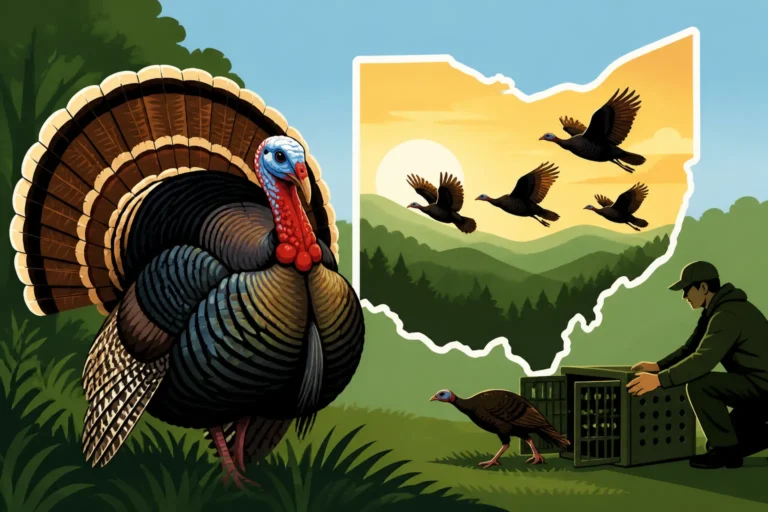
It's incredibly frustrating for us turkey hunters when we put in all the scouting work, brave the early morning chill, and spend hours trying to call in a bird, only to find that local turkey numbers seem to be struggling. A major, often unseen, factor behind fluctuating populations and disappointing seasons can be traced back to nest predation and the success, or failure, of the annual turkey hatch. This guide dives deep into how nest predation impacts Ohio's wild turkey populations and what hunters can do to help.
Understanding the Cycle of Turkey Reproduction in Ohio
Wild turkeys are truly magnificent birds, survivors that have made an incredible comeback in Ohio thanks to dedicated conservation efforts. But their journey from egg to adult is fraught with peril, especially during the crucial nesting and brooding phases. Understanding this cycle is key to appreciating the challenges they face and why issues like nest predation hit so hard.
The Critical Role of the Nesting Period
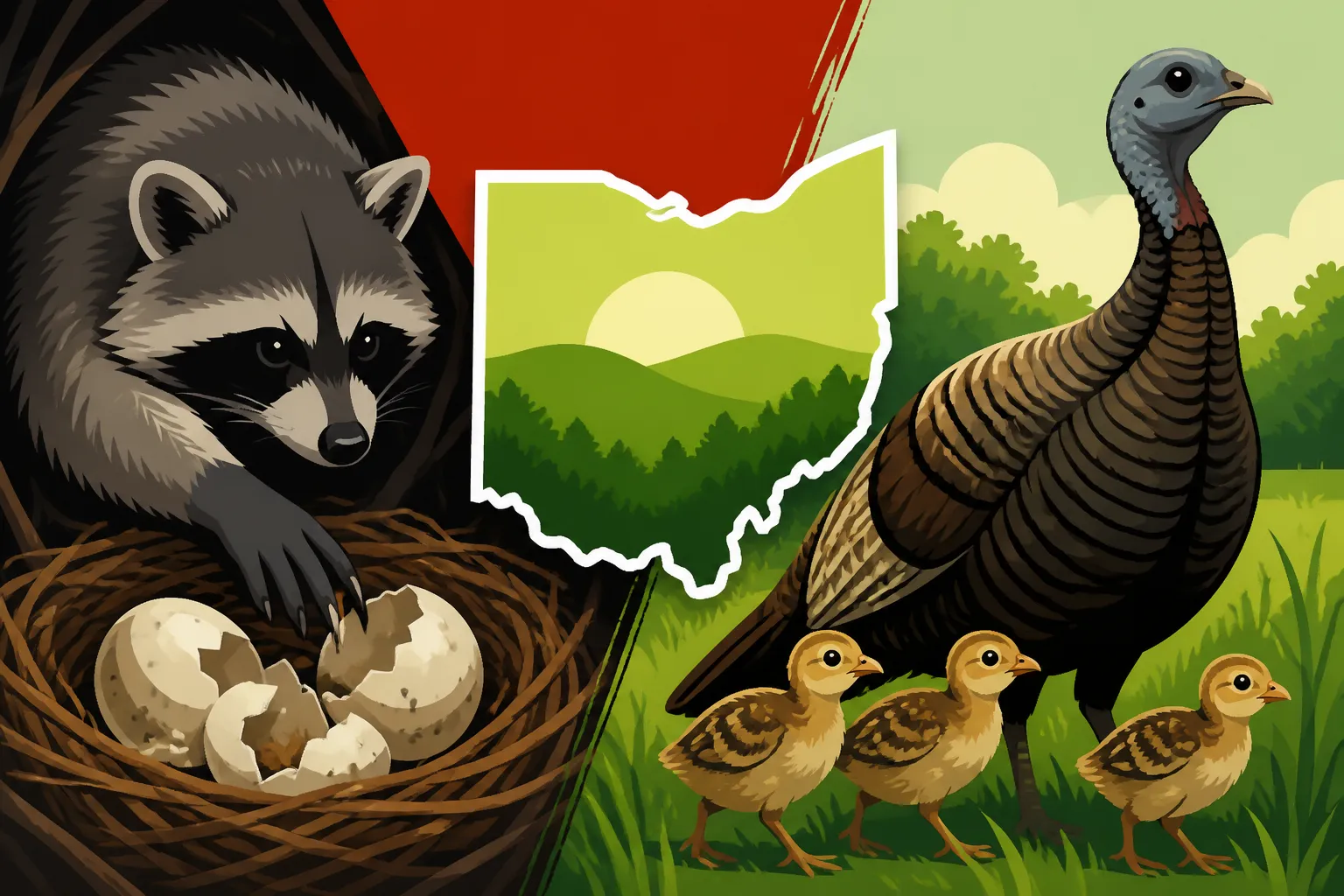
For Ohio's wild turkeys, the nesting period, typically from late April into June, is the bedrock of future populations. After a successful breeding season, hens will seek out secluded, well-camouflaged spots, often at the base of trees, under brush piles, or in dense thickets, to lay their clutch of eggs. These nests are masterpieces of natural concealment, but they are far from invulnerable. A hen will lay anywhere from 8 to 15 eggs, incubating them diligently for about 28 days. During this time, she is incredibly vulnerable, relying entirely on her camouflage and stillness to protect her precious clutch. A single disturbance or discovery by a predator can wipe out an entire brood before it even has a chance to hatch. This is why areas with good nesting cover are so vital – they give the hen a fighting chance.
It's not just about the number of eggs laid, but the percentage that actually hatch and survive those first few critical weeks. A low hatch rate due to predation means fewer poults hitting the ground, which directly translates to fewer jakes and gobblers in future seasons. Think of it like a ripple effect across the entire turkey population. When many nests are destroyed year after year, the overall population struggles to rebound, making it harder for us to find birds in the woods. This challenge underscores why understanding Ohio Turkey Population Trends is so important for all of us invested in the future of the sport.
Why Successful Hatches Matter for Hunters
For us hunters, a robust and successful annual hatch isn't just a nice-to-have; it's the lifeblood of our sport. Without consistently good hatches, the turkey population simply can't sustain itself at healthy levels, leading to fewer birds, lower harvest numbers, and increasingly difficult hunts. We've all experienced those seasons where it felt like the woods were just… quiet. Often, that silence can be traced back to a couple of poor hatch years where nest predation or other factors severely impacted poult survival.
Young birds from successful hatches mature into the jakes and gobblers that provide our hunting opportunities. If you recall the booming turkey populations of past decades in Ohio, much of that success was built on consistently high poult-to-hen ratios and successful hatches. When these ratios drop, it's a clear signal that the population is facing pressure, and nest predation is almost always a primary culprit. Hunters often consult resources like the Ohio Turkey Brood Survey Results to get a sense of how the population is faring, and these surveys directly reflect the success of previous hatches. It’s a direct line from a hidden nest in May to a gobble echoing through the timber next April.
Key Predators Threatening Ohio Turkey Nests
The Ohio woods are full of life, and while we appreciate the intricate balance of nature, some species pose a direct and significant threat to turkey nests. These predators aren't "bad" animals; they're simply following their instincts. However, their cumulative impact on turkey reproduction can be substantial, especially when predator populations are high or turkey nesting habitat is lacking.
Mammalian Marauders: Raccoons, Opossums, and Skunks
When we talk about nest predators, raccoons are often the first culprits to come to mind, and for good reason. These opportunistic omnivores are incredibly intelligent, dexterous, and abundant across nearly all of Ohio's turkey range, from the Appalachian foothills to prime agricultural country. They have a keen sense of smell and will systematically search out nests, devouring eggs with ruthless efficiency. Opossums, while perhaps less notorious, are equally problematic. They are slow-moving but persistent, and their nocturnal habits mean many nests are raided under the cover of darkness. Skunks, too, are common nest destroyers, especially in areas bordering farmland or suburban fringes.
The impact of these mammalian predators is significant because they are so widespread and their diets are so adaptable. A raccoon isn't relying solely on turkey eggs for survival, but a nest full of protein-rich eggs is an easy meal that's hard to pass up. This reality makes managing their populations or, more realistically, creating nesting habitats that make it harder for them to succeed, a critical aspect of turkey conservation. Areas with good habitat that offers multiple nesting sites can help dilute the impact, as predators are less likely to find every single nest.
Avian Adversaries: Crows and Raptors
It's not just furry critters that pose a threat. Avian predators also play a role, particularly crows. Crows are incredibly smart, social birds that often work in groups. They have excellent eyesight and will fly systematic search patterns, especially during the nesting season. Once a nest is located, a crow can quickly raid it, often taking multiple eggs. Their presence can also stress nesting hens, potentially causing them to abandon a nest if they feel too exposed or harassed.
While raptors like hawks and owls primarily target poults or adult turkeys, they can sometimes be opportunistic nest predators if they stumble upon an exposed nest. However, their impact on nests specifically is generally less pronounced than that of raccoons or crows. The primary concern with avian predators often comes down to visibility. If a hen chooses a nest site with insufficient overhead cover, she becomes a beacon for sharp-eyed aerial hunters. Understanding these threats helps us appreciate why a hen spends so much effort picking the perfect, hidden spot to raise her young.
The Silent Threat: Snakes and Other Opportunists
Snakes might not have the same "cute and cuddly" factor as a raccoon (unless you're into reptiles, of course!), but they are incredibly effective nest predators. Black rat snakes, for instance, are common throughout Ohio and are excellent climbers. They can slither into dense cover that other predators might struggle with, and once they locate a nest, they will consume eggs whole. Their silent, stealthy approach makes them particularly difficult for a nesting hen to detect and deter.
Beyond the more common culprits, other opportunistic feeders can contribute to nest loss. Coyotes, while primarily targeting adult deer or small mammals, will absolutely raid a turkey nest if found. Even domestic animals, particularly stray or poorly supervised dogs and cats, can stumble upon and destroy nests, especially on private lands bordering rural residences. The sheer diversity of threats underscores the challenge turkeys face. Even if a nest avoids the most common predators, there's always another hungry mouth looking for an easy meal in the Ohio woods.
Factors Influencing Nest Predation Rates
While predators are a constant presence, the actual rate of nest predation isn't uniform. Several environmental and ecological factors can amplify or mitigate the success of nest predators, directly influencing the number of poults that ultimately join the flock. Understanding these variables can help us identify potential issues and guide conservation efforts.
Habitat Quality and Cover Availability
This is arguably the most critical factor. High-quality nesting habitat provides ample concealment, making it harder for predators to locate nests. Think dense thickets, overgrown fencerows, standing warm-season grasses, and areas with good understory cover. When a hen has many suitable, well-hidden options, it effectively dilutes the predator's success. Imagine a predator trying to find a needle in a haystack; the more haystacks there are, the harder their job becomes. Conversely, areas with sparse, fragmented habitat force hens into fewer, more obvious nesting locations, essentially putting all their eggs in fewer, riskier baskets.
Many Ohio landowners and public land managers focus on improving nesting cover. This can involve prescribed burns to encourage new growth, planting native warm-season grasses, or leaving brush piles from timber stand improvements. The goal is to create a mosaic of cover types that not only provide nesting sites but also offer protection for poults once they hatch. A good example of this is seen in regions managed for optimal Ohio's Squirrel and Rabbit Populations, where diverse undergrowth benefits multiple species, including turkeys. Without adequate habitat, predator success rates soar, and our turkey populations suffer the consequences.
Predator Density and Distribution
It's simple math: more predators generally mean more nests found and destroyed. While we can't eliminate all predators (nor should we want to), unnaturally high densities of certain opportunistic predators like raccoons, opossums, and skunks can severely impact turkey populations. These animals thrive in many human-altered landscapes, often benefiting from abundant food sources (like discarded human food or agricultural waste) and safe havens (like culverts, old barns, or dense suburban thickets).
Their distribution also matters. If predator populations are particularly concentrated in areas where turkeys are forced to nest due to limited habitat, the impact is magnified. For instance, if a public land tract has a bottleneck of good nesting cover near a consistently high-density raccoon population, those nests are at much greater risk. Monitoring local predator populations, even informally through trail cameras or observed sign, can provide insights into potential pressures on turkey hatches. Using mapping tools like the GoHunt app can help you visualize habitat and potential predator travel corridors as you scout, giving you a better idea of the risks.
Weather Patterns and Their Impact
Weather might seem like an unrelated factor, but it plays a significant, albeit indirect, role in nest predation. Severe spring weather, such as prolonged cold snaps or heavy, incessant rain during the nesting and early brooding period, can stress hens and make nests more vulnerable. A hen might be forced to leave her nest more frequently to feed if conditions are harsh, increasing the chances of a predator finding it. Heavy rains can also flood low-lying nests, forcing abandonment, and making the hen more susceptible to predation herself if she's constantly moving.
Furthermore, weather influences vegetation growth. A cool, wet spring can delay the emergence of dense nesting cover, leaving early-nesting hens with fewer options for concealment. Conversely, a warm, dry spring might lead to earlier, more robust vegetation growth, offering better cover. Drought conditions in the summer following a hatch can also impact poult survival by reducing insect populations (a critical food source for young poults) and making them concentrate around limited water sources, thus becoming more vulnerable to predation. It's a complex web, and understanding it helps us appreciate the resilience required for a turkey hatch to succeed.
What Hunters and Landowners Can Do to Help
While we can't control every aspect of nature, hunters and landowners are uniquely positioned to make a tangible difference in supporting Ohio's wild turkey populations. Our passion for the hunt naturally extends to a desire to see healthy, thriving game animals, and a big part of that is ensuring successful hatches. It's about being proactive, informed, and dedicated to conservation.
Habitat Improvement Strategies
Improving and maintaining high-quality nesting and brooding habitat is hands down one of the most effective ways to boost turkey hatch success. This means looking at your land, or areas you manage, and asking: "Where would a hen feel safe laying her eggs, and where would her poults find cover and food in those crucial first weeks?" Dense, diverse cover is the answer. Consider planting native warm-season grasses like switchgrass or big bluestem in open areas. These grasses grow tall and thick, providing excellent concealment for ground nests and young poults. You can learn more about specific plant choices by looking into local conservation resources.
Another great strategy is managing existing timber to create more diverse understory growth. This might involve selective cutting to allow more sunlight to reach the forest floor, encouraging the growth of shrubs, briars, and young trees that offer protective cover. Leaving brush piles or downed tops after a timber harvest can also provide critical nesting sites and escape cover. On public lands, while we can't directly alter habitat, we can advocate for these types of management practices with the ODNR. When you're scouting for prime turkey spots, always keep an eye out for areas that offer this kind of dense, diverse cover; these are often where you'll find healthy turkey activity. A good strategy for this is often discussed in advice for Reading a Ridge for Southeast Ohio Deer, which also applies to turkey habitat.
Responsible Predator Management Considerations
Predator management is a topic that often sparks debate, but from a turkey conservation standpoint, there are responsible approaches that can help. Reducing unnaturally high populations of opportunistic nest predators like raccoons and opossums can directly benefit turkey nesting success. This doesn't mean eradication, but rather targeted efforts to bring their numbers into better balance, especially on smaller, managed properties. Trapping is a common and effective method for reducing these specific predator populations, often done during dedicated furbearer seasons.
For hunters, participating in furbearer hunting and trapping seasons is a direct way to contribute. Coyotes, too, are common predators of turkeys and their young. Regulated hunting of coyotes, particularly through methods like Coyote Calling in Ohio Winter, can help manage their numbers. The key is balance and understanding the ecosystem. We're not trying to eliminate these species, but to alleviate intense localized pressure on turkey nests where predator populations might be overly abundant, especially in areas with limited nesting habitat. Always ensure you are following all state regulations regarding hunting and trapping furbearers.
Monitoring Hatch Success and Local Populations
As hunters and conservationists, keeping an eye on local turkey populations and hatch success is incredibly valuable. This informal monitoring can involve observing poult-to-hen ratios during late summer and early fall. If you consistently see hens with large broods of healthy poults, it's a good sign of successful hatches in your area. Conversely, seeing very few poults, or none at all, suggests a problem.
Many states, including Ohio, conduct formal brood surveys, and participating or simply being aware of these reports can inform your hunting strategy and conservation efforts. Reporting your observations to local wildlife officials can contribute to larger datasets. Additionally, using tools like the GoHunt platform can help you analyze past harvest data and population trends for specific regions, informing your expectations for the upcoming season. Understanding how Ohio Deer Harvest Records are used for population management can give you insight into how turkey data is similarly utilized. The more eyes we have on the ground, the better understanding we have of the challenges and successes our wild turkeys are experiencing.
| Predator Species | Primary Target | Nest Predation Impact | Mitigation Strategies for Hunters/Landowners |
|---|---|---|---|
| Raccoon | Eggs, Poult | High | Trapping, habitat improvement, secure feeders |
| Opossum | Eggs, Poult | Moderate to High | Trapping, habitat improvement |
| Skunk | Eggs | Moderate | Trapping, habitat improvement |
| Coyote | Poult, Adult | Low (opportunistic for eggs) | Regulated hunting, habitat improvement |
| Crow | Eggs | Moderate | Habitat improvement (overhead cover) |
| Snake (Rat Snake) | Eggs | Moderate | Habitat management (dense ground cover) |
| Feral Cat/Dog | Poult, Eggs | Variable (localized) | Proper pet management, trapping ferals |
Disclaimer
This article is for general informational purposes only and does not constitute professional advice. Laws, prices and regulations vary by location and change over time. Consult a qualified professional for guidance on your specific situation.