Decoy Spreads for Lake Erie Divers
Hunting diver ducks on Lake Erie is a truly unique challenge, with big water, unpredictable weather, and fast-flying birds making for an experience unlike any other inland hunt. Many hunters struggle to consistently put birds over their decoys, often battling waves, currents, and ducks that seem to flare at the last second. This comprehensive guide will walk you through the nuances of setting effective decoy spreads specifically tailored for diver ducks on Lake Erie, helping you understand their behavior and rig your spread for success.
Understanding Diver Duck Behavior on Lake Erie
Before you even think about tossing out your first decoy, it's crucial to understand the very birds you're targeting. Diver ducks are a different breed from puddle ducks, both in how they feed and how they react to a spread. Lake Erie, being such a vast and dynamic body of water, presents its own set of behaviors that you need to account for.
Species of Divers You'll Encounter
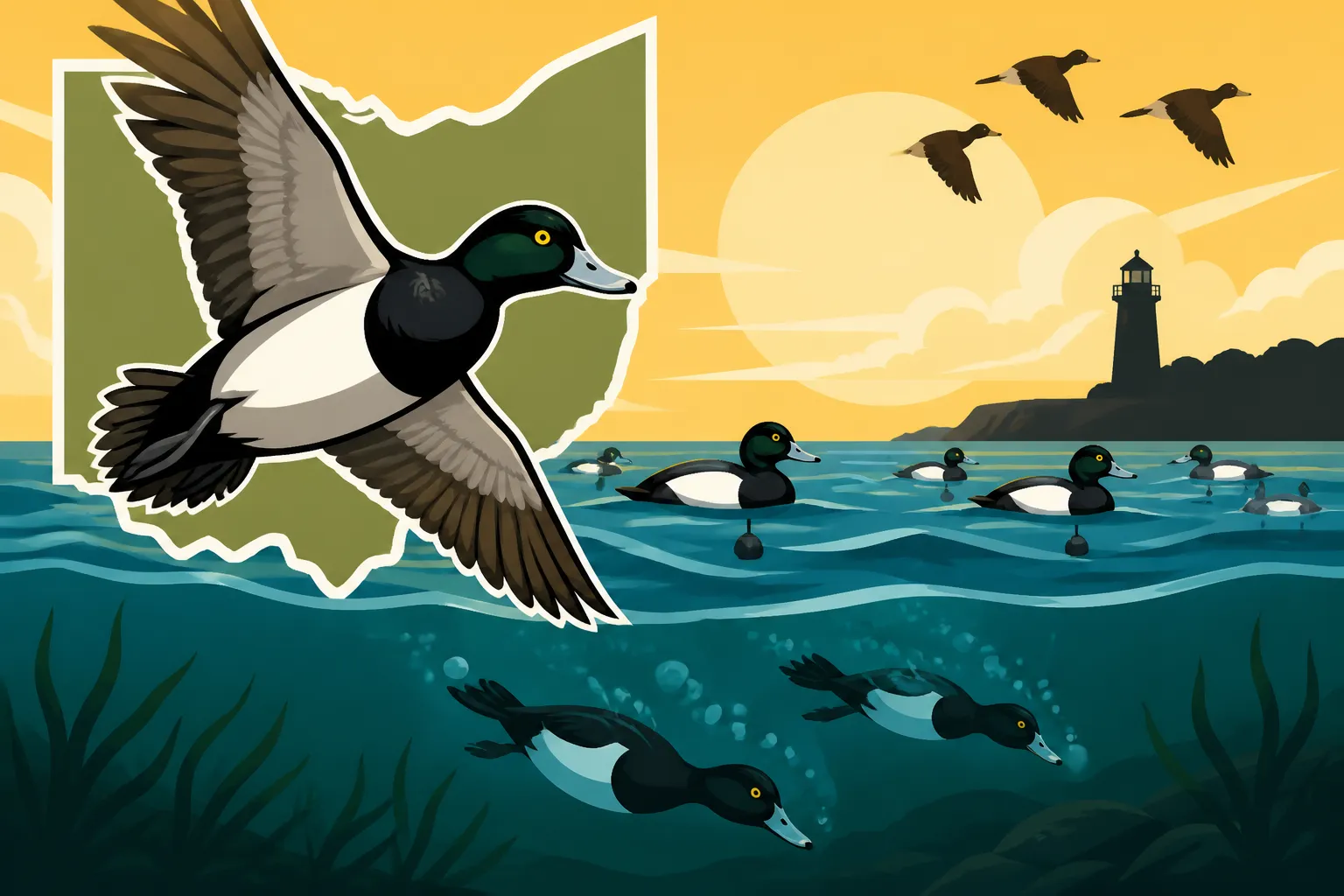
Lake Erie is a major stopover on the Mississippi Flyway, and during migration, it can be absolutely teeming with different diver species. You're likely to see greater and lesser scaup (often called bluebills), canvasbacks, redheads, buffleheads, and goldeneyes. Each of these species has its own subtle preferences, though they generally share an affinity for open water and deep-diving for food. Scaup are often the most abundant, traveling in large rafts, while canvasbacks and redheads, particularly drakes, are highly prized for their striking plumage. Understanding which species are most prevalent during your hunt can inform your decoy choices and spread density.
When the migration is in full swing, you might see massive flocks of scaup moving across the horizon, sometimes numbering in the thousands. These birds are often on a mission, but a well-placed, highly visible spread can pull them in. Canvasbacks, on the other hand, are often found in smaller groups and are notoriously wary. You'll need realism and a precise landing zone to convince them to commit. Redheads are a bit more social and can often be found mixed in with scaup, though they typically prefer slightly shallower open water areas with submerged vegetation.
Their Feeding and Resting Habits
Diver ducks, as their name suggests, feed by diving underwater. On Lake Erie, this means they're primarily looking for zebra mussels, quagga mussels, and other aquatic invertebrates found on the lake bottom, often in depths ranging from a few feet to twenty or more. They also eat some submerged vegetation, especially redheads and canvasbacks. This deep-water feeding habit dictates where they spend their time – usually well offshore, away from shorelines and shallow marshes that puddle ducks prefer. This is why you often find them rafted up in large groups out in the open, feeding during the day and resting in large, protected bays or on the open lake.
Knowing these habits means you'll rarely find divers dabbling in a foot of water at the edge of a cattail marsh. Instead, you'll be focusing your efforts on larger, more open expanses of water where these mussels are abundant. They'll feed for a while, then raft up to rest, often in very large groups, sometimes miles offshore. When they do decide to move, it's usually between these feeding and resting areas, or when disturbed by boat traffic or rough weather. Your decoy spread needs to mimic a comfortable, safe feeding or resting area for these birds to feel secure enough to drop in.
Flight Patterns and Approaches
Diver ducks are fast, strong flyers, and they approach a decoy spread with purpose. Unlike puddle ducks that often circle a spread several times, gaining altitude, then dropping in, divers tend to fly lower and more directly. They'll often make one or two wide swings to get a good look, then set their wings and commit, dropping straight into the pocket you've created. This direct approach means your landing zone needs to be clear, inviting, and directly into the wind, allowing them to cup their wings and parachute down.
Observing their flight patterns is key. If you notice birds consistently favoring a certain flight path, or if they're always approaching from a particular direction before flaring, you can adjust your spread to capitalize on this. Often, divers will fly just above the wave tops, using the contours of the water to their advantage. A strong crosswind can make their approach even more challenging, as they'll fight to stay on course. Understanding Duck Migration Timing Through Ohio can also give you an edge, helping you predict when the major pushes of diver ducks will occur, and thus when you should focus your efforts on the big lake.
Essential Gear for Lake Erie Diver Decoying
Diver hunting on Lake Erie isn't a casual affair; it requires specialized gear to be safe, effective, and comfortable in often demanding conditions. You're dealing with big water, strong winds, and sometimes bitter cold, so your equipment needs to be up to the task.
Decoy Types and Quantities
When it comes to diver decoys, realism and visibility are paramount. For Lake Erie, you'll want large, oversize decoys, as they show up better on big water. While a mix of species is good, focusing on the predominant species, like scaup, canvasbacks, and redheads, is wise. Don't be afraid to use a lot of decoys; diver hunting often calls for large spreads to create the impression of a safe, inviting raft. A typical spread for Lake Erie divers might range from 50 to 150 decoys, or even more for truly massive spreads targeting scaup.
Consider using a higher percentage of drakes in your spread, especially for species like canvasbacks and redheads. Their bright white or red heads stand out much better from a distance than the more subdued hen colors. Motion decoys, such as jerk cords or even a simple spinner placed strategically, can also add realism, though be mindful of how they interact with big waves. Brands often offer different sizes, from standard to magnum to super magnum, and for diver hunting, bigger is almost always better for visibility. When setting up, remember that you're trying to create a welcoming scene on a vast, often intimidating body of water.
Anchor Systems and Lines
This is where diver hunting on Lake Erie drastically differs from puddle duck hunting in a swamp. You're dealing with strong currents, significant wave action, and deep water. Your standard string and weight isn't going to cut it. You need heavy-duty anchor systems that can keep your decoys in place. Many diver hunters use Texas rigs or similar individual rigging systems with heavy, coated lines (e.g., 400-600 lb test monofilament or tarred line) and heavy weights (8-16 oz, sometimes more depending on conditions) to prevent tangling and ensure the decoys stay put. Gang rigs, where multiple decoys are clipped to a main line, are also popular for deploying and retrieving large numbers quickly, but require even heavier anchors at each end.
Imagine setting 100 decoys in 15 feet of water with a 2-foot chop and a stiff breeze – without proper rigging, you'll have a tangled mess or lost decoys in no time. The key is robust, tangle-free systems that allow for quick deployment and retrieval, as Lake Erie weather can change on a dime. Investing in good quality line that won't freeze and crack in cold weather, and weights that are heavy enough to hold your decoys in place against significant current and wave action, will save you a lot of headache and lost gear. Waterfowl Gear for Lake Erie and Inland Marsh often highlights the importance of durable rigging.
Boats and Layout Blinds
Hunting divers on Lake Erie almost always requires a specialized boat and, frequently, a layout blind. Your vessel needs to be sea-worthy, capable of handling choppy water, and large enough to carry a substantial number of decoys, hunters, and gear safely. A stable, open boat like a jon boat or larger duck boat, often 16-20 feet or more, is typical, equipped with a powerful motor. Safety gear like life jackets, marine radio, and navigation lights are non-negotiable.
For concealment, many Lake Erie diver hunters rely on layout boats or specialized layout blinds designed to float low in the water, blending in with the decoy spread. These offer an extremely low profile, allowing ducks to commit without spotting hunters. Alternatively, some hunters might use a larger boat with an elaborate blind built into it, positioned downwind of the spread. Regardless of your choice, effective concealment is critical, especially for wary divers. Consider how your Layout Blinds and Marsh Boats will handle the open water and strong winds, and practice deploying and retrieving them safely before the season.
Key Principles of Effective Diver Spreads
Creating a truly effective diver spread is more art than science, blending observation, experience, and a good understanding of what makes ducks feel safe. It's about more than just throwing decoys out; it's about painting a picture that screams "safe haven" to a passing flock.
Creating the "Landing Strip"
One of the most crucial elements of any diver spread is the "landing strip" or "pocket." This is the open water area within your spread where you want the ducks to land. Divers, with their direct flight paths, need a clear, unobstructed space to set their wings and drop in. This pocket should be directly upwind of your shooting position, allowing incoming birds to land into the wind, just as they naturally would. The size of the pocket depends on your spread and target species, but it should be invitingly open, contrasting with the tighter groups of decoys around it.
A common mistake is making the spread too dense, leaving no clear space for birds to land. Divers won't try to land on top of other ducks; they need their own space. Think of it like an airport runway: clearly defined, easy to approach, and facing into the prevailing wind. Sometimes, if the wind shifts, you might need to quickly adjust your boat or blinds to ensure the pocket remains optimally oriented. The visual contrast between tightly grouped decoys and the open water is what draws their eye and guides them in.
Visibility and Realism
On the vast expanse of Lake Erie, visibility is everything. Your decoys need to stand out against the grey water and sky, often from great distances. This is why magnum and super magnum decoys are so popular – they simply catch the eye better. However, realism also plays a critical role, especially for pressured birds. Lifelike paint schemes, natural postures, and a good mix of species can make your spread more convincing.
Even with big decoys, how they ride the waves matters. You want them to look natural, not like they're fighting the chop. A good weight and keel design help with this. While most diver decoys are dark, ensuring they contrast with the water is key. White-backed canvasback decoys or the distinct markings of scaup drakes really pop on the water. Some hunters even add "feeder" decoys with heads down, mimicking feeding behavior, to add another layer of realism and imply a productive feeding area. The goal is to create an illusion that is visible from afar and holds up to close inspection.
Confidence Decoys and Motion
Beyond the primary diver species, adding a few "confidence decoys" can often make a big difference. These are decoys of species that other ducks feel safe around, such as coots, Canada geese, or even a few puddle duck species if you're in a mixed habitat. On Lake Erie, coots or even common mergansers can serve this purpose, suggesting that the area is safe and undisturbed. While not the target species, their presence can sometimes reassure wary divers that it's okay to commit.
Motion is another powerful tool, especially on calm days or when birds are working your spread cautiously. A simple jerk cord, operated from your blind, can create ripples and natural movement among a few decoys, mimicking feeding or preening birds. This subtle motion can be the trigger that convinces reluctant ducks to drop in. Battery-operated spinners or flapping wing decoys can also work, though some hunters find divers can be sensitive to overly mechanical movements. The trick is to make the motion look as natural as possible, adding life to your static spread.
Specific Decoy Spread Configurations for Divers
Now that we've covered the basics of diver behavior and essential gear, let's dive into some specific spread configurations that have proven effective for diver ducks on Lake Erie. The choice of spread often depends on factors like wind direction, current, target species, and the number of decoys you have available.
The J-Hook or Fish Hook Spread
The J-hook, or fish hook, is perhaps the most classic and widely used diver spread, and for good reason. It's designed to funnel incoming birds directly into a clear landing zone. Imagine a large "J" shape on the water, with the long arm extending downwind and curving back towards your blind. The decoys are packed more densely along the curve and the hook, creating a visible mass, while the open space inside the curve is your "landing strip." Your blind or boat would be positioned at the short end of the "J," usually on the inside of the hook, concealed and downwind.
Incoming ducks will see the large mass of decoys and naturally follow the open water of the "J" curve, flying along the outside or inside edge, until they are directly in front of your blind, headed into the wind. This spread is excellent for guiding birds and is particularly effective when you have a good crosswind that helps push birds along the hook. It works well for a variety of diver species and is a great starting point for any Lake Erie diver hunt. The key is ensuring the hook is open enough for birds to feel comfortable landing.
The Vee or W Spread
The Vee or W spread is another popular choice, particularly for faster-flying divers like canvasbacks and redheads, as it creates an inviting path right to your sweet spot. For the Vee, you set two long lines of decoys that converge towards your blind, forming a "V" shape. The open water within the "V" is your landing zone, and your boat or blind is typically placed at the narrow end of the V, concealed. Incoming birds will often fly between the two arms of the "V," following the path of least resistance directly to the pocket.
A variation is the "W" spread, which effectively combines two "V" shapes, creating a wider, more complex landing area. This can be useful for larger flocks or when you want to provide multiple entry points. The "W" adds more mass and visibility, which can be enticing on a large body of water. Both the Vee and W spreads rely on creating clear lanes that lead birds into shooting range. They work especially well when you have birds flying parallel to the shore or a consistent wind direction to align the spread. A common setup would be to place scaup decoys on the outer points for visibility, with canvasbacks and redheads closer to the kill hole to entice those wary birds.
The Blob or Mass Spread
Sometimes simplicity is key, especially when dealing with massive rafts of divers like scaup or bluebills. The "blob" or "mass" spread involves simply deploying a very large, dense group of decoys, often hundreds, with a small, strategic opening or pocket right near your blind. This spread mimics a large raft of feeding or resting ducks and relies on sheer numbers and visibility to pull in birds from a distance. It's less about guiding and more about attracting.
This strategy can be incredibly effective when you encounter huge concentrations of bluebills on Lake Erie. When they're flying by in waves, they're looking for other large groups to join. Your massive blob of decoys tells them exactly where to go. The challenge with this spread is managing the large number of decoys and ensuring your small shooting hole remains clear and optimally positioned for the wind. You might use this tactic with hundreds of Diver Ducks on Lake Erie decoys, with your blind just off the main cluster, giving birds a small, clear patch to land in. This requires a significant investment in decoys and time for rigging, but can be very rewarding.
Adapting to Lake Erie's Challenging Conditions
Lake Erie is beautiful, but it can be unforgiving. Successfully hunting divers here means being prepared for and adapting to its often-harsh conditions. Weather, water, and visibility can change rapidly, and your ability to adjust on the fly will make or break your hunt.
Wind and Wave Management
Wind is arguably the biggest factor on Lake Erie. It dictates wave height, current, and how your decoys ride. A strong wind can make deploying and retrieving decoys a nightmare, and it can also cause your decoys to ride unnaturally, appearing like a jumbled mess to wary ducks. Always set your spread to allow ducks to land into the wind, which is their natural approach. If the wind shifts, you'll need to decide whether to adjust your boat/blind position or, in extreme cases, pull the spread and reset.
High waves can also swamp smaller decoys or make them disappear in the troughs. Using larger decoys helps, but you also need proper rigging. Heavy weights and sturdy lines will keep your decoys from drifting or tangling. Sometimes, if the waves are too high, it might be safer and more effective to seek out more protected waters, or reschedule the hunt altogether. Always prioritize safety over the desire to hunt. Diver Hunting on Open Lake Erie Water often involves navigating significant chop, so a stable boat and careful planning are paramount.
Currents and Drifting Decoys
Lake Erie isn't a stagnant pond; it has currents, sometimes quite strong, especially near channels or points. These currents can cause your decoys to drift out of position, ruining the carefully crafted pattern of your spread. This is another reason why heavy anchor weights are so critical for diver spreads. Even with good anchors, you need to monitor your spread throughout the hunt. Using binoculars from your blind to periodically scan the pattern will help you spot any decoys that are drifting or getting tangled.
If decoys are consistently drifting, you might need to adjust your anchor weight or even add more anchors to a gang rig. Some hunters use small, floating buoys with longer lines attached to main anchor weights to mark the edges of their spread, helping them maintain the shape. It's a constant battle, but staying vigilant about your spread integrity is essential for continued success. Remember, even a slight shift can alter your landing zone and make birds flare.
Visibility in Fog and Low Light
Lake Erie can be prone to sudden fog banks, especially in cooler weather, and hunters often find themselves out in low light conditions at dawn and dusk. This dramatically affects how ducks see your spread, and how you navigate. In fog, visibility is severely limited, making it hard for ducks to spot your spread from a distance. In these conditions, large, high-contrast decoys become even more important. Motion decoys can also help birds pinpoint your spread when visual cues are obscured.
However, safety is paramount. If a thick fog rolls in, your first priority should be navigating safely back to shore. Always carry a reliable GPS unit (like the functionality often found in apps like GoHunt), a compass, and a marine radio. When visibility is poor, hunters also need to be acutely aware of safe shooting lanes and make sure to only shoot at positively identified birds. During the early morning or late evening, ducks might approach very low over the water, so keeping a sharp eye out is crucial.
Decoy Maintenance and Transportation for Big Water
Successfully running a diver spread on Lake Erie isn't just about the hunt itself; it's also about the preparation and post-hunt care. Proper rigging, storage, and transportation are vital to ensure your expensive decoy spread lasts for many seasons and is ready to go when you are.
Rigging for Durability and Quick Setup
Given the challenging conditions of Lake Erie, your decoy rigging needs to be robust. Individual Texas rigs are very popular for divers because they minimize tangles. They consist of a heavy monofilament line, a heavy lead weight, and a crimp or loop at the top for attachment to a main line or carabiner. The key is to use line that won't tangle easily, can withstand freezing temperatures, and is resistant to abrasions from waves and rocks. Many hunters prefer tarred line or heavy-duty coated cables.
Gang rigs, while requiring more initial setup, can be incredibly efficient for deploying and retrieving large numbers of decoys quickly. This involves a main line with multiple droppers, each holding a decoy. Each end of the gang rig needs a substantial anchor to hold it in place. The advantage is you're only handling a few main lines rather than dozens of individual ones. Regardless of the system, make sure all knots are secure, crimps are tight, and lines are free of fraying. You don't want to lose a valuable decoy to a broken line in the middle of a choppy lake.
Storing and Protecting Decoys
After a long day battling the elements on Lake Erie, the last thing you want is a messy pile of decoys. Proper storage not only prolongs the life of your decoys but also makes the next hunt much easier. Decoy bags, often mesh or heavy-duty canvas, are essential for keeping decoys organized and preventing paint from rubbing off. Many bags are designed to hold a dozen or more decoys, keeping them separated and protected.
When storing for the off-season, make sure your decoys are clean and completely dry to prevent mildew and paint adhesion. Store them in a cool, dark place away from direct sunlight, which can fade colors and degrade plastic over time. Periodically inspect your decoys for cracks, leaks, or faded paint, and make any necessary repairs or touch-ups. A well-maintained spread not only looks better to the ducks but also reflects the care and dedication of the hunter.
Transporting Large Spreads Safely
Hauling a large spread of diver decoys to and from Lake Erie can be a logistical challenge. You're often dealing with dozens, if not hundreds, of bulky decoys, along with heavy anchors and rigging. Your boat needs to be configured to safely and efficiently transport this gear. This might mean having dedicated storage areas, secure tie-downs, or specialized decoy trailers if you're using a smaller boat or traveling significant distances.
Safety on the water is paramount. Never overload your boat, even if it means making multiple trips or bringing fewer decoys. Ensure that decoys are secured so they don't shift during transit, especially in choppy water. Loose decoys can become dangerous projectiles or fall overboard. Some hunters even build custom racks or "sleds" that fit inside their boats to keep everything organized. When heading out for a hunt, planning your launch, deployment, and retrieval process meticulously, especially if you're using a lot of decoys, will make the experience smoother and safer. You can use tools like the GoHunt app to help you identify good launch points and navigate safely on the water.
This article is for general informational purposes only and does not constitute professional advice. Laws, prices and regulations vary by location and change over time. Consult a qualified professional for guidance on your specific situation.