Finding Sign in Big Appalachian Timber
The vast, unbroken expanses of Appalachian timber in Ohio can feel like a formidable wilderness. You might find yourself staring at a sea of trees, wondering where to even begin looking for deer, let alone deciphering their movements. It's a common frustration for hunters, feeling overwhelmed by the sheer scale and subtle nuances of the forest. This guide is here to demystify the process, showing you how to read the landscape, identify subtle cues, and strategically find deer sign even in the biggest, thickest woods that Ohio has to offer.
Decoding the Appalachian Timber Landscape
Ohio's Appalachian region, particularly areas like Wayne National Forest and Shawnee State Forest, presents a unique challenge and opportunity for hunters. The terrain is rugged, with steep hills, deep ravines, and endless timber. To consistently find deer sign here, you first need to understand how deer interact with this challenging environment. It's not just about looking for tracks; it's about understanding the entire ecosystem.
The Lay of the Land: Ridges, Hollows, and Benches
Deer in big timber country are masters of using topography to their advantage, both for travel and security. Ridges often serve as natural highways, connecting different areas of the forest. They offer easier travel than the steep sides of hollows, and bucks frequently cruise ridge tops during the rut. When you're out scouting, pay close attention to the subtle changes in elevation that form these pathways. You might find well-worn trails running right along the spine of a ridge, especially where it narrows or offers a good vantage point. These are often primary travel corridors, especially for mature deer moving between bedding and feeding areas.
Deep hollows, on the other hand, provide excellent cover and thermal protection, making them prime bedding areas, especially during harsh weather or high hunting pressure. Deer will often bed on the leeward side of these hollows, protected from the wind and able to catch thermal currents that carry scent upwards, alerting them to anything approaching from below. Descending into these hollows, you might notice thicker undergrowth, which also contributes to their appeal as sanctuaries. Learning to anticipate these bedding locations based on wind direction and temperature can be a game-changer for your hunting strategy, allowing you to approach from an advantageous direction.
Benches, those relatively flat shelves that interrupt the steep slope of a hillside, are absolute goldmines for deer sign. These features often serve as staging areas where deer will mill about before heading to a food source or after leaving a bedding area. They provide a comfortable, level spot for deer to rest, browse, or just hang out. When scouting, focus on the benches that connect known bedding areas to potential feeding areas further down or up the slope. You'll often find concentrated droppings, rubs, and even beds on these benches, indicating frequent use. Understanding how to Wind and Thermals on an Appalachian Ridge influence deer movement here is crucial, as deer will use thermals to detect danger and wind to their advantage.
Reading Tree Species and Mast Crops
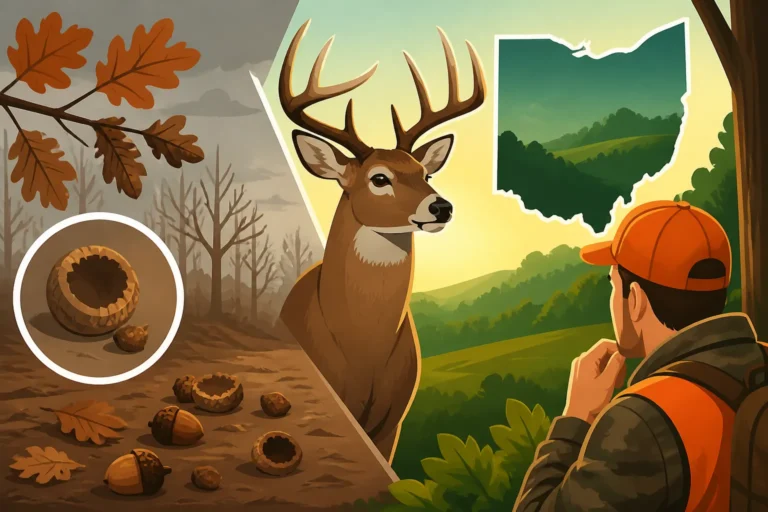
In Appalachian timber, food is a primary driver of deer movement, and understanding the dominant tree species and their mast production is paramount. Oaks are, without a doubt, the most important trees in this ecosystem. White oaks drop their acorns earlier and are generally preferred by deer due to their lower tannin content, making them sweeter. Red oaks, black oaks, and scarlet oaks drop their acorns later and provide a critical food source deeper into the fall and even early winter. Identifying different oak species and knowing when their acorns are falling is key.
When you find an oak flat or a series of scattered oak trees, get on your hands and knees and look for fresh cuttings and disturbed leaves. Deer will spend hours under these trees, gorging themselves on acorns. If you discover a poor mast year in your hunting area, this knowledge profoundly impacts your scouting efforts, as deer will be forced to seek alternative food sources. This scenario often requires specific tactics for Hunting After a Poor Acorn Year. Beyond acorns, don't overlook other mast sources. Hickories provide nutrient-rich nuts, and while not as widespread as oaks, a producing hickory grove can be a magnet for deer. Even "softer" mast like persimmon and pawpaw, often found in creek bottoms and along field edges, can be highly attractive when ripe. Learning to spot these trees and recognizing their fruit will give you an edge, especially during the early archery season.
Understanding Habitat Transitions and Edges
Deer, like many wildlife species, thrive on edges—those places where two different habitat types meet. In big Appalachian timber, these transitions can be particularly productive. Think about where a mature oak forest abruptly ends and gives way to a recent clear-cut, a dense briar patch, or an old field undergoing succession. These edges provide a mix of food (browse in clear-cuts, mast from mature trees) and cover (dense thickets). Deer will often travel along these edges, using the security of the thicker cover while being close to feeding opportunities.
Clear-cuts, especially those that are 3-10 years old, can be incredibly important. While they might look like a messy tangle to us, they are a buffet of regenerating browse for deer and offer incredibly thick bedding cover. Deer will bed down in the densest parts of these cuts, only emerging at dusk to feed on the edges or in nearby mature timber. Old logging roads, too, create linear edges that deer often utilize for travel, particularly when moving between different parts of their home range. Learning to identify these types of areas on aerial maps, perhaps using a tool like GoHunt, and then verifying them on the ground can unlock entirely new hunting opportunities. Understanding how deer utilize these specific habitat features will greatly aid your success when Hunting a Clear-Cut Regrowth Edge, as deer will travel these areas for food and cover.
Identifying Key Deer Sign in Dense Woods
Once you've started to understand the broader landscape, it's time to zero in on the specific cues that deer leave behind. In the vastness of Appalachian timber, these signs can be subtle, requiring a keen eye and a patient approach. It’s not just about seeing the sign, but understanding what it tells you about the deer’s recent activity and potential future movements.
Interpreting Rubs and Scrapes
Rubs and scrapes are like a deer's social media—they're how bucks communicate their presence and readiness to breed. When you find a rub, don't just note it; interpret it. Is it fresh, with sap still oozing from the bark, or old and weathered? The freshness tells you how recently a buck was there. The size of the rub, particularly its height and diameter, can give you a clue about the size of the buck. Smaller rubs might be from younger bucks, while larger, higher rubs usually indicate a more mature animal. A line of rubs, often following a subtle contour or leading to a bedding area, indicates a clear travel corridor that a buck is consistently using. These rub lines are essentially signposts pointing you toward preferred pathways.
Scrapes are even more complex. They consist of a pawed-out patch of ground, often with an overhanging branch (the "licking branch") that bucks will rub their preorbital glands on. Like rubs, freshness is key. Is the dirt freshly disturbed? Can you smell that distinct musky deer odor? Scrapes serve as communication hubs where deer deposit scent from their interdigital glands (from their hooves) and their preorbital and forehead glands (from the licking branch). Primary scrapes, especially those found along logging roads or at habitat junctions, are often visited repeatedly, particularly during the pre-rut and rut. Bucks will also make smaller, "mock" scrapes as they travel. Pay attention to the location of scrapes; those near thick cover or connecting food and bedding are often the most active. Understanding Scrape Lines Along a Logging Road can give you insight into a buck's travel routes and increase your chances of intercepting him.
Locating Trails and Funnels
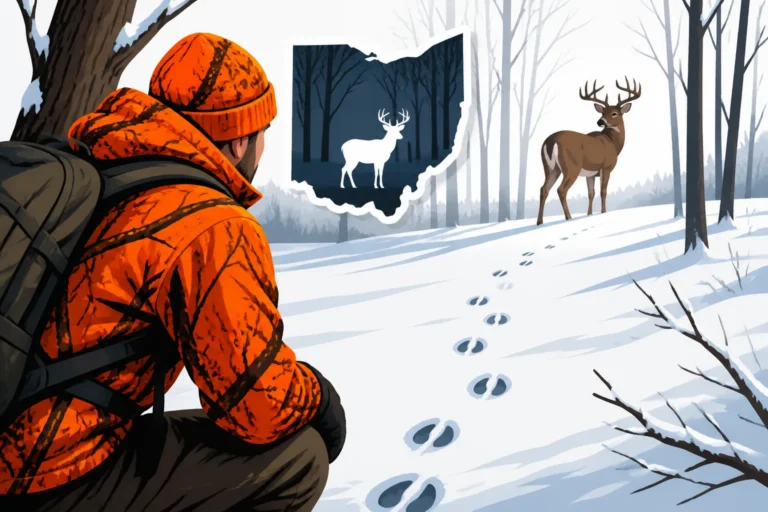
In big timber, distinguishing a well-used deer trail from an old logging track or even a faint human path requires practice. Deer trails in dense woods are rarely super highways; they are often subtle, just enough of a depression or a series of broken twigs to indicate consistent passage. Look for tracks, but also for broken spiderwebs across the trail, snapped branches at deer height, or flattened vegetation. Follow these trails to see where they lead. Do they connect to a food source, a water source, or a bedding area? The more distinct the trail, the more frequently it's used. Remember, deer will always take the path of least resistance, so trails often follow subtle terrain features.
Natural funnels are where the topography or vegetation forces deer into a narrow travel path, concentrating their movement. These are pinch points that are invaluable to hunters. Examples include saddles on a ridge, where deer cross from one side to another, or narrow strips of timber between two open fields. A creek crossing where the banks are low and easy to navigate will also act as a funnel. Understanding how these features channel deer movement allows you to strategically place yourself for an encounter. A saddle between two high points on a ridge, for instance, is a classic deer crossing. Similarly, a narrow section of woods between a clear-cut and a mature oak flat is likely to see heavy deer traffic. A great example of this is learning to hunt a Hunting a Ridge-Top Saddle for Rutting Bucks, which can be a highly productive strategy.
Droppings, Beds, and Feeding Evidence
While not as glamorous as big rubs or fresh scrapes, droppings, beds, and feeding evidence are perhaps the most reliable indicators of recent deer activity. Fresh droppings are usually soft, moist, and dark, and their presence tells you deer are currently using that specific area. The quantity of droppings can indicate how many deer, or how frequently, they are using the spot. Pay attention to the shape; deer droppings are typically cylindrical, and if you find larger, more elongated droppings, it could indicate a buck. Finding droppings in a small area implies feeding or bedding.
Bedding areas are where deer spend a significant portion of their day, especially in thick timber. Look for flattened oval depressions in the leaves or grass, often with matted vegetation. These beds are typically found in sheltered spots—on the leeward side of ridges, within dense thickets of young timber, or in brushy pockets in hollows. Deer choose bedding locations that offer security, warmth, and the ability to detect predators. A bed on a south-facing slope will provide warmth in winter, while one tucked into a dense laurel thicket offers excellent concealment. The presence of several beds in close proximity indicates a primary bedding area. The ground around a bed may also show fresh droppings or signs of browsing, further confirming its use.
Finally, don't overlook feeding evidence. This isn't just about acorns; deer are browsers and will eat a variety of vegetation. Look for nipped twigs and stems at deer height, especially on palatable species like greenbrier, honeysuckle, or various saplings. You might see bark stripped from certain trees, especially during winter when other food sources are scarce. Disturbed leaves or soft soil under mast trees, indicating where deer have rooted around for fallen nuts, also points to recent feeding. In areas like the Athens Unit of Wayne National Forest, where food sources can be scattered, every bit of feeding evidence helps you piece together the deer's daily patterns.
Strategic Scouting Approaches for Big Timber
The sheer size of Ohio's Appalachian timber makes efficient scouting crucial. You can't just wander aimlessly and expect to consistently find prime deer sign. You need a strategy that combines modern technology with old-school woodsmanship. This layered approach helps you cover more ground effectively and zero in on the most promising areas.
Leveraging Technology: Maps and Apps
Before you even set foot in the woods, the best scouting starts at home with a good mapping application. Tools like GoHunt or onX Hunt are invaluable for hunters in big timber. They provide detailed topographic maps that highlight ridges, hollows, and benches—the very features deer rely on. You can identify potential funnels, saddles, and staging areas from the comfort of your couch. Aerial imagery layers allow you to pinpoint habitat transitions, clear-cuts, thickets, and even specific tree species if the resolution is high enough. You can mark potential bedding areas, travel corridors, and feeding locations, creating a virtual game plan before you ever strap on your boots.
Another fantastic resource is the Ohio HuntFish App, provided by the ODNR. This app offers public land boundaries, which is absolutely critical when navigating large tracts of public timber like those found in Scioto County or Adams County. Knowing exactly where property lines lie prevents accidental trespassing and ensures you're hunting legally. By using these apps, you can identify remote, overlooked corners of public land that might see less pressure. You can also trace old logging roads or trails that aren't visible on basic maps, offering discreet access points. Planning your routes, marking waypoints for interesting features, and understanding the terrain before you go can save countless hours of aimless wandering. For detailed pre-season work, understanding Scouting With the Ohio HuntFish App and Reading Aerial Photos for Southeast Ohio Deer will be incredibly helpful.
Boots-on-the-Ground Reconnaissance
While technology is a fantastic planning tool, there's no substitute for "boots-on-the-ground" scouting. This is where you verify what you saw on the map and discover the subtle nuances that only direct observation can reveal. When scouting big timber, adopt a "still-hunting" mindset, even if you're not carrying a weapon. Move slowly, quietly, and deliberately. Stop frequently to glass ahead, listen, and scan the forest floor and tree trunks for sign. Remember, you're not just walking; you're observing, interpreting, and connecting the dots.
One effective strategy is to "grid search" promising areas you've identified on your map, systematically covering every square inch of a ridge or hollow. Walk subtle contours, following benches and checking every funnel point. Look for concentrations of sign—areas with multiple rubs, scrapes, fresh tracks, and droppings usually indicate a higher likelihood of deer presence. Don't be afraid to go deep and explore remote corners. Often, the best sign is found where human foot traffic is minimal. This type of intensive scouting, similar to the techniques used for Still-Hunting Shawnee State Forest Ridges, helps you build a detailed picture of deer movement patterns. Even during scouting, aim to be as stealthy as possible, moving with the wind, mimicking actual hunting conditions. You never know when you might jump a deer, giving you valuable intel on their preferred escape routes and bedding spots.
Interpreting Pressure and Finding Undisturbed Areas
In heavily hunted states like Ohio, especially on public lands, hunter pressure is a major factor influencing deer movement. In big Appalachian timber, deer have vast spaces to escape, and they will quickly adapt to human intrusion. If you find an area with abundant fresh sign near a well-used trail or road, it might be a great spot during the off-season, but it could become a ghost town once hunting season opens. Deer will learn to move nocturnally or simply abandon high-pressure areas for sanctuaries. This is why Hunting Pressure on Ohio Public Land is such a critical consideration.
Your scouting should always include an element of looking for undisturbed areas. This means venturing deeper, often into the steepest, thickest, and most inconvenient terrain. Look for areas that require extra effort to access, such as remote pockets in the Wayne National Forest or the farthest reaches of Shawnee State Forest that are miles from the nearest parking lot. These hard-to-reach spots often hold older, less pressured deer. Pay attention to older, less fresh sign that indicates historical use, which could become current use once hunting pressure pushes deer from easier-to-access locations. Sometimes, Finding Ground Others Walk Past is less about pristine, fresh sign and more about understanding where deer will go when the orange army hits the woods. These overlooked spots become critical refuges for deer.
Adapting Your Search for Different Seasons
Deer behavior and their use of the Appalachian timber change significantly throughout the hunting season, primarily driven by food availability, breeding activity, and weather. Successful scouting isn't a one-and-done activity; it's an ongoing process of adapting your search to these seasonal shifts.
Early Season and Mast-Driven Movement
When Ohio's archery season opens in late September, deer movement is largely dictated by food. Early mast crops, particularly acorns from white oaks and other early-dropping species, are absolute magnets. Your scouting in the late summer should focus heavily on identifying these productive oak stands. Deer will often bed close to these food sources, emerging in the late afternoon or early morning to feed. Look for fresh droppings, disturbed leaves under oak trees, and perhaps subtle trails leading into the thickest parts of nearby hollows where they bed.
Beyond acorns, don't forget about other early-season food sources like wild grapes, persimmons, and pawpaws, often found along creek bottoms and sunny edges. These localized food plots can concentrate deer movement in specific areas. During this time, deer patterns are often consistent and predictable, making early season scouting highly rewarding. Understanding when Ohio's Archery Season Opening Day is allows you to time your scouting to catch deer in these predictable patterns. If you find a hot oak flat with fresh sign, you've found an early-season honey hole.
Rut-Time: Focusing on Buck Sign and Travel Corridors
As October transitions into November, the focus shifts dramatically from food to breeding. This is when the woods come alive with buck sign. The increase in testosterone means bucks are on the move, actively seeking does. This is the prime time to find heavy rub lines and primary scrapes. Bucks will use the ridgelines and saddles as travel corridors to cover ground efficiently while scent-checking for does. They'll also patrol the edges of thick bedding areas, hoping to intercept receptive does.
During the rut, your scouting should concentrate on these travel routes: the tops of long ridges, saddles that connect different ridge systems, and the funnels created by narrow sections of timber. Look for fresh, aggressive rubs and active scrapes, as these indicate a buck's presence and territorial marking. This period is when you're most likely to see bucks moving during daylight hours, making it an exciting time for reconnaissance. Knowing when Hunting the Rut in Early November will allow you to pinpoint the most effective scouting times. Don't be afraid to revisit known travel corridors from previous seasons; bucks often use the same general areas year after year.
Late Season: Food and Thermal Cover
Once the gun seasons pass and the deep cold of December and January sets in, deer priorities shift again towards survival: finding reliable food sources and adequate thermal cover. The rich mast crops of fall are largely gone, and deer turn to persistent food sources like standing crops (if any remain on adjacent private land), persistent browse (honeysuckle, greenbrier), and any late-dropping acorns. Your scouting efforts should now focus on identifying these crucial late-season food patches.
Thermal cover becomes paramount, especially during bitter cold snaps or heavy snow. Deer will seek out dense evergreen stands (pines, cedars), thick laurel patches, or the leeward sides of steep hillsides that block the wind and capture sunlight. These areas provide warmth and security, allowing deer to conserve energy. Look for concentrated beds and heavy trails leading into these thickets, often associated with a nearby food source. South-facing slopes that catch the most sunlight are also key during this period. Understanding Late-Season Food Sources for Ohio Whitetails and how deer utilize them is crucial for success during these challenging months. It's often about finding the combination of the thickest cover and the most accessible food in a specific area.
Ohio Deer Sign Guide by Season
| Deer Sign Type | What it Indicates | Prime Season to Find | Location Focus |
|---|---|---|---|
| Fresh Tracks | Recent deer movement, direction of travel, size of deer | All Season | Trails, creek beds, soft ground near food/bedding |
| Droppings (Scat) | Deer feeding/bedding activity, freshness indicates recent use | All Season | Under food trees, bedding areas, travel corridors |
| Rubs | Buck presence, territorial marking, travel routes (especially rub lines) | Pre-Rut, Rut | Ridge tops, travel corridors, edges of thickets |
| Scrapes | Buck communication, breeding activity, doe presence | Pre-Rut, Rut | Logging roads, habitat edges, transition zones, funnels |
| Beds | Bedding areas, security cover, thermal protection | All Season | Leeward ridges, dense thickets, south-facing slopes |
| Browsing/Feeding | Active feeding, preferred food sources | Early Fall, Late Season | Mast trees, persistent browse, clear-cut edges |
| Trails | Consistent travel paths between food, water, and bedding | All Season | Ridges, hollow bottoms, funnels, habitat edges |
Disclaimer
Please note that hunting regulations, seasons, and local conditions can change. Always consult the most current Ohio Department of Natural Resources (ODNR) hunting regulations before heading into the field. This guide provides general information and recommendations, but it is your responsibility to ensure compliance with all applicable laws and safety guidelines.