Marsh Boats and Push Poles
There's a special kind of dedication that comes with chasing waterfowl in Ohio's vast and often unpredictable wetlands. Many of us have experienced that moment: standing hip-deep in waders, looking out at a promising spread of decoys, only to realize the birds are landing just out of reach in water too deep to wade, or that the mud beneath our feet is simply too thick to push through. That’s precisely when you realize that to truly unlock the best of Ohio’s marsh hunting, you need more than just waders; you need a reliable marsh boat and the silent propulsion of a push pole. This guide will dive deep into why these tools are essential for success and how to pick and use them effectively in our unique Ohio environments.
Why Marsh Boats Are Your Best Friend in Ohio's Wetlands
Ohio's marshes, from the sprawling Lake Erie wetlands to smaller inland pockets, present a dynamic and often challenging environment for waterfowl hunters. While waders are absolutely indispensable, they have their limits. A marsh boat extends your reach, carries your gear, and provides a stable platform where waders simply can't compete.
The Limitations of Waders Alone
Think about it: you've trekked through knee-high cattails, the cold water seeping in a little bit with every step, your decoy bag feeling heavier than a sack of bricks. You finally find that perfect little opening, but the water just beyond is a good foot or two deeper than your waders allow. Or perhaps you're in an area with a soft, silty bottom that threatens to suction off your boots with every step. We've all been there, mentally calculating the risk of taking a dunk versus missing out on prime hunting ground. Waders are fantastic for covering shallow areas and providing mobility on solid ground or firm mud, but they fall short when you need to cross deeper channels, navigate open water stretches, or transport a significant amount of gear, decoys, and especially your retrieving dog. In places like the Maumee Bay marshes or some of the larger wildlife areas, covering long distances in deep, soft muck can quickly become exhausting and unsafe without a proper vessel. Waders for Ohio Marsh Hunting can only take you so far!
Types of Marsh Boats for Ohio Hunters
The good news is that there’s a marsh boat out there for almost every Ohio hunter’s needs and budget. Understanding the different types can help you make an informed decision about what will serve you best in our diverse wetlands.
Layout Boats and Sneak Boats
These are the stealth fighters of the marsh. Layout boats and sneak boats are designed with an incredibly low profile, allowing you to blend seamlessly into the surrounding cover. Many are designed to be stable enough to shoot from, offering an unparalleled advantage for wary birds that shy away from anything resembling a traditional boat. They're often lightweight and can be camouflaged heavily. The downside is typically limited capacity; they're usually designed for one or two hunters and minimal gear. If your goal is pure stealth and getting right into the thick of things on a calm day, these are fantastic. Imagine setting up a perfect spread in a hidden pocket of Magee Marsh and disappearing into your boat.
Jon Boats and Small Skiffs
For many Ohio hunters, a flat-bottomed jon boat or a small skiff is the workhorse of choice. These boats offer a great balance of stability, capacity, and maneuverability. Their flat bottoms allow them to float in incredibly shallow water, making them perfect for navigating the mud flats and channels of inland wetlands or the shallower portions of Lake Erie. They can carry a decent load of decoys, blind material, and a dog or two. While not as low-profile as a dedicated layout boat, they can often be camouflaged effectively with grass mats or blind netting. Their versatility makes them suitable for everything from setting up large decoy spreads to retrieving downed birds across open water. When considering something robust enough for Ohio Waterfowl Hunting on Lake Erie and Inland, a sturdy jon boat might be just the ticket.
Specialized Marsh Skiffs
Beyond the common types, there are also specialized marsh skiffs, often custom-built or from niche manufacturers. These might feature unique hull designs for even shallower running, incredibly durable materials to withstand constant abuse from ice and stumps, or integrated blind systems. They are typically lighter than traditional jon boats of similar size, making them easier to push, pull, and launch. While they often come with a higher price tag, their performance in truly challenging marsh environments can be unmatched. When you’re spending good money on gear, a resource like GoHunt can offer valuable reviews and comparisons of different specialized models.
Key Features to Look for in an Ohio Marsh Boat
Choosing the right marsh boat for Ohio conditions means considering several crucial factors beyond just the basic type.
- Durability and Puncture Resistance: Our Ohio marshes are not pristine lakes. You'll encounter submerged stumps, ice chunks late in the season, sharp rocks, and thick rebar. A boat made from durable, thick-gauge aluminum or rugged rotomolded plastic will stand up to the abuse better than thinner materials. You don't want to be patching a leak in the dark, miles from the launch.
- Stability: Whether you're standing up to push, swinging on a bird, or your retrieving dog is enthusiastically jumping in and out, stability is paramount. A wider beam and a flatter bottom generally equate to more stability. Test-sitting or even test-standing in a boat before buying is a wise move.
- Weight and Portability: Will you be launching from a ramp, or will you need to drag it across a levee or through a muddy field to access a remote pond? Lighter boats are easier to handle solo or with a partner. Consider if you'll be car-topping it, using a small trailer, or even an ATV to get it to your spot.
- Camouflage and Concealment: The marsh is all about blending in. While you can add your own camouflage, a boat that starts with a dull, natural color is a step ahead. Think about how easily you can add natural vegetation or a dedicated blind system to it. This ties directly into effective Layout Blind Hunting Ohio Farm Fields or hidden marsh setups.
- Capacity: How many hunters will typically be with you? How many decoys do you plan to run? Do you hunt with a dog? All these factors dictate the length and width you'll need. Don't underestimate how much space decoys, blind bags, and even a well-behaved retriever can take up.
| Boat Type | Best For | Pros | Cons | Typical Capacity |
|---|---|---|---|---|
| Layout/Sneak Boat | Stealthy hunting in open water/light cover | Incredibly low profile, excellent concealment, stable for shooting | Limited gear capacity, often 1-2 hunters, not for heavy transport | 1-2 hunters, minimal gear |
| Flat-Bottom Jon Boat | Versatile, shallow water, moderate gear transport | Stable, good capacity, shallow draft, durable, often affordable | Can be heavy, not as stealthy as layout, exposed to elements | 2-3 hunters, moderate gear, dog |
| Specialized Marsh Skiff | Extreme shallow water, specific marsh conditions | Very lightweight, extremely shallow draft, highly durable | Higher cost, often custom, specific design for niche use | 1-2 hunters, moderate gear |
The Art and Science of the Push Pole
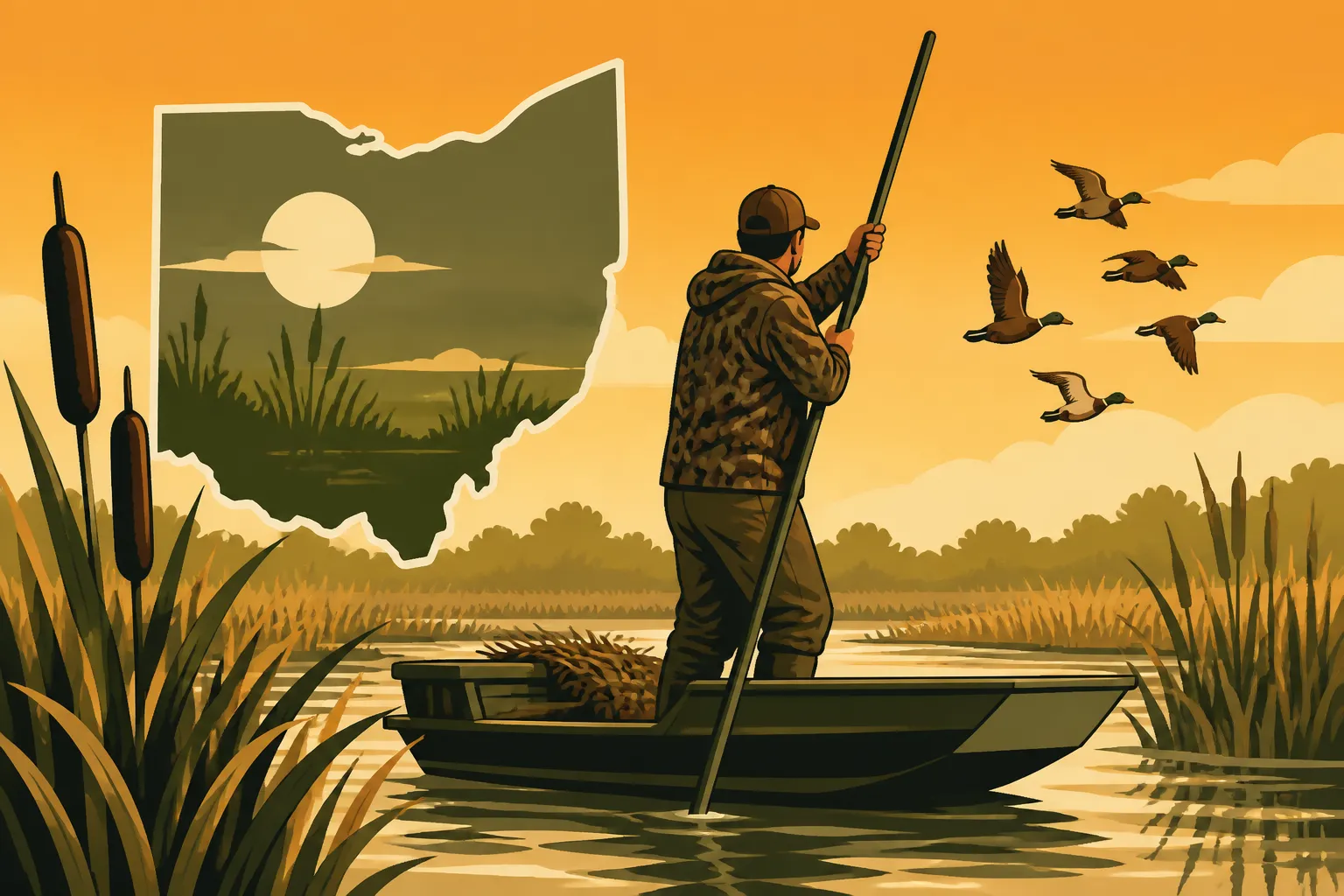
Once you have your marsh boat, you're only halfway there. The second, equally crucial tool is the push pole. This simple yet effective piece of gear is what truly allows you to navigate the shallow, vegetated, and often silty waters where paddles get tangled and motors get fouled.
Why a Push Pole, Not a Paddle or Motor?
This is a question often asked by new marsh hunters, and the answer lies in the unique characteristics of wetland environments.
- Silence is Golden: Waterfowl are incredibly wary creatures. The splash of a paddle or the whir of an outboard motor, even a quiet electric one, can easily send ducks and geese flaring before you're even close to your desired spot. A push pole, used correctly, allows for almost completely silent propulsion, letting you sneak into position undetected. This quiet approach is paramount, especially when Hunting Lake Erie Marsh Zone Waterfowl where birds are often highly pressured.
- Navigating the Nasty Stuff: Ohio's marshes are rarely open water. They are choked with cattails, lily pads, submerged weeds, and thick, soupy mud. A paddle offers minimal leverage against such resistance, and propeller blades on motors will quickly foul and bog down. A push pole, on the other hand, lets you physically push off the bottom, giving you powerful, direct thrust through the densest vegetation and over the softest mud.
- Environmental Friendliness: Many sensitive marsh areas, particularly within state wildlife areas, have strict regulations on motor use, often prohibiting gasoline outboards or even setting horsepower limits for electric motors. In some cases, motors are simply not allowed at all. The push pole bypasses all these restrictions, ensuring you can access these areas legally and with minimal impact on the delicate ecosystem. It's an extension of ethical hunting practices.
- Precision and Control: In tight quarters, around blind corners, or when positioning your boat precisely within a decoy spread, a push pole offers unmatched control. You can pivot, stop on a dime, and navigate with a finesse that's hard to achieve with a paddle or motor. This kind of precision is vital when trying to perfectly position your spread for Decoy Spreads for Lake Erie Divers.
Materials and Construction of a Good Push Pole
Just like your boat, not all push poles are created equal. The material and design significantly impact its effectiveness and durability.
- Materials:
- Fiberglass: A very common choice, fiberglass poles offer a good balance of strength, flexibility, and affordability. They are generally durable and can withstand significant bending without breaking.
- Aluminum: Aluminum poles are lightweight and very rigid. They are excellent for penetrating hard bottoms and offer great pushing power. However, they can be noisy if they scrape against rocks or other hard objects, and can sometimes bend if caught incorrectly.
- Carbon Fiber: The premium option, carbon fiber poles are incredibly lightweight and remarkably strong. They offer excellent stiffness, reducing fatigue during long pushes, and are generally very quiet. The trade-off is typically a higher cost. For a hunter serious about minimizing weight and maximizing performance, it's a worthwhile investment.
- Construction: Look for a pole that feels robust but isn't overly heavy. The most critical part of a push pole is the "foot" or "duck foot" at the end. This broad, often V-shaped or flared end is designed to spread the pushing force over a wider area, preventing the pole from sinking too deeply into soft mud and providing better grip on firm bottoms. Ensure it's securely attached and made from a durable, non-slip material. Some poles are one-piece, while others break down into two or three sections for easier transport and storage. GoHunt's gear reviews frequently highlight the pros and cons of different push pole designs, helping hunters choose wisely.
Proper Push Pole Technique for Ohio Marshes
Using a push pole isn't just about sticking it in the mud and shoving; there's a technique to it that improves efficiency, maintains balance, and reduces fatigue.
- Stance and Balance: Stand in your boat with your feet spread slightly, knees slightly bent, to create a stable base. Keep your body centered in the boat. If you’re pushing from the stern, face forward. Hold the pole firmly, but not with a death grip. Your hands should be spaced to give you good leverage.
- The Pushing Motion: This is where many beginners go wrong. Don't just rely on arm strength. Engage your core and use your legs. Push the pole down and into the bottom, then lean into it, driving the boat forward with your body weight. It's a rhythmic, full-body motion, not just an arm exercise. Keep the pole at a slight angle to the boat, pushing behind you.
- Navigating Weeds and Muck: In thick vegetation, you might need to use shorter, more powerful jabs. If the pole gets stuck in deep mud, don't yank it straight up; twist it gently to break the suction before pulling it free. Learning to "feel" the bottom is crucial. Sometimes you'll find a harder vein of earth to push off; other times it's a constant battle with soft silt. Patience is key.
- Safety Considerations: The marsh is wet, and boats can be tippy, especially if you're standing. Always be mindful of your balance. If the pole gets firmly stuck, it's safer to let go and retrieve it later than to be pulled overboard trying to free it. Wearing a PFD (personal flotation device) is always a smart choice, especially in cold weather or if you're alone. Learning the ins and outs of proper technique can also enhance your safety when navigating challenging waterways while Hunting the Ohio River Backwaters.
Combining Boats and Poles for Maximum Effectiveness
The true power comes from using your marsh boat and push pole in tandem. This combination unlocks access to prime hunting grounds and enhances your overall efficiency in the field.
Scouting and Accessing Remote Pockets
Before the season even opens, your boat and pole become invaluable scouting tools. You can silently penetrate hidden sloughs and backwater areas that are unreachable on foot or by motorboat. This allows you to locate obscure roosting spots, evaluate food sources, and identify perfect ambush points long before opening day. Imagine finding a quiet, untouched pocket of water nestled deep within a public wildlife area – a spot where the ducks feel safe because few hunters can reach it. This ability to access remote pockets is vital for successful Scouting Ohio Public Land Before Season.
Silent Approach and Decoy Deployment
When the season arrives, the combination of boat and pole gives you an undeniable advantage. You can load up all your decoys, blind material, and dog without having to make multiple trips or struggle through deep mud. Then, with the silent glide of the push pole, you can approach your chosen setup location without spooking any early birds. Once on site, the boat provides a stable platform from which to meticulously deploy your decoy spread, ensuring perfect spacing and realistic positioning. You can easily adjust a decoy that's floated out of place or retrieve one that's sunk without disturbing the area. This stealth is crucial for Reading a Marsh for a Morning Flight and getting your spread just right.
Retrieving Birds and Gear
It's one of the most common frustrations: a downed bird sails into thick cover or lands just beyond wading distance. With your marsh boat and push pole, retrieval becomes a simple task. You can quickly and quietly move to the bird, preventing potential loss and minimizing disturbance to other birds in the area. The same goes for collecting your decoys at the end of the hunt. No more wading back and forth with armfuls of muddy dekes; simply load them directly into the boat, saving energy and keeping you drier. For those long days, especially when the Duck Migration Timing Through Ohio is in full swing, efficiency like this means more time hunting and less time struggling.
Maintenance and Storage of Your Marsh Gear
Taking care of your equipment is key to ensuring it lasts season after season. Marsh conditions are tough on gear, so a little effort goes a long way.
- Cleaning: After every hunt, especially if you've been in saltwater or brackish water near Lake Erie, rinse your boat and pole thoroughly with fresh water. Remove all mud, vegetation, and any debris. This prevents corrosion and build-up.
- Drying: Allow everything to dry completely before storing. Moisture trapped in crevices or under covers can lead to mildew, rot, or even structural damage, particularly for wooden elements or fabric blinds.
- Inspection: Regularly inspect your boat for dings, scratches, or potential leaks. Check the push pole for cracks, splinters (on fiberglass), or bends (on aluminum). Address any issues promptly. Small repairs now can prevent big problems later.
- Storage: Store your boat upside down or with a cover to prevent water accumulation and protect it from UV degradation. Keep it off the ground, if possible, to deter critters from nesting in it. Store your push pole flat or hanging to prevent warping. Protecting your valuable waterfowl gear, including your Waterfowl Gear for Lake Erie and Inland Marsh, will extend its life and save you money in the long run.
Navigating Ohio's Wetland Regulations
Ohio's diverse hunting opportunities come with a set of rules and regulations designed to manage wildlife and ensure safety. When you're using marsh boats and push poles, it's vital to be aware of the specific guidelines for the area you're hunting.
Understanding Public vs. Private Access
Ohio offers a fantastic amount of public hunting land, including numerous wildlife areas with prime marsh habitat. However, rules can vary significantly between public and private properties. On public lands, such as areas managed by the Ohio Department of Natural Resources (ODNR), you'll often find specific regulations regarding what kind of boats are permitted, where you can launch, and even how long you can leave gear unattended. Private lands, on the other hand, are governed by the landowner's rules, which typically means you'll need explicit permission to access or use your boat there. Always check the ODNR's official website or consult resources like GoHunt for detailed information on specific public areas you plan to visit, paying close attention to the most current Ohio's New Waterfowl Zone Map.
Motor Restrictions and No-Wake Zones
This is one of the most critical areas where your push pole becomes not just an option, but a necessity. Many of Ohio's most sensitive marsh habitats, particularly within state wildlife areas, have strict rules regarding outboard motors. You might encounter:
- "No Motor" Zones: Entire sections of marsh where any motorized propulsion is strictly prohibited. Here, your push pole is your only legal means of travel.
- Electric Motor Only Zones: Areas where gasoline motors are banned, but electric trolling motors are allowed, sometimes with horsepower restrictions. Even in these zones, a push pole is often more effective for silent, shallow-water navigation.
- "No Wake" Zones: Even in areas where motors are allowed, you'll frequently find no-wake zones, especially near launching points or sensitive wildlife habitats. Using a push pole here allows you to move efficiently and legally without disturbing the water or other hunters.
Always assume there are motor restrictions in place unless you've confirmed otherwise for your specific hunting area. These rules are in place to protect the habitat and ensure a quality hunting experience for everyone.
Safety and Registration Requirements
Operating any boat in Ohio, even a small marsh boat, comes with safety responsibilities. While your small marsh boat might not feel like a typical "vessel," it's important to know the rules.
- Boat Registration: Boats over a certain length or those with any type of motor (even electric) generally need to be registered with the state of Ohio. Always check the current regulations to ensure your boat is legally compliant. The registration process usually involves a fee and displaying registration numbers on your boat.
- Personal Flotation Devices (PFDs): It is mandatory to have a wearable PFD for every person on board your boat. For those 12 years of age and younger, wearing a PFD is required when the boat is underway. This is especially critical in cold weather or rough water, common during Ohio's waterfowl seasons.
- Other Safety Gear: Depending on the size of your boat and whether you have a motor, you may also be required to carry other safety equipment, such as visual distress signals (flares), a sound-producing device (whistle or horn), and navigation lights if operating before sunrise or after sunset.
- Hunter Education: While not directly tied to boat use, remember that anyone born on or after January 1, 1982, must successfully complete a hunter education course to hunt in Ohio. This foundational safety knowledge is crucial for all aspects of your hunt, whether you're targeting Ohio Duck Daily Bag Limit or other species.
By understanding and adhering to these regulations, you ensure a safe, legal, and enjoyable hunting experience for yourself and others in Ohio's incredible wetlands.
Disclaimer
This article is for general informational purposes only and does not constitute professional advice. Laws, prices and regulations vary by location and change over time. Consult a qualified professional for guidance on your specific situation.