Upland Vests With Water Capacity
There's nothing quite like a crisp autumn morning, a good bird dog at your side, and miles of Ohio fencerows or CRP fields stretching before you. But let's be honest, chasing pheasants, flushing grouse, or running rabbits through the thick cover of an Ohio fall can be incredibly thirsty work, not just for us, but especially for our four-legged hunting partners. Fumbling for a water bottle in a pocket or lugging a separate pack for water breaks the rhythm of the hunt and can leave you and your dog feeling parched and underperforming. This guide is all about finding the perfect upland vest with integrated water capacity to keep you both hydrated and comfortable throughout your long days afield.
Why Staying Hydrated is Non-Negotiable on the Upland Trail
It’s easy to underestimate how much fluid you lose while walking miles through fields and timber, especially when you're focused on the hunt. That constant movement, the adrenaline, and even just the cool breeze can contribute to dehydration, which can sneak up on you faster than you think. And for our dogs, it's an even more critical concern.
The Hunter's Thirst: Keeping Your Edge
Imagine yourself pushing through a dense patch of multiflora rose in an old fencerow, hoping to kick up a cottontail, or steadily working a cut cornfield margin for a wily rooster pheasant. You’re exerting yourself, climbing over downed logs, pushing through tangles, and constantly scanning for movement. Your heart rate is up, you're sweating, even if it's not a scorching hot day. Dehydration doesn't just make you feel thirsty; it can lead to fatigue, headaches, dizziness, and a significant drop in mental focus and physical stamina. You might miss a flush because your concentration wanes, or your legs might feel like lead when you need that burst of energy to keep up with a running bird.
On a long walk through a rolling Ohio landscape, perhaps while Rabbit Hunting Ohio Fencerows or Pheasant Hunting Ohio Farm Country, having readily accessible water can literally make or break your day. Taking small, frequent sips from a hydration bladder rather than chugging a bottle during a longer stop helps maintain a consistent hydration level, keeping you alert and energetic. This steady supply prevents the sharp dips in performance that come with waiting until you're truly parched to drink. It's about proactive hydration, not reactive, which allows you to maintain peak physical and mental performance throughout the often physically demanding pursuit of upland birds.
Keeping Your Canine Companion Hydrated and Happy
Our bird dogs are athletes, plain and simple. Whether they’re a pointing dog locked on scent or a flushing retriever tirelessly quartering a field, their energy expenditure is immense. They’re running, sniffing, and working harder than we are, often in dense cover that can trap heat. A dog can overheat quickly, especially a driven hunting dog that won't quit until told. Without adequate and frequent access to fresh water, they risk serious heatstroke, exhaustion, and injury. This isn't just about comfort; it's about their health and safety.
I’ve seen dogs get sluggish, their tongues hanging low, their pace slowing, simply because they weren’t getting enough water. When a dog is focused on the hunt, they might not even signal their thirst clearly until it's a serious problem. A vest with water capacity allows you to offer your dog a drink whenever you take one yourself, or even more frequently, ensuring they stay cool and hydrated. Many hunters carry a collapsible bowl to make this easy, ensuring their valued Bird Dog Gear for Ohio Farm Country is well-cared for. This consistent hydration keeps their noses working efficiently, their stamina high, and ultimately, makes them more effective hunters and healthier companions.
Beyond Just a Water Bottle: The Limitations of Traditional Carry
For years, hunters just shoved a water bottle into a cargo pocket or a small backpack. While functional, it’s far from ideal. Think about it: every time you want a drink, you have to stop, take off your pack or reach awkwardly into a pocket, unscrew a cap, take a swig, recap, and put it back. That might not sound like much, but over the course of a long day of hunting, those small interruptions add up, breaking your focus and wasting precious time. If you have a dog, it’s even more of a hassle.
Loose water bottles can also shift around, creating uncomfortable pressure points or throwing off the balance of your vest. They can leak, drenching other gear, or clank against things, potentially spooking game. The limited capacity of standard bottles often means you run out of water far too soon, especially on longer excursions or warmer days, leaving you and your dog rationing sips or facing the unpleasant prospect of a dry, thirsty walk back to the truck. An integrated hydration system addresses all these frustrations, providing a seamless, on-demand water supply.
Key Features to Look for in Upland Vests with Water Capacity
When you're investing in a good upland vest, especially one designed to carry water, you want to make sure it truly meets the demands of an Ohio hunting day. It's not just about throwing a water bladder into any old vest; the best ones are thoughtfully designed for both hunter and dog.
Integrated Hydration Systems: More Than Just a Pouch
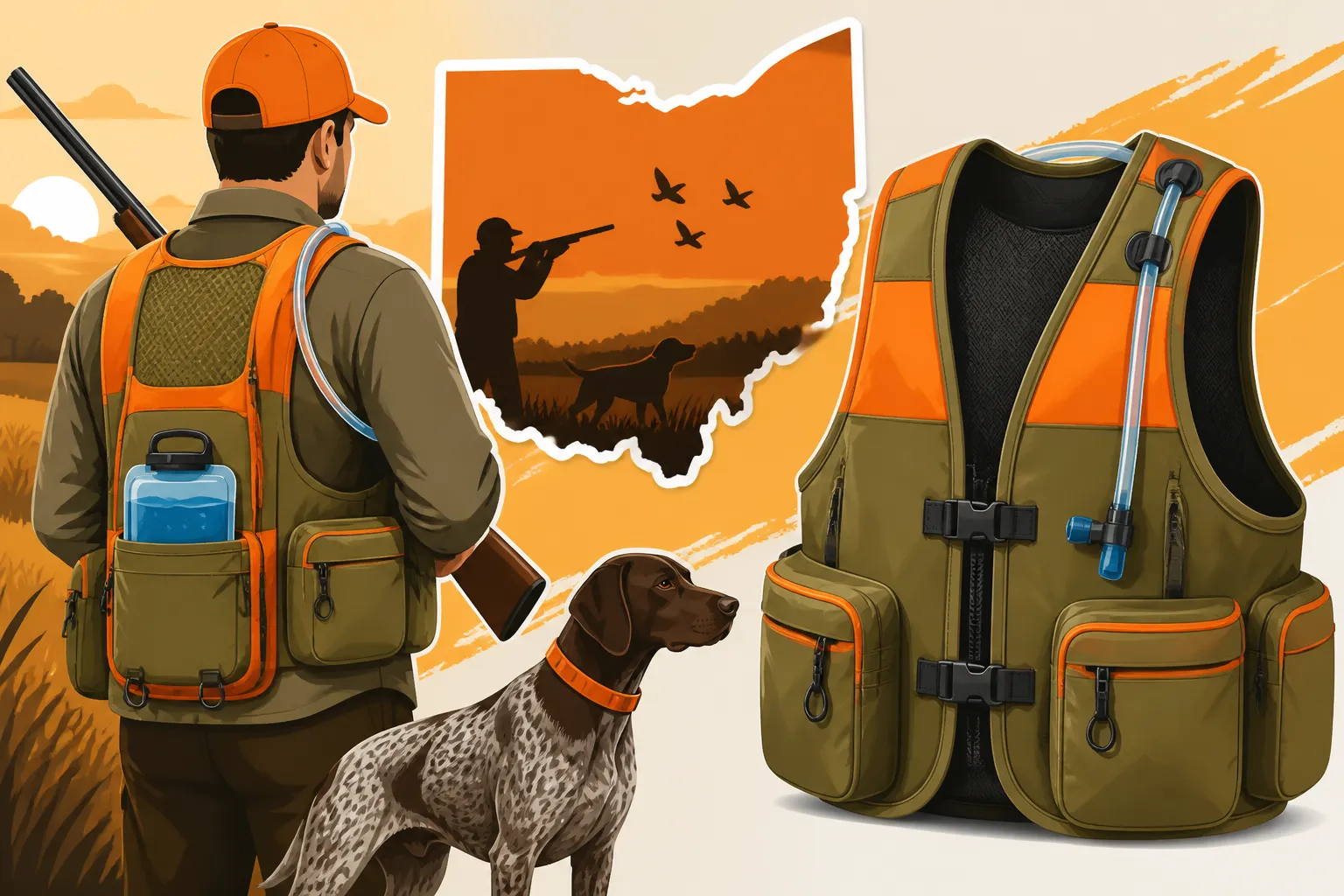
The heart of these vests is, of course, the hydration system itself. Look for vests that come with a dedicated bladder pocket, typically designed to hold 1.5 to 3 liters of water. The bladder itself should be made from a durable, food-grade material that doesn't impart a plastic taste to your water. Crucially, the hose routing needs to be well-engineered, allowing the hose to run comfortably over your shoulder or through loops, culminating in a bite valve that's easy to access without fumbling.
The capacity needs to match your typical hunt duration and conditions. A 1.5-liter bladder might suffice for a quick morning hunt, but for an all-day expedition through big blocks of public land like those found while Hunting Shawnee State Forest Ridges, especially with a dog, you’ll likely want 2-3 liters. Ease of filling and cleaning is paramount. Look for bladders with wide-mouth openings or slide-top closures that make it simple to get ice in and scrub the inside. Proper cleaning is key to preventing mold and keeping your water tasting fresh, so consider designs that allow for thorough drying after each use.
Smart Storage for All Your Essentials
Beyond water, an upland vest needs to carry everything else vital for a successful hunt. We’re talking shells, a game bag, possibly a first-aid kit for you and your dog, a dog whistle, a GPS unit, and your phone. The best vests integrate the hydration system without compromising on this essential storage.
- Shell Loops: Conveniently placed external loops or internal pockets that keep your shotgun shells organized and quickly accessible. There’s nothing worse than fumbling for shells when a bird flushes unexpectedly.
- Game Bag: A spacious, easy-to-access game bag across the back is non-negotiable. It should be large enough to comfortably carry a few pheasants, a limit of rabbits, or several squirrels without feeling cumbersome. Look for blood-proof or easily cleanable linings. Some vests, like certain models available through GoHunt, feature expandable game bags or those that can be detached for cleaning, which is a huge plus.
- Accessory Pockets: Multiple pockets, both zippered and open-top, are essential for storing everything from dog treats and a leash to your truck keys and an emergency compass. Pockets with secure closures prevent items from bouncing out when you’re navigating rough terrain. Think about how a good Turkey Vest With a Kickstand Seat has specialized pockets for calls; an upland vest needs similar thoughtful organization.
Comfort and Fit for Long Days Afield
You're going to be wearing this vest for hours, potentially walking many miles. If it's uncomfortable, rubs, or distributes weight poorly, you're going to feel it.
- Ergonomics and Weight Distribution: A full water bladder can add significant weight. The vest should be designed to distribute this weight evenly across your shoulders and hips, preventing strain. Padded shoulder straps and a supportive waist belt are crucial.
- Adjustability: Look for vests with multiple points of adjustment – shoulder straps, side straps, and chest straps – to ensure a snug, personalized fit over various layers of clothing. A vest that fits well moves with you, not against you.
- Ventilation: Walking often leads to sweating. Mesh panels on the back and sides can significantly improve airflow, helping to keep you cooler and prevent uncomfortable clamminess, especially during early-season hunts when temperatures are mild.
- Freedom of Movement: The vest should not restrict your shooting motion. You need to be able to smoothly shoulder your shotgun and swing on a bird without the vest snagging or bunching up.
Durability and Materials: Built to Endure Ohio Cover
Ohio upland hunting can be tough on gear. From briar patches to tangled fencerows and wet fields, your vest needs to stand up to abuse.
- Tough Fabrics: Look for rugged materials like heavy-duty nylon or Cordura. These fabrics resist tears, punctures, and abrasion from thick cover. Reinforced stitching at stress points will also extend the life of the vest.
- Water Resistance: While not necessarily waterproof, a good upland vest should offer some degree of water resistance to protect your gear from light rain, dew, or splashes. This is especially important for electronics or maps.
- Robust Zippers and Hardware: Zippers should be heavy-duty and easy to operate with gloved hands. Buckles and other hardware should be durable and resistant to breaking or seizing up in the field. Cheap components will fail when you need them most.
Choosing the Right Upland Hydration Vest for Your Ohio Hunt
With so many options out there, selecting the perfect upland vest with water capacity can feel a bit overwhelming. But by considering your specific hunting style, the conditions you'll face, and your personal preferences, you can narrow down the choices and find a vest that serves you well for many seasons to come.
Matching Capacity to Your Hunting Style
The ideal water capacity isn't one-size-fits-all. It really depends on the type of hunts you typically embark on in Ohio.
- Short Morning Hunts (1-2 hours): If you're only heading out for a quick jaunt before work or a brief afternoon walk on a nearby parcel, a vest with a 1.5-liter bladder might be plenty. This keeps the weight down and allows for quick hydration for both you and a single dog. You might not need as many pockets for extra layers or extensive gear.
- Half-Day Excursions (2-4 hours): For a typical Saturday morning or afternoon hunt, especially in warmer weather or with an active dog, a 2-liter capacity is a good sweet spot. This provides enough hydration without making the vest overly bulky or heavy. You’ll have enough to take care of yourself and provide frequent water breaks for your retriever working hard in the cover.
- All-Day Adventures (4+ hours): Tackling larger public lands like Killdeer Plains Wildlife Area or exploring multiple sections of farmland with extended drives requires a more substantial setup. A 3-liter bladder, perhaps even with additional external water bottle pockets, would be advisable. This ensures both you and your dog have ample hydration to last the entire day, especially if you're pushing hard and perhaps even trying to get a second limit of squirrels while Squirrel Hunting Ohio Oak Ridges. This larger capacity often means the vest itself is more robust, offering better support and potentially more specialized pockets.
Consider the time of year too. Early season hunts in September and October for small game or even dove can be surprisingly warm, requiring more water. Late season hunts in December or January might be colder, reducing overall water consumption, but a quality vest will still keep you comfortable.
Balancing Pockets, Gear, and Water Weight
One of the biggest challenges with any hunting vest is finding the right balance between carrying what you need and not overloading yourself. Adding water capacity further emphasizes this.
- Assess Your Essentials: Before you even look at vests, lay out everything you typically carry on an upland hunt: shells, dog whistle, leash, first-aid kit, compass, GPS, phone, knife, dog treats, perhaps a light snack. Now, consider your water needs.
- Prioritize Accessibility: Think about which items you need instant access to (shells, whistle, water hose) and which can be stowed more securely (keys, wallet, heavier items). The best vests will have a thoughtful layout of pockets that caters to these needs.
- Don't Overdo It: A common mistake is to get a vest with too many pockets and then fill them with unnecessary items, adding weight and bulk. Try to be pragmatic. Do you really need three different types of dog treats or can you consolidate? Every ounce adds up over miles.
- GoHunt Research: When I’m considering a new piece of gear like a vest, I always check out review sections on sites like GoHunt. Real-world hunter reviews often highlight how well a vest manages its loaded weight and how accessible the pockets truly are once you’re out in the field. This kind of insight is invaluable for understanding the practical balance of features.
Trying Before You Buy: The Importance of Fit and Feel
Just like a good pair of boots, an upland vest needs to fit you comfortably. Online shopping is convenient, but for something you'll wear for hours, a physical fitting can make all the difference.
- Simulate a Full Load: If possible, try on vests with some weight in them, mimicking a full water bladder and a few boxes of shells. Walk around, swing your arms, and practice shouldering your shotgun. Does it feel balanced? Are there any pinch points or areas of discomfort?
- Layering Considerations: Think about what you typically wear underneath your vest. In early season, it might be a lightweight shirt. In late season, you could be wearing multiple layers, including a heavy fleece or jacket. The vest needs to adjust to fit comfortably over all these variations.
- Dog Interaction: If you hunt with a dog, consider how the vest feels when you bend over to leash or unleash your dog, or when you squat down to give them water. Does it ride up? Does anything dig in?
- Hose Management: Pay attention to how the hydration hose is routed. Is it easy to attach and detach? Does it flop around, or is it securely held in place? A small detail like a magnetic clip for the bite valve can make a huge difference in convenience throughout the day. GoHunt often features videos or detailed descriptions that can give you a better idea of these specific features, even if you can't physically try every option.
Maintenance and Care: Keeping Your Vest Ready for the Next Hunt
A high-quality vest with a hydration system is an investment, and proper care will ensure it lasts for many seasons of Rabbit and Upland Bird Hunting in Ohio.
- Bladder Cleaning: This is the most crucial part. After every use, drain the bladder completely. Use a bladder cleaning kit (brush and cleaning tablets) or a mild soap solution, rinse thoroughly, and then hang it upside down to air dry completely. Mold and mildew are your enemies here!
- Vest Cleaning: Most upland vests can be spot cleaned with a damp cloth and mild soap. For a more thorough cleaning, check the manufacturer's instructions, but often a gentle hand wash or a delicate cycle in a front-loading washer (with all bladders and rigid inserts removed) followed by air drying is sufficient. Avoid harsh detergents or high heat in a dryer, which can damage fabrics and coatings.
- Inspect and Repair: Periodically inspect your vest for any tears, frayed stitching, or damaged zippers. Addressing small issues promptly can prevent them from becoming bigger, more expensive problems down the line. A little duct tape can fix a small tear in the field, but a proper repair or patch will extend the life of your gear significantly.
When I am looking for a new vest, the ability to clean and maintain the hydration bladder easily is a significant factor. A quick search on GoHunt for "easy clean hydration vests" can often highlight models praised for their user-friendly maintenance.
Here’s a quick comparison of general vest types based on water capacity and typical use:
| Vest Type | Water Capacity (Liters) | Key Features | Ideal Ohio Hunt Scenario | Pros | Cons |
|---|---|---|---|---|---|
| Minimalist Hydration Vest | 1.0 – 1.5 | Lightweight, small game bag, basic pockets | Short morning pheasant or squirrel hunts, cool weather | Very light, unrestrictive, easy to maneuver | Limited storage, less water for long/hot hunts |
| Standard Upland Vest | 2.0 – 2.5 | Moderate game bag, good pockets, adjustable fit | Typical half-day rabbit or pheasant hunts, single dog | Balanced capacity & storage, comfortable | Can still feel heavy when fully loaded |
| Heavy-Duty/Expedition Vest | 2.5 – 3.0+ | Large game bag, extensive pockets, sturdy frame | All-day hunts, multiple dogs, rough terrain, warm weather | Maximum hydration & storage, durable | Heavier, can be bulkier, may feel hot in summer |
Choosing the right upland vest with water capacity is about more than just carrying water; it’s about enhancing your comfort, extending your effective hunting time, and most importantly, ensuring the well-being of your dedicated hunting dog. By focusing on smart design, durability, and a proper fit, you’ll find a vest that becomes an indispensable part of your Ohio upland hunting kit.
Disclaimer
This article is for general informational purposes only and does not constitute professional advice. Laws, prices and regulations vary by location and change over time. Consult a qualified professional for guidance on your specific situation.