Crossbows Under Ohio Rules
For many Ohio hunters, the thought of pursuing deer and other game often conjures images of traditional archery or the rifle seasons. However, crossbows have carved out a significant niche, offering a unique blend of challenge and accessibility. Yet, navigating the specific rules and regulations surrounding crossbow use in Ohio can feel like deciphering a cryptic ancient scroll, leaving many enthusiastic hunters scratching their heads about what's truly allowed. This guide aims to clear up all that confusion, giving you a crystal-clear understanding of Ohio's crossbow rules, helping you choose the right setup, and ensuring you're ready for a successful and legal hunt.
The Evolution of Crossbow Hunting in Ohio
It wasn't always a straightforward path for crossbow enthusiasts in Ohio. The journey from a specialized, often restricted weapon to a widely accepted hunting tool is a story of changing perceptions, advancements in technology, and legislative adjustments. Understanding this history helps shed light on why the rules are structured the way they are today.
From Niche to Mainstream: A Brief History
For a long time, crossbows were relegated to a much smaller role in Ohio's hunting seasons. Historically, they were often viewed with a bit of skepticism by some traditional archery purists, and their use was primarily restricted to specific groups, such as those with physical disabilities that prevented them from drawing a vertical bow. This created a perception that crossbows were less "sporting" or somehow inferior, which was frankly a bit unfair given the skill and practice they still demand.
However, as technology advanced, crossbows became more user-friendly, accurate, and powerful, bridging the gap between traditional archery and firearms in terms of effective range and ease of use. This technological leap, coupled with a growing desire among hunters for more inclusive opportunities and longer seasons, began to shift public and regulatory opinion. The advocacy of hunters and organizations eventually led to significant changes, recognizing crossbows as a legitimate and effective means of harvesting game. It was a big step for many hunters who previously felt left out or limited by their equipment choices, opening up new avenues for participation in Ohio's rich hunting heritage.
Expanding Opportunities and Season Access
The biggest game-changer for crossbow hunters in Ohio was the decision to allow their use throughout the entire deer archery season. This was a monumental shift from the previous restrictions. Before this, you might have only been able to use a crossbow during a limited portion of the season, or only if you had a special permit due to a physical limitation. Imagine getting ready for the season, only to find your preferred method of hunting was only legal for a few weeks, or worse, not at all unless you qualified for an exemption. That was a real frustration for many.
Now, whether you prefer a compound, recurve, or crossbow, you can essentially hit the woods on the same opening day as everyone else, and hunt right through until the season closes. This move has not only increased participation but also offered hunters more flexibility and time in the field, which is crucial for success, especially on challenging public land. It acknowledged the crossbow as a true archery implement, deserving of equal footing within the broader archery season framework. This expanded access means more time to scout, more chances to adapt to changing deer patterns, and ultimately, more enjoyable hunting experiences for a wider range of participants. Ohio Archery Season Structure details how this full season access now works.
Ohio's Current Crossbow Regulations
Alright, let's get down to brass tacks: what are the actual rules for using a crossbow in Ohio? This is where the rubber meets the road, and knowing these specifics will keep you on the right side of the law and make your hunt both successful and stress-free. There's nothing worse than having a fantastic hunt marred by a simple misunderstanding of the regulations.
General Legal Use for Deer and Other Game
The most important thing to know is that crossbows are absolutely legal for hunting deer, wild turkey, and various small game species during their respective open seasons in Ohio. This isn't just a small window; for deer, crossbows can be used throughout the entirety of Ohio's long archery season. This is a huge advantage, allowing hunters to participate from late September well into February, often overlapping with key periods like the rut. How Ohio's Archery Season Runs Into February highlights just how long that season is.
For turkey, crossbows are permitted during both the spring and fall turkey seasons, offering another versatile option. When pursuing small game like squirrels or rabbits, crossbows can also be a unique and challenging method, though less common than shotguns or .22 rifles. The key takeaway here is versatility: if it's an archery season for a particular species, your crossbow is very likely a legal tool. Always double-check the current year's hunting regulations booklet, but this general principle holds true.
Specific Equipment Requirements and Restrictions
While crossbows are broadly allowed, there are still some specific requirements and restrictions regarding the equipment itself. These aren't meant to be burdensome, but rather to ensure humane harvesting and fair chase.
- Draw Weight: Ohio regulations typically don't specify a minimum draw weight for crossbows, unlike vertical bows which often have a minimum. The emphasis is more on the bolt and broadhead. However, common sense dictates that you should use a crossbow with sufficient kinetic energy to humanely harvest your target animal. For deer, this generally means a modern crossbow with a draw weight suitable for delivering around 40-50 ft-lbs of kinetic energy at impact, which most contemporary crossbows easily achieve.
- Bolt and Broadhead Requirements: This is where the rules become more specific and critical.
- Bolts: Your bolts must be at least 18 inches in length. This is a standard size for most crossbow bolts, so finding compliant ammunition shouldn't be an issue.
- Broadheads: Broadheads must have at least two cutting edges and be a minimum of 7/8 inch in width. This ensures a wide enough cutting surface for quick, humane kills. Mechanical broadheads are absolutely permitted, as long as they meet the two-cutting-edge and 7/8-inch minimum width requirement when deployed. This means if your mechanical broadhead measures less than 7/8 inch when closed but expands to meet or exceed that width, it's legal. Many hunters prefer mechanicals for their flight characteristics and larger cutting diameters. Broadheads for Timber Shots discusses how different broadheads perform.
- No Explosive or Poisonous Bolts: This goes without saying, but it's explicitly stated in the regulations: no explosive tips, tranquilizer darts, or poison-tipped bolts are allowed. We're engaging in ethical hunting, not espionage.
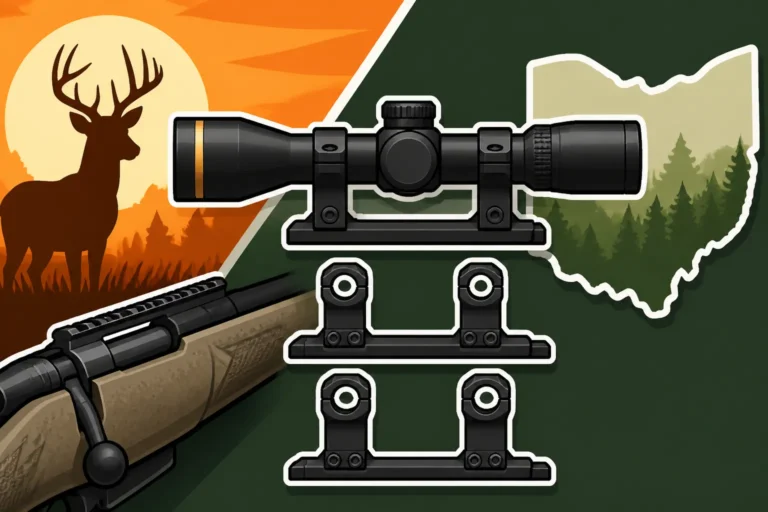
- Illuminated Reticles and Scopes: Crossbows are permitted to have scopes, and illuminated reticles are also legal. This is a significant advantage, especially during those low-light periods at dawn and dusk, or when hunting in dense timber. A clear, accurate scope is paramount for precise shot placement, which is even more critical with a crossbow. Crossbow Scopes for Ohio Timber Ranges explores this in more detail.
Distinguishing Crossbows from Vertical Bows
It's important to understand that while crossbows now share the same season as vertical bows (compound and recurve bows), they are still considered distinct in terms of equipment specifics. You won't find the same draw weight restrictions, for example, on a crossbow as you might on a vertical bow. The method of propulsion and holding the draw are fundamentally different.
The primary distinction for regulation purposes often comes down to how the energy is stored and released. A vertical bow requires the hunter to hold the string at full draw, while a crossbow stores that energy until the trigger is pulled. This is why crossbows are often seen as more accessible to a broader range of hunters, including youth, seniors, or those with physical limitations, as holding a heavy draw weight for an extended period isn't required. This distinction matters because it dictates which specific equipment rules apply. For a deeper dive into the nuances, you might find Crossbow Versus Vertical Bow in Ohio helpful.
Here's a quick comparison of general requirements:
| Feature | Vertical Bow (Compound/Recurve) | Crossbow |
|---|---|---|
| Season Access | All Ohio Archery Season | All Ohio Archery Season |
| Minimum Draw Weight | Typically 40 lbs for deer | No specific minimum, but adequate for humane kill |
| Arrow/Bolt Length | No specific minimum | Minimum 18 inches |
| Broadhead | 2 cutting edges, 7/8" minimum | 2 cutting edges, 7/8" minimum |
| Scopes/Sights | Allowed, typically pin sights | Allowed, including magnified and illuminated reticles |
| Trigger | Not applicable | Required, must be functional |
Choosing a Crossbow for Ohio Hunting
So, you're sold on the idea of crossbow hunting in Ohio? Fantastic! Now comes the fun part: picking out the right rig. With so many options out there, it can feel a bit overwhelming, but focusing on what works best for Ohio's diverse hunting landscapes will help narrow it down.
Recurve vs. Compound Crossbows
Just like vertical bows, crossbows come in two main flavors: recurve and compound. Each has its pros and cons, and what's "best" really depends on your personal preferences, budget, and hunting style.
- Recurve Crossbows: These are generally simpler in design, often more lightweight, and easier to maintain. They don't have cams or complex string systems, which means fewer moving parts to potentially break or need tuning. If you're someone who appreciates simplicity and reliability in the field, especially if you're venturing deep into the Wayne National Forest where you might be miles from a vehicle, a recurve might be for you. They can also be quieter than some compounds, which can be an advantage when you're trying to stay undetected by that wary buck. On the flip side, they typically have a wider limb span, which can be a bit cumbersome in tight treestands or thick brush, and they might not be quite as fast or generate as much kinetic energy as some compound models.
- Compound Crossbows: These are the performance machines of the crossbow world. They use a system of cams and cables, much like compound vertical bows, to achieve higher speeds, greater kinetic energy, and a narrower axle-to-axle width at rest. The narrower profile is a huge plus when you're hunting from a blind or a cramped treestand, making maneuverability much easier. Many compound crossbows also feature a lighter trigger pull and advanced anti-dry fire mechanisms. However, they are generally more complex, often heavier, and can be more challenging to self-maintain. If a string or cable needs replacing, it usually requires a specialized press. They also tend to be pricier. But for sheer power, speed, and compact design, compounds are often the choice for serious hunters.
Think about where you hunt most often. If you're primarily in Appalachian Ohio Foothills with steep, dense terrain, a more compact compound might be a lifesaver. If you're still-hunting open hardwoods or sitting in a spacious ground blind, a recurve's simplicity might appeal.
Key Features to Consider for Ohio Conditions
When you're sifting through all the options, keep these critical features in mind, especially with Ohio's varied terrain and weather in mind.
- Weight and Balance: You'll be carrying this thing through the woods, potentially for miles. A lightweight, well-balanced crossbow is a joy to carry, whether you're climbing up a ridge in Shawnee State Forest or navigating muddy creek bottoms. A front-heavy crossbow can quickly become a chore. Test different models in the store; shoulder them, swing them around, and see how they feel.
- Speed and Kinetic Energy: While ultra-high speeds aren't the only factor, sufficient speed and kinetic energy are crucial for humane kills. For deer, anything over 300-350 feet per second (fps) is generally more than adequate, especially with a well-matched bolt and broadhead. Focus on the total kinetic energy delivered, as this is what really does the work. Faster crossbows can also flatten trajectory, making range estimation a little more forgiving.
- Trigger Quality: A crisp, light trigger pull can make all the difference in shot accuracy. A heavy, creepy trigger can cause you to pull shots and reduce your precision. Many modern crossbows feature excellent triggers, but test them out. It's similar to how a good rifle trigger enhances accuracy.
- Noise Level: Deer have incredible hearing. A loud crossbow can cause a "jump" or "string jump" reaction, where the deer ducks or moves before the bolt arrives. While no crossbow is silent, some are significantly quieter than others. Vibration dampeners and limb silencers can help reduce noise.
- Cocking Mechanism: This is a big one, especially if you're not as strong as you once were, or if you plan on doing a lot of hunting. Many crossbows now come with integrated cocking devices (ICDs) or rope cockers that drastically reduce the effort required to cock the bow. This can be a huge advantage for safety and ease of use in the field, allowing you to re-cock quietly and efficiently after a shot, or if you need to uncock at the end of a hunt. Don't underestimate the strain of cocking a 150-200 lb draw weight crossbow by hand repeatedly.
- Optics: Most crossbows come with a scope, but the quality can vary wildly. Look for a scope with clear glass, a reticle designed for crossbow trajectory (often with multiple aiming points), and good low-light performance. An illuminated reticle is a major plus in those critical hunting hours.
When comparing models, a tool like GoHunt could even assist in finding reviews or user experiences specific to certain crossbows, or help you scout out different terrains where certain features might shine more than others.
Crossbow Accessories and Essential Gear
Once you've got your crossbow picked out, you're not quite done. There's a whole world of accessories that can enhance your hunting experience, improve your accuracy, and keep you safe in the field. Skimping on these can sometimes lead to frustration or even missed opportunities.
Optics and Sights: Maximizing Accuracy
The scope on your crossbow is your direct link to accuracy. While many crossbows come with a basic scope, upgrading can make a huge difference, especially if you're hunting in varied light conditions or need precise aiming.
- Crossbow Scopes: Unlike traditional rifle scopes, crossbow scopes are designed for the much slower velocity of a bolt. They often feature multiple illuminated aiming dots or a BDC (Bullet Drop Compensator) reticle with aiming points calibrated for different distances (e.g., 20, 30, 40, 50 yards). Some advanced scopes are speed-adjustable, allowing you to fine-tune them to your specific crossbow's velocity. Look for scopes with good light-gathering capabilities and a clear field of view. A fog-proof and waterproof scope is non-negotiable for Ohio's unpredictable weather.
- Rangefinders: You absolutely, positively need a rangefinder. Estimating distance with a crossbow, especially on a whitetail deer, is critical. Even a few yards off can result in a high or low shot. A good rangefinder will give you an instant, accurate reading, removing all guesswork. Look for one that's compact, easy to use with one hand, and has a range out to at least 100-150 yards. While you might not be shooting that far, it's handy for scouting or ranging landmarks. For treestand hunters, a rangefinder with angle compensation is a bonus, providing the "shoot-to" distance on angled shots.
- Binoculars: While not directly mounted to your crossbow, a good pair of binoculars is indispensable for spotting deer in thick cover, evaluating antler size, and scanning distant fields. 8×42 or 10×42 are popular choices for deer hunting in Ohio, offering a balance of magnification and light gathering. Don't go overboard on power; too much magnification can make it hard to hold steady and reduce your field of view in dense woods.
Bolts, Broadheads, and Quivers
Your ammunition and how you carry it are just as important as the crossbow itself.
- Bolts: Consistency is key. Stick with bolts of the same spine, weight, and fletching from a reputable manufacturer. Practice with the exact bolts and broadheads you plan to hunt with. Carbon bolts are generally preferred for their durability and straightness. Ensure they are at least 18 inches long to comply with Ohio regulations.
- Broadheads: As mentioned, broadheads must have two cutting edges and be at least 7/8 inch wide. This means you have options between fixed-blade and mechanical (expandable) broadheads.
- Fixed-blade broadheads are known for their ruggedness and reliability. They have no moving parts and cut from the moment they hit. They can sometimes be more sensitive to tuning than mechanicals, especially at higher crossbow speeds, and might "plane" a bit.
- Mechanical broadheads typically fly more like field points, making tuning easier. They open on impact, creating larger wound channels. Ensure your chosen mechanicals are robust enough to withstand impact and deploy reliably, and always confirm they meet Ohio's minimum cutting diameter when expanded. Many hunters find mechanicals offer superior flight characteristics out of a crossbow.
- Quivers: A good quiver keeps your bolts secure, quiet, and easily accessible. Many crossbows come with side-mounted quivers, but some hunters prefer a detachable quiver that can be removed once in the stand or blind to reduce weight and bulk. Look for one that holds your bolts tightly, prevents rattling, and keeps your broadheads protected.
Safety and Comfort Gear
Hunting, especially from an elevated position, always demands a focus on safety.
- Safety Harness: If you hunt from a treestand, a full-body safety harness is non-negotiable. Falls from treestands are a leading cause of hunting accidents. Use it from the moment your feet leave the ground until they return. Paired with a lifeline, it ensures you're always connected. Treestand Safety Gear for Steep Ground is a must-read for anyone using an elevated stand.
- Hunting Clothes and Camouflage: Layering is crucial for Ohio's fluctuating weather. Early season might call for lightweight, breathable camo, while late season demands insulated, waterproof layers. Blaze orange (or pink) is required during gun seasons, but check regulations carefully for archery-only periods, as rules can vary. Quiet fabrics are essential to prevent spooking game.
- Ground Blind: For hunting field edges or open woods, a good ground blind can be incredibly effective, especially for crossbow hunting where the wider limbs can be tricky in a treestand. A blind offers concealment, shelter from the elements, and allows for more movement. Make sure to brush it in well to break up its outline. Using a Ground Blind on Ohio Public Land offers some great tips.
- Backpack: A comfortable daypack is essential for carrying all your gear: snacks, water, calls, extra layers, a small first-aid kit, and anything else you might need for a long sit. Look for one with good organizational pockets and quiet zippers.
Ethical Considerations and Best Practices
Being a responsible hunter means more than just following the rules; it means approaching the sport with respect for the animal, the land, and fellow hunters. Crossbow hunting, like any other method, comes with its own set of ethical considerations and best practices.
Shot Placement and Effective Range
This is paramount. Just because a crossbow can send a bolt downrange quickly doesn't mean you should attempt shots at extreme distances.
- Practice, Practice, Practice: Know your crossbow and your personal limitations. Spend significant time at the range, practicing from various distances and positions you might encounter in the field (e.g., sitting, kneeling, from a treestand). Understand how different weather conditions, especially wind, affect your bolt's trajectory.
- Ethical Shot Placement: For deer and turkey, the vitals (heart and lungs) are the target. This means aiming for the "crease" behind the shoulder on deer, and aiming for the base of the wing or head/neck on a turkey. A well-placed shot leads to a quick, humane harvest. Resist the urge to take questionable shots, especially if the animal is quartering away severely or facing directly at you.
- Defining Your Personal Effective Range: This isn't just about what your crossbow can do, but what you can do consistently under hunting pressure. For many, this might be 30-40 yards. For others, it might be 50 or slightly more. Never exceed this range. A missed shot, or worse, a wounded animal, is far more detrimental than going home empty-handed.
Respecting Fair Chase Principles
Fair chase is a cornerstone of ethical hunting, ensuring that the hunter doesn't have an unfair advantage over the animal.
- No Artificial Advantage: While crossbows offer advantages in terms of stability and reduced physical exertion compared to vertical bows, it's still about scouting, tracking, and understanding deer behavior. Using devices that provide unfair advantages, such as electronic calls (illegal for deer), night vision or thermal optics for hunting (illegal for most game in Ohio), or hunting over bait (also illegal for deer in Ohio), goes against fair chase.
- Understanding Animal Behavior: Spend time in the woods observing. Learn deer patterns, bedding areas, travel routes, and feeding habits. Tools like GoHunt's mapping features can be invaluable for pinpointing historical game movement, identifying potential bottlenecks, or marking sign you find during scouting trips. This kind of diligent scouting and knowledge of the animal is the most ethical "advantage" a hunter can possess. Scouting Ohio Public Land Before Season is a great place to start learning.
- Retrieval and Tracking: After the shot, your ethical duty is to make every reasonable effort to recover the animal. Give the animal time before tracking, especially for a marginal hit. Follow blood trails meticulously, even if it means crawling on your hands and knees. If you lose the trail, re-evaluate, broaden your search, and consider seeking help from experienced trackers or even a tracking dog. Losing a game animal after a shot is one of the most disheartening experiences for a hunter, and it's our responsibility to minimize this whenever possible.
Maintaining Your Crossbow for Ohio Conditions
Your crossbow is an investment, and like any fine piece of equipment, it needs regular care and maintenance to perform at its best, especially when subjected to Ohio's unpredictable weather and rugged hunting environments. Neglecting it can lead to decreased accuracy, premature wear, or even dangerous malfunctions.
Routine Cleaning and Inspection
After every outing, or at least every few hunts, give your crossbow a thorough once-over. This routine care will extend its lifespan and ensure it's always ready when you are.
- Wipe Down: Use a clean, dry cloth to wipe down the limbs, rail, and stock. If it's been a wet hunt, ensure you get all moisture off to prevent rust on metal components. A light coat of silicone spray on non-skid areas can also help.
- Rail Lube: The flight rail is where the bolt sits and accelerates. Apply a thin, even coat of specialized rail lube to the flight rail regularly – typically every 5-10 shots, or as recommended by your crossbow manufacturer. This reduces friction, which protects your string and improves accuracy. A dry rail can quickly fray your string and decrease performance.
- String Wax: The string and cables are the heart of your crossbow. Apply a good quality string wax to them, excluding the serving (the tightly wound areas). Work the wax into the fibers with your fingers until it disappears. This helps protect the string from fraying, moisture, and UV damage. Again, follow your manufacturer's recommendations for frequency.
- Inspect Components: Visually inspect your string and cables for any signs of fraying, cuts, or excessive wear. Check the limb pockets for cracks and ensure all screws and bolts are tight. Pay attention to the scope mounts – vibration from shooting can sometimes loosen them, affecting accuracy. A loose scope mount is a prime suspect for inexplicable changes in point of impact.
- Broadhead Check: When you're done with a hunting bolt, always remove and inspect the broadhead. Clean any residue, check for damage, and resharpen or replace blades as needed. You want razor-sharp edges every time you hunt.
Storage and Off-Season Care
How you store your crossbow during the off-season is just as important as in-season maintenance.
- Proper Storage Environment: Store your crossbow in a cool, dry place, away from extreme temperature fluctuations and direct sunlight. A hard case offers the best protection against physical damage and dust, though a soft case is good for general transport and short-term storage. Avoid storing it in a hot car or damp basement, as these environments can be detrimental to the string, limbs, and optics.
- Uncocking for Storage: It's generally recommended to uncock your crossbow for extended storage periods. Leaving the limbs under tension for months can potentially reduce their lifespan or lead to limb fatigue. Always follow the manufacturer's instructions for safe uncocking; never dry-fire your crossbow.
- Annual Tune-Up: Even with diligent home care, it's a good idea to take your crossbow to a reputable pro shop annually, especially if you shoot a lot or notice any performance issues. They can inspect it more thoroughly, check cam timing (on compound crossbows), replace the string and cables if needed, and ensure everything is in top working order. This is a small investment that can prevent big problems down the road.
By taking care of your crossbow, you're not just protecting your gear; you're ensuring that when that moment of truth arrives in the Ohio woods, your equipment performs flawlessly, giving you the best chance for an ethical and successful harvest. This attention to detail is part of the hunting tradition, just like knowing Ohio Deer Season Structure Explained or Ohio Spring Turkey Zones and Dates.
Disclaimer
This article is for general informational purposes only and does not constitute professional advice. Laws, prices and regulations vary by location and change over time. Consult a qualified professional for guidance on your specific situation.