Ohio Firearms Discharge Setback Rules
One of the biggest anxieties for any hunter in Ohio, whether you're a seasoned veteran or just starting out, is ensuring you’re not only safe but also completely legal when you pull the trigger. There's nothing worse than the gnawing worry that you might be too close to a road, a house, or a property line. This comprehensive guide is designed to peel back the layers on Ohio's firearms discharge setback rules, helping you hunt with confidence and peace of mind.
The Foundation: Ohio's Core Firearms Setback Regulations
Let's cut right to the chase because understanding the basic rules is your first line of defense against potential violations. Ohio has clear regulations regarding how far you must be from certain structures and boundaries when discharging a firearm while hunting. These aren't just suggestions; they are laws designed to protect public safety and property. Ignorance of the law is never an excuse, and a misstep can lead to serious consequences, not to mention giving hunters a bad name.
The 250-Yard Rule Explained
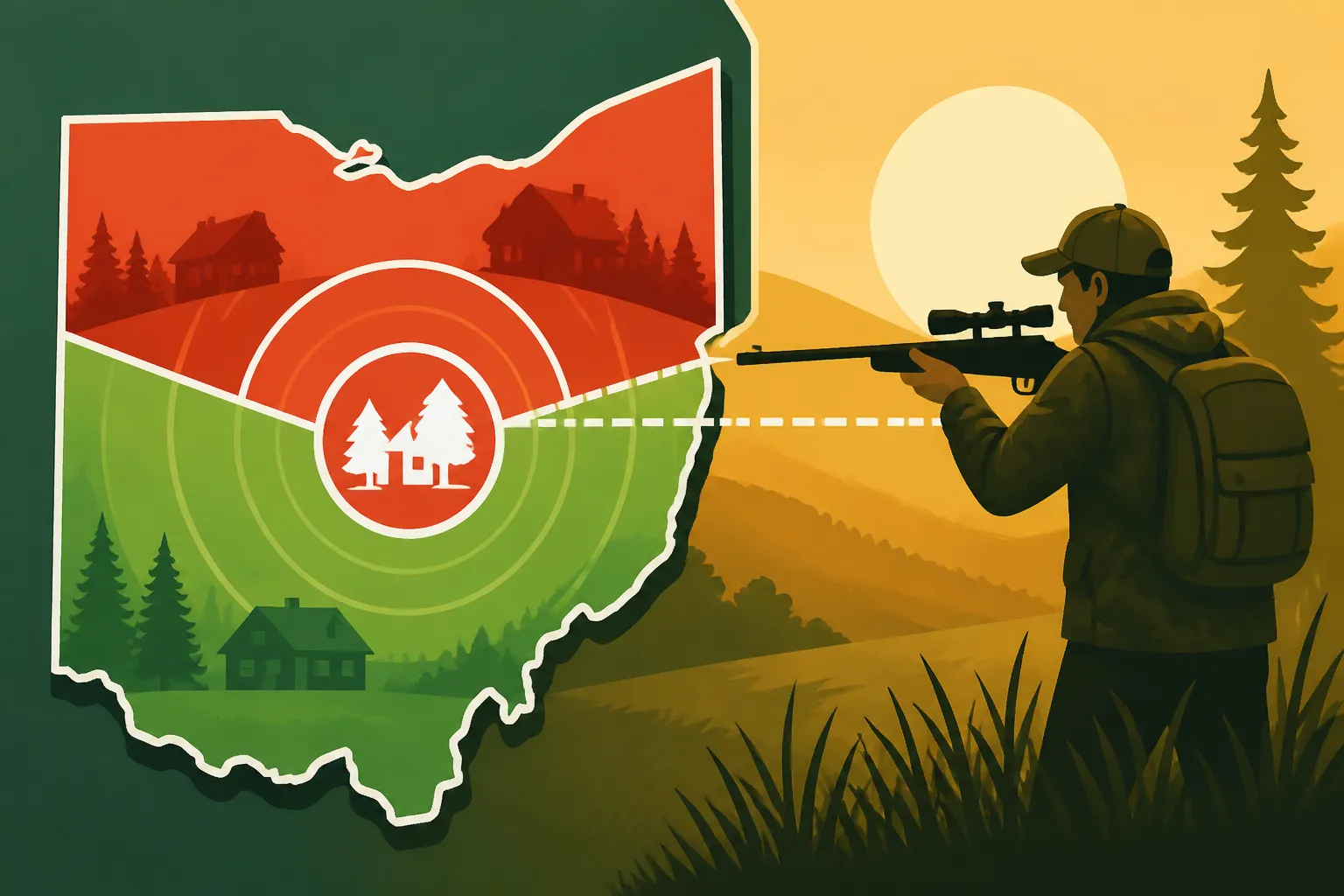
At the heart of Ohio's firearms discharge regulations for hunting lies the "250-yard rule." Generally speaking, you cannot discharge a firearm while hunting within 250 yards of a residential dwelling or other building without first obtaining the written permission of the owner or occupant. This isn't just about the building you think is empty; it applies to any occupied or unoccupied residential dwelling or outbuilding that might be used by people. Think about that old barn on the edge of a field, or a rarely used hunting cabin – if it's considered a building, the rule applies.
This rule is pretty specific to firearms, including rifles, shotguns, and muzzleloaders. Archery equipment, like bows and crossbows, generally falls under different, often less stringent, regulations regarding setbacks from dwellings, which is an important distinction when considering Crossbow Versus Vertical Bow in Ohio. The intent here is clear: to prevent stray bullets from endangering people or property, especially in areas where homes might be scattered but still present. It’s about creating a buffer zone of safety that respects the lives and property of non-hunters.
Imagine you're tracking a buck through a woodlot on the edge of a small town. You get to the far side, and suddenly a beautiful 8-point steps out. Before you even think about raising your rifle, your eyes should be scanning for any structures within that 250-yard radius. A quick glance at a property line map, which we'll talk more about, can save you a world of trouble. That distance is longer than many people realize when they're excited and focused on game.
The Importance of Property Lines and Public Roads
Beyond dwellings, property lines and public roads also demand your attention. While the 250-yard rule applies specifically to buildings, you generally cannot discharge a firearm onto or across a public road or highway. This rule is absolute and designed to prevent accidents involving vehicles and pedestrians. Even if no vehicles are in sight, firing across a public thoroughfare is a huge no-no and carries significant penalties.
Furthermore, hunters must be acutely aware of property lines. You cannot discharge a firearm in such a way that the projectile would enter another person's property without their explicit permission. This isn't just about shooting at something on their land; it's about the path of your bullet. Even if you're aiming at a deer on your side of the fence, if your bullet could travel and land on a neighbor's property without their consent, you're in violation. This is where Ohio Trespass and Permission Law comes into play, not just for entering land, but for respecting the airspace and potential impact zone.
This becomes especially tricky in areas where properties are smaller or fragmented, like much of central Ohio. Picture hunting a small woodlot tucked between two agricultural fields. You have permission for the woodlot, but the fields on either side belong to different landowners. If a deer steps into the corner of your woodlot, you need to ensure your shot angle and the potential trajectory of your bullet will not carry it over onto adjacent properties without consent. This level of diligence requires a good understanding of your surroundings, which mapping tools can greatly assist with.
Special Considerations for Different Firearms
While the 250-yard rule generally applies, it's worth noting that Ohio's legal firearms for deer hunting have evolved, with the introduction of straight-wall cartridge rifles now permitted in addition to shotguns and muzzleloaders. This change in allowed Ohio Legal Firearms for Deer Hunting can impact how hunters perceive distances and safe backstops. A modern straight-wall cartridge rifle, like a .350 Legend or .450 Bushmaster, can be incredibly accurate and carry energy much further than traditional shotgun slugs.
This increased capability means hunters need to be even more mindful of their background and potential bullet travel. While a shotgun slug might lose significant energy past 150-200 yards, a straight-wall rifle cartridge can remain dangerous at much greater distances, demanding a higher degree of caution and awareness of your surroundings. Therefore, even if a building is "just outside" the 250-yard mark, considering the extended range of your chosen firearm is a responsible hunting practice.
Conversely, while not subject to the 250-yard firearm setback, archery equipment still requires common sense and respect for safety. You wouldn't want to send an arrow into someone's backyard, even if not legally required to be 250 yards away. The spirit of the law, regardless of the specific yardage, is always about safety first.
Navigating Public and Private Land Challenges
Hunting in Ohio means navigating a patchwork of public and private lands, each with its own set of considerations when it comes to firearms discharge setbacks. The rules themselves don't change, but the context in which you apply them certainly does.
Public Land: What You Need to Know
Ohio boasts a good amount of public hunting land, including state forests like Shawnee State Forest and Wayne National Forest, as well as numerous Ohio Wildlife Areas. These areas are fantastic resources, but they often have more diverse uses and potentially more people than private hunting grounds. On public land, you're not just worrying about houses; you're also thinking about hiking trails, camping areas, observation decks, and other recreational users.
The 250-yard rule from dwellings still applies on public land if there are any structures, such as park ranger residences, maintenance buildings, or even private cabins that border the public property. It’s crucial to understand the boundaries of the public land you're hunting and what lies just beyond them. Using tools like the Ohio HuntFish App or onX Layers for Ohio Land Status can be invaluable for identifying property lines, public access points, and potential structures. Many public lands also have specific designated safety zones or areas where hunting is prohibited or restricted due to high public use. Always check the local regulations for the specific wildlife area or state forest you plan to hunt.
When you're Hunting Pressure on Ohio Public Land, you might also encounter other hunters. While there isn't a specific setback rule between hunters, common sense and ethical hunting dictate giving others plenty of space. You're responsible for your bullet's trajectory and ensuring it won't endanger another person, even if they're a fellow hunter. A good rule of thumb is to always know what’s beyond your target and to have a safe backstop.
Private Land: Respecting Boundaries and Structures
For many Ohio hunters, private land is the primary hunting ground. While this often means less public pressure, it presents its own unique set of challenges regarding setback rules. When you Getting Private Land Permission in Ohio, you need to be explicitly clear on the boundaries of the property you're allowed to hunt. This isn't just for trespass prevention but also for ensuring you're not inadvertently shooting towards a neighbor's home or property.
The 250-yard rule is paramount here. If you're hunting a small woodlot, Hunting Small Private Tracts in Ohio, adjacent to a farmer's house or a neighbor's garage, you need to be acutely aware of that distance. It’s not uncommon for property owners to grant permission to hunt, but they expect you to do so safely and legally. Discharging a firearm too close to their, or their neighbor's, structures can quickly lead to permission being revoked and potential legal issues.
You might also encounter situations where a landowner gives you permission but doesn't fully understand or explain the nuances of their property lines or adjacent structures. It's your responsibility as the hunter to verify this information. Never assume; always know.
The Role of Permission in Mitigating Risk
Written permission from the owner or occupant can grant an exception to the 250-yard rule for discharging a firearm near a residential dwelling or other building. This is a critical point. If a dwelling is within 250 yards of where you intend to hunt, you MUST have that written permission. This isn't just a friendly handshake; it should be a clear, documented agreement.
This permission should ideally state that the owner or occupant is aware you will be hunting with a firearm within 250 yards of their (or their tenant's) dwelling and explicitly grants permission for you to do so. This protects both you and the landowner. Without it, you could be in violation, even if you thought you had a verbal okay. The burden of proof would be on you.
This written permission doesn't, however, grant you the right to shoot across public roads or to shoot onto another neighbor's property without their permission. It's specific to the dwelling and the landowner who grants it. Always ensure you understand the full scope of your permission and all applicable laws.
Practical Strategies for Safe and Legal Hunting
Knowing the rules is one thing, but practically applying them in the field can be another challenge entirely. Here are some actionable strategies to help ensure you stay compliant and safe.
Utilizing Mapping Tools and Technology
In today's age, technology is your best friend when it comes to understanding land boundaries and structures. The Ohio Division of Wildlife offers the Ohio HuntFish App, which provides invaluable resources including property maps for public lands and details on various hunting opportunities. However, for private land, dedicated mapping applications truly shine.
Many hunters swear by apps like onX Hunt or GoHunt, which allow you to overlay property lines, parcel ownership, and even satellite imagery onto your GPS. Before you ever step foot in the woods, you can use these tools to virtually scout your hunting area. You can identify residential dwellings, barns, and other buildings, then use the app's distance measurement tools to mark off 250-yard buffers. This allows you to plan your stand locations or hunting routes to avoid potential violations.
- Pre-Season Homework: Use GoHunt to study the property boundaries. Look for any red flags like houses near the edges of your permitted hunting area. Identify potential safe shooting lanes and areas where you should absolutely not shoot.
- In-Field Confirmation: While in the field, use your phone's GPS with these apps to confirm your location relative to property lines and structures. Modern smartphones are incredibly accurate, often within a few feet, which can make all the difference when you're making a split-second decision.
- Identifying Public/Private Transition: These maps are also crucial for understanding where public land ends and private land begins, especially if you're exploring vast areas like Wayne National Forest Hunting or Hunting Southeast Ohio Appalachian Foothills. They can highlight those crucial boundaries that might not be obvious on the ground.
Scouting and Pre-Season Planning
Nothing beats good old-fashioned boots-on-the-ground scouting, but now it's integrated with your digital mapping. When you Scouting Ohio Public Land Before Season, or even your own private property, take your time to walk the perimeter and interior, cross-referencing what you see with your mapping app.
- Identify Structures: Physically locate all dwellings, outbuildings, and public roads that are in or near your hunting area. Even small, seemingly insignificant sheds count if someone could occupy them.
- Establish Safe Zones: Clearly mark mentally, or even physically with non-invasive trail markers, areas where you absolutely cannot shoot due to proximity to structures or property lines.
- Consider Shot Angles and Backstops: Think about the topography. A deep ravine or a thick stand of timber can act as an excellent natural backstop. Flat, open fields, however, offer little to stop a projectile. When planning a Treestand Setups in Appalachian Ohio Hardwoods, consider how the terrain affects your potential shot angles and where a bullet might travel if it passes through your target.
- Wind and Thermals: While not directly related to setbacks, understanding Wind and Thermals on an Appalachian Ridge is critical for deer movement. If deer are moving through a corridor that places them too close to a house for a safe shot, you need to recognize that and adjust your strategy, rather than forcing a risky shot.
Communicating with Landowners and Neighbors
Open and honest communication is paramount, especially when hunting private land. When you initially obtain permission, discuss the setback rules with the landowner. Ask them about their neighbors, where their houses are, and if there are any specific concerns. This conversation builds trust and ensures everyone is on the same page.
- Clarify Boundaries: Go over the property lines together, using a physical map or an app like GoHunt to clearly define the hunting area and any no-go zones due to setback requirements. This can prevent misunderstandings later.
- Neighborly Awareness: Sometimes, a landowner might not object to you hunting near their house, but their neighbor might be quite sensitive. A considerate hunter will always think about the broader community. If a shot makes a neighbor nervous, it can create problems for everyone.
- Written Permission: As mentioned, if you anticipate needing to hunt within 250 yards of a dwelling, get that written permission explicitly stating it. Make sure it's dated and signed by the owner or occupant. This small step offers significant protection.
Understanding the Ramifications of Violations
It's easy to dismiss these rules as inconvenient, but the consequences of not adhering to Ohio's firearms discharge setback regulations can be severe. It's not just about getting a ticket; it's about public safety, the reputation of hunting, and potentially your freedom.
Legal Penalties and Fines
Discharging a firearm within prohibited distances or across a public road is a serious offense in Ohio. Violations can range from a misdemeanor to more severe charges, depending on the specific circumstances and if any damage or injury occurred. Fines can be substantial, often in the hundreds or even thousands of dollars.
Beyond monetary penalties, you could face confiscation of your hunting equipment, including your firearm, and the suspension or revocation of your hunting license. Losing the privilege to hunt is a bitter pill to swallow, and it's a direct consequence of failing to prioritize safety and compliance. These penalties are designed to deter reckless behavior and emphasize the importance of responsible hunting.
Ethical Considerations and Hunter Reputation
Every hunter has a responsibility to uphold the integrity of the sport. A single incident of unsafe firearms discharge can cast a negative light on all hunters, fueling anti-hunting sentiment and leading to stricter regulations for everyone. When you hunt, you are an ambassador for the entire hunting community.
Consider the potential for injury or property damage. A stray bullet traveling further than expected could injure a person or animal, or damage a house, car, or other property. The thought of such an outcome is horrifying and should be enough to make any responsible hunter err on the side of extreme caution. Always remember the absolute necessity of having a clear, safe backstop for every shot you take. This is a fundamental principle of firearms safety, not just an Ohio rule.
TABLE: Ohio Firearms Discharge Setback Rules Summary
| Scenario | Minimum Setback Distance | Requirement | Notes |
|---|---|---|---|
| From a residential dwelling or other building | 250 yards | Written permission required to hunt closer | Applies to occupied or unoccupied buildings. |
| Across a public road or highway | N/A (Absolute prohibition) | Cannot discharge a firearm onto or across | No exceptions. |
| Onto another's property (without permission) | N/A (Absolute prohibition) | Projectile cannot enter without explicit permission | Includes trajectory of bullet. |
| Archery equipment (bow/crossbow) | Generally no specific rule | Common sense and safety still apply | Always ensure a safe background and target impact zone. |
In essence, Ohio's firearms discharge setback rules are not just bureaucratic hurdles; they are foundational elements of responsible, ethical, and safe hunting. Taking the time to understand them, utilize modern mapping tools, communicate effectively, and always prioritize safety will ensure your hunting experiences remain enjoyable and problem-free. Happy hunting, and stay safe out there!
Disclaimer
The information provided in this article is for general guidance and informational purposes only and does not constitute legal advice. Hunting regulations can change, and interpretations may vary. Always consult the most current official regulations published by the Ohio Department of Natural Resources (ODNR) and, if necessary, seek legal counsel to ensure full compliance with all applicable laws.