Ohio Grouse Season Status
It's tough to talk about, but for many Ohio upland hunters, the ruffed grouse season has become a painful memory, a ghost of seasons past. The frustrating reality is that the vibrant drumming of a ruffed grouse, once a common sound in our Appalachian foothills, has grown tragically silent across much of the state. If you’re like many of us who remember chasing these elusive birds, you’re likely wondering about the current status of Ohio's grouse season, and sadly, the news hasn't gotten better. This guide dives deep into why we've reached this point, what the official word is, and what, if anything, can be done.
The Somber Reality: Ohio's Ruffed Grouse Season is Closed Statewide
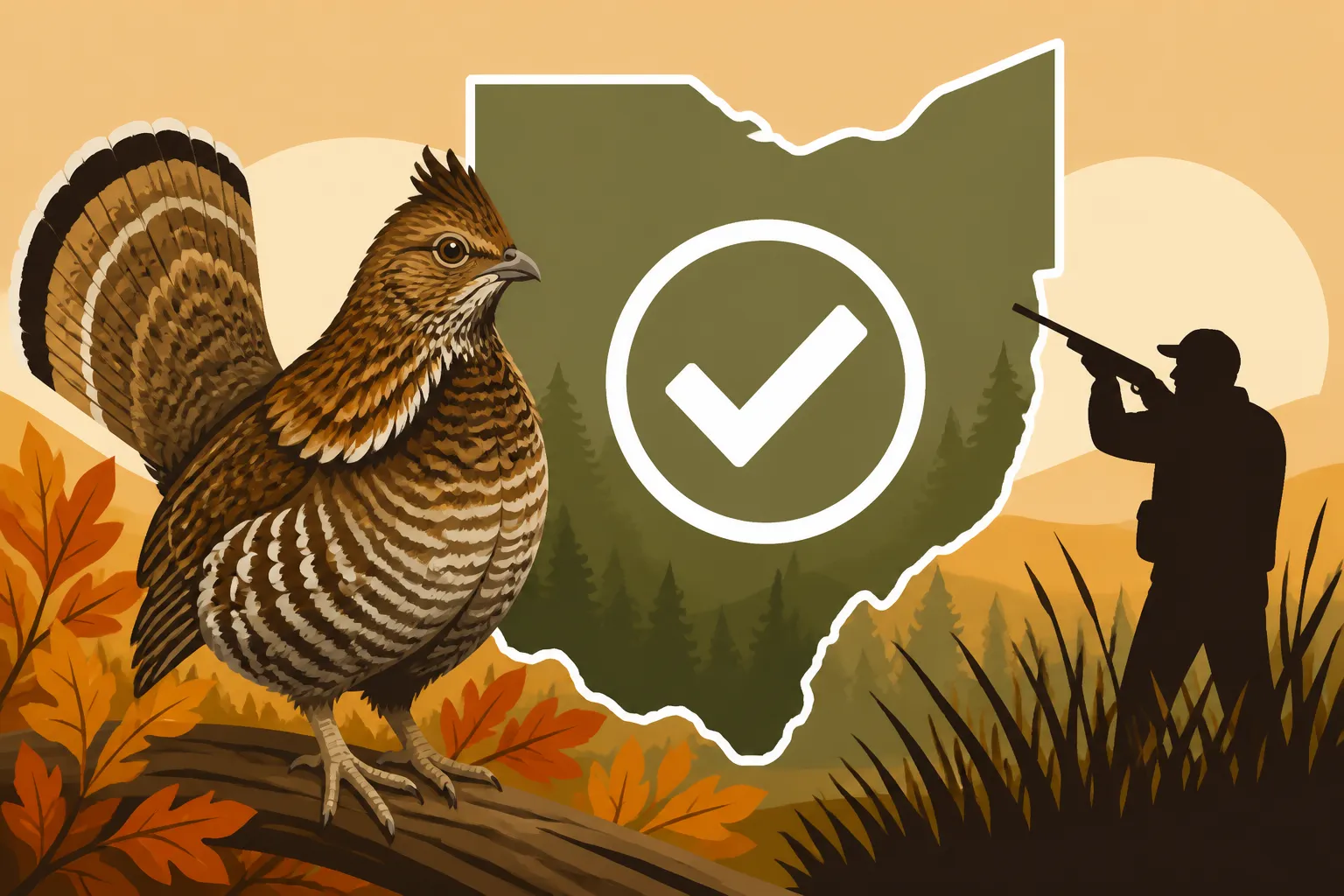
For those of us who grew up with the thrill of a ruffed grouse exploding from a thicket, the current situation in Ohio is truly disheartening. As of the 2022-2023 hunting season, the Ohio Department of Natural Resources (ODNR) made the difficult but necessary decision to close the ruffed grouse season statewide. This wasn't a snap judgment; it was the culmination of years of declining populations, extensive research, and heartbreaking observations in the field.
Think about it from the perspective of an upland hunter who remembers bountiful flushes in places like Shawnee State Forest or Zaleski State Forest just a couple of decades ago. That sudden silence, where once there was a burst of wings and a fleeting glimpse of mottled brown and gray, hits hard. The closure reflects a grim reality: the numbers simply aren't there anymore to support a sustainable hunting season. It’s a bitter pill to swallow, but it’s a vital step to give these magnificent birds any chance at recovery. Many hunters, myself included, have relied on detailed information, like that provided by GoHunt mapping, to try and locate these birds, only to find fewer and fewer each year, confirming the ODNR’s tough decision.
Unraveling the Decline: Why Ohio Lost Its Grouse
Understanding why Ohio's ruffed grouse population plummeted is a complex puzzle, with several interconnected pieces. It's not just one factor, but a perfect storm that has led to the current statewide closure. For years, we’ve watched the numbers trend downwards, and now we're grappling with the stark reality.
The Crushing Impact of Habitat Loss and Fragmentation
If you ask any old-timer or modern wildlife biologist about the primary culprit, habitat loss will invariably be at the top of the list. Ruffed grouse are highly specialized birds, thriving in early successional forest habitat – young, dense woodlands with thick undergrowth, brambles, and brush. They need this thick cover for nesting, rearing chicks, and escaping predators.
- Maturing Forests: Much of Ohio's timber has simply grown too old. The vast tracts of young forest that once dominated after widespread logging or agricultural abandonment have matured into closed-canopy woodlands. While beautiful, these mature forests lack the dense understory grouse require. They need sunlight to hit the forest floor to stimulate the growth of shrubs, saplings, and briars that offer cover and food.
- Lack of Active Management: Modern forestry practices, or the lack thereof on many public and private lands, have contributed significantly. Timber harvesting methods, especially those that create large clear-cuts or prescribed burns that mimic natural disturbances, are crucial for creating new grouse habitat. Without these disturbances, the forest marches toward maturity, and grouse habitat vanishes.
- Fragmented Landscapes: Even where small pockets of suitable habitat exist, they are often isolated. Grouse struggle to move across open fields, mature timber, or developed areas, making it hard for populations to connect, find new mates, and expand their range. This fragmentation leads to isolated, vulnerable populations, as discussed in detail in Habitat Loss Behind Ohio's Grouse Decline.
The West Nile Virus Connection
Another significant, and perhaps more insidious, threat emerged in the late 1990s and early 2000s: West Nile Virus (WNV). While it might seem like a distant concern for hunters, WNV, transmitted by mosquitoes, has had a devastating effect on ruffed grouse populations across their range, including Ohio.
- High Susceptibility: Research has shown that ruffed grouse are highly susceptible to WNV. Unlike some other bird species that can develop immunity or suffer only mild symptoms, grouse often experience high mortality rates when infected.
- Cumulative Effect: WNV doesn't necessarily cause massive, immediate die-offs that are easily observed. Instead, it acts as a chronic stressor, reducing survival rates over time, especially in juvenile birds. This "silent killer" can slowly chip away at a population, making recovery incredibly difficult even in areas with good habitat. It's like a constant drain on an already struggling system. The lack of grouse drumming and flushes we've noticed aligns with the timing and impact of WNV outbreaks.
Predation and Other Factors
While habitat and WNV are the big two, other factors also play a role, especially when populations are already stressed.
- Increased Predator Populations: As deer and turkey populations rebounded in Ohio, so did many of their predators, like coyotes, raccoons, and opossums. While these predators have always been part of the ecosystem, their increased numbers, combined with less protective grouse cover, can lead to higher predation rates on grouse nests, chicks, and even adult birds.
- Climate Change and Weather Patterns: Unpredictable weather patterns, including late spring frosts that damage crucial food sources like catkins, or prolonged wet, cold springs that impact chick survival, can also hit grouse hard. These events, while cyclical, can have a disproportionate impact on a species already on the brink.
- Low Reproduction Rates: Even in good conditions, grouse don't reproduce at incredibly high rates compared to some other game birds. When faced with multiple challenges, their ability to bounce back quickly is severely hampered. This contributes to the overall Ohio Ruffed Grouse Numbers Today being so low.
Here’s a simplified look at the timeline of decline:
| Period | Primary Factors Contributing to Decline | Impact on Grouse Numbers | ODNR Action (Approximate) |
|---|---|---|---|
| 1970s – 1980s | Forest maturation, decreasing clear-cuts | Gradual decrease, still huntable | Monitoring, bag limits |
| Late 1990s – 2010s | West Nile Virus emergence, accelerated habitat loss | Significant decline, noticeable by hunters | Reduced season length/bag limits, focused research |
| 2010s – Early 2020s | Continued WNV pressure, critical habitat scarcity | Steep decline, very few birds | Further restrictions, county closures |
| 2022-2023 Season Onward | Persistently low populations across range | Near extirpation in many areas | Statewide Season Closed |
Remembering the Ruffed: Where Ghost Birds Once Drummed
For those of us who remember the days when Flushing Grouse in Southeast Ohio Hollows was a real possibility, it's hard to reconcile that memory with today's empty woods. Ohio's ruffed grouse were primarily found in the unglaciated, Appalachian region of the state. This area, characterized by its rugged terrain, dense timber, and varied topography, once provided the perfect blend of habitat.
Historical Hotbeds of Grouse Activity
Historically, counties like Hocking, Vinton, Athens, Jackson, and Lawrence were synonymous with grouse hunting. These areas had a mix of timber stands, often disturbed by past logging or farming, that created the essential early successional habitat. The edges of old clear-cuts, the transition zones between different forest types, and areas recovering from timber harvests were prime locations.
- Shawnee State Forest: This vast forest in southern Ohio was once a stronghold. Its deep hollows, steep ridges, and mixed oak-hickory forests provided ample habitat. Hunters would traverse the challenging terrain, hoping to hear that tell-tale drum or see a bird flush. The cover here was often thicker and more diverse than in other parts of the state.
- Wayne National Forest: Covering parts of Athens, Hocking, Vinton, Jackson, and Monroe counties, Wayne National Forest also held significant grouse populations. The national forest's management, including some timber sales, helped create mosaics of habitat that benefited grouse.
- Zaleski State Forest and Tar Hollow State Forest: These state forests, too, were known for their grouse. They offered remote, less-pressured areas where birds could thrive, especially in sections that were actively managed for diverse timber age classes. If you were looking for Ohio State Forest Hunting opportunities for grouse back then, these were top picks.
The Ideal Grouse Cover: A Hunter's Dream
What made these areas so good for grouse? It wasn't just old growth. It was specifically:
- Young Aspen and Birch Stands: While not as prevalent in Ohio as in northern states, pockets of these trees, especially in regenerating clear-cuts, were grouse magnets. They provided essential winter food (catkins) and incredibly dense cover.
- Thick Conifer Plantations: Evergreen stands, particularly pines and hemlocks, offered crucial thermal cover during harsh winters and escape cover from avian predators.
- Dense Grapevine Thickets and Briar Patches: These natural barriers were fantastic escape routes and provided food sources like wild berries. When you were deep in the woods, pushing through a greenbrier patch, that's where you'd often find your birds.
Today, while the habitat types might still exist, their quality and connectivity have diminished significantly. You might still find remnants of these covers, but the birds themselves are largely absent. Even when scouting for other small game, you rarely stumble upon a grouse anymore. If you're using advanced tools, like those found on the GoHunt platform, to map out these historic grouse locations, you'll see the potential habitat, but it remains a sobering experience due to the absence of the birds.
A Glimmer of Hope? Conservation Efforts and the Future
So, is all hope lost for Ohio's ruffed grouse? While the statewide closure is a stark indicator of the challenges, it doesn't mean the birds are entirely gone or that efforts aren't underway to help them. This is where the long-term perspective and the dedication of conservationists come into play.
Targeted Habitat Restoration
The most critical factor for grouse recovery is habitat. Wildlife agencies and conservation groups understand this, and there are efforts, albeit often slow and localized, to create and maintain early successional forest habitat.
- Ohio's Healthy Forest Initiative: The ODNR, in partnership with other organizations, implements forestry practices on public lands, including state forests and wildlife areas, aimed at promoting forest health and biodiversity. This sometimes involves timber harvests designed to create young forest patches. For example, projects on areas like Woodbury Wildlife Area or Brush Creek State Forest might aim to create conditions beneficial to a variety of wildlife, including grouse, even if indirectly.
- Ruffed Grouse Society (RGS) and American Woodcock Society (AWS): These organizations are at the forefront of advocating for and funding early successional habitat projects. They work with private landowners and public land managers to implement practices like clear-cutting, prescribed burning, and invasive species removal, all of which benefit grouse and other "young forest" species like American woodcock. Supporting these groups is one of the most direct ways hunters can contribute.
- Private Landowner Programs: Some federal and state programs offer incentives to private landowners to manage their timber for wildlife habitat. Encouraging these practices on smaller private tracts, which make up the majority of Ohio’s land, is crucial.
Monitoring and Research
Even with the season closed, monitoring grouse populations continues. Biologists use various methods to track grouse, including drumming surveys (listening for the distinctive territorial drumming of male grouse) and brood surveys (counting chicks with hens). This data is vital for understanding Ohio's Declining Ruffed Grouse Range and for guiding future management decisions. Understanding how turkeys and other game species interact with this environment, as outlined in articles like Ohio Turkey Population Trends, can also provide insights.
The Long Road Ahead
Let's be realistic: the recovery of Ohio's ruffed grouse population will be a long, arduous journey, if it happens at all. WNV remains a significant threat, and habitat creation takes time. Forests don't regenerate overnight. However, the closure of the hunting season demonstrates a commitment to prioritize the species' survival.
- Advocacy and Education: Hunters and outdoor enthusiasts have a vital role to play. Educating others about the importance of early successional habitat, advocating for active forest management, and supporting conservation organizations are all crucial steps. Tools and insights from resources like GoHunt can help identify potential areas for conservation efforts.
- Patience and Persistence: We may not see an open grouse season in Ohio for many years, if ever again in our lifetime. But by understanding the challenges and supporting dedicated conservation efforts, we can contribute to giving this iconic woodland bird a fighting chance. Perhaps one day, the faint, distant thump-thump-thump-thump-thump-thump of a drumming grouse will once again echo through Ohio's timber, a testament to what dedicated conservation can achieve. Until then, many of us will keep an eye on Ohio Small Game and Upland Bird Seasons in hopes of a miracle.
Disclaimer
The information provided in this guide is for general informational purposes only and is subject to change. Always consult the official Ohio Department of Natural Resources (ODNR) hunting regulations and proclamations for the most current and accurate season dates, bag limits, and specific rules before engaging in any hunting activities. Wildlife regulations can change frequently, and it is the hunter's responsibility to stay informed and comply with all applicable laws.