Hunting Ohio River Backwater Sloughs
Finding those truly overlooked hunting spots in Ohio can feel like chasing a ghost, especially when you're tired of fighting the crowds on well-known public lands. But if you're willing to embrace a little adventure and a lot of mud, the intricate network of backwater sloughs along the Ohio River offers some incredible, often ignored opportunities for waterfowl, small game, and even late-season deer. This guide will take you deep into understanding, scouting, and effectively hunting these unique and highly productive environments, helping you uncover hidden gems and enjoy a more secluded, rewarding experience.
The Allure and Anatomy of Ohio River Backwater Sloughs
The Ohio River isn't just a big, flowing highway for barges and pleasure craft. It's a complex, dynamic ecosystem, and nowhere is this more apparent than in its backwater sloughs. These quiet, often forgotten pockets of water and marshland are a world apart from the main channel, teeming with life and offering prime habitat for a variety of game species.
What Defines a Productive Backwater?
A productive backwater slough along the Ohio River is a special place, a low-lying area that was once part of the main river channel but has since been cut off, at least partially, by natural processes like sedimentation or changes in the river's course. These areas are typically characterized by slow-moving or stagnant water, thick stands of vegetation, and an abundance of natural food sources. Think about a quiet cove lined with willows, buttonbush, and cattails, where the water might be only a few feet deep, but the bottom is rich with organic matter. This combination creates perfect sanctuary. Ducks and geese seek refuge from the constant activity of the main river, finding calm water to loaf and feed, while the dense cover provides excellent bedding and escape routes for squirrels, rabbits, and even deer. The specific types of vegetation, from water lilies to various grasses, also provide insect life and seeds that are crucial for a healthy ecosystem, attracting birds and animals alike.
Beyond just the cover, a truly prime backwater slough will often have a gentle current or occasional influx of fresh water, especially during higher river levels. This subtle flow helps to refresh the water, prevent stagnation, and distribute new food sources or sediment, keeping the habitat vibrant. You might find areas with slightly deeper pockets, offering a resting place for diving ducks, alongside expansive mud flats where dabblers can tip up to feed on submerged aquatic vegetation or invertebrates. These diverse micro-habitats within a single slough are what make them so appealing to a wide array of wildlife, creating a continuous buffet and sanctuary that's hard for game to resist, especially when hunting pressure builds up on more accessible lands.
Understanding the Dynamic River System
Hunting Ohio River backwaters means understanding the very temperamental nature of the river itself. The Ohio River is famous for its fluctuating water levels, which can change dramatically with rainfall upstream or adjustments at the locks and dams. This constant flux directly impacts the sloughs. When river levels rise, backwaters can become temporarily reconnected to the main channel, allowing new fish species to enter and bringing in fresh nutrients and debris. This can be a boon for waterfowl, as newly flooded vegetation becomes available, but it can also make access tricky and introduce faster currents than hunters might expect. Conversely, during periods of low water, some sloughs might shrink, expose vast mudflats, or even dry up completely, drastically altering game movement and where animals can be found.
Sedimentation is another key factor. Over time, the Ohio River deposits silt and sand, especially in slower-moving areas like backwaters. This process gradually fills in sections, creating shallower depths and promoting the growth of emergent vegetation. What was once open water might become a dense cattail marsh in a few decades. This natural progression means that a slough you hunted successfully last year might be entirely different this season, demanding continuous scouting and adaptation. Furthermore, the overall ecosystem is interconnected; the health of the main river's fish populations, which provide food for various birds, can influence the viability of the backwaters. Understanding these dynamic forces – the rise and fall of water, the slow march of sedimentation – is crucial for any hunter hoping to consistently find success in these ever-changing environments.
Strategic Scouting for Backwater Success
You can't just show up to an Ohio River backwater slough blind and expect to find game. These areas demand dedicated scouting, often a blend of modern digital tools and good old-fashioned boots-on-the-ground effort. The effort you put in beforehand will directly correlate to your success when the season opens.
Digital Reconnaissance with Mapping Tools
Before you even think about getting mud on your boots, your scouting should start with a good mapping application. Tools like Google Earth, OnX Hunt, or even the Scouting With the Ohio HuntFish App are invaluable for pinpointing potential sloughs. Start by looking for oxbow lakes, abandoned river channels, and low-lying areas adjacent to the main river. These often appear as darker green or blue areas on satellite imagery, distinct from the surrounding hardwoods or agricultural fields. What you're looking for are pockets of water that are sufficiently cut off from the main flow to offer refuge, but still close enough to attract transient waterfowl or game from nearby timber. Pay close attention to subtle features: small points of land, islands of vegetation, narrow constrictions (pinch points), or even old logging roads that might lead close to the water's edge.
Beyond just identifying the water itself, use these digital tools to analyze access points. Is there public land nearby that provides legal entry? The Ohio Department of Natural Resources (ODNR) provides maps of Ohio River Bottomland Public Access points that can be a great starting point. Are there any visible trails or clearings? What's the surrounding land use? Farmland often means nearby food sources for deer and geese, while dense timber indicates potential squirrel and turkey habitat. Some advanced apps, including GoHunt's mapping features, can even show property lines, which is absolutely critical for avoiding trespass. By spending hours digitally poring over these maps, you can narrow down your physical scouting efforts to the most promising locations, saving precious time and effort. Look for areas where dense cover meets open water, as these transition zones are often hotspots for game movement.
Boots-on-the-Ground Exploration
Once you've identified a few promising spots on your map, it's time to hit the field. The best time for physical scouting backwater sloughs is often in the late summer or early fall, before heavy leaf-out but well before hunting season begins. This allows you to observe game patterns without disturbing actual hunts. Take a small boat, like a canoe or kayak, if possible, as it will allow you to navigate shallow waters and access areas that are impossible to reach on foot. Pay attention to water depth – what looks like open water on a map might be only inches deep, or choked with submerged vegetation. Look for game sign: tracks along muddy banks, droppings from waterfowl, clipped vegetation from rabbits, or chewed nuts from squirrels in adjacent timber.
While you're out there, try to identify natural blind locations. Are there thick stands of willows that you could easily brush up for concealment? Are there high points that offer a good vantage for Jump-Shooting an Ohio Creek or slough? Note potential entry and exit routes, considering how you'll get yourself and any harvested game out, especially when the ground might be muddy or the water low. Think about sun position, wind direction, and how scent might carry. During the late season, when many sloughs might be frozen, scouting can shift to looking for isolated open water pockets that still attract birds, or tracking deer movement along the frozen edges. This physical reconnaissance is where you confirm or deny your digital findings and get a real feel for the environment you'll be hunting in.
Effective Hunting Methods in Slough Environments
Hunting backwater sloughs isn't like hunting open water or big woods. It requires specific tactics tailored to these unique, often confined, and unpredictable environments. Adaptability is key, as conditions can change from one day to the next.
Waterfowling in Secluded Backwaters
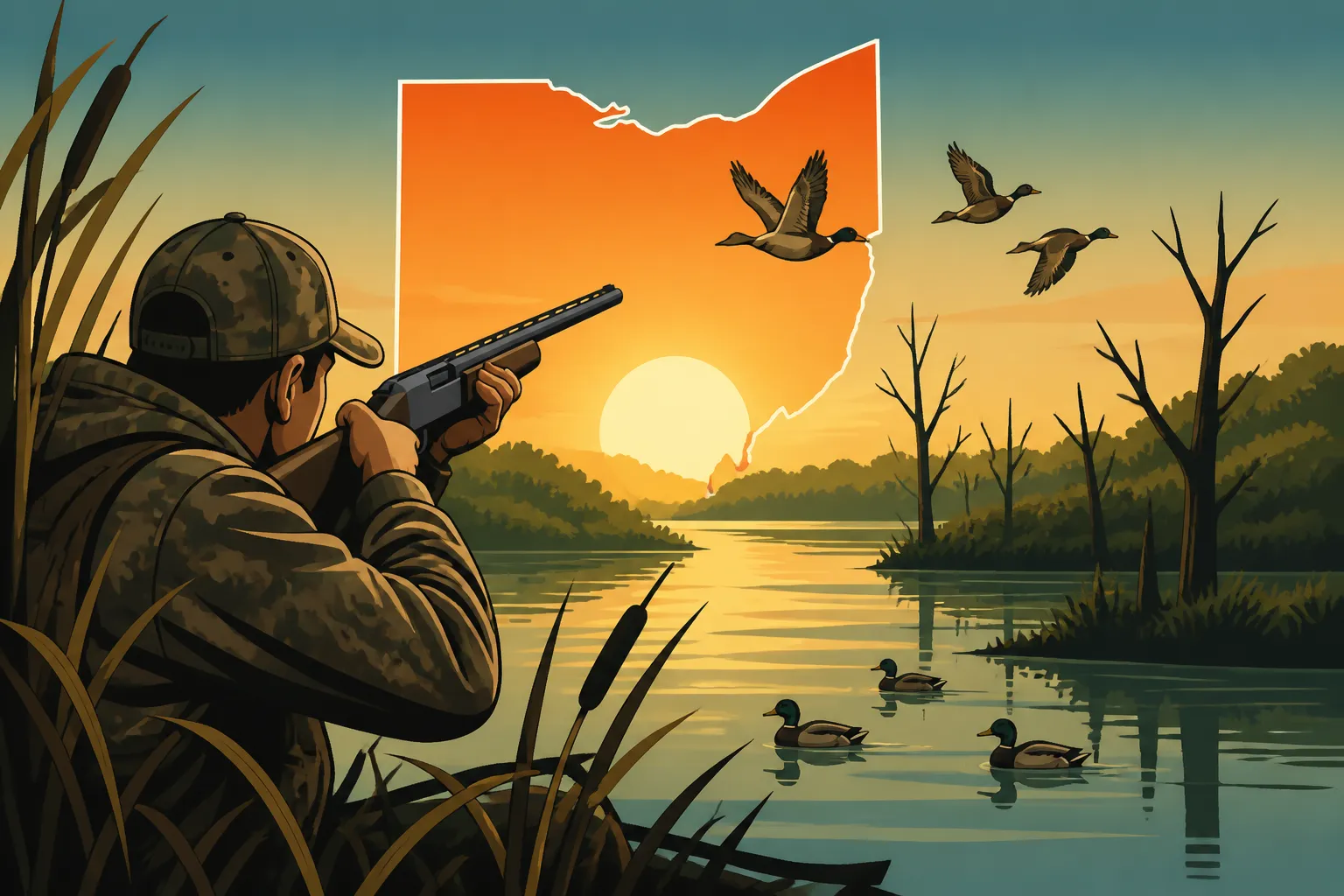
Waterfowl hunting in Ohio River backwater sloughs is often about finesse rather than brute force. Forget huge decoy spreads and aggressive calling you might use on Lake Erie. The birds using these sloughs are often local Mallards and Wood Ducks in Ohio Marshes, or wary migrants seeking sanctuary. A small, realistic decoy spread, perhaps a half-dozen mallards and a few wood ducks, is usually more effective. Place your decoys close to the natural cover where you'll be hiding, mimicking a relaxed group of birds. Focus on quiet entry and exit, as noise carries easily over still water. Stealth is paramount.
Blind placement should capitalize on the natural vegetation. Utilize dense willow thickets, buttonbush clumps, or cattail stands. A well-brushed layout blind or even just sitting quietly amongst the natural cover can be incredibly effective. Calling should be soft and infrequent; a few contented quacks or a soft whistle from a wood duck call can be enough to draw birds in. If the slough is narrow or has a bend, jump-shooting can be a productive method, especially for those early morning wood duck flights. When planning for Early Goose Season Tactics in Ohio, remember that geese often use sloughs for loafing after feeding in nearby fields, so positioning for morning flights between feed and water can be effective. Always be mindful of the sun's position and try to have it at your back, making it harder for birds to spot your hide.
Pursuing Small Game Along the Edges
Beyond waterfowl, the edges of Ohio River backwater sloughs can be hotspots for various Ohio Small Game and Upland Bird Seasons. The dense, often neglected timber and underbrush surrounding these waters provide fantastic habitat for squirrels and rabbits. For squirrels, focus on the mature mast-producing trees – oaks, hickories, and beeches – that often line the banks. These trees provide food, and their proximity to the water offers an escape route if pressured. Squirrel Hunting Ohio Hardwoods adjacent to these sloughs can be very productive, especially during the early season when leaves are still on the trees, providing cover for both hunter and game. Look for cuttings and listen for the tell-tale chatter of a squirrel.
Rabbits, on the other hand, will often be found in the thick, thorny briar patches and tangled fencerows that are common around these backwater areas. These dense pockets of cover offer protection from predators and the elements. Rabbit Hunting Ohio Fencerows near a slough can be a fantastic late-season activity, especially after a fresh snow, which makes tracking easier. A good beagle can be invaluable here, but still-hunting slowly and meticulously working through the cover can also yield results. Small-caliber rifles (like a .22) or shotguns with light loads are ideal for these close-quarters opportunities. Don't overlook the potential for late-season raccoons along these watery fringes, as they'll often travel the banks searching for food.
Considering Deer Movement Near Water
While backwater sloughs are primarily thought of for waterfowl and small game, don't discount their potential for deer, especially during the late season when food sources are scarce and hunting pressure is high. Deer are often drawn to the dense cover and persistent food sources found in these areas. Think about the thick willow brakes and buttonbush islands as prime bedding areas, offering thermal cover and concealment. Deer will travel these edges, often using them as secure travel corridors between bedding and feeding areas, especially if there's standing corn or leftover beans in nearby agricultural fields.
During the late archery or Muzzleloader Deer Hunting in Ohio seasons, deer will often seek out browse along the unfrozen edges or dig for roots in the exposed mud flats when water levels drop. A strategic stand or ground blind placement overlooking a known travel corridor or a transition zone between heavy cover and a subtle food source can be effective. Consider how deer might move along a Working a Creek Bottom for Late-Season Deer that feeds into or out of a slough. Scouting for fresh tracks, rub lines, or scrapes along these edges is critical. The key is often finding those pockets of undisturbed cover that offer sanctuary, especially where the slough is buffered by private land or deep, inaccessible public ground.
Essential Gear, Safety, and Ethical Considerations
Hunting Ohio River backwater sloughs demands specialized gear and a strong emphasis on safety. These aren't your typical easy-access spots, and being unprepared can quickly turn an exciting hunt into a dangerous situation.
Navigating the Water: Boats, Waders, and Propulsion
Accessing many backwater sloughs often requires a boat. A sturdy jon boat with a reliable outboard is excellent for getting across deeper stretches, but you'll often need a smaller, shallower-draft vessel like a canoe, kayak, or even a specialized marsh boat to get into the really tight, productive spots. An electric trolling motor is a godsend for stealthy approaches, allowing you to sneak into position without spooking birds. A good push pole is absolutely indispensable for navigating through shallow, muddy areas or dense vegetation where an outboard would get fouled. Many seasoned hunters swear by a stout aluminum push pole for its durability and effectiveness in getting through mucky bottoms.
Beyond boats, quality waders are non-negotiable. You’ll be stepping out of the boat, setting decoys, or traversing muddy banks. Look for durable, insulated waders if you’re hunting in cold weather, as Waders for Ohio Marsh Hunting need to stand up to sharp sticks and thick mud. Chest waders are often preferred for their versatility in varying water depths. Don't skimp on wader boots; good traction is crucial on slippery banks and submerged logs. Before heading out, always check river levels. A slough that was easily accessible last week might be bone dry or completely flooded this week, changing your approach and required gear dramatically.
Staying Prepared: Apparel, Navigation, and Emergency Gear
The Ohio weather is famously unpredictable, and spending a day in a cold, wet backwater can be miserable, or worse, dangerous, if you’re not dressed appropriately. Layering is key, allowing you to add or shed clothing as temperatures and activity levels change. Start with a moisture-wicking base layer, add insulating layers like fleece or wool, and top it with a waterproof and windproof outer shell. Layering for an Ohio Deer Stand or a waterfowl blind applies directly here. Wool is a fantastic choice for insulation, as it retains warmth even when wet. Don't forget insulated, waterproof boots and warm gloves or mittens.
Navigation in backwater areas can be tricky. What looks like an open path in the dark of pre-dawn can quickly become a maze of dead ends and thick vegetation. A reliable GPS unit or a smartphone with a robust hunting app (like GoHunt, which offers excellent offline mapping capabilities) is essential. Mark your entry point and any tricky turns. Always carry a headlamp with extra batteries. For safety, a properly fitted PFD (personal flotation device) is a must, even in shallow water. Pack a dry bag with spare clothes, a first-aid kit, a fully charged cell phone (though service can be spotty), and ideally, a satellite communication device if you're venturing into truly remote spots. Always let someone know your float plan and expected return time.
Respecting the Resource and Other Users
Hunting in these riverine environments comes with a significant responsibility to respect the resource, the land, and other users. Adhere strictly to all Ohio Waterfowl Hunting on Lake Erie and Inland regulations, as well as Ohio Small Game and Upland Bird Seasons limits and licensing. This includes proper game checking and reporting. Always practice Leave No Trace principles: pack out everything you pack in, and leave the area cleaner than you found it. This helps preserve these special places for future generations.
If you are hunting near private land, confirm your boundaries using a mapping app. While Ohio Trespass and Permission Law may vary slightly, always assume you need explicit permission to enter private land for any reason, including game retrieval. Ethical shot placement is paramount, especially when hunting over water where retrieving a wounded bird can be challenging. Consider your backdrop and ensure a safe shooting lane. Finally, remember that these areas might also be used by anglers, kayakers, or nature observers. Be courteous, share the public waters, and represent the hunting community in a positive light.
| Species Commonly Found | Typical Habitat in Backwaters | Best Hunting Times | Notes for Slough Hunting |
|---|---|---|---|
| Mallard | Open water, flooded timber, mud flats | Early morning, late afternoon | Small decoy spreads, soft calling |
| Wood Duck | Heavily timbered edges, brushy banks | First light, last light | Excellent jump-shooting, look for roosts |
| Canada Goose | Open water, adjacent agricultural fields | Mid-morning after feeding | Seek out secluded loafing areas |
| Squirrel (Fox & Gray) | Mature hardwoods along banks, dense brush | Early morning, late afternoon | Listen for cuttings, still-hunt edges |
| Rabbit | Thick briars, fencerows, heavy cover | Overcast days, after light snow | Dog invaluable, slow methodical pushes |
| White-tailed Deer | Dense willow thickets, adjacent timber | Early morning, late afternoon | Late season, travel corridors, bedding cover |
Disclaimer
Hunting is an inherently dangerous activity. This guide provides informational content only and is not a substitute for professional instruction, adherence to all local, state, and federal laws and regulations, or sound judgment. Always prioritize safety, check current hunting regulations from the Ohio Department of Natural Resources, and obtain proper licenses and permits before heading into the field. The author and publisher are not responsible for any accidents, injuries, or legal issues that may arise from using this information.