Barrel Length for Walking Fencerows
Walking those dense Ohio fencerows and tangled field edges for rabbits and pheasants can feel like you're wrestling an octopus, especially when your shotgun barrel keeps snagging on every briar and branch. It’s a frustrating dance, constantly pulling your barrel free, losing precious seconds and maybe even a shot opportunity. This guide dives deep into why your barrel length matters so much in these environments and how choosing the right one can transform your fencerow hunting experience from a struggle into a smooth, effective pursuit.
The Frustrations of a Long Barrel in Thick Cover
Let's be honest, we've all been there. You're trying to sneak along a prime fencerow, the kind with thick multiflora rose and honeysuckle, hoping to jump a cottontail or flush a pheasant. You have your trusty waterfowl gun with a 28 or 30-inch barrel slung over your shoulder, thinking it'll be fine. But every few steps, that long barrel catches. It hooks on a stray branch, gets tangled in a vine, or digs into the muddy ground as you try to duck under an overhang. You stop, untangle, re-shoulder, and by the time you're ready to move again, that rabbit you were hoping to surprise has long since vanished.
This isn't just an inconvenience; it's a genuine hindrance to effective hunting in dense cover. A long barrel compromises your ability to react quickly and fluidly. Imagine a rabbit bursting from a brush pile right at your feet. With a long barrel, your swing is often too slow, too jerky, or completely obstructed by the vegetation you're fighting through. The extra leverage of a long barrel might be great for smoothly tracking a duck across open sky, but in the close confines of an Ohio fencerow, it feels like an anchor. It fatigues your arms quicker, makes navigating obstacles a chore, and ultimately, can lead to missed opportunities and a less enjoyable hunt. Plus, constantly fighting your gun can be noisy, alerting game long before you ever get a chance to see it.
Snagging, Tangling, and Noise Pollution
The primary nightmare of a long barrel in fencerows is the constant snagging. Ohio fencerows, particularly in farm country, are notorious for their dense, often thorny, vegetation. Multiflora rose, greenbrier, grapevines, and honeysuckle create an impenetrable barrier that seems specifically designed to grab onto anything you're carrying. A 28-inch barrel becomes a magnet for these obstacles. You might be focused on where your feet are landing in the uneven terrain, and suddenly, the muzzle of your shotgun is hopelessly woven into a thorny bush.
Every time this happens, you have to stop. You have to carefully extract your barrel, trying not to prick yourself or, worse, bend something on your gun. This process isn't silent. The rustling of leaves, the snapping of twigs, and the muttered frustrations under your breath all carry far in the quiet winter woods. Rabbit Hunting Thick Ohio Fencerows is a prime example of where silence and fluid movement are key. Game animals, especially cottontails and pheasants, are incredibly sensitive to sudden movements and sounds. That repeated struggle with your long barrel can alert every critter in a 50-yard radius, sending them scurrying to deeper cover before you even know they're there. It breaks your rhythm, your concentration, and your overall stealth.
Reduced Swing Speed and Target Acquisition
Beyond the snagging, a longer barrel significantly impacts your ability to swing the gun quickly and smoothly when a bird or rabbit flushes. In fencerow hunting, shots are almost always close-range and fast. A rabbit might bolt from directly under your feet, or a pheasant might explode skyward from a ditch line. These aren't long, deliberate swings; they are snap shots requiring instant reaction and precise pointing.
A longer barrel naturally has more inertia, meaning it takes more effort and time to get it moving and stop it. This translates directly into slower swing speed. When that pheasant takes off like a rocket and ducks behind a patch of multiflora, you need to get on target now. With a long barrel, you might find yourself still trying to get the gun up and pointed while the bird has already put obstacles between you and it. Pheasant Hunting Ohio Farm Country often means jump shooting, where every fraction of a second counts. You might even find your swing arc is limited by overhead branches or tangled vines, preventing you from ever truly getting on the bird or bunny. It’s a battle against the environment and the physics of your own equipment.
The Agile Advantage of Shorter Barrels for Fencerow Hunting
Now, let's talk about the game-changer: the shorter barrel. When you're talking about traversing dense cover like fencerows, creek bottoms, and thick briar patches in Ohio, a shotgun with a 20-inch or 24-inch barrel feels like an extension of your body, not an awkward appendage. It’s the difference between trying to paddle a canoe with a telephone pole and using a nimble kayak paddle. The immediate benefit is maneuverability, but the advantages extend far beyond just avoiding snags.
Think about the way you move through heavy cover. You're ducking, weaving, stepping over logs, and pushing through branches. A shorter barrel dramatically reduces the chances of it catching on overhead limbs or digging into the ground. It allows you to keep the gun mounted or at least ready to shoulder much more easily, which is crucial for those sudden flushes. This agility is what makes guns like the classic pump-action scatterguns, often designed with shorter barrels, so popular for close-quarters hunting. They were built for quick reactions in tight spots, precisely the kind of hunting you'll encounter along Ohio's rural edges.
Enhanced Maneuverability and Quick Target Acquisition
The moment you pick up a shotgun with a 20-24 inch barrel, you'll feel the difference. It's lighter, more balanced, and incredibly agile. When that rabbit bolts or that pheasant explodes, your gun comes to your shoulder faster, and you can swing it through tight openings with far less effort. There's less barrel to get caught, less inertia to overcome, and a quicker point-ability that translates directly into more successful shots. This is particularly vital when you're hunting in areas where Rabbit Hunting Ohio Fencerows is the primary goal, as shots are almost always under 20 yards and often much closer.
This enhanced maneuverability isn't just about speed; it's about control. You can keep your focus on the flushing game, rather than on where your muzzle is in relation to the surrounding brush. You can track a fast-moving target through a small window in the cover, getting your shot off before it disappears. For jump-shooting or flushing game, where reactions are instantaneous, a shorter barrel gives you a distinct advantage. Many dedicated Upland Guns for Fencerow Cover are built with these shorter barrels for exactly this reason.
Reduced Weight Fatigue and Improved Balance
Longer barrels, by their nature, add weight. And while a few extra ounces might not seem like much on paper, after several hours of walking, pushing through thickets, and constantly re-shouldering your gun, those ounces turn into pounds of fatigue. A shorter barrel often means a lighter overall gun, or at least a gun with its balance point closer to your hands. This improved balance makes the gun feel more natural to carry, reducing strain on your arms and shoulders.
When you're slogging through mud, climbing over downed trees, and navigating dense cover, every bit of reduced fatigue counts. It allows you to stay in the field longer, remain more alert, and maintain better form throughout the hunt. This can be especially true if you're hunting several fencerows in a day, covering a significant amount of ground. Boots for Walking Ohio Farm Country and other gear focused on comfort and efficiency work in tandem with a lighter, shorter-barreled shotgun to make your long days in the field much more manageable and productive. You'll simply have more energy to focus on the hunt itself, rather than fighting your gear.
Finding Your Sweet Spot: Balancing Length and Performance
So, we've established that shorter barrels are generally better for fencerow hunting. But how short is too short? And what about the age-old argument that longer barrels pattern better? It’s all about finding that ideal balance for your hunting style and the specific game you're pursuing in Ohio.
Most upland hunters in thick cover find that a barrel length between 22 and 26 inches hits that sweet spot. A 22-inch barrel offers maximum maneuverability, feeling incredibly fast and light. A 24-inch barrel is a fantastic all-around choice for upland work, providing great handling without feeling excessively short. A 26-inch barrel, while a bit longer, still offers good balance and swing, especially if you anticipate some slightly longer shots in more open areas adjacent to the fencerows. Anything longer than 26 inches starts to lean back into the "awkward" category for dense brush.
Modern Chokes and Pattern Density
The traditional wisdom that "longer barrels pattern better" is largely a myth, especially with modern ammunition and choke tube technology. Barrel length has very little, if any, impact on a shotgun's pattern density or effective range. What truly shapes the shot pattern is the choke constriction at the muzzle. A shorter barrel with a full or modified choke will throw just as dense and effective a pattern at 30-40 yards as a longer barrel with the same choke.
So, don't let concerns about pattern density keep you from opting for a shorter barrel. Focus on finding a gun that points naturally for you and that allows you to swap out choke tubes to match the hunting scenario. For rabbits and pheasants in thick fencerows, you'll likely be using open chokes like Improved Cylinder or Modified, as shots are typically close-range. For example, when Hunting a Funnel Between Two Woodlots that's filled with tangled brush, an improved cylinder choke will provide a wide, forgiving pattern that's ideal for fast-flushing game at short distances. Always pattern your shotgun with your chosen ammunition and choke to understand its real-world performance.
Practical Ranges and Game Types
For rabbits, shots are almost always very close – often under 20 yards. A super-short 20 or 22-inch barrel is perfect for this. It allows you to react instantly when a bunny jumps out right at your feet. Running Beagles on Ohio Cottontails means a lot of busting through thick stuff, and a short, fast-handling gun is a huge asset.
Pheasants can be a bit different. While many flush close, some will hold tight and then explode out at 25-30 yards or even more, especially late in the season when they've been pressured. For these slightly longer shots, a 24 or 26-inch barrel might offer a touch more perceived "reach" simply due to the slightly longer sighting plane, though scientifically, it makes little difference. The key is still a quick, fluid swing. If you're hunting open ditches or fields more than truly dense fencerows, a slightly longer barrel might feel more comfortable.
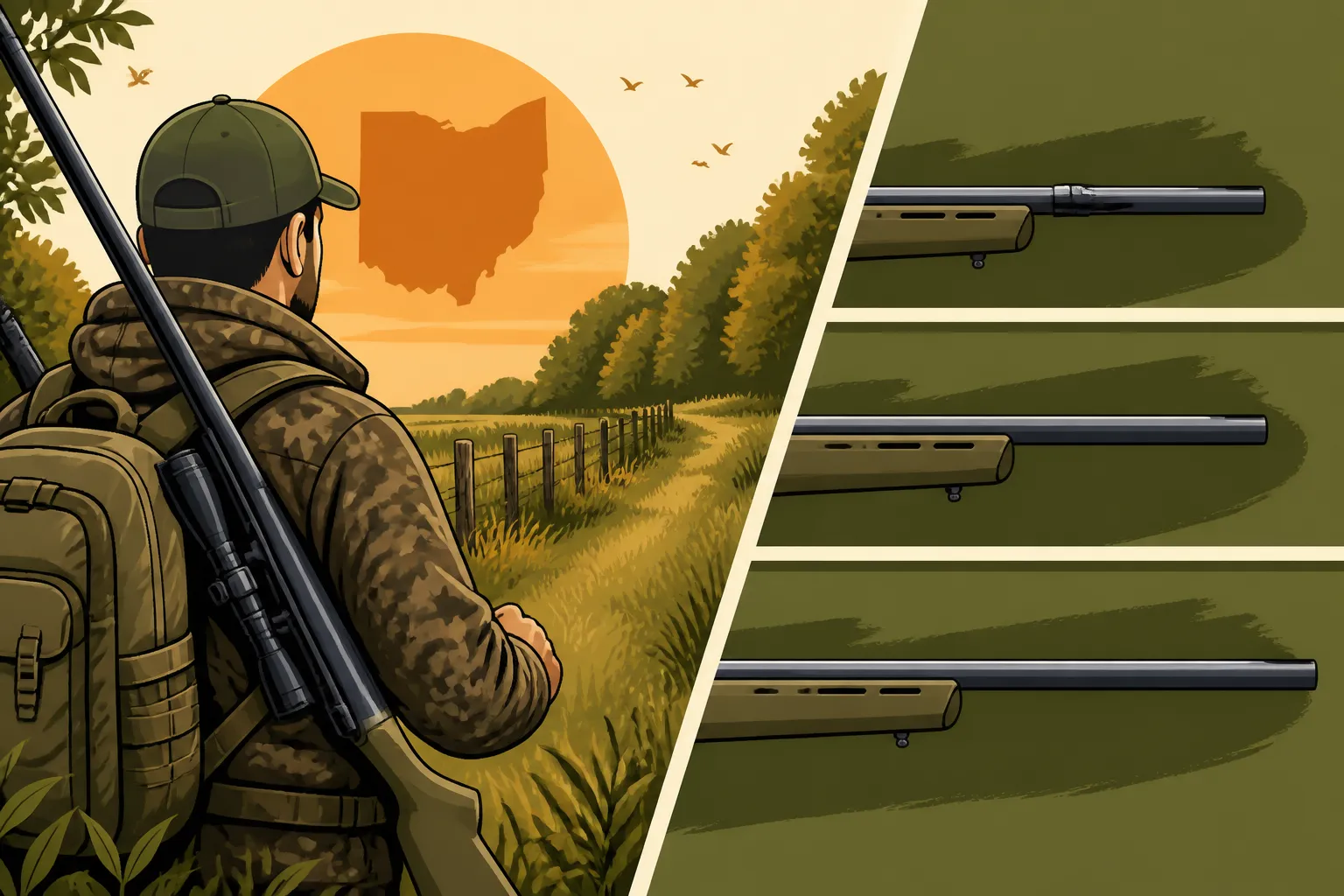
Here's a quick comparison of typical barrel lengths for fencerow hunting:
| Barrel Length (inches) | Pros for Fencerows | Cons for Fencerows | Ideal Game/Scenario |
|---|---|---|---|
| 20-22 | Maximum maneuverability, fastest handling, lightest | Very short sighting plane (minor), muzzle blast a bit louder | Rabbits, thickest briar patches, tight jump-shooting |
| 24 | Excellent balance, great maneuverability, versatile | None really, a true sweet spot for most | Rabbits, pheasants, mixed cover, all-around upland |
| 26 | Good balance, smooth swing, slightly longer sight plane | Can still snag occasionally in densest cover, a bit heavier | Pheasants in slightly more open fencerows, longer shots |
| 28+ | Smooth tracking for flying birds in open, long sight plane | Constantly snags, heavy, slow to swing in cover, tiring | Waterfowl, pass shooting, open field hunting (not fencerows) |
Ultimately, the "best" barrel length is personal. Go to your local sporting goods store, shoulder a few different shotguns, and see how they feel. Imagine yourself swinging it in tight quarters. If you can, borrow a friend's gun with a shorter barrel and take it for a walk (unloaded, of course!) through some brush to get a feel for the maneuverability.
Beyond Barrel Length: Complementary Gear for Fencerow Success
Choosing the right barrel length is a massive step, but it's not the only piece of the puzzle for comfortable and effective fencerow hunting. Your other gear choices can either enhance or negate the advantages of a shorter barrel. Think of it as building a system designed for navigating thick Ohio cover, with every component working together. When you're spending all day traversing varied terrain, whether you're using a GoHunt app to scout potential rabbit runs or just following your nose, comfort and efficiency are paramount.
From how you carry your gun to what you wear to protect yourself from thorns, optimizing your gear can turn a grueling day into an enjoyable and productive one.
Proper Sling Selection and Carry Methods
Even with a shorter barrel, how you carry your shotgun matters immensely. A good quality sling is essential. Look for a sling that's comfortable, adjustable, and won't slip off your shoulder easily. A non-slip backing is a huge plus. Some hunters prefer a two-point sling, while others like a single-point for quick transitioning. Experiment to find what works for you.
When walking fencerows, avoid carrying the gun slung over your shoulder by the strap, especially with the muzzle pointing up. This makes it an even bigger snag hazard. Instead, try carrying it either cradled in your arms, ready to swing, or, if conditions allow and you need both hands free, slung across your back with the muzzle down. This keeps the barrel low and out of the way of overhead branches. However, be mindful that slung across your back makes quick shots impossible. For actual hunting, carrying it cradled is often the best compromise. You can always check aerial photos on platforms like GoHunt before your hunt to plan routes and identify the densest sections where a specific carry method might be advantageous.
Durable Clothing and Footwear
Fencerow hunting is tough on clothes. You're pushing through thorns, crawling under branches, and getting covered in mud. Investing in durable hunting attire is not a luxury; it's a necessity. Look for Brush Pants for Ohio Fencerows made from tough, briar-resistant materials like nylon or canvas with reinforced fronts. These will protect your legs from punctures and tears, allowing you to focus on the hunt instead of wincing with every step.
For footwear, Boots for Walking Ohio Farm Country means rubber boots or waterproof hiking boots with good ankle support are crucial. You'll encounter mud, wet grass, and uneven ground. Keeping your feet dry and comfortable is key to enjoying a long day afield. Consider wearing gaiters to prevent debris and water from getting into your boots. Layering is also important for Ohio's variable weather. You'll be working hard, generating heat, but then standing still, cooling down. A good base layer, a warm mid-layer, and a waterproof, breathable outer layer will keep you comfortable.
Navigation and Scouting Tools
Even with the perfect shotgun and clothing, knowing where you're going and what the terrain holds is invaluable. Before you even step into the field, use scouting tools. Apps and platforms like GoHunt can be invaluable for identifying prime fencerow habitat, finding access points, and noting potential escape routes for game. You can look for patterns of thick cover, drainage ditches, and field edges that funnel game. Scouting Ohio Public Land Before Season is always a good idea, and mapping tools are a huge part of that.
While on the move, a reliable GPS or a hunting app on your phone (like GoHunt, which often has offline map capabilities) can help you stay oriented, mark hot spots, and ensure you're not trespassing on private property if you're Knocking on Doors in Ohio Farm Country for permission. These tools, combined with a short-barreled, nimble shotgun, make you a far more efficient and less frustrated fencerow hunter in Ohio. You'll be able to move confidently, react quickly, and maximize your chances of success.
Disclaimer
This article is for general informational purposes only and does not constitute professional advice. Laws, prices and regulations vary by location and change over time. Consult a qualified professional for guidance on your specific situation.