Which Counties Border the Ohio DSA
The anxiety of hunting near a Chronic Wasting Disease Surveillance Area (DSA) is real, and it adds a layer of complexity to an already challenging pursuit. You're probably wondering what specific counties hug the edges of Ohio's DSA, and more importantly, how that impacts your hunting plans, from checking deer to managing carcass movement. This guide will meticulously break down the boundaries of Ohio's CWD DSA, identify the surrounding counties, and detail the critical regulations you need to understand to hunt responsibly and successfully in these areas.
Understanding Ohio's CWD Surveillance Area
Chronic Wasting Disease (CWD) is one of those phrases that can send a shiver down any deer hunter's spine, and for good reason. It's a serious, always-fatal neurological disease that affects cervids – that's deer, elk, and moose to us hunters. In Ohio, our primary concern is, of course, our cherished white-tailed deer population. The disease is caused by abnormal proteins called prions, and it slowly degrades the brain of an infected animal, leading to emaciation, abnormal behavior, loss of bodily functions, and ultimately, death. What makes it particularly insidious is its long incubation period, often years, during which an animal can appear healthy while shedding prions through saliva, urine, and feces, contaminating the environment for future deer.
Why Ohio Established the DSA
Ohio, like many states, has been vigilant in monitoring for CWD. When the first confirmed case of CWD in a wild deer was detected in Wyandot County, it was a pivotal moment. The Ohio Department of Natural Resources (ODNR) knew they had to act decisively to try and contain the disease and prevent its wider spread. This led to the establishment of the CWD Surveillance Area (DSA). This wasn't a knee-jerk reaction but a carefully considered, proactive measure based on scientific understanding of CWD transmission. The goal behind the DSA is multi-faceted: to intensely monitor deer health in high-risk areas, to collect crucial data on disease prevalence and spread, and ultimately, to protect Ohio's broader deer herd and the hunting heritage we all hold dear. It's a challenging task, and understanding Ohio's Chronic Wasting Disease Surveillance Area is paramount for any hunter in the region.
Key Characteristics and Rules Within the DSA
Life inside the DSA is a bit different for hunters, and these rules are vital for disease management. During specific periods, especially opening weekends of gun seasons, hunters are often subject to mandatory CWD testing of harvested deer. This means taking your deer to a designated check station or self-serve kiosk so wildlife biologists can collect lymph node samples for testing. This intense data collection helps the ODNR track the disease's presence and inform their management strategies.
Another significant characteristic within the DSA involves carcass movement restrictions. To prevent the accidental spread of prions to new areas, there are strict rules about what parts of a deer can be transported out of the DSA. Generally, only boned-out meat, clean skull plates (with antlers attached), clean antlers, capes (for taxidermy), and hides are allowed to leave. This is because the brain, spinal cord, and lymph nodes are considered high-risk tissues for CWD prions. Beyond testing and movement rules, the ODNR might also implement specific bag limits or additional deer management permits within the DSA to help reduce deer densities, which can be a strategy to slow disease transmission. This constant monitoring and research are an ongoing effort to safeguard our deer.
Identifying the Counties Bordering Ohio's DSA
Navigating the landscape of CWD regulations starts with knowing where the lines are drawn. The DSA isn't static, and its boundaries can shift based on new detections and ongoing research, but understanding its core and immediate neighbors is always the first step for hunters.
The Core Counties of the DSA
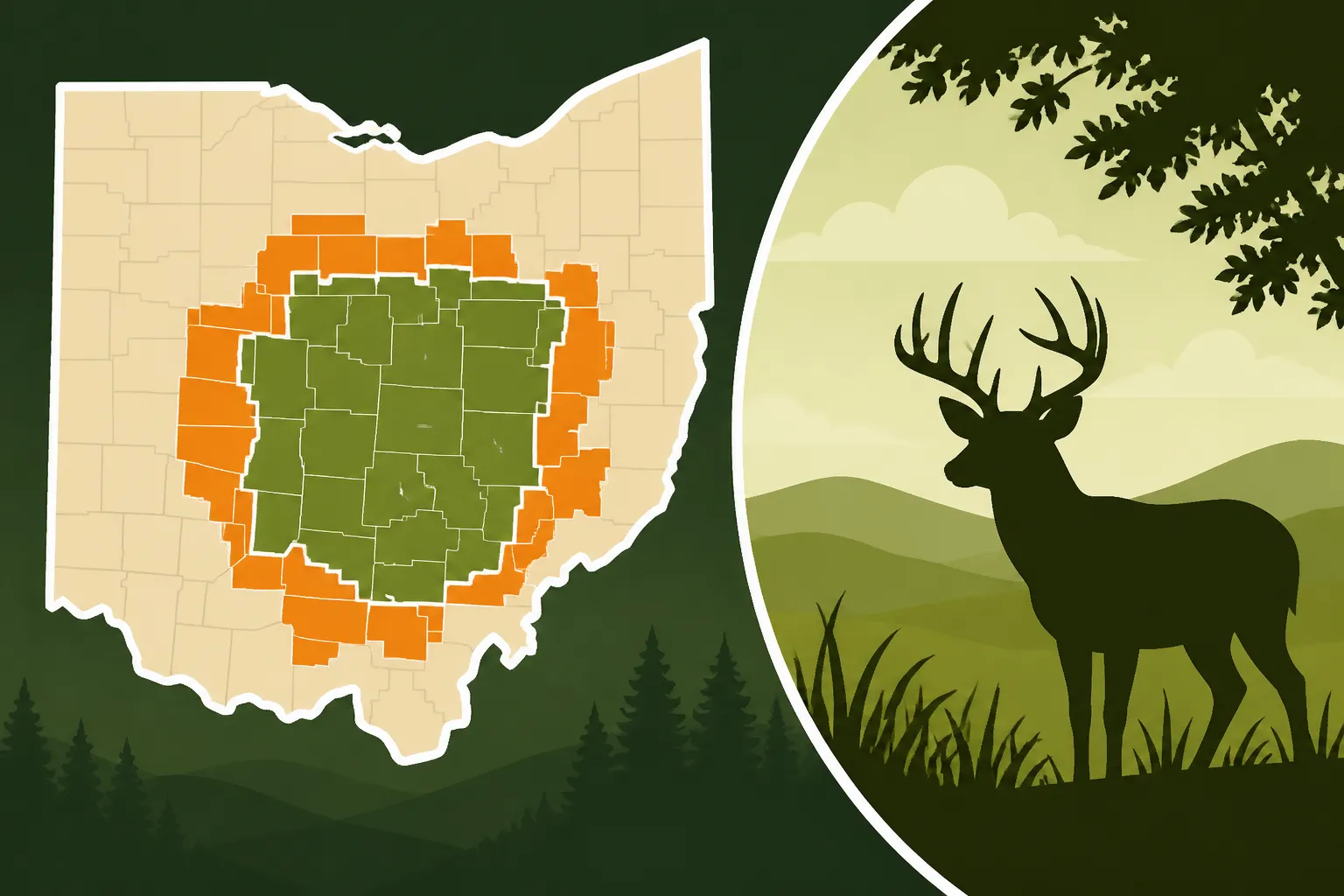
Currently, the primary counties within Ohio's CWD Surveillance Area include Hardin, Marion, and Wyandot counties, along with portions of Crawford, Delaware, Franklin, Logan, Morrow, and Union counties. These are the areas where the initial CWD cases were detected and where the disease has been most actively monitored. For instance, Why Wyandot County Drives Ohio's CWD Numbers is often a topic of discussion among wildlife biologists and hunters alike, as it was the site of the state's first confirmed wild CWD case, making it a critical hub for surveillance. The ODNR focuses its most stringent regulations within these core areas, as they represent the frontline in the battle against CWD. Hunters in these counties face mandatory testing windows, specific carcass movement restrictions, and are on the cutting edge of Ohio's CWD management efforts.
The Immediate Neighbors: Counties on the Fringe
While the core DSA counties have direct regulations, the real focus for many hunters is often on those counties that border the DSA but aren't fully within it. These are the fringe counties, and while they might not always have the same mandatory testing requirements, their proximity means hunters need to be extra vigilant and informed. They are essentially buffer zones, and what happens within them is crucial for containing any potential spread.
Here's a breakdown of the counties that immediately border Ohio's current CWD DSA, as of recent ODNR updates:
- Allen County: Borders Hardin County.
- Ashland County: Borders Crawford and Morrow counties.
- Auglaize County: Borders Hardin and Logan counties.
- Champaign County: Borders Logan and Union counties.
- Fairfield County: Borders Franklin and Delaware counties.
- Hancock County: Borders Hardin and Wyandot counties.
- Huron County: Borders Crawford County.
- Knox County: Borders Delaware and Morrow counties.
- Licking County: Borders Delaware and Franklin counties.
- Madison County: Borders Franklin and Union counties.
- Pickaway County: Borders Franklin and Delaware counties.
- Richland County: Borders Crawford and Morrow counties.
- Seneca County: Borders Wyandot and Crawford counties.
- Shelby County: Borders Logan County.
- Wood County: Borders Wyandot County.
These bordering counties act as a critical second line of defense. While the rules might be less strict here compared to the core DSA, any hunter in these areas should still be well-versed in CWD prevention and reporting, as a new detection in one of these counties could lead to rapid changes in regulations.
Visualizing the Boundary for Planning Your Hunt
Understanding which counties are where is one thing, but actually visualizing these boundaries on a map is incredibly helpful for planning your hunt. Many hunters rely on digital mapping tools like the GoHunt app or the official ODNR's Scouting With the Ohio HuntFish App to overlay these CWD zones onto their hunting areas. This allows you to see precisely where the DSA line runs in relation to your favorite woodlot, field edge, or public land hunting spot. Even if you're hunting in a bordering county, that imaginary line is a very real consideration when it comes to understanding and adhering to carcass movement restrictions.
To help put it all into perspective, here's a quick reference table:
| Category | Counties | Key Hunting Considerations |
|---|---|---|
| Core CWD DSA Counties | Hardin, Marion, Wyandot, and portions of Crawford, Delaware, Franklin, Logan, Morrow, Union | Mandatory Testing: Often required during specific hunt dates (e.g., gun season opener). Carcass Movement Restrictions: Strict rules on what deer parts can leave the DSA. Increased Surveillance: Higher likelihood of targeted research or additional regulations. |
| Bordering Counties | Allen, Ashland, Auglaize, Champaign, Fairfield, Hancock, Huron, Knox, Licking, Madison, Pickaway, Richland, Seneca, Shelby, Wood | Vigilance is Key: While mandatory testing might not apply, consider voluntary testing if deer show signs of illness or are harvested very close to the DSA line. Carcass Movement Awareness: If you hunt within the DSA and live in a bordering county, restrictions still apply. Stay Informed: Be aware that regulations can change if CWD is detected in these areas. |
This table, combined with a good mapping application like GoHunt, can be an invaluable resource for ensuring you're always hunting within the current guidelines.
Navigating Hunting Regulations in Bordering Counties
Hunting in or near Ohio's CWD Surveillance Area requires more than just knowing where the boundaries are; it demands a proactive approach to understanding and adhering to the nuanced regulations. It's about being a responsible steward of our wildlife resources.
Specific Rules for Harvest and Testing Considerations
For hunters operating within the core DSA counties, Mandatory CWD Testing Windows in the DSA are a non-negotiable part of the season. This often means presenting your harvested deer at a designated sampling station or kiosk during specific dates, typically the opening weekend of the statewide gun season. However, even if you're hunting in one of the bordering counties where mandatory testing isn't currently required, it’s still wise to consider voluntary testing, especially if you harvest a deer that appears sick or if your hunting spot is right on the DSA boundary. The ODNR provides Ohio CWD Sampling Station Locations for both mandatory and voluntary submissions. Being proactive helps wildlife managers gather crucial data that informs future disease management, even from outside the core DSA. It's a small extra step that contributes significantly to the health of the entire deer herd.
Understanding Carcass Movement Restrictions
This is perhaps the most impactful regulation for hunters, particularly those in bordering counties who might venture into the DSA. The rules surrounding Ohio Carcass Movement Restrictions are designed to prevent the physical transfer of CWD prions from an infected area to a clean one. Imagine you’ve successfully harvested a magnificent buck deep within a DSA county, but your home and processing facilities are located in a bordering county like Shelby or Licking. You can’t simply load the entire deer into your truck and head home.
The regulation specifies that only certain parts of a deer harvested within the DSA can be transported out of it. This usually includes:
- Boned-out meat (meaning all bone and spinal column material has been removed).
- Clean skull plates, with or without antlers, as long as all brain matter and soft tissue are removed.
- Clean antlers.
- Capes (for taxidermy), provided they are free of brain and spinal tissue.
- Hides.
The reason for this is scientific: the highest concentrations of CWD prions are found in the brain, spinal cord, and lymph nodes. By restricting the movement of these high-risk tissues, the ODNR aims to limit the potential for CWD to establish itself in new areas. This means if you're hunting in the DSA, you might need to perform a thorough field dressing and partial processing in the field or at a local facility before transporting your deer, a skill that can be particularly challenging in cold weather but necessary. This process is often a more involved affair than just Field Dressing a Deer in Cold Weather, requiring attention to detail to ensure compliance.
Best Practices for Hunters in Adjacent Areas
Even when hunting outside the strict CWD DSA boundaries, hunters in bordering counties have a vital role to play in prevention and surveillance.
First, scouting for signs of sick deer is crucial. While CWD is largely asymptomatic in its early stages, deer in advanced stages may appear emaciated, disoriented, have excessive drooling, or carry their head in an unusual way. If you spot a deer exhibiting these symptoms, report it to the ODNR immediately, regardless of where you are.
Second, processing your deer responsibly is key. If you hunt within the DSA, plan to process your deer there if possible, or ensure you follow carcass movement restrictions before transporting it home to a bordering county. Even for deer harvested in bordering counties, consider what you do with the carcass remains. Never dump high-risk parts in areas accessible to other deer, as this could contribute to environmental contamination.
Third, maintain good hygiene. Always clean your knives, saws, and other equipment thoroughly after field dressing and processing a deer. Wash your hands and clothing, especially if you’ve handled brain or spinal tissue.
Finally, stay informed. The CWD situation is dynamic. Regulations, boundaries, and recommendations can change. Regularly check the Ohio Department of Natural Resources website or use trusted hunting resources like GoHunt to get the latest updates. Being proactive and knowledgeable is the best defense against CWD's spread.
Implications for Hunters and Wildlife Management
The presence of Chronic Wasting Disease, even if contained within specific surveillance areas, casts a long shadow over wildlife management and hunting traditions. It forces a reevaluation of established practices and demands a collaborative effort from state agencies and the hunting community.
Impact on Ohio's Deer Management Strategies
The Ohio Department of Natural Resources (ODNR) is continually adapting its approach to deer management in light of CWD. This includes potentially adjusting Ohio Deer Season Structure Explained, altering bag limits, or issuing more Ohio Deer Management Permits in affected or high-risk areas. The overarching goal is often to reduce deer densities in these zones, as lower densities can help slow the transmission rate of the disease. The data collected from mandatory and voluntary CWD testing is invaluable in shaping these strategies, providing wildlife biologists with a clearer picture of the disease's prevalence and geographic spread. These decisions aren't made lightly; they involve complex scientific modeling, public input, and a deep commitment to maintaining healthy White-Tailed Deer Across Ohio for future generations to enjoy. The challenge lies in balancing disease management with maintaining hunting opportunities and traditions.
Hunter Responsibility in CWD Prevention
Hunters are, without a doubt, the most critical partners in CWD prevention and surveillance. We are often the first to observe deer in their natural habitats, making us the frontline observers for any signs of illness. Reporting sick deer, adhering strictly to carcass movement restrictions, and participating in mandatory testing programs are not just legal obligations but ethical responsibilities. Every hunter's actions contribute to the larger effort to protect the deer herd. Whether you're focused on Hunting Ohio Farmland Deer or stalking public land in the Appalachian foothills, understanding how CWD can affect deer and what you can do to prevent its spread is paramount. Proper disposal of carcass waste is another huge responsibility. Instead of leaving high-risk tissues where other deer might encounter them, disposing of them in lined landfills or following ODNR guidelines helps break the chain of transmission.
The Future of CWD in Ohio and Beyond
CWD is a persistent and long-term challenge, and its future in Ohio, as in other states, remains uncertain. It's a disease that demands ongoing vigilance, research, and adaptive management. The DSA boundaries and associated regulations are not static; they are living documents that may evolve as new information becomes available or as the disease either spreads or is successfully contained. Researchers are constantly working on better detection methods, understanding transmission pathways, and exploring potential management interventions. For hunters, this means remaining adaptable and perpetually informed. Using reliable sources like GoHunt for mapping and regulations, coupled with the official ODNR website, will be essential for staying up-to-date. This isn't a battle with an easy victory, but through collective effort, informed decisions, and responsible hunting practices, we can strive to mitigate the impact of CWD and preserve Ohio's hunting heritage.
Disclaimer
The information provided in this guide is for general educational purposes only and is subject to change. Hunting regulations, including those related to Chronic Wasting Disease (CWD) and Surveillance Areas (DSA), are frequently updated by the Ohio Department of Natural Resources (ODNR). It is the hunter's responsibility to verify all current rules, regulations, and boundaries directly with the ODNR before hunting. Always consult the official Ohio Hunting and Trapping Regulations and any specific CWD advisories issued by the ODNR.