Ohio Coyote Night Hunting Permit
Dealing with coyotes can be a real headache, especially when they're impacting livestock or local deer populations, and the idea of hunting them at night often comes with a lot of questions about what's actually allowed. It’s easy to feel confused about the specific rules and if you even need a special "Ohio Coyote Night Hunting Permit" to take care of business after dark. This guide is going to walk you through exactly what Ohio's regulations say about hunting coyotes at night, clearing up any misconceptions and equipping you with the knowledge to hunt safely and legally.
Understanding Ohio's Coyote Night Hunting Rules
The allure of hunting coyotes after dark is strong – these canny predators are often most active under the cloak of night, making them a challenging target for those looking to manage their populations. But before you grab your gear and head out, it's absolutely vital to understand the specific rules and regulations that govern night hunting in Ohio. The common phrase "Ohio Coyote Night Hunting Permit" often pops up in conversations, but the reality of what's required might surprise you.
Dispelling Common Misconceptions About a Specific Permit
Many hunters, especially those new to predator control or coming from other states, often assume there's a specific, standalone "Ohio Coyote Night Hunting Permit" required to hunt coyotes after the sun sets. I get it; some states have very particular regulations for night hunting, sometimes necessitating special permits for things like furbearers or using artificial lights. This assumption often stems from a desire to be absolutely compliant, or perhaps from experiences in other regions with stricter night hunting laws. It's a valid concern, as nobody wants to run afoul of the law simply because of a misunderstanding.
However, the reality in Ohio is a bit different from this common misconception. While you absolutely need a valid Ohio hunting license to pursue coyotes at any time of day, there isn't a separate, distinct permit that specifically grants you permission to hunt them only at night. This can be a relief for some, and a point of confusion for others who might have been actively searching for a non-existent permit on the ODNR website or in the hunting digest. The absence of a dedicated night permit doesn't mean it's a free-for-all; it just means the permissions for night hunting are embedded within the general hunting regulations.
Instead, Ohio's framework allows for night hunting of coyotes under the general hunting license, provided you adhere to specific rules regarding legal hours, lighting equipment, and other safety considerations. This distinction is crucial: it’s not about obtaining an extra piece of paper, but about understanding and diligently following the conditions under which night hunting is permitted. For example, if you're out on a crisp January night, your standard hunting license covers your pursuit of coyotes, but you must still follow rules about light use and land access. This means that while the term "night hunting permit" might be colloquially used, what you’re really seeking is clarity on the existing general hunting regulations for after-dark coyote control, which this guide aims to provide.
Legal Hours and Permitted Light Sources for Night Hunting
Hunting coyotes after dark brings with it a unique set of challenges and, consequently, a specific set of rules. For most game species in Ohio, hunting is strictly limited to legal shooting hours, which typically run from half an hour before sunrise to half an hour after sunset. If you were planning on Bowhunting Ohio's Long Archery Season for deer, for instance, you'd be packing up right at last legal light. However, coyotes are a notable exception, falling under the "nuisance animal" and "furbearer" categories that allow for more flexible hunting hours.
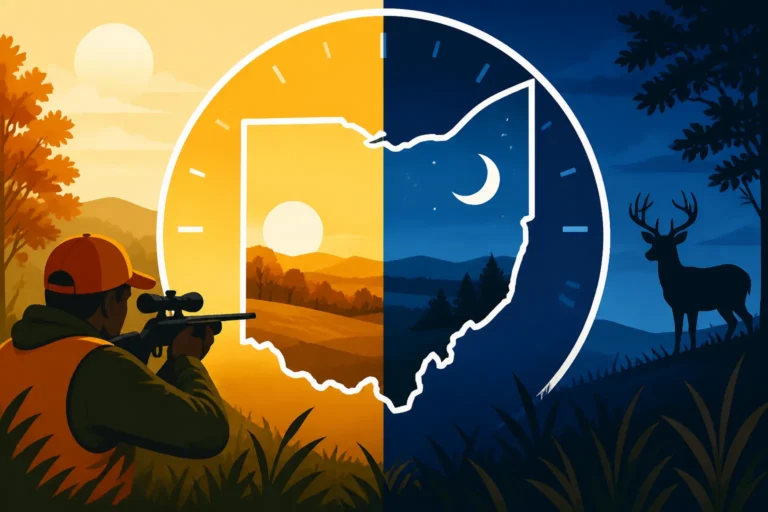
You can hunt coyotes at night in Ohio, year-round, without specific hour restrictions. This flexibility is a huge advantage for hunters targeting these nocturnal predators, who often become much more active once the sun goes down. Whether you're dealing with them in a suburban setting or on remote farmland, the ability to hunt them during their peak activity allows for much greater success. This means you can be out there from sundown to sunup, as long as you're following all other relevant regulations.
When it comes to light sources, this is where many people get tripped up. Ohio law permits the use of artificial lights while hunting coyotes at night. This includes spotlights, headlamps, and even mounted lights on firearms. However, it's vital to remember that these lights can only be used to spot, locate, and take coyotes, and not other species for which night hunting or the use of artificial light is prohibited. Always be absolutely certain of your target before engaging, as misidentifying an animal in the dark, even with a powerful light, can lead to serious consequences. For instance, you absolutely cannot use these lights to hunt deer, even if a deer happens to be in the beam. This is a critical distinction that keeps hunters honest and ethical, making sure you're focused solely on the intended target.
The Ohio Coyote Night Hunting Framework: What You Need to Know
Given that there isn't a specific "Ohio Coyote Night Hunting Permit," understanding the actual requirements and framework is essential for any hunter looking to engage in this challenging pursuit. It's less about a standalone permit and more about adhering to a set of conditions and responsible practices that are woven into the existing hunting laws.
Licensing and Required Documentation for Coyote Hunting
Since there isn't a dedicated "Ohio Coyote Night Hunting Permit," what is truly required? Well, for starters, any individual pursuing coyotes in Ohio needs a valid Ohio hunting license. This isn't just for night hunting; it's a baseline requirement for almost all hunting activities in the state, whether you're chasing deer, turkeys, or small game. If you're an Ohio resident, you'll need a resident hunting license, and non-residents will require a nonresident hunting license. For a full breakdown of what licenses cost and options available, our guide on Ohio Hunting Licenses and What They Cost is a valuable resource.
You can easily purchase these licenses online through the Ohio Department of Natural Resources (ODNR) website or at various license vendors across the state, including many sporting goods stores and bait shops. It’s a pretty straightforward process, but make sure your license is current and valid for the season you’re hunting. This is your fundamental permission slip for any hunting activity in Ohio.
While coyotes are considered furbearers, a separate furtaker permit is generally for trapping, not hunting them with a firearm or bow. However, always double-check the latest regulations, as wildlife laws can change. I often use resources like the official ODNR site or the GoHunt app to quickly verify current requirements, as information can sometimes be updated. Carrying proof of your valid license, whether a physical copy or on your phone, is absolutely essential when you're out in the field. Game wardens often conduct checks, and being able to present your license promptly ensures a smooth interaction.
Operating Legally on Public Versus Private Land
The rules for night hunting coyotes can vary significantly depending on whether you're on public or private land. On private land, with landowner permission, you have a bit more leeway, but you still must follow statewide regulations regarding legal methods and safety. Securing explicit permission from the landowner is paramount, and it's always a good idea to get it in writing, especially when hunting at night. This protects both you and the landowner. Discussing your intentions, including the use of lights and firearms, beforehand can prevent misunderstandings and build trust. For more details on getting access, check out our guide on Getting Private Land Permission in Ohio.
When it comes to public lands, the rules become much stricter. Many Ohio wildlife areas and state forests have specific regulations that might restrict night hunting, discharge of firearms after certain hours, or the use of artificial lights. For example, some public lands might prohibit hunting entirely outside of daylight hours, regardless of the species. It's crucial to consult the specific rules for the public land unit you intend to hunt. This information is typically available on the ODNR website or at the specific wildlife area office.
The ODNR's GoHunt app is incredibly useful here, as it often includes maps and property-specific regulations, allowing you to zoom in and check boundaries and specific rules before you even leave home. Always assume night hunting or using artificial lights is prohibited on public land unless you have verified, beyond a shadow of a doubt, that it is expressly permitted for coyotes. Ignoring these rules can lead to citations, fines, and even loss of hunting privileges, which nobody wants. It’s far better to be overly cautious than to accidentally violate a regulation.
Tactical Considerations and Equipment for Ohio Night Coyote Hunting
Once you understand the legal framework, you can turn your attention to the practicalities of night hunting. This is where specialized gear, meticulous planning, and an unwavering commitment to safety really come into play.
Essential Gear for After-Dark Success
Hunting coyotes at night is a completely different ballgame than during the day, and your gear list needs to reflect that. First and foremost, a reliable firearm is essential. Many hunters opt for straight-wall cartridge rifles like the .350 Legend or .450 Bushmaster for their effectiveness and legal compliance in Ohio, offering sufficient knockdown power for coyotes while adhering to state regulations. Alternatively, a good old shotgun with buckshot can be incredibly effective in closer quarters, especially in thick cover. For more on the capabilities of these firearms, check out Straight-Wall Rifles for Ohio Deer, which covers calibers also suitable for coyotes.
The real game-changer at night is your optical equipment. Thermal imaging and night vision devices have become incredibly advanced and are legal for coyote hunting in Ohio. A good thermal monocular can help you spot coyotes (and other animals, so identification is key!) at hundreds of yards, detecting their heat signatures against a cold landscape. Once a target is spotted, a thermal or night vision scope on your rifle allows for precise shot placement in total darkness. These tools not only enhance your ability to find and target coyotes but also significantly improve your safety by giving you a clearer picture of your surroundings.
Don't forget a powerful spotlight or headlamp with different color filters (red and green are popular) for scanning and target identification. While thermal and night vision are excellent for detection, a visible light can sometimes be crucial for positive identification just before the shot, or for tracking after the shot. Lastly, electronic callers loaded with various coyote vocalizations, rabbit distress, or even fawn bleats are indispensable. A good remote-controlled caller allows you to position the sound away from your location, drawing coyotes in without immediately revealing your exact position.
Safety Protocols and Ethical Practices in the Dark
Safety takes on an even higher priority when hunting at night. Visibility is minimal, and the potential for misidentification or accidental discharge is heightened. Always hunt with at least one trusted partner, and ensure you have a clear communication plan – two-way radios can be invaluable for maintaining contact and coordinating efforts, especially if you're spreading out. If you're new to hunting or thinking of bringing a new hunter along, understanding Ohio Hunter Education Requirements is crucial, as safe handling and ethical considerations apply whether it's day or night.
A cardinal rule is to never point your firearm at anything you haven't positively identified, and always know what's beyond your target. Backstops are critical; shooting over ridges or into open fields where you can't see what's behind can be incredibly dangerous. This is particularly important when using powerful lights or optics that might allow you to see a target clearly, but obscure what lies beyond. Always take a moment to assess the backdrop before taking a shot.
When using lights, sweep slowly and methodically, avoiding quick, jerky movements that might startle animals or confuse your partner. Ethical hunting practices demand clean, swift kills. Thermal and night vision make this possible, but only if you practice with your equipment to understand its limitations and your effective range in the dark. Misjudging distance or shot placement in low light can lead to wounded animals and difficult recovery scenarios. Remember, the goal is responsible wildlife management, not just taking a shot. Understanding Night Hunting Rules for Ohio Coyotes is essential for staying safe and legal.
Ohio's Broader Coyote Hunting Regulations and Opportunities
While the focus here is on night hunting, it's beneficial to understand how these specific rules fit into the larger picture of coyote hunting in Ohio. Coyotes are a prevalent species, and the state offers generous opportunities for hunters to pursue them throughout the year.
Year-Round Hunting and Open Seasons
One of the most appealing aspects of coyote hunting in Ohio is that there is no closed season and no daily bag limit. This means you can pursue coyotes year-round, whenever the opportunity arises, provided you have your valid Ohio hunting license. This continuous open season is a testament to the ODNR's recognition of coyotes as a widespread species that can benefit from population management, especially in areas where they impact livestock or other game species. It gives hunters immense flexibility, unlike species like deer or turkey that have very specific season dates.
While you can hunt them anytime, many hunters find the colder months, particularly winter, to be the most productive. Snow cover makes tracking easier, and the lack of foliage improves visibility, especially during daylight hours. Also, during the winter, coyotes are often more responsive to calling as they are actively searching for food and preparing for breeding. For specific tactics during these productive times, consider our detailed guide on Coyote Calling in Ohio Winter.
This year-round opportunity allows hunters to integrate coyote hunting into their schedule seamlessly, whether it's an impromptu evening hunt after work or a dedicated weekend pursuit specifically for predator control. This consistency in opportunity makes Ohio a great state for those who enjoy the challenge and management benefits of coyote hunting.
Approved Methods, Equipment, and Reporting
Beyond night hunting, Ohio offers a variety of legal methods and equipment for pursuing coyotes during the day as well. Firearms, including shotguns, straight-wall cartridge rifles, and even handguns, are permitted. For a full discussion of what makes a firearm legal for big game in Ohio, and often applicable to predators, refer to our guide on Ohio Legal Firearms for Deer Hunting. Archery equipment, such as vertical bows and crossbows, is also legal, providing options for different hunting styles and preferences. This versatility ensures that hunters can utilize the gear they are most proficient and comfortable with.
Electronic calls, mouth calls, and decoys (like a flapping bird or rabbit decoy) are all incredibly effective tools for luring coyotes within range, both day and night. The key is to understand how to use these tools to mimic natural prey or coyote vocalizations to draw them into your setup. A good mapping tool, like the one offered by GoHunt, can help you identify prime hunting locations, understand terrain features, and note property boundaries – which is crucial whether you're still-hunting or setting up a stand. You can often find useful information on Coyote and Predator Hunting in Ohio that covers these broader methods.
Currently, Ohio does not require hunters to report harvested coyotes to the ODNR, unlike deer or turkey. However, it's always good practice to keep track of your own harvests for personal records and to contribute to local knowledge. If you encounter any unusual behavior or suspected disease in a coyote you harvest, reporting it to the ODNR is always recommended to assist with wildlife monitoring efforts. Understanding Ohio Coyote Range and Density can also help you target productive areas where coyote populations are more robust, increasing your chances of success.
Minimizing Impact and Adhering to Local Ordinances
While state regulations provide the overarching framework for coyote hunting, local ordinances can sometimes add an extra layer of complexity, particularly in more populated or suburban areas. Before you head out, especially if you're hunting near residential zones or on the fringes of a town, it's crucial to check local laws regarding firearm discharge, noise ordinances, and even the use of artificial lights. What might be perfectly legal under statewide ODNR rules could be prohibited by a city or county ordinance. For example, some municipalities have specific rules about discharging firearms within city limits, even on private property with permission. This is particularly relevant for night hunting, where calls and gunshots can be more noticeable.
Always do your homework – a quick call to the local sheriff's department or municipal office can save you a lot of grief. It’s far better to make a proactive phone call than to explain yourself to a local law enforcement officer after the fact. Additionally, when driving through rural areas, be mindful of private property lines and avoid disturbing residents with bright lights or loud calls if you’re not hunting on their land. The goal is to be a responsible hunter who respects both wildlife and the community.
The GoHunt app, with its detailed parcel data and land ownership overlays, is a fantastic tool for easily identifying property lines and ensuring you stay on the right side of the law, even in unfamiliar territory. By being considerate and doing your due diligence on both state and local regulations, you can ensure your night coyote hunting adventures are both effective and trouble-free. This approach reflects well on all hunters and helps maintain good relations with landowners and non-hunters alike.
Key Ohio Coyote Night Hunting Rules at a Glance
For quick reference, here's a summary of the most important aspects concerning night hunting coyotes in Ohio:
| Aspect | Ohio Coyote Night Hunting Rules |
|---|---|
| Specific Permit? | No dedicated "Ohio Coyote Night Hunting Permit." A general Ohio hunting license is sufficient. |
| Required Licenses | Valid Ohio Hunting License (Resident or Nonresident). For more details on all Ohio Coyote Hunting Season Rules, always refer to the current ODNR digest. |
| Legal Hours | Year-round, 24 hours a day (no specific time restrictions for coyotes), allowing for flexible night hunting. |
| Artificial Lights | Permitted for spotting, locating, and taking coyotes. Cannot be used to hunt other species for which night hunting/light use is prohibited (e.g., deer). |
| Thermal/Night Vision | Legal for coyote hunting and highly effective for after-dark visibility. |
| Public Land | Varies by specific public land unit. Always check specific area regulations for the property you intend to hunt. Assume prohibited unless expressly permitted. |
| Private Land | Legal with landowner permission, following all statewide rules and any local ordinances. Written permission highly recommended to avoid disputes. |
| Bag Limit | No daily or seasonal bag limit, reflecting the ODNR's approach to managing this prolific species. |
| Reporting | Not currently required for coyote harvests, providing administrative simplicity for hunters. |
Disclaimer
Please note that hunting regulations are subject to change. Always consult the most current Ohio Department of Natural Resources (ODNR) hunting and trapping regulations before heading afield. This guide provides general information and should not be considered a substitute for the official ODNR hunting digests or legal advice.