Fogged Optics in Ohio Cold
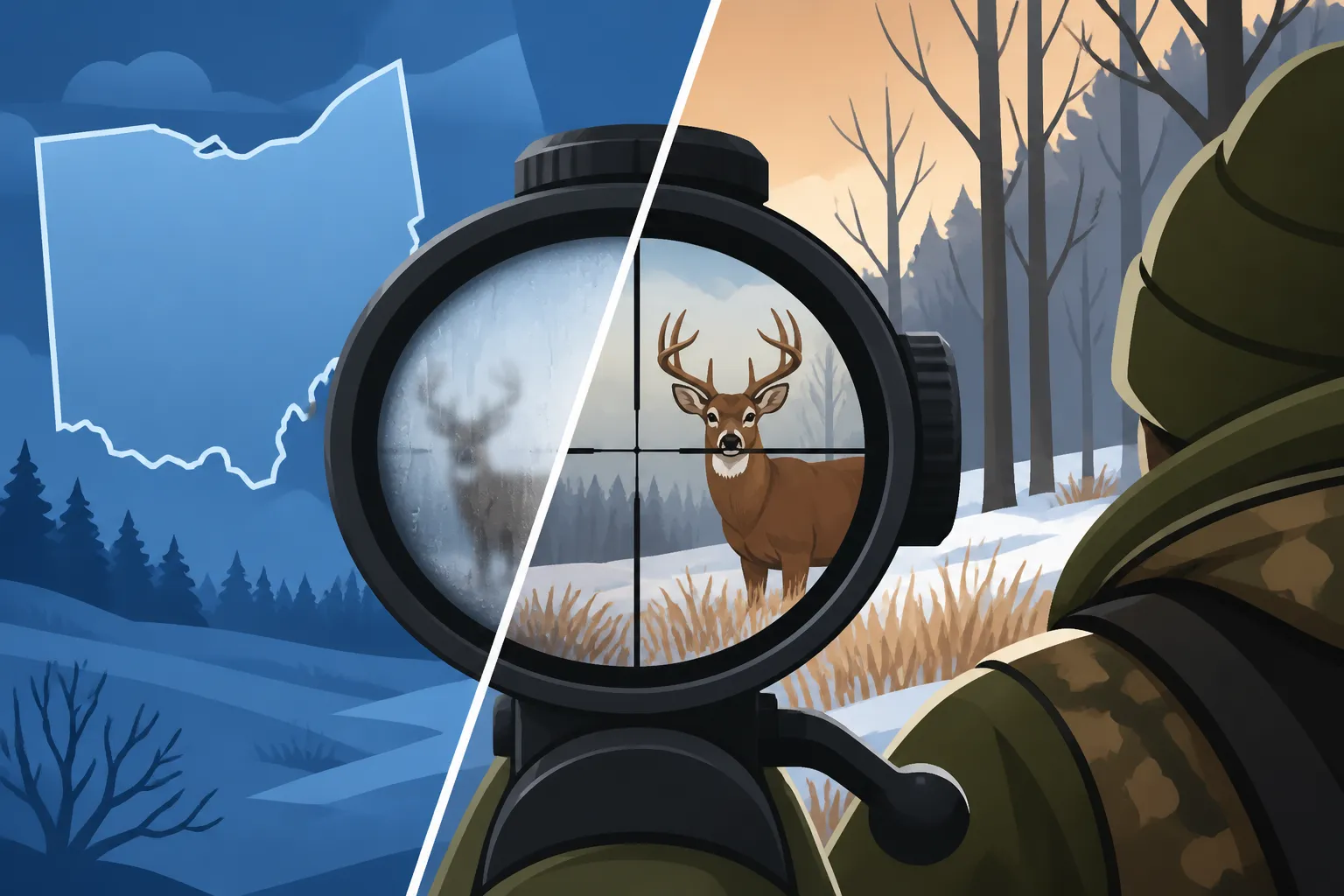
There's nothing quite like settling into your treestand on a frigid Ohio morning, the crisp air biting at your cheeks, hoping that a big buck will materialize in the pre-dawn gloom. You raise your binoculars to scan the shadowy woods, or perhaps shoulder your rifle and look through the scope, only to be met with a frustrating, blinding cloud. That instant, opaque film on your lenses is fog, and it's a common, infuriating problem that can completely derail a critical moment in the field. This guide is all about understanding why your optics betray you in the cold Ohio weather and, more importantly, how to prevent and manage that maddening fog, ensuring you stay clear-eyed and ready when it matters most.
Why Your Optics Fog Up in Ohio's Winter
Ohio's hunting seasons, especially for deer and fall turkey, stretch deep into the colder months, bringing with them a delightful mix of biting cold, damp air, and often, unexpected warmth from our own bodies. These conditions are a perfect storm for optics to fog up, turning a clear view into a milky haze. It's not just bad luck; there's a real science behind why your lenses suddenly go opaque at the worst possible moment.
The Science Behind Condensation
At its heart, fogging is pure physics: condensation. It happens when warm, moist air comes into contact with a cold surface. The air rapidly cools, losing its ability to hold as much moisture, and that excess water vapor then condenses into tiny liquid droplets on the cold surface – your lens. Think about a cold glass of sweet tea on a hot summer day; the outside of the glass quickly gets wet. It's the same principle, just happening on a much smaller, more frustrating scale on your expensive hunting optics.
In Ohio, our winters can swing wildly. One day it's a damp, 40-degree drizzle, the next it's a dry, single-digit freeze. When you take your warm binoculars or scope from your heated truck cab or house and expose them to sub-freezing temperatures, the lenses become a prime target for condensation. Even your own breath, warm and laden with moisture, can be enough to instantly fog an unprotected lens as you peer through it. This is why a moment of excitement, a quick breath, or even just the change in air around your face can cause that frustrating whiteout right when you need clarity the most. It's a fundamental challenge for anyone Hunting Ohio's Two-Weekend Gun Deer Season or spending time Muzzleloader Deer Hunting in Ohio in the dead of winter.
Common Scenarios for Fogging in the Field
Knowing the "why" is one thing, but recognizing the "when" is just as crucial for preventing it. Hunters in Ohio face several common scenarios that almost guarantee fogged optics.
One of the most frequent culprits is the sudden temperature change. You’ve had your binoculars or rifle scope inside your warm house or vehicle, and then you step out into a 20-degree morning to climb into your stand. As soon as the cold air hits those warm lenses, particularly if there’s any humidity in the air from recent rain or snow, they're going to fog up externally. This isn't an internal seal issue; it's just the surface temperature imbalance. A classic scenario unfolds when you hike deep into Wayne National Forest, get into your stand, and then pull your binos from a warm pocket only to have them instantly cloud over as you try to scan a distant ridge line.
Another prime fogging opportunity comes from our own bodies. We breathe, and our breath is warm and moist. If you're scanning intently through binoculars or focusing through a scope, especially in a ground blind where the air might be still, your breath can waft directly onto the lenses. This creates an immediate, localized fog that can be surprisingly persistent. Or consider a quick, strenuous drag of a deer out of a ravine. You're hot and sweaty, then you stop to check your path with your binos, and poof, they're fogged. Rain, sleet, or heavy dew can also contribute significantly, as the moisture on the lens surface combines with temperature differentials to create a persistent film, even if the lens itself is technically clear. Sometimes, the issue isn't even external, but internal. If your optics aren't perfectly sealed, humidity can seep inside, leading to a much harder-to-fix internal fogging that indicates a breach in the seal or purging. This is especially problematic during prolonged exposure to damp conditions, a common occurrence when Hunting Southeast Ohio Appalachian Foothills.
Practical Strategies to Prevent Fogged Optics
The good news is that while fogging is a natural phenomenon, it's often preventable with a bit of foresight and the right gear. There are several steps you can take to minimize the chances of your view being obscured by a sudden cloud.
Acclimation and Temperature Equalization
The simplest and most effective way to prevent external fogging is to minimize temperature differences between your optics and the ambient air. This process is called acclimation. Instead of bringing your binoculars or scope from a warm house straight to a cold morning stand, try to get them accustomed to the colder temperatures gradually.
If you know you're going hunting in the morning, consider placing your optics, stored safely in their case, in an unheated garage, shed, or even in your vehicle overnight. This allows them to slowly cool down to roughly the same temperature as the outside air you'll be hunting in. When you step out, the temperature differential will be much smaller, drastically reducing the likelihood of immediate condensation. For those quick trips from the truck to the stand, keeping your binos on your chest under an outer layer, rather than in a warm pocket, can help them acclimate slowly to the exterior cold without being hit by a sudden blast of super-cold air. This is a crucial step for hunters embarking on a cold muzzleloader sit. Even something as simple as putting your rifle and scope in a soft case in the truck bed on the drive to your hunting spot, rather than in the heated cab, can make a significant difference.
Protective Coatings and Rain Guards
While acclimation handles external temperature shock, sometimes you need extra protection against moisture and breath. This is where specialized coatings and physical barriers come into play. Many modern optics feature hydrophobic lens coatings that cause water to bead up and roll off, making it harder for a persistent film of moisture to form. These coatings also make cleaning easier, as smudges and rain spots are less likely to adhere stubbornly.
You can also apply anti-fog treatments yourself. There are various lens pens, sprays, and treated cloths available specifically designed to leave a thin, invisible layer on your lenses that inhibits condensation. Brands like those featured on GoHunt often carry user reviews for these types of products, giving you insight into what performs best in real-world hunting scenarios. Remember to always apply these according to the manufacturer's directions and test them out before a critical hunt. Beyond chemical treatments, physical accessories like flip-up scope caps and rain guards for binoculars are invaluable. These protect your lenses from rain, snow, and even your own breath, keeping them clear until the moment you need to make a shot or take a closer look. They're particularly useful during a rainy Hunting the Second Gun Weekend in December.
Proper Storage and Field Handling
How you store and handle your optics both before and during a hunt has a huge impact on fog prevention. Always store your binoculars and scopes in a clean, dry environment, preferably in a padded case when not in use. This protects them from dust, debris, and excessive moisture. If your optics get wet during a hunt, never put them directly back into a sealed case until they are completely dry. Let them air out in a relatively dry, warm environment, wiping them down gently with a microfiber cloth first.
In the field, resist the urge to breathe directly onto your lenses to "clean" them, as this only adds warm moisture and guarantees fogging. Instead, carry a dedicated lens cloth. When you're not actively glassing or aiming, keep your lens caps on. For binoculars, a good quality bino harness or case that keeps them tucked against your chest, protected from direct exposure to the elements, can work wonders. This also keeps them a bit warmer, aiding in acclimation. If you're using a ground blind, keep your binos and scope inside until you need them, minimizing exposure to the outside air until necessary. Even simple actions like wiping down your rifle and scope after a long day of Hunting Deer After a January Thaw can prevent moisture from seeping into small crevices and causing internal issues later.
What to Do When Your Optics Already Fogged Up
Despite your best efforts, sometimes fog happens. A sudden weather change, an unexpected exertion, or just plain bad luck can leave you staring at a blurry mess. When that happens, knowing how to react quickly can salvage your hunt.
Quick Fixes in the Field
If your optics fog up externally, the first step is often the simplest: a gentle, dry wipe. Always use a clean, soft microfiber lens cloth designed specifically for optics. Avoid using your shirt, a tissue, or anything else that might scratch the delicate lens coatings. Many hunters keep a dedicated lens cloth in a waterproof pouch in their bino harness or jacket pocket, easily accessible for such moments. If the fog is light, a quick, gentle buff can clear it right up.
If wiping doesn't completely clear it, or if it immediately fogs again, you're likely dealing with a significant temperature differential. The next best course of action is to try to equalize the temperature. Hold the optics so the fogged lenses are exposed to the ambient air, but shielded from your breath. Sometimes, simply letting the air currents work on them for a minute or two will help them clear as they fully acclimate. If it's not actively raining or snowing, this often works. For extreme cold, you can sometimes very carefully use your body heat. Tuck the optics under an armpit or inside your jacket for a few minutes. The idea isn't to make them hot, but to slowly bring their temperature closer to your body's, which should also be closer to the air temperature after you've been sitting for a while. This is a technique often employed during a cold Late-Season Food Sources for Ohio Whitetails sit. Remember, patience is key here; aggressive rubbing can just spread moisture and smudge the lens.
Long-Term Maintenance and Repair
External fogging is annoying, but internal fogging is a real problem and usually indicates a deeper issue. If you're consistently seeing fog inside your scope or binoculars, it means the internal seals have been compromised, and moisture has gotten inside. This is not something you can fix in the field. Internal fogging often leads to permanent damage, as mold or mildew can grow on the internal lens elements, leaving permanent spots.
If your optics are internally fogging, the best course of action is to contact the manufacturer's customer service. Most reputable optics brands offer excellent warranties that cover defects like this, especially for fogging in purged optics. They will often repair or replace the unit. Do not attempt to open or repair the optics yourself, as this will almost certainly void the warranty and cause further damage. Regular cleaning and inspection of your optics can help prevent issues down the line. Check for any cracks or damage to the housing that might compromise seals. Make sure lens caps fit snugly. Investing in high-quality optics from the start, often reviewed and compared on platforms like GoHunt, can save you a lot of headache in the long run, as these brands typically have superior sealing and purging processes. This is especially true for gear you rely on for precision tasks, like determining antler points when Filling an Antlerless Permit Late in Ohio.
Choosing Optics Designed for Ohio's Harsh Conditions
When you're shopping for new binoculars or a rifle scope, especially with Ohio's varied and often challenging weather in mind, there are specific features that can significantly reduce your battle with fog. Don't just look at magnification and glass quality; consider how the optic is built to withstand the elements.
Nitrogen or Argon Purging
This is arguably the most critical feature for preventing internal fogging. Most high-quality modern optics are "purged" and "O-ring sealed." This means that during manufacturing, all the air and moisture inside the optic's housing are removed and replaced with an inert gas, typically nitrogen or argon. These gases are dry and won't condense, even with extreme temperature fluctuations. The O-rings then create a tight seal, preventing any external moisture or air from entering.
If an optic is advertised as "nitrogen purged" or "argon purged," it means it's designed to be internally fog-proof and often waterproof as well. This is a non-negotiable feature for serious hunters in Ohio, where damp, cold conditions are the norm for much of the hunting season. Without it, even the most expensive glass will eventually suffer from internal condensation if the seals aren't perfect. Always confirm this feature before purchasing, as it’s a true game-changer for clarity in adverse weather. This is essential for ensuring you have a clear sight picture on a crucial moment during Ohio's Two-Weekend Gun Deer Season.
Quality Lens Coatings and Construction
Beyond internal purging, the quality of external lens coatings and the overall construction of the optic play a huge role in preventing fog and maintaining clarity. Look for multi-coated lenses, especially those with hydrophobic (water-repelling) coatings. These specialized coatings cause water droplets to bead up and roll off the lens surface, preventing them from forming a flat, vision-obscuring film. This not only helps with rain and snow but also makes it harder for breath-induced condensation to take hold.
The physical housing of the optic also matters. A robust, well-sealed chassis, often made from magnesium or aluminum alloy, provides a strong foundation for the internal components and external seals. Rubber armoring not only protects against bumps and drops but can also provide an additional barrier against moisture. When you’re researching optics, look for reviews that specifically mention performance in wet or cold conditions. Sites like GoHunt often have detailed product breakdowns that highlight these features, helping you choose gear that stands up to the rigors of an Ohio winter. Don't underestimate the value of a solid build when you're Hunting Northwest Ohio Farmland Deer, where moisture can come from heavy dew, fog, or a damp field edge.
Choosing the Right Gear: A Comparison
To help you make an informed decision, here's a quick comparison of optic types and their susceptibility to fogging, along with features to look for:
| Optic Type | Common Fogging Scenarios | Key Anti-Fog Features to Look For | Importance for Ohio Hunter |
|---|---|---|---|
| Binoculars | Warm breath, sudden cold exposure, rain/snow on lenses | Nitrogen/Argon Purged, Hydrophobic Coatings, Lens Caps, Bino Harness | High (essential for scouting and identification) |
| Rifle Scope | Sudden cold exposure, internal seal failure, rain/snow on objective | Nitrogen/Argon Purged, Multi-Coated Lenses, Flip-Up Scope Caps | High (critical for clear aiming) |
| Spotting Scope | Prolonged exposure to cold, high humidity, moving between environments | Nitrogen/Argon Purged, Large Objective Lens for light gathering | Moderate (less common in mobile hunting, but critical for long-range glassing) |
| Rangefinder | Hand warmth + cold air, light rain on small lens | Water-resistant housing, basic lens coatings, compact carry | Moderate (small lens, less prone but still possible) |
By understanding the causes, implementing preventative measures, and choosing optics with the right features, you can ensure that fogged lenses become a rare frustration, rather than a common hindrance, during your Ohio hunting adventures.
Disclaimer
This article is for general informational purposes only and does not constitute professional advice. Laws, prices and regulations vary by location and change over time. Consult a qualified professional for guidance on your specific situation.