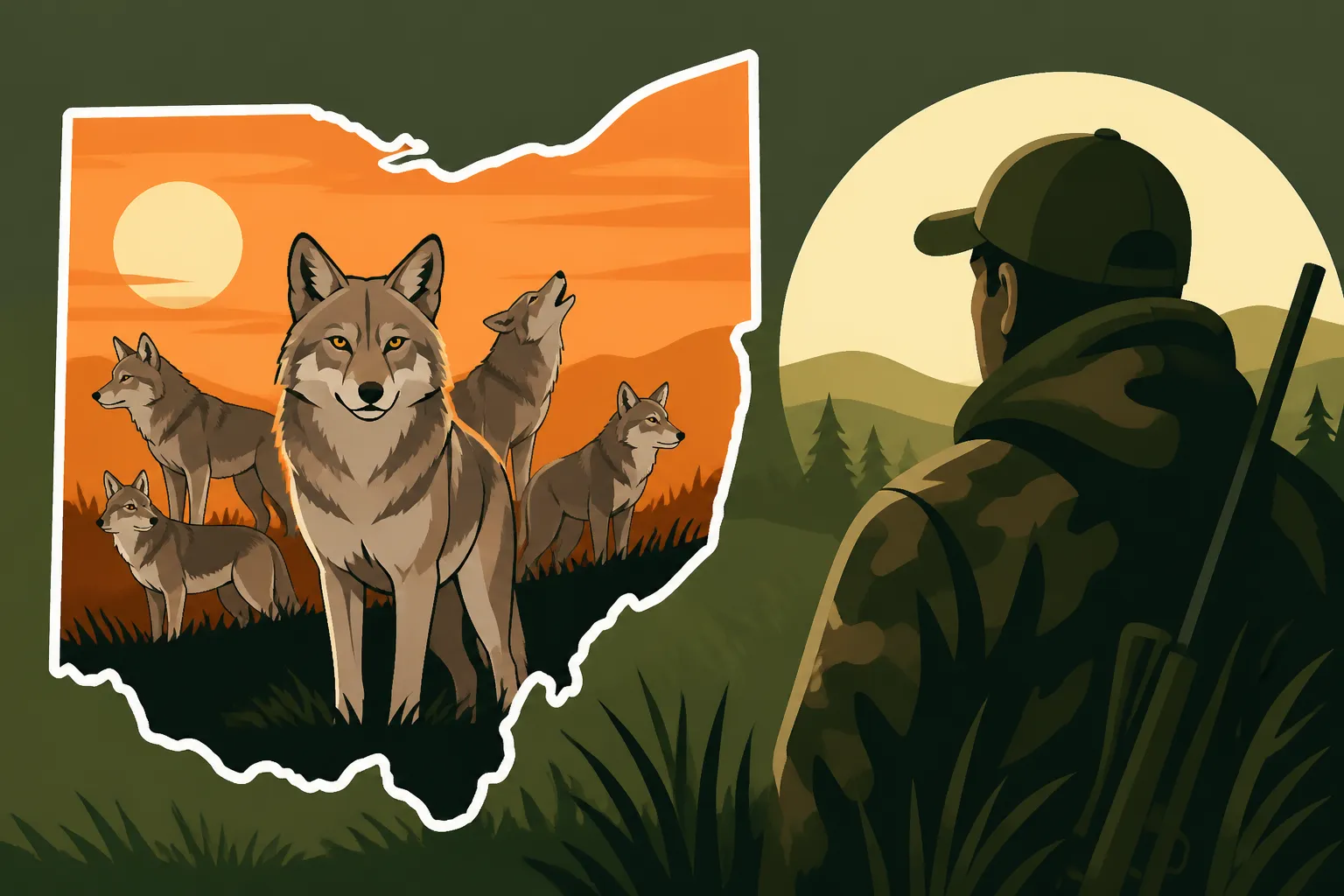
How Many Coyotes Ohio Has
It’s a question almost every hunter, farmer, and even suburban homeowner in Ohio has pondered: just how many coyotes are actually out there? You hear them yipping and howling at dusk, spot one slipping across a field in broad daylight, or catch a glimpse of a pair crossing a road at night, and it certainly feels like they're everywhere. This guide will dive deep into the fascinating reality of Ohio's coyote population, exploring why getting an exact number is so tough, what we know about their presence and impact, and how we can better understand these clever predators.
The Elusive Numbers Game: Why Counting Coyotes is Tricky in Ohio
When it comes to Ohio's wildlife, we often hear precise figures for deer harvests or turkey populations. But coyotes? That's a different story. While you might expect a neat, tidy number for how many coyotes roam the Buckeye State, the truth is far more complex. Unlike deer, which are managed with specific harvest quotas and seasons, coyotes are largely unmanaged in terms of population control by the state, existing under very liberal hunting and trapping regulations. This makes precise census data a real challenge.
The Nature of the Beast: Adaptability and Range
Coyotes are, in a word, survivors. Their incredible adaptability is precisely what makes them so successful across Ohio, from the sprawling farmlands of the northwest to the rugged, forested hills of the Appalachian foothills. They're not picky about their habitat; a coyote can thrive in dense timber, open agricultural fields, brushy fencerows, and even surprisingly close to human habitation in urban and suburban areas. This wide-ranging nature means they don't stay put in easily definable territories that can be neatly counted. A coyote spotted today in one woodlot might be miles away by tomorrow, making a comprehensive, statewide count a logistical nightmare.
Think about it: deer tend to stay within a few square miles for much of their lives, especially does and fawns. Turkeys have their roosts and strutting grounds. But a coyote? They are constantly on the move, searching for food, mates, or new territory. This nomadic tendency, coupled with their natural wariness of humans and their nocturnal habits, means they are incredibly adept at avoiding detection. This elusiveness contributes significantly to the feeling that they are far more abundant than they might actually be, simply because when you do see one, it feels like a rare event, yet it reinforces the idea of their omnipresence.
Methods of Estimation: What Wildlife Biologists Do
So, if we can't count every single coyote, how do wildlife biologists even begin to estimate their numbers or understand population trends? They rely on a combination of indirect methods and data points, none of which provide a definitive headcount but together paint a picture of their status. These methods include looking at harvest data from licensed hunters and trappers, which gives an indication of minimum populations and trends over time. If harvest numbers are increasing, it suggests a healthy or growing population.
Another key method involves citizen science and surveys. The Ohio Department of Natural Resources (ODNR) often conducts surveys, gathering information from landowners, hunters, and trappers about coyote sightings and activity. Trail camera surveys are also invaluable, as they can capture images of coyotes in specific areas over time, helping to estimate density in localized regions. Researchers might also use scat surveys, looking for droppings to identify presence and even diet, or track stations where bait is laid out to attract and record visits from coyotes. While these methods don't count individual animals, they provide crucial indices of population health, distribution, and trends. For dedicated hunters and land managers, using mapping and scouting tools like GoHunt can help track local coyote activity, aiding in personal observation and understanding of their immediate area.
Ohio's Lack of a Definitive "Count"
It’s crucial to understand that Ohio, like many states, doesn't publish a single, fixed numerical estimate for its statewide coyote population. And honestly, they probably couldn't even if they tried. The very nature of the species, as discussed, makes such an exact figure practically impossible to obtain and maintain given constant fluctuations. Instead, the focus is on population trends and distribution. What biologists can tell us is that coyotes are well-established in all 88 counties of Ohio. Their population is considered healthy, stable, and in some areas, likely increasing, particularly in adapting to suburban environments.
Rather than looking for a specific number like "Ohio has 10,000 coyotes," it’s more accurate to think of them as an omnipresent and thriving component of our ecosystem. They are here to stay, and their populations are regulated more by natural factors like food availability, disease, and intra-species competition than by human hunting pressure, which tends to remove surplus animals without significantly impacting the core breeding population. This is a common pattern among highly adaptable predators; they reproduce quickly and can often compensate for losses.
Understanding Ohio's Coyote Population Trends
The story of the coyote in Ohio is one of remarkable resilience and expansion. While it might seem like they've always been here, their widespread presence across the entire state is actually a relatively recent phenomenon. Understanding this historical context helps us grasp their current numbers and how they continue to thrive.
Historical Arrival and Expansion
Ohio was once home to various large predators, including wolves and cougars, but these were extirpated (locally extinct) by the mid-1800s due to habitat loss and relentless persecution. This left a vacant niche in the ecosystem – that of a medium-to-large-sized canine predator. Coyotes, originally a species of the American West, began to expand their range eastward in the late 19th and early 20th centuries. They were first confirmed in Ohio in the 1930s, primarily in the northwestern and western parts of the state, likely migrating from Indiana and Michigan.
Their expansion wasn't a sudden explosion but a gradual creep. By the 1980s, coyotes were regularly reported in all 88 counties. This slow but steady colonization demonstrates their incredible ability to adapt to new environments and exploit available resources. As agricultural practices changed, creating more edge habitat, and as human development fragmented forests but also provided new food sources (like rodents in fields or even discarded human food near towns), coyotes found fertile ground to establish themselves. They are opportunistic by nature, and Ohio's diverse landscape provided ample opportunity.
Factors Influencing Population Dynamics
Ohio's coyote population isn't static; it ebbs and flows based on several key environmental and ecological factors. One of the most significant influences is food availability. Coyotes are generalist predators with a highly varied diet. They primarily prey on small mammals like rabbits, mice, voles, and groundhogs. They'll also readily consume deer fawns, especially during the spring birthing season, and are efficient scavengers of deer carcasses, playing a crucial role in cleaning up the landscape after the hunting season or vehicle collisions. When populations of these prey species are high, coyote numbers tend to follow suit. Conversely, a severe winter that depletes small game or leads to widespread deer mortality can also impact coyote survival and reproduction.
Habitat changes also play a big role. While coyotes thrive in mixed habitats, significant deforestation or, conversely, rapid urbanization can shift their numbers. However, they are remarkably resilient. Suburban sprawl, which might seem detrimental, often creates excellent opportunities for coyotes. Green spaces, golf courses, parks, and residential areas with accessible food sources (like outdoor pet food, garbage, or abundant small prey) can support surprisingly high coyote densities. This is why you might hear about Coyote Calling in Ohio Winter being effective in areas that aren't strictly wilderness. Disease, such as mange or parvovirus, can also cause localized dips in populations, but these are typically temporary as coyotes are prolific breeders and can recover quickly.
Regional Differences in Density
While coyotes are found statewide, their density isn't uniform. You'll likely encounter more coyotes, or at least see more signs of them, in certain types of regions. For example, large agricultural areas, particularly those interspersed with woodlots, fencerows, and brushy creek bottoms, often support robust coyote populations. These areas provide a buffet of small rodents and rabbits, along with ample cover for denning and travel. Farmers often report seeing them regularly, especially when crops like corn are tall enough for cover.
Conversely, while they exist there, you might perceive fewer coyotes in the deepest, most contiguous blocks of forest in places like Wayne National Forest or Shawnee State Forest. Here, their prey base might be slightly different, and the sheer vastness of the woods can make them harder to spot. However, these areas are vital for their survival and offer ample space. Urban and suburban fringes, surprisingly, can also host dense populations. Here, coyotes learn to navigate human landscapes, often becoming more nocturnal and secretive, but benefiting from human-associated food sources. Understanding Ohio Coyote Range and Density helps illustrate how these clever animals adapt to different environments across the state.
The Impact of Ohio's Coyote Population
The presence of a healthy coyote population in Ohio naturally leads to questions about their impact on other wildlife, livestock, and even our pets. These are valid concerns, and it's important to separate anecdotal observations from broader ecological realities.
On Other Wildlife: Predation and Competition
Coyotes play a vital ecological role as apex predators in Ohio. They are part of a natural system of checks and balances. One significant impact is on the white-tailed deer population. While adult, healthy deer are generally safe from coyotes, fawns are vulnerable. Coyotes are known to prey on fawns, especially in the first few weeks of their lives. This might sound concerning to deer hunters, but from an ecological perspective, this predation often serves to cull weaker or less healthy fawns, potentially contributing to a healthier and more robust deer herd overall. It's a form of natural selection. In areas with high deer densities, coyotes help regulate populations, complementing the role of human hunters. We often talk about Ohio Deer Population Estimate and while hunters are the primary drivers of deer population control, coyotes contribute to fawn mortality.
Beyond deer, coyotes prey on a wide array of small game. They are opportunistic, and this means rabbits, squirrels, and even wild turkeys (especially poults and eggs) can be on their menu. The perception among some hunters is that coyotes are decimating game populations. While coyotes certainly take their share, scientific studies generally suggest that for healthy, reproducing game populations, coyote predation is often compensatory rather than additive; meaning, they primarily take animals that would likely have died anyway from other causes like disease, starvation, or other predators. Other predators, like foxes, might also experience some competition for food resources with coyotes, but generally, the ecosystem accommodates multiple predator species. For those hunting small game, understanding Ohio Small Game and Upland Bird Seasons can help you time your hunts when game populations are typically at their highest, often before heavier coyote predation on young animals.
On Livestock and Pets
For farmers and pet owners, the impact of coyotes is much more direct and often frustrating. Coyotes are known to occasionally prey on livestock, particularly lambs, calves, and poultry. This can result in significant economic losses for agricultural producers. The risk tends to be higher in areas where coyotes have learned to associate livestock with an easy food source, or when vulnerable young animals are left unprotected. It's a very real problem, and proactive measures are essential for prevention.
Similarly, coyotes can pose a threat to pets, especially small dogs and cats, particularly if they are allowed to roam unsupervised, especially at night. A coyote sees an unattended pet as simply another potential food source. This isn't out of malice, but pure instinct. The emotional toll of losing a pet to a coyote can be devastating, leading to understandable frustration and calls for greater control. This is why communities and individuals often seek ways to manage nuisance coyotes, often employing localized hunting or trapping efforts.
Hunter Perception vs. Reality
It's common to hear hunters express concern that "coyotes are everywhere" and that they are solely responsible for dips in deer or turkey numbers. This perception is understandable. Coyotes are incredibly adaptable, their calls are eerie and carry far, and seeing one in the woods often leaves a lasting impression. However, the scientific reality is often more nuanced. While coyotes are widespread, their actual density in many areas might be lower than perceived.
As discussed, their secretive nature and ability to thrive in various habitats can make them seem more numerous. Furthermore, game populations, especially deer and turkeys, are influenced by a multitude of factors far beyond just coyote predation. Habitat quality, severe weather, disease (like EHD in deer), acorn crop failures, and human hunting pressure all play significant roles in the health and size of Ohio Turkey Population Trends and White-Tailed Deer Across Ohio. While coyotes are a piece of the puzzle, they are rarely the sole cause of a significant decline in game numbers. In fact, robust game populations can often sustain considerable predation without long-term negative impacts.
Managing Coyote Populations in Ohio
Given their widespread presence and potential impacts, many people wonder about managing Ohio's coyote population. The approach in Ohio largely focuses on recreational hunting and trapping, combined with proactive strategies for coexistence, rather than large-scale population control.
Hunting and Trapping as Management Tools
In Ohio, coyotes are largely considered a nuisance species by law, meaning they can be hunted or trapped year-round with very few restrictions, assuming you have a valid hunting or trapping license. There are no bag limits, and night hunting is permitted with some specific regulations on lighting. This liberal approach allows landowners and hunters to take action when coyotes are causing problems or simply as a recreational pursuit. Methods like calling, stalking, and setting snares or foothold traps are all legal. Many hunters find Coyote Calling in Ohio Winter to be an exciting and challenging pursuit, especially when other hunting seasons are closed.
However, it's important to understand that while individual coyotes can be removed through hunting and trapping, these efforts rarely have a significant, long-term impact on the overall statewide coyote population. Coyotes are incredibly prolific breeders. When their numbers are reduced in an area, the remaining coyotes often respond by having larger litters and higher pup survival rates – a phenomenon known as compensatory reproduction. New coyotes from surrounding areas also quickly move in to fill vacant territories. Therefore, hunting and trapping are most effective as localized tools for addressing specific problem animals or reducing pressure in a particular area, rather than a broad strategy for statewide population reduction. For those interested in trapping, knowing the Ohio Trapping and Furbearer Seasons provides a full picture of furbearer regulations.
Coexistence Strategies for Landowners
Given that coyotes are a permanent fixture in Ohio's landscape, effective management often shifts towards strategies of coexistence, particularly for landowners and pet owners. This means taking proactive steps to minimize conflicts. For livestock owners, measures like robust fencing, securing birthing areas, using scare tactics, and employing livestock guardian animals (such as certain dog breeds, donkeys, or llamas) can be highly effective. Bringing vulnerable livestock into secure enclosures at night is also a common practice.
For pet owners, keeping cats indoors and supervising dogs, especially small breeds, when outside, particularly during dawn and dusk or at night, is crucial. Fencing yards, removing pet food and water bowls from outdoors, and securing garbage cans can also reduce attractants for coyotes. If a coyote becomes habituated to human presence, hazing techniques (making loud noises, throwing objects near them, carrying a air horn) can help re-establish their natural fear of people. Using mapping applications like GoHunt can assist landowners in identifying potential coyote travel corridors or denning areas on their property, helping them implement deterrents more strategically.
The Future of Coyotes in Ohio
There's little doubt that coyotes are here to stay in Ohio. They have proven their ability to adapt and thrive across all types of landscapes, from wildlands to suburbia. Their population will likely remain healthy and widespread, continuing to fluctuate based on prey availability, habitat changes, and localized pressures. The challenge for Ohioans will continue to be finding ways to coexist with these intelligent and adaptable predators.
Future management will likely continue to emphasize research into coyote ecology, public education on coexistence, and providing resources for landowners to mitigate conflicts. While many hunters and trappers will continue to pursue coyotes for sport or to protect local game, it's clear that their role in the Ohio ecosystem is firmly established. Understanding their behavior and ecological role, rather than fearing an unseen "invasion," is the key to appreciating these fascinating creatures and minimizing potential conflicts. For up-to-date information on rules and regulations, consulting the ODNR website or using an app like GoHunt to stay informed on hunting seasons and areas is always a good idea.
| Concern / Problem | Recommended Coexistence/Management Strategy | Effectiveness |
|---|---|---|
| Livestock Predation | Secure fencing (electric or woven wire), livestock guardian animals (dogs, donkeys), night confinement. | High, especially with multiple strategies. |
| Pet Safety (Small Dogs/Cats) | Keep pets indoors, supervise outdoor time, never leave food/water outside, secure garbage, haze habituated coyotes. | High, direct human intervention is key. |
| Coyote Sightings Near Homes | Remove food attractants (pet food, trash), haze coyotes (make loud noises), maintain clean yards. | Moderate to High, depends on consistency and coyote habituation. |
| Perceived Impact on Game Species | Recreational hunting/trapping (primarily localized impact), habitat management to benefit game. | Low for overall population control, but can relieve localized pressure. |
| Disease Concerns | Report sick animals to ODNR. Avoid direct contact. | High for public health, minimal impact on overall coyote population. |
Disclaimer
This article is for general informational purposes only and does not constitute professional advice. Laws, prices and regulations vary by location and change over time. Consult a qualified professional for guidance on your specific situation.