How Turkeys Were Restored to Ohio
It’s hard to imagine Ohio’s woodlands today without the resonant gobble of a wild turkey echoing through the trees, but for many decades, this iconic bird was almost entirely absent from our landscape. Hunters and nature enthusiasts alike faced the disheartening reality of a vital species lost to history. This comprehensive guide delves into the remarkable journey of how wild turkeys, once extirpated from Ohio, were meticulously and successfully restored, transforming our forests and bringing back a cherished hunting tradition.
The Vanishing Gobbler: A Historical Look at Ohio's Wild Turkey Decline
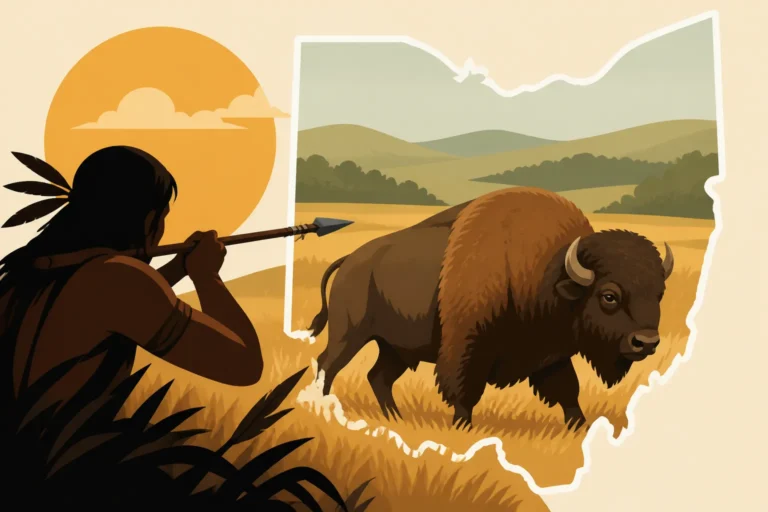
Before European settlement fundamentally altered the Ohio landscape, wild turkeys were a common, even abundant, sight. These majestic birds thrived in the vast, unbroken forests that covered much of the state, serving as a crucial food source for indigenous peoples and a symbol of robust wilderness. However, the arrival of settlers brought with it changes that the wild turkey population simply could not withstand.
Pre-Settlement Abundance
Imagine Ohio as a patchwork of towering hardwoods – oaks, hickories, beech – interspersed with dense undergrowth and meandering river bottoms. This was the ancestral home of the Eastern Wild Turkey, Meleagris gallopavo silvestris. These birds, with their keen eyesight and sharp hearing, roamed freely, feeding on the rich mast crops, insects, and berries provided by the pristine ecosystem. Historical accounts from early pioneers often mention the sheer numbers of turkeys, describing flocks so large they seemed to darken the sky. Their robust presence was a testament to the health and biodiversity of Ohio's primeval forests. They were not just a food source but an integral part of the ecological fabric, their scratching and foraging playing a role in seed dispersal and forest floor dynamics.
The Impact of European Settlement and Habitat Loss
The relentless march of settlement brought with it a dramatic transformation of Ohio's wilderness. Forests were cleared at an astonishing rate to make way for agriculture, towns, and roads. What once were contiguous blocks of prime turkey habitat became fragmented, isolated woodlots surrounded by fields. Turkeys, which require large tracts of mature forest with a diverse understory for roosting, nesting, and foraging, found their territories shrinking and their migratory paths disrupted. The sheer scale of this habitat destruction, driven by the rapid expansion of farming and logging throughout the 18th and 19th centuries, was the primary catalyst for their decline. Without adequate cover and food, especially during harsh Ohio winters, the remaining populations struggled to survive and reproduce.
Market Hunting and Unregulated Harvest
Compounding the devastating habitat loss was the unregulated hunting pressure of the era. Prior to modern wildlife management, hunting was often a commercial enterprise. Market hunters, driven by the demand for wild game in growing urban centers, targeted turkeys without any concept of sustainability. They employed methods like trapping, netting, and mass shooting, often wiping out entire local populations. This, combined with subsistence hunting by settlers, meant that the remaining, increasingly isolated turkey flocks were subjected to relentless pressure. There were no season limits, bag limits, or designated hunting areas. By the early 20th century, the combination of widespread habitat destruction and incessant hunting had driven the wild turkey to complete extirpation from Ohio by 1904. It was a stark reminder of how quickly a once-plentiful species could vanish without proper conservation efforts.
A Glimmer of Hope: Early Conservation Efforts and Research
The complete disappearance of wild turkeys from Ohio served as a powerful wake-up call for early conservationists. As the 20th century progressed, a growing understanding of ecological principles and the need for scientific wildlife management began to take hold. The desire to bring back such an iconic species fueled innovative research and determined efforts, even if initial attempts faced significant hurdles.
Recognizing the Problem: Early 20th Century Concerns
While the last wild turkey sighting in Ohio was officially recorded in 1904, the decline had been apparent for decades. Concerned naturalists and a nascent conservation movement started to voice alarm. They recognized that the loss of the wild turkey wasn't just about a vanished game bird; it was a symptom of broader ecological damage. The Ohio Department of Natural Resources (ODNR), and its predecessors, began to assess the situation, understanding that if something wasn't done, many other species could follow the turkey into oblivion. This period marked a shift from simply exploiting natural resources to attempting to manage and preserve them, a crucial first step toward restoration. Understanding the dire state of various game species, pioneers in wildlife management began to theorize about how to reverse these trends.
Initial Attempts and Challenges
The first attempts to reintroduce wild turkeys in Ohio, starting in the 1950s, were well-intentioned but largely unsuccessful. These early efforts primarily involved releasing pen-reared, farm-raised turkeys. The thinking was simple: raise birds in captivity and then set them free in suitable habitats. However, these domestic-bred birds lacked the instincts and survival skills of their wild counterparts. They were poorly equipped to forage for food, evade predators, and adapt to the harsh realities of the Ohio wilderness. Many quickly succumbed to disease, predation, or starvation. This frustrating period taught conservationists a vital lesson: simply releasing birds wasn't enough; the genetics and innate wildness of the stock were paramount. This realization paved the way for more scientifically grounded approaches.
The Role of Biological Research
The failures of the pen-reared turkey programs underscored the critical need for sound biological research. Wildlife biologists, working with state and federal agencies, began to study wild turkey populations in states where they still thrived, particularly in the rugged Appalachian regions of Pennsylvania, West Virginia, and Missouri. They meticulously documented turkey behavior, habitat requirements, population dynamics, and breeding success. This research revealed that genuine wild turkeys, even small populations, possessed an incredible resilience and adaptability that pen-reared birds simply couldn't replicate. Understanding these nuances was key to developing effective restoration strategies. This scientific foundation was critical, informing everything from habitat management to the groundbreaking trap-and-transfer techniques that would eventually prove successful.
The Trap-and-Transfer Revolution: Bringing Turkeys Back Home
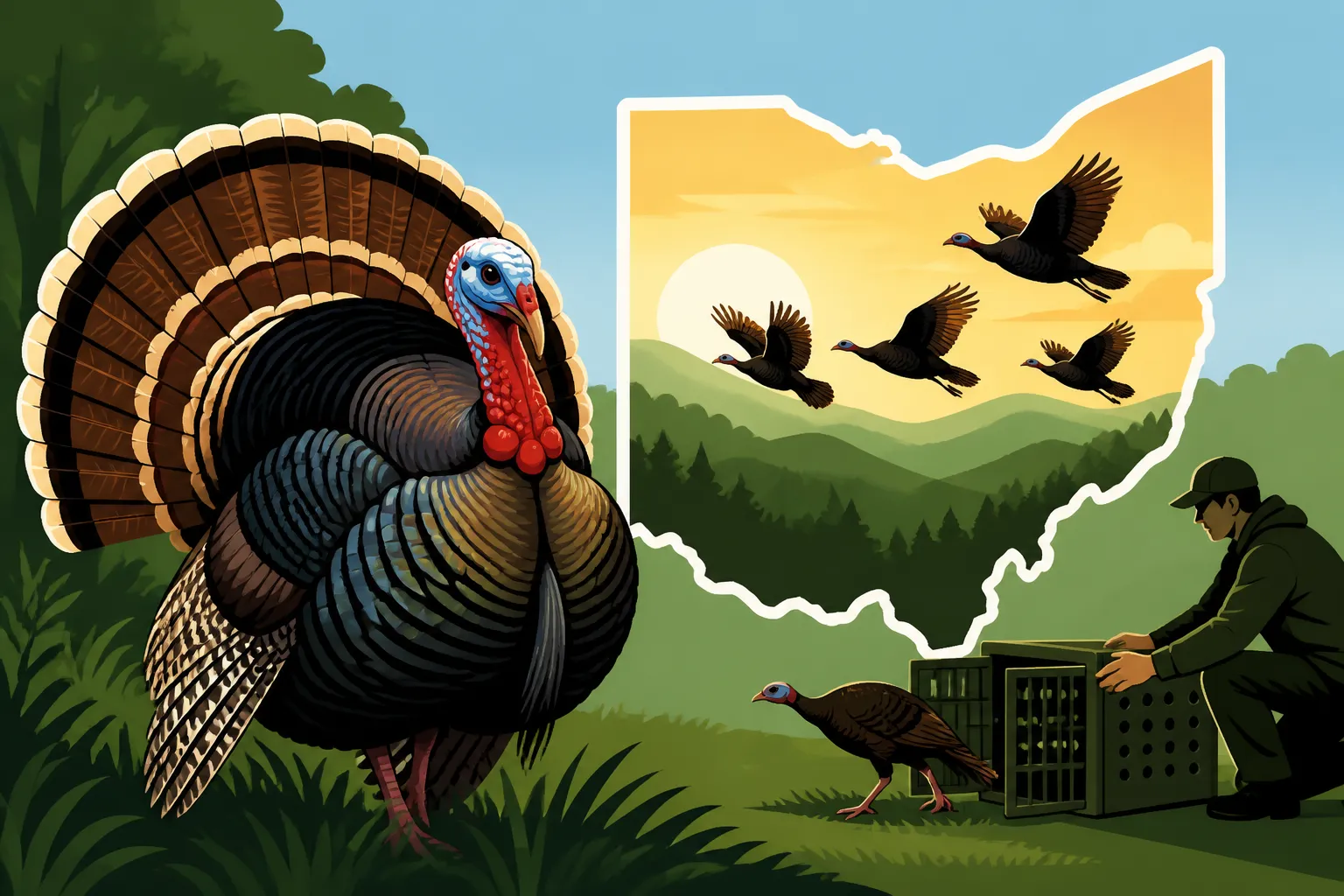
The turning point in Ohio's wild turkey restoration story came with the development and refinement of trap-and-transfer methods. This innovative approach, coupled with strategic planning, allowed wildlife managers to successfully move truly wild turkeys from robust populations in other areas into Ohio's recovering woodlands.
The Rocket Net Breakthrough
The game-changer for wild turkey restoration was the invention and widespread adoption of the rocket net (sometimes called a cannon net). This ingenious device allowed wildlife biologists to capture large numbers of wild turkeys humanely and efficiently. Turkeys would be baited into an open area, and at the opportune moment, small cannons would launch a large net over the flock. This method was a vast improvement over previous, less effective trapping techniques, as it minimized stress on the birds and allowed for the capture of multiple individuals at once. The turkeys could then be quickly processed, health-checked, banded, and prepared for transport. This technology, perfected in the mid-20th century, unlocked the ability to move genetically pure, wild birds, which was the missing piece of the puzzle for Ohio.
Identifying Ideal Release Sites
With a reliable method for acquiring wild turkeys, the next critical step was identifying suitable release sites within Ohio. Biologists meticulously surveyed potential areas, focusing on regions with extensive tracts of mature hardwood forests, diverse understories, and reliable water sources – essentially, recreating the conditions that turkeys thrived in centuries ago. Many of these prime locations were found in the rugged terrain of Hunting Southeast Ohio Appalachian Foothills, particularly in areas like Wayne National Forest and Shawnee State Forest, where reforestation efforts were starting to yield results. These areas offered the vital cover and food sources necessary for turkeys to not only survive but also reproduce and expand their numbers. Sites were chosen far from major human disturbances to give the newly introduced birds the best chance to establish themselves. Understanding the lay of the land, much like a hunter might use an app like GoHunt to scout potential turkey territory, was crucial for these biologists in pinpointing the most promising areas.
Strategic Stocking and Monitoring
The trap-and-transfer program in Ohio officially began in 1956, initially with turkeys brought from states like Missouri, Arkansas, and West Virginia, and later by relocating birds from the few remnant populations found in Ohio's unglaciated hill country, where they had barely clung on. Birds were released in carefully planned increments, usually in groups of 10-20, to maximize their chances of successful breeding. Each released bird was tagged, and biologists undertook extensive monitoring to track their movements, nesting success, and survival rates. This wasn't a one-time event; it was a multi-decade commitment. Between 1956 and 1999, over 4,000 wild turkeys were released across 71 of Ohio's 88 counties. The strategy was to create scattered, self-sustaining populations that would then naturally expand their range. By the late 1980s and into the 1990s, the success was undeniable, with populations growing exponentially in response to these efforts. The diligence of these early programs laid the groundwork for the robust populations we enjoy today.
| Year Range | Key Restoration Milestones in Ohio | Impact on Turkey Population |
|---|---|---|
| Pre-1904 | Extirpation of Wild Turkeys | Zero wild turkeys in Ohio |
| 1956-1960 | First trap-and-transfer releases | Initial small, localized populations established in southeastern Ohio |
| 1961-1970 | Continued strategic stocking | Slow but steady growth, range expansion in forested areas |
| 1971-1980 | Population growth, first limited hunting season (1966) | Demonstrates success of reintroduction, responsible management begins |
| 1981-1990 | Rapid expansion, increased harvest | Populations become widespread, hunting opportunities expand |
| 1991-1999 | Final large-scale releases, statewide distribution | Turkeys present in virtually all suitable habitat across Ohio |
| 2000-Present | Sustainable management, population monitoring | Stable, thriving populations with regulated hunting seasons |
Building a Foundation: Habitat Restoration and Management
While the trap-and-transfer program was the engine of turkey reintroduction, its success wouldn't have been possible without concurrent and ongoing efforts to restore and manage the necessary habitat. Turkeys need more than just empty woods; they require specific types of forest structure and food sources to thrive.
Forest Regeneration and Diversity
The vast clear-cutting that led to the turkey's initial demise eventually gave way to widespread reforestation efforts, particularly in southern and eastern Ohio. Lands that were once barren or heavily farmed slowly reverted to forest. However, merely replanting trees wasn't enough; the type of forest mattered. Wildlife managers understood that diverse forests with a mix of mature timber, young regenerating stands, and open areas provided the best turkey habitat. Mature hardwoods, especially oak and hickory, are crucial for their mast production (acorns, nuts) which provides vital winter food. Regenerating clear-cuts and thinned areas offer dense cover for nesting hens and poults, as well as abundant insects. Efforts focused on promoting this mosaic of forest types, creating the ideal conditions for turkey growth. Projects on public lands, often guided by ODNR foresters, aimed to create this ideal habitat, which also benefits other species like Ohio's Squirrel and Rabbit Populations. For hunters interested in understanding these habitat patterns, mapping tools like those offered by GoHunt can provide invaluable insights into forest types and potential food sources.
Partnerships with Landowners and Foresters
The majority of Ohio's land is privately owned, making partnerships with landowners absolutely essential for successful habitat restoration. The ODNR actively engaged with private citizens, providing technical assistance and resources to encourage forest management practices that benefit wild turkeys and other wildlife. This included advice on selective timber harvesting, planting mast-producing trees, and creating brushy cover. Foresters, whether working for the state or private entities, became key allies in this effort, designing management plans that balanced timber production with wildlife conservation goals. These collaborations ensured that prime turkey habitat wasn't limited to public land but extended across the broader landscape, allowing populations to expand and flourish throughout the state. Such efforts are vital for ensuring healthy populations of White-Tailed Deer Across Ohio too.
Controlled Hunting and Population Control
Once turkey populations rebounded to sustainable levels, careful management included the reintroduction of hunting seasons. The very first modern wild turkey hunting season in Ohio was a limited, controlled affair in 1966, almost exclusively in counties like Jefferson, Ross, and Vinton, with very restrictive quotas. This wasn't about rapid harvest, but about managing the population, providing recreational opportunities, and gathering crucial biological data. Modern Spring Turkey Hunting in Ohio seasons are carefully regulated by the ODNR, with specific zones, bag limits, and hunting dates, like the distinct rules for the Ohio Spring Turkey Zones and Dates. This controlled harvest helps maintain healthy turkey populations by preventing overpopulation, which can lead to increased disease transmission, habitat degradation, or conflict with landowners. Hunters contribute directly to conservation through license fees and by providing data from their harvests, which allows biologists to monitor the health and trends of Ohio's turkey numbers, as detailed in reports like the Ohio Turkey Harvest Numbers.
The Modern Comeback: Sustaining Ohio's Turkey Population
Today, Ohio boasts a robust and widespread wild turkey population, a true testament to decades of dedicated conservation work. However, managing this success requires ongoing vigilance and adaptation to new challenges.
Current Population Status and Distribution
From near extinction, wild turkeys have made an astonishing comeback in Ohio. They can now be found in all 88 counties, though their densities vary. The highest populations, as documented in studies like Where Ohio Turkeys Are Densest, remain in the forested, unglaciated regions of southeastern Ohio, such as the Appalachian foothills, where extensive, suitable habitat persists. However, healthy populations are also established in the more agricultural landscapes of western and northern Ohio, adapting to smaller woodlots and riparian corridors. The latest Ohio Turkey Population Trends show a generally stable population, a remarkable achievement that allows thousands of hunters to pursue these magnificent birds each spring and fall. The ability to find and pattern these birds is a testament to their resilience and the success of the restoration efforts. Hunters today can easily look up population data and specific hunting regulations on the ODNR's website or utilize comprehensive platforms like GoHunt that integrate this critical information.
Ongoing Management Challenges
Even with a healthy population, wildlife managers face ongoing challenges in sustaining Ohio's wild turkeys. Habitat fragmentation, particularly in rapidly developing areas, continues to be a concern, as it isolates populations and reduces genetic diversity. Disease outbreaks, while often localized, require constant monitoring to prevent widespread impact. Predator management is another aspect, ensuring a healthy balance within the ecosystem to allow for good poult survival rates. Climate change and its potential effects on mast crops and nesting seasons also present new variables that biologists must consider. These challenges underscore the need for adaptive management strategies, continuous research, and public engagement to ensure the long-term health of the species.
The Future of Ohio's Wild Turkeys
The future of wild turkeys in Ohio looks bright, thanks to a legacy of successful conservation. The ODNR continues its vital work, monitoring populations, managing habitats on Ohio Wildlife Areas and state forests, and adapting hunting regulations as needed. Education plays a crucial role, ensuring that current and future generations of hunters and outdoor enthusiasts understand the history of this restoration and their role in its continuation. Participating in programs like Ohio Hunter Education Requirements helps instill these conservation ethics. As hunters continue to scout and pursue these birds, perhaps by using digital tools to help them better understand the landscape and turkey behavior, like identifying prime areas for Roost Hunting Ohio Gobblers, they are not just engaging in a pastime; they are participating in a living conservation success story. The return of the wild turkey is a powerful reminder that with dedication, scientific understanding, and collaborative effort, we can reverse the tide of wildlife loss and ensure vibrant natural legacies for generations to come.
Disclaimer
Please be aware that hunting regulations, seasons, and licensing requirements in Ohio can change. Always consult the official Ohio Department of Natural Resources (ODNR) website or their current hunting and trapping digests for the most up-to-date and accurate information before planning any hunting activities. This article is intended for informational purposes only and should not be considered a substitute for official regulations.