Working a Fencerow for Late-Season Deer
When late season hits in Ohio, and those crisp, often brutal, winter winds start whipping across vast, barren fields, many hunters feel like the deer just vanish. It’s incredibly frustrating to spend hours shivering on a stand, seeing nothing but empty woods. But what if I told you that one of the most overlooked, yet incredibly productive, spots for bagging a late-season whitetail isn't deep in the timber, but often right under your nose, hugging the edges of those very fields? This guide is all about honing in on the humble fencerow and transforming it into your late-season deer hunting secret weapon.
The Late-Season Fencerow Advantage
As the landscape changes from lush green to stark brown and white, deer behavior shifts dramatically. Gone are the days of plentiful mast and thick cover everywhere. Now, every scrap of food and every bit of thermal protection becomes a magnet. And this is precisely where fencerows, those often-ragged lines of trees, shrubs, and weeds that delineate property boundaries or field edges, truly shine. They're not just fences; they're lifelines.
Why Deer Gravitate Towards Fencerows
Think about it from a deer's perspective. After weeks, sometimes months, of hunting pressure, they become incredibly wary. They're looking for cover that offers security, access to food, and a quick escape route – all while expending minimal energy in the harsh cold. Fencerows, especially the older, thicker ones, provide all of this in spades. They act as natural travel corridors, funnels, and even bedding areas.
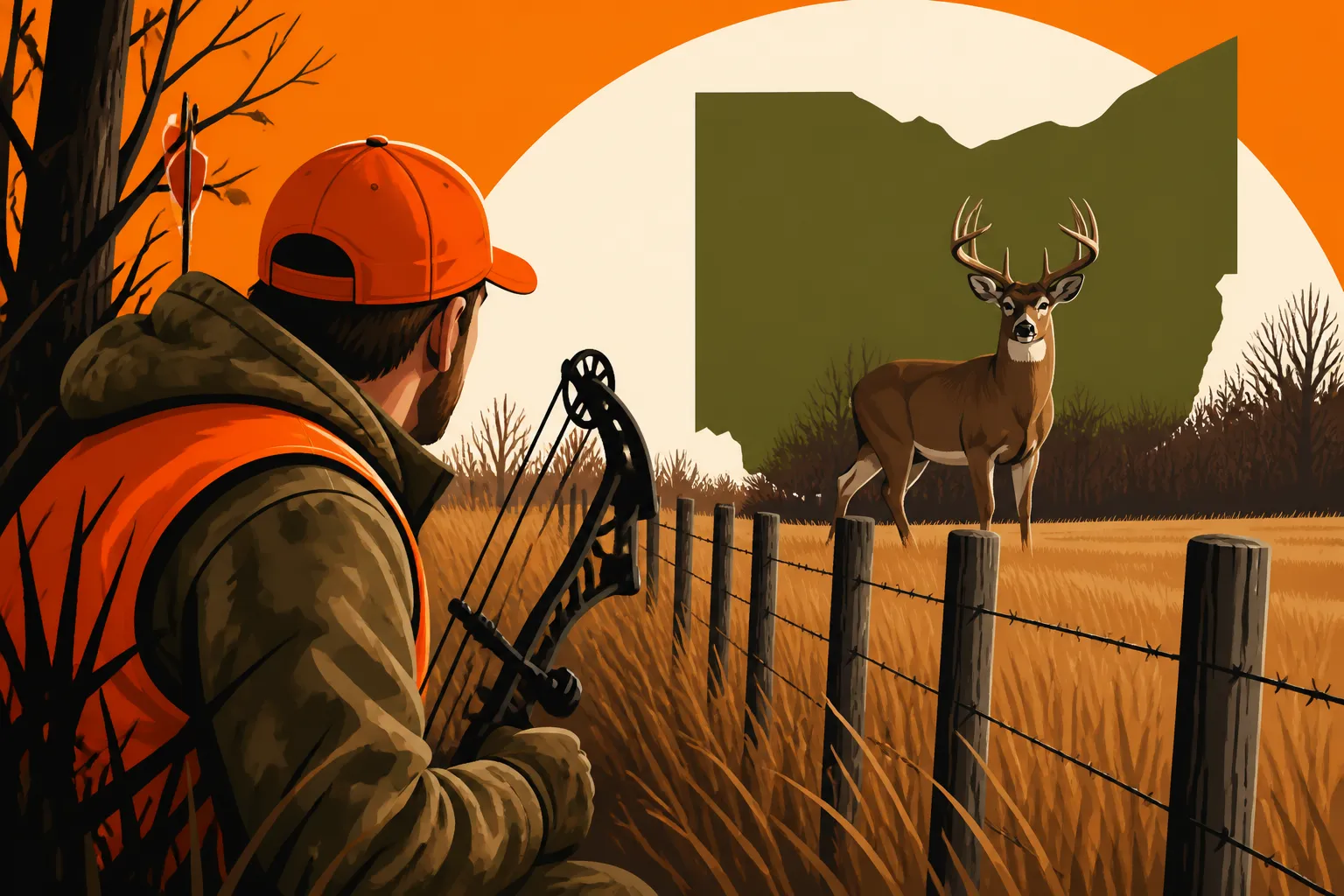
Consider a typical northwest Ohio farm field after the corn and soybeans have been harvested. It's a wide-open expanse, offering little to no concealment. But along its edge, often separating it from another field, a woodlot, or even a different property, you'll find a fencerow. This linear strip of vegetation, even if only 10-20 yards wide, suddenly becomes the only "safe" travel route. Deer will use these fencerows to move from bedding areas to whatever scant food sources remain – perhaps leftover soybeans, corn, or even browse on the woody stems within the fencerow itself. They allow deer to move with their bellies closer to the ground, out of the wind, and largely out of sight from predators or hunters glassing from a distance. In areas with high hunting pressure, especially on public land, deer often learn that these narrow, linear covers offer a surprising degree of safety compared to exposed fields or over-hunted timber blocks. They provide a feeling of security, a hidden path where they can move relatively unmolested.
Reading Fencerow Sign in Winter
One of the beautiful things about late-season fencerow hunting is how clearly deer sign stands out against the barren winter backdrop. Fresh tracks in mud or, even better, snow, are like neon signs pointing to deer activity. You don't need to be a seasoned tracker to pick up on this. Look for concentrations of tracks running parallel to the fence line, especially where it might bottleneck or offer a particularly dense patch of cover. This is where you might find deer bedding down during the day. You’ll often find these tracks piled up in spots that offer a thermal advantage, like a south-facing bank that catches the winter sun, or a dip in the terrain that breaks the wind.
Beyond tracks, pay close attention to fresh droppings and browse lines. Droppings indicate recent feeding or travel. The type of browse can tell you what they're eating – are they nipping at honeysuckle, multiflora rose, or the ends of young saplings? This can help you understand what might be drawing them to that particular fencerow. Rubs and scrapes, while typically more prevalent during the rut, can still be found in late season, especially by bucks still cruising or marking territory, though they'll be less fresh. Look for older rubs where bucks have consistently worked trees in previous weeks. However, don't dismiss the subtle clues. Overhanging branches that have been repeatedly nipped off, or small trails leading directly into the thickest parts of the fencerow, are all vital pieces of the puzzle. Using a tool like GoHunt's mapping features can help you identify these linear features and potential pinch points before you even step foot in the woods, allowing you to scout smarter. When snow blankets the ground, as it often does in January across much of Ohio, reading the fresh tracks becomes even more critical for success. This is a perfect time to apply your skills in Reading Ohio Snow for Fresh Deer Movement.
Scouting and Setting Up Your Fencerow Ambush
Successfully hunting a fencerow isn't just about finding one; it's about understanding its nuances and setting up strategically. This involves a blend of pre-season preparation and on-the-fly adjustments based on current conditions.
Pre-Season Scouting vs. In-Season Adjustments
Ideally, your scouting for fencerows should begin long before the late season. During the summer months, while leaves are still on the trees, you can identify the densest, most secluded fencerows that offer the best cover. These are the ones that will still provide shelter even after leaf-fall. Pay attention to how these fencerows connect different areas – a woodlot to a standing corn field, or a dense bedding thicket to a known Late-Season Food Sources for Ohio Whitetails. Mark these on your maps. Identifying these key connective tissues is crucial, as deer are lazy and will always take the path of least resistance. You can use platforms like GoHunt that overlay property boundaries and topographic maps to really dial in on potential hotspots and understand how fencerows intersect different habitats. It's like having an X-ray vision into the deer's world.
However, late season often demands in-season adjustments. What looked good in October might be completely different in December or January. Harvested fields, new logging activity, or even an early snowstorm can drastically alter deer movement patterns. If you're going to be successful in Working a Fencerow for Late-Season Deer, you need to adapt. On-the-ground scouting, even just a quick walk-through, can reveal fresh sign or altered conditions that warrant a change in your planned setup. This is especially true if you are hunting an area that experiences significant pressure. Observing fresh tracks or subtle changes in a fencerow's micro-habitat can be the difference between a cold, empty sit and a successful hunt.
Choosing the Right Setup Along the Fence
The beauty of a fencerow is its versatility for setups. You can utilize a ground blind, a treestand, or even just a natural ambush point. The key is to blend in and be invisible to wary deer.
For ground blinds, concealment is paramount. Look for a thick section of the fencerow, perhaps where it widens out into a patch of multiflora rose or a small tangle of small saplings. You want something that breaks up your outline completely. Brushing In a Blind on a Field Edge is an absolute must. Gather natural vegetation like corn stalks, cedar branches, or dead weeds and layer them over and around your blind. The goal is to make it look like just another part of the fencerow, not a foreign object. Remember, deer are constantly scanning, especially in open country. Setting up your blind far enough in advance to allow deer to get used to it can also be a huge advantage. Often, setting up a ground blind is an excellent choice for Using a Ground Blind on Ohio Public Land, as it offers mobility and adaptability to ever-changing conditions.
If a treestand is your preference, look for mature trees within the fencerow itself or just inside the adjacent woodlot that offer an elevated vantage point. You want a tree that provides good cover, allowing you to break up your silhouette. Consider the sun's position – you don't want to be backlit at prime hunting times. Also, think about your entry and exit routes. You need to be able to get to and from your stand without spooking deer moving along the fencerow. This often means using an approach that keeps the prevailing wind in your face and utilizes topography or other cover to shield your movements. A good rule of thumb is to place your stand where you can see the fencerow well, but also where deer won't easily pick you out. Sometimes, finding a subtle bend or small dip in the fenceline is a perfect place to set up, as it naturally funnels deer past your location.
Effective Hunting Tactics for Fencerows
Once you've identified your fencerow and set up your ambush, it's time to consider the tactics that will truly make your late-season hunt successful. This involves more than just sitting still; it's about understanding deer movement, using the wind, and knowing when to introduce a call.
Still-Hunting the Fenceline
While setting up a stand or blind is a common tactic, still-hunting a fencerow can be incredibly effective, especially on private land where you have more control over the immediate area. This involves moving slowly and deliberately, taking a few steps, then pausing for several minutes to scan for deer. Use the natural cover of the fencerow to your advantage, keeping the thickest vegetation between you and the open field.
The key to successful still-hunting is patience and stealth. Move at a snail's pace, pausing frequently to observe. Look for subtle movements, flicking ears, or the horizontal line of a deer's back blending into the vertical lines of the fence. This approach is particularly effective when you suspect deer are bedded down within the fencerow itself, or when they are slowly making their way along it. By moving slowly, you can often spot deer before they spot you, giving you time to set up for a shot. Consider the time of day: mornings might be better for catching deer moving back to bed, while afternoons are ideal for those heading out to feed. This style of hunting, much like Still-Hunting Shawnee State Forest Ridges, requires immense discipline and a keen eye, but can pay off big time in dense fencerow cover.
Using the Wind and Thermals to Your Benefit
In late season, especially with sparse cover, playing the wind correctly is non-negotiable. Deer rely heavily on their sense of smell, and a single whiff of human scent will send them packing. Always approach and set up with the wind in your favor, blowing your scent away from where you expect deer to approach.
Fencerows, however, can create tricky microclimates. The dense vegetation can sometimes cause swirling winds, especially if the fencerow is in a depression or near a change in elevation. Before you commit to a spot, use a wind checker to observe how the air currents are behaving at different heights. Pay attention to how the wind interacts with the field on one side and any woodlots or other cover on the other. Thermals, the rising and falling air currents, are also at play. In the morning, as the air warms, thermals will typically rise, carrying your scent upwards. In the evening, as the air cools, thermals fall, carrying your scent downwards. Understanding these subtle shifts is vital for maintaining your advantage. For a more in-depth understanding of how these invisible forces shape deer movement, you might want to review how Wind and Thermals on an Appalachian Ridge influence hunting strategy, as many of the principles apply to fencerow hunting. GoHunt's mapping features can also provide valuable information on elevation changes that impact thermals.
Strategic Calling and Decoy Use
Late-season deer, especially bucks, are often less responsive to calls than during the peak rut, but they are not entirely immune. A well-placed doe bleat or a subtle grunt can sometimes pique a deer's curiosity, particularly if they are already moving along the fencerow. The goal isn't to draw them in from a quarter-mile away, but to stop them or subtly redirect their path within range.
For calling, focus on soft, realistic sounds. A simple doe bleat can sometimes make a passing deer pause, trying to locate the "lonely" doe. A soft grunt might entice a late-season buck that's still cruising for does or just curious. Avoid aggressive calls unless you're absolutely sure of your timing and the deer's mood. Decoys can also be effective, particularly a single doe or a small buck decoy placed near the fencerow. In open field edges, a decoy can be visible from a distance, drawing the deer's eye and potentially luring them closer along the fenceline. Just remember to position your decoy so that the approaching deer presents a good shot opportunity. Always consider the wind direction when using a decoy; you want the deer to approach it, and your position, from a direction that puts them downwind of the decoy but ideally crosswind or slightly upwind of you.
Overcoming Fencerow Challenges
Fencerows, while offering great opportunities, also come with their own set of challenges. Understanding and preparing for these can make or break your late-season success.
Dealing with Hunting Pressure
Ohio's deer hunting is popular, and public land, in particular, can see a lot of pressure, especially during the gun seasons. Fencerows, being obvious travel corridors, can sometimes become high-traffic areas for both deer and hunters. The key here is to think differently. While other hunters might focus on the big woodlots, consider hunting the less obvious, thinner fencerows, or those that are harder to access. Deer, being smart, will often seek out these overlooked pockets of cover.
If you know a fencerow gets pressured, try to find a setup that allows you to catch deer that are skirting the pressure. This might mean setting up further back in the cover, or focusing on the "middle third" of the day when most hunters are taking a break. You could also try hunting a fencerow that acts as a buffer between private land (where deer might feel safer) and public land, catching them as they transition. Using tools that show public and private land boundaries, like GoHunt's mapping system, is invaluable here. It allows you to identify these transition areas where deer might feel secure on private land but still need to cross public fencerows for food or water. Understanding Hunting Pressure on Ohio Public Land is crucial, and fencerows can either be prime spots or over-hunted bottlenecks, depending on how you approach them.
Navigating Access and Property Lines
One of the most common challenges with fencerow hunting is that they often delineate property lines. This means you need to be acutely aware of where you are at all times. Trespassing, even accidentally, is a serious offense in Ohio and can quickly lead to legal trouble and a tarnished reputation for hunters. Always carry a reliable GPS unit or a mapping app on your phone with property lines clearly marked. GoHunt's app excels at this, providing detailed parcel data that updates regularly.
If a fencerow runs along a private property line, you absolutely need permission to hunt on that land or to retrieve a deer that crosses the line. This is where building relationships with landowners comes in handy. Don't be afraid to do some legwork and start Knocking on Doors in Ohio Farm Country well before the season. Introduce yourself, explain your intentions, and ask for permission. Even if they don't allow you to hunt on their land, they might grant you permission to track a wounded animal, which is invaluable. Always respect "No Trespassing" signs and know your local Ohio Trespass and Permission Law. It's better to err on the side of caution and always know exactly where you stand – literally – when hunting along a fencerow.
Types of Fencerows and Their Hunting Potential
| Fencerow Type | Description | Deer Movement/Behavior | Best Hunting Tactics |
|---|---|---|---|
| Thick, Woody Fencerow | Dense growth of trees, shrubs (e.g., honeysuckle, multiflora rose), briars. Offers excellent cover. | Primary travel corridor, bedding for cold days, thermal cover. | Treestand overlooking a bend/pinch, ground blind brushed in, slow still-hunt on calm days. |
| Thin, Grassy Fencerow | Mostly weeds, tall grass, sparse shrubs. Limited visual cover, some wind break. | Quick crossings, often used at dusk/dawn, secondary travel. | Ground blind on field edge, ambushing crossing points, focus on low light. |
| Creek Bottom Fencerow | Runs alongside a creek or ditch, often with more mature trees and sometimes water access. | High traffic; combines water, cover, and travel. | Elevated stand near creek crossing, still-hunt along banks, focus on transition points. |
| Connecting Woodlot Fencerow | Links two larger timber blocks or a timber block to a feeding field. | Critical funnel, high daytime movement for bedding/feeding. | Stand or blind at the narrowest point, focus on early morning/late afternoon transitions. Often a good spot for a Hunting a Funnel Between Two Woodlots. |
| Old Fence/Brush Pile Fencerow | Discarded farm equipment, old fence posts, accumulated brush piles creating small pockets of cover. | Daytime bedding, short travel segments, sanctuary spots. | Aggressive still-hunt, careful stalking, focus on dense pockets. |
Disclaimer
Please remember that hunting regulations, seasons, and licensing requirements can change. Always consult the Ohio Department of Natural Resources (ODNR) official website or current hunting digests for the most up-to-date and accurate information before planning any hunt. This guide is for informational purposes only and does not supersede official regulations. Stay safe, hunt ethically, and respect the land.