Low-Light Performance in a Scope
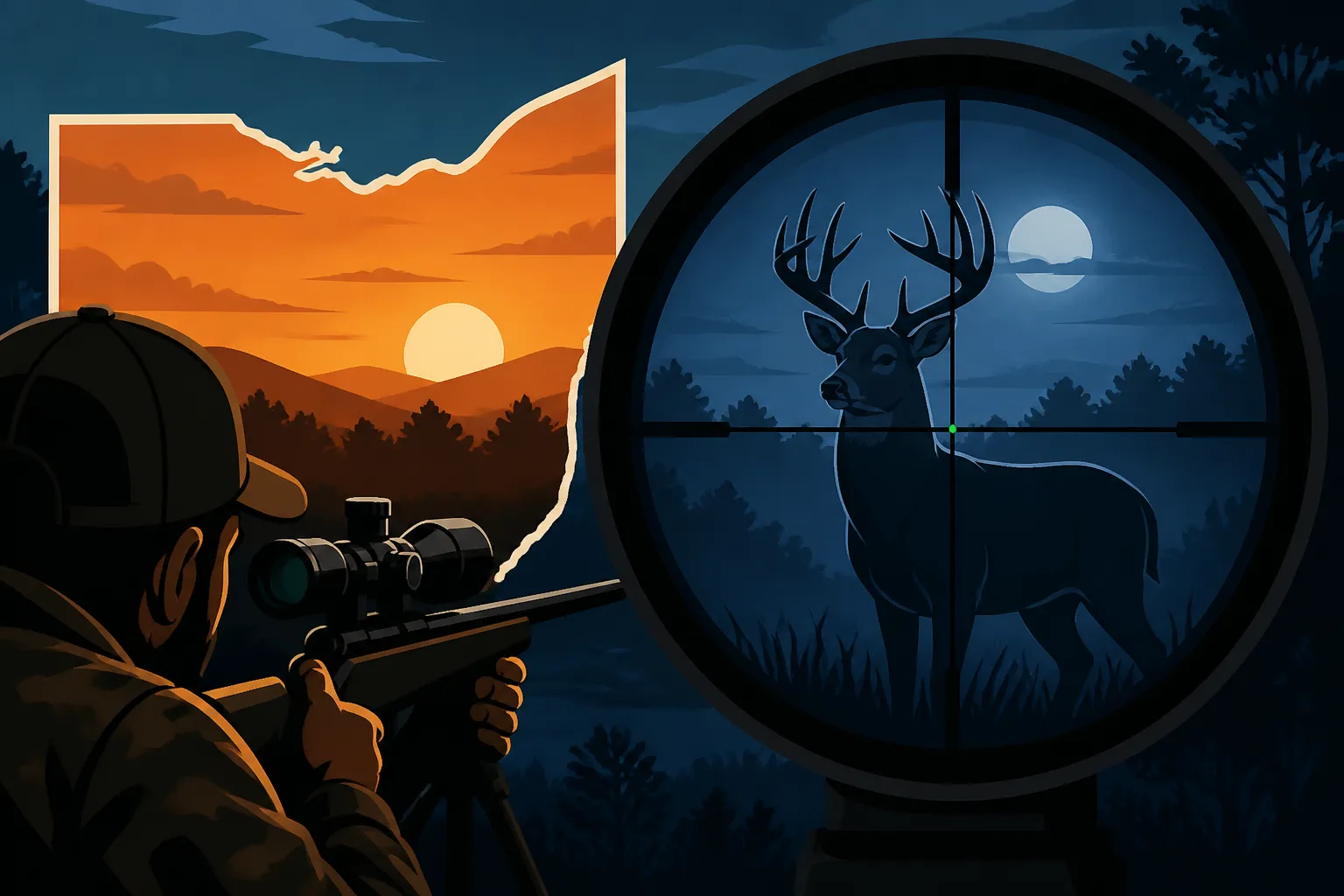
There's nothing quite like those first few minutes of legal shooting light as the woods begin to stir, or the final fading moments of dusk when that big buck finally steps out. But if you’ve ever found yourself squinting into a dark Ohio ravine, trying to make out a deer that you know is there, only for your scope to let you down, you understand the frustration. It’s a gut-wrenching feeling to be limited not by your skill or the deer, but by your gear. This guide is all about helping you cut through the marketing jargon and truly understand what makes a rifle scope perform when the light gets thin, ensuring you can make an ethical, confident shot during those crucial twilight periods of your Ohio hunt.
Understanding What "Low-Light Performance" Really Means for Ohio Hunters
When we talk about "low-light performance" in a scope, it's easy to get caught up in buzzwords or assume it just means having a big lens. But for us Ohio hunters, facing everything from dense Appalachian timber to open farmland edges, it's a critical combination of several factors. It's about how much light the scope can gather, how efficiently it transmits that light, and how well it presents a clear, usable image to your eye when every photon counts.
Beyond Magnification: The Role of Objective Lens Size and Quality
First and foremost, the objective lens—that big lens at the front of your scope—is the primary light-gathering component. Think of it like a funnel for light. The wider the funnel (i.e., the larger the objective lens diameter), the more light it can potentially collect from the environment. This is absolutely crucial when you're perched in a stand during those prime Ohio Archery Season Opening Day moments, just as the sun peeks over the horizon, or when you’re Hunting the Second Gun Weekend Before Christmas and the overcast skies make it feel like dusk at midday. A 50mm or 56mm objective lens will inherently gather more ambient light than a smaller 40mm or 32mm lens.
However, size isn't the only factor. The quality of the glass and the coatings applied to those lenses are equally, if not more, important. Cheap, low-quality glass, even in a large objective, can introduce distortion or absorb too much light, negating the benefit of its size. High-quality glass, often referred to as "ED" (Extra-low Dispersion) or "HD" (High Definition), allows light to pass through with minimal dispersion, resulting in a clearer, sharper image with truer colors. On top of that, advanced multi-coatings on all air-to-glass surfaces minimize glare and reflections while maximizing light transmission. These coatings can significantly increase the percentage of available light that actually makes it to your eye, which is a game-changer when you're trying to pick out a deer against a shadowy backdrop in Finding Sign in Big Appalachian Timber. Without good coatings, a significant portion of light can be lost simply bouncing off the lens surfaces.
Exit Pupil and Your Eye: Why It Matters in Dim Conditions
The "exit pupil" is a term you'll hear a lot, and it's simply the bright circle of light you see when you hold the scope at arm's length and look through the eyepiece. Its size is determined by dividing the objective lens diameter by the magnification setting. For example, a 42mm objective at 7x magnification gives you a 6mm exit pupil (42/7 = 6). A larger exit pupil means more light is delivered to your eye, and it also makes it much easier to quickly acquire a full, clear sight picture without having to perfectly align your eye with the scope. This can be vital when a deer suddenly appears at the edge of legal light, and you need to get on target fast.
Your own eye's pupil also plays a role here. In bright conditions, your pupil constricts to about 2-3mm. But in dim light, it can dilate to 5mm, 6mm, or even 7mm or more, especially if you're younger. The goal is for your scope's exit pupil to be as large as or larger than your eye's dilated pupil. If the scope's exit pupil is smaller than your eye's pupil, your eye isn't receiving all the light the scope could potentially deliver, effectively making the image appear darker. This is why a 10x scope with a 50mm objective (5mm exit pupil) might perform beautifully in low light for a middle-aged hunter whose pupils dilate to 5mm, but a 15x scope with the same 50mm objective (3.3mm exit pupil) would appear much dimmer, even if the glass quality is identical. Understanding this relationship helps you pick the right magnification range for Hunting Northwest Ohio Farmland Deer where you might need more reach, versus the thick woods.
Illumination and Reticle Choices for the Shadows
Sometimes, it's not just about how bright the image is, but how well you can actually see your aiming point. This is where an illuminated reticle truly shines. Imagine you're scanning a dark oak flat just before official closing time, trying to locate a buck that just melted into the shadows after a scrape line. Your scope might be gathering enough light to show you the deer's outline, but your black reticle suddenly disappears against its dark hide or the tangled brush behind it. That's a missed opportunity, or worse, an unethical shot because you can't be precise.
An illuminated reticle, typically offering a red or green dot or crosshairs, solves this problem by providing a distinct, glowing aiming point that contrasts sharply with any dark background. Most modern illuminated reticles offer multiple brightness settings, allowing you to fine-tune it so it's bright enough to see without being so bright that it washes out your view of the target. This feature can be incredibly valuable for Hunting the Rut in Early November when those big bucks are often on the move during the dimmest parts of the day. Some hunters prefer red for its easy visibility and less disruptive effect on night vision, while others find green more soothing to the eye. The key is that the illumination allows you to place your shot precisely when every other detail of the environment is fading into shadow.
Practical Considerations for Choosing a Low-Light Scope in Ohio
Choosing a low-light scope isn't just about technical specifications; it's about how those specs translate into practical performance in the unique and often challenging hunting environments across Ohio. From the rugged hills of the Wayne National Forest to the flat, open farmlands of the northwest, your scope needs to be more than just bright; it needs to be robust, adaptable, and a comfortable extension of your hunting rifle.
Balancing Brightness with Field of View and Weight
While a larger objective lens generally means better low-light performance, it comes with trade-offs. Scopes with large objectives (50mm, 56mm) are physically larger and heavier. A bigger, heavier scope can throw off the balance of your rifle, making it feel unwieldy, especially during long stalks or quick swings on moving game. If you're planning a full day of still-hunting the ridges in Shawnee State Forest Hunting, every ounce matters, and a heavy scope can quickly lead to fatigue. Consider how the scope feels on your rifle. Will it be cumbersome if you're carrying your rifle for hours through brush, or if you need to quickly shoulder it for a shot? Slings for a Long Wayne Forest Walk become even more important with a heavier setup.
Furthermore, increasing magnification, even if it has a large objective, will reduce your field of view – the width of the image you see through the scope. In dense Ohio cover, a wide field of view is absolutely critical for quickly acquiring a target, especially if it's moving, or for tracking multiple deer. A 1.5-6x42mm scope, for example, might offer a brighter image and a much wider field of view at 1.5x than a 3-12x56mm scope set at 3x, even if the 56mm objective gathers more light. For many typical Ohio hunting scenarios where shots are often under 100 yards, a scope that balances decent light gathering with a generous field of view and manageable weight (like a 3-9x40mm or a 2.5-10x42mm) might be a more practical choice than the absolute brightest, heaviest option. Think about the types of terrain you primarily hunt; a scope that's perfect for expansive Western plains might be completely overkill and cumbersome in the tight woods of Hunting Southeast Ohio Appalachian Foothills.
Durability and Fog-Proofing: Ohio Weather is No Joke
Ohio weather can be notoriously unpredictable, especially during hunting season. One day it's sunny and mild, the next it's a cold, driving rain, or a wet, heavy snow. Your scope isn't just a light collector; it's a precision instrument that needs to withstand these harsh conditions. This means opting for a scope that is fully sealed and purged with an inert gas, like nitrogen or argon. This process prevents moisture from entering the scope, which eliminates internal fogging—a hunter's nightmare when that big buck finally steps out during a damp morning. A fogged scope is a useless scope.
Beyond fogging, durability extends to its ability to handle bumps, drops, and the recoil of your rifle. A scope might have fantastic glass, but if its internal components can't hold zero or shift with typical use, it's not reliable. Look for scopes with robust, one-piece main tubes and quality erector systems. If you're hunting during Muzzleloader Deer Hunting in Ohio in January, dealing with freezing rain and muddy conditions, your gear needs to be able to take a beating and still perform flawlessly. The last thing you want is for a hard earned shot to be compromised by a scope that couldn't stand up to a little adversity.
The "Sweet Spot" of Magnification for Ohio Hunting
While high magnification might seem appealing for spotting distant details, it can actually hinder low-light performance by reducing your exit pupil size and narrowing your field of view. For much of Ohio, where shots are often taken at ranges under 100 yards, particularly in wooded areas, an overly powerful scope isn't necessary and can even be detrimental.
Many seasoned Ohio hunters find their "sweet spot" in variable power scopes with a maximum magnification between 7x and 12x. A 3-9x40mm, 2-10x42mm, or 4-12x50mm are popular choices that offer versatility. At lower magnifications (e.g., 3-4x), these scopes provide a wide field of view and a large exit pupil, making them excellent for low-light conditions, quick target acquisition, or tracking game in thick cover. When a deer steps out into a small food plot or open timber, you can keep the scope on a lower power setting for maximum brightness and field of view. If that deer is a bit further out across a cut cornfield, you can dial up the magnification to positively identify antlers and place your shot precisely. This flexibility is key to adapting to various scenarios you'll encounter, whether you're Hunting the Ohio Youth Gun Weekend or Filling an Antlerless Permit Late in Ohio. Remember, the actual magnification setting you use in low light is often more important than the maximum magnification available.
Testing and Maximizing Your Scope's Low-Light Capabilities
Having a scope that's technically proficient in low light is one thing, but truly making the most of it requires practical understanding, proper setup, and ongoing maintenance. Don't let your investment in quality optics go to waste by overlooking these crucial aspects.
Real-World Testing: Beyond the Spec Sheet
Manufacturers will provide specifications, but how a scope performs for you in your hunting conditions is what truly matters. Never wait until opening morning to test your scope's low-light capabilities. Instead, take your rifle and scope out to your stand location or a similar environment in the weeks leading up to the season. Go out at dawn and dusk, exactly when you'd expect to be hunting. Look into shaded areas, into dark timber, and at targets that mimic deer (brown paper, cardboard cutouts). Pay attention to:
- Clarity and Contrast: Can you clearly distinguish details, even when the overall image is dim? Can you pick out the edges of a branch against a deer's body?
- Reticle Visibility: Does your reticle wash out against dark backgrounds, or is it always clearly visible? If it's illuminated, is there a setting that works well without being too bright?
- Eye Relief and Eyebox: How easy is it to acquire a full sight picture without moving your head around? A forgiving eyebox is especially helpful for quick shots.
If possible, compare your scope side-by-side with other scopes from friends. This direct comparison, looking at the exact same scene in the same light, is often the most revealing test. You'll quickly notice differences in how different scopes render colors, details, and brightness. Remember, everyone's eyes are different, and what works best for one person might not be ideal for another. You can also use a platform like GoHunt to read user reviews and compare specifications before you buy, getting insights from other hunters who have put these scopes through their paces.
Mounting and Accessories for Optimal Low-Light Use
A high-performing scope is only as good as its mounting system. Proper mounting ensures that your scope is secure, holds its zero, and provides optimal eye relief and a clear sight picture. Make sure your rings and bases are of high quality and installed correctly. Incorrect mounting can lead to issues like parallax, difficulty acquiring a target, or even shifting zero, all of which will negate any low-light advantages your scope offers. Ensure you have proper eye relief so you can quickly get behind the scope without having to search for the image, a critical factor when dealing with fleeting moments of legal shooting light.
Beyond mounting, consider essential accessories:
- Lens Covers: These are non-negotiable. Quality flip-up or bikini-style lens covers protect your objective and ocular lenses from dust, dirt, rain, and snow. A smudged or wet lens will drastically reduce your scope's light-gathering ability. Keeping them clean and dry is paramount, especially when facing typical Ohio conditions during Ohio's Two-Weekend Gun Deer Season.
- Cleaning Kit: Always carry a dedicated lens cleaning kit with a lens pen or cleaning cloth and solution. Never use your shirt or a rough cloth, as this can scratch the delicate lens coatings. Keeping your glass pristine is one of the easiest ways to maximize low-light performance. This is just as important as Cleaning a Rifle After a Wet Sit.
- Anti-Fog Treatments: While quality scopes are fog-proof internally, the external lenses can still fog up. Applying an anti-fog treatment to the outer surfaces can provide an extra layer of protection on humid, cold mornings.
Legal Shooting Light and Ethical Hunting
Let's be absolutely clear: a scope with excellent low-light performance does not extend legal shooting hours. Ohio law states that deer and turkey can only be hunted from 30 minutes before sunrise to 30 minutes after sunset. Understanding Ohio Legal Shooting Hours is non-negotiable.
What a good low-light scope does do is allow you to ethically and confidently hunt up to those legal limits. Instead of having to pack up 15 minutes early because you can no longer positively identify your target, you can continue to hunt effectively and ethically until the very last legal second. This is crucial for hunters who might be hunting on heavily pressured public land, where deer movement often concentrates during these twilight periods. The enhanced clarity and brightness allow you to clearly identify whether a deer is antlered or antlerless, and to place your shot precisely, ensuring a clean kill and a quick recovery. It's not about cheating the system; it's about making the most of every legal moment with the utmost responsibility.
Budgeting for Better Low-Light Performance
The world of rifle scopes can feel like an endless rabbit hole of features and price points. While it’s true that you often get what you pay for when it comes to optical quality, especially in low light, it doesn’t mean you have to mortgage your house to get a capable optic for your Ohio hunting adventures.
The Relationship Between Cost and Quality
It’s a simple truth: producing high-quality glass, applying sophisticated lens coatings, and manufacturing a durable, precisely built optical system is expensive. Therefore, there's a direct correlation between a scope's price tag and its low-light performance. Generally speaking, as you move up in price, you'll see improvements in:
- Glass Clarity and Purity: Less distortion, truer colors, and sharper edge-to-edge image quality.
- Light Transmission: More efficient coatings mean a higher percentage of available light reaches your eye.
- Mechanical Reliability: Better tracking, more precise adjustments, and superior ability to hold zero under recoil.
- Durability and Weatherproofing: More robust construction, better sealing, and more effective inert gas purging to prevent fogging.
For an Ohio hunter, where weather can be a real factor and those critical minutes of legal light often mean the difference between seeing a deer or not, investing in a quality scope is an investment in your success and ethical hunting. It ensures you have the tool to make a clean shot when the opportunity arises, rather than being left questioning your equipment. That said, there are points of diminishing returns; a scope costing thousands of dollars might offer marginal improvements over one costing several hundred, which might not be justifiable for every hunter’s budget or typical shot distances.
Entry-Level vs. Mid-Range vs. High-End
Let's break down what you might expect at different price points for low-light performance:
- Entry-Level (Generally under $300-400): You'll find scopes that will get the job done in decent light. They'll have basic multi-coatings, and the glass will be acceptable. Low-light performance will be adequate but not outstanding. You might struggle to discern fine details in deep shadows or right at the edges of legal shooting light. They might lack illuminated reticles or advanced waterproofing. These are often great for daylight hunting or for those just getting into the sport, but if low-light is your priority, you might feel limited.
- Mid-Range (Generally $400-$800): This is often the sweet spot for many Ohio hunters. Here, you start seeing much better glass, fully multi-coated lenses, and often proprietary coatings that significantly boost light transmission. You'll find good objective lens sizes (e.g., 42mm, 50mm) paired with robust construction. Many scopes in this range offer illuminated reticles and are nitrogen or argon purged for excellent fog-proofing and waterproof performance. The clarity and brightness at dawn and dusk will be noticeably superior to entry-level options. Brands often mentioned in forums like GoHunt as good value in this range often perform well here.
- High-End (Generally $800+): At this level, you're looking at exceptional optical quality. Think ED/HD glass, superior light transmission (sometimes exceeding 90-95%), flawless mechanical precision, and advanced features like sophisticated illuminated reticles, zero-stop turrets, and extremely durable construction. Low-light performance is often breathtaking, allowing you to see details and maintain clarity when others' scopes have long since faded to black. While certainly an investment, these scopes often provide a lifetime of reliable, top-tier performance for the most demanding conditions or long-range scenarios. For dedicated hunters who spend countless hours in the field and demand the absolute best, these scopes are worth the price.
Ultimately, the best approach is to decide on your budget and then try to purchase the best quality scope within that range. Consider it an investment in ethical hunting and increased success during those critical low-light periods. Don't cheap out on your optics, especially if you hunt during the prime early morning and late evening hours when Ohio deer are most active.
Disclaimer
This article is for general informational purposes only and does not constitute professional advice. Laws, prices and regulations vary by location and change over time. Consult a qualified professional for guidance on your specific situation.