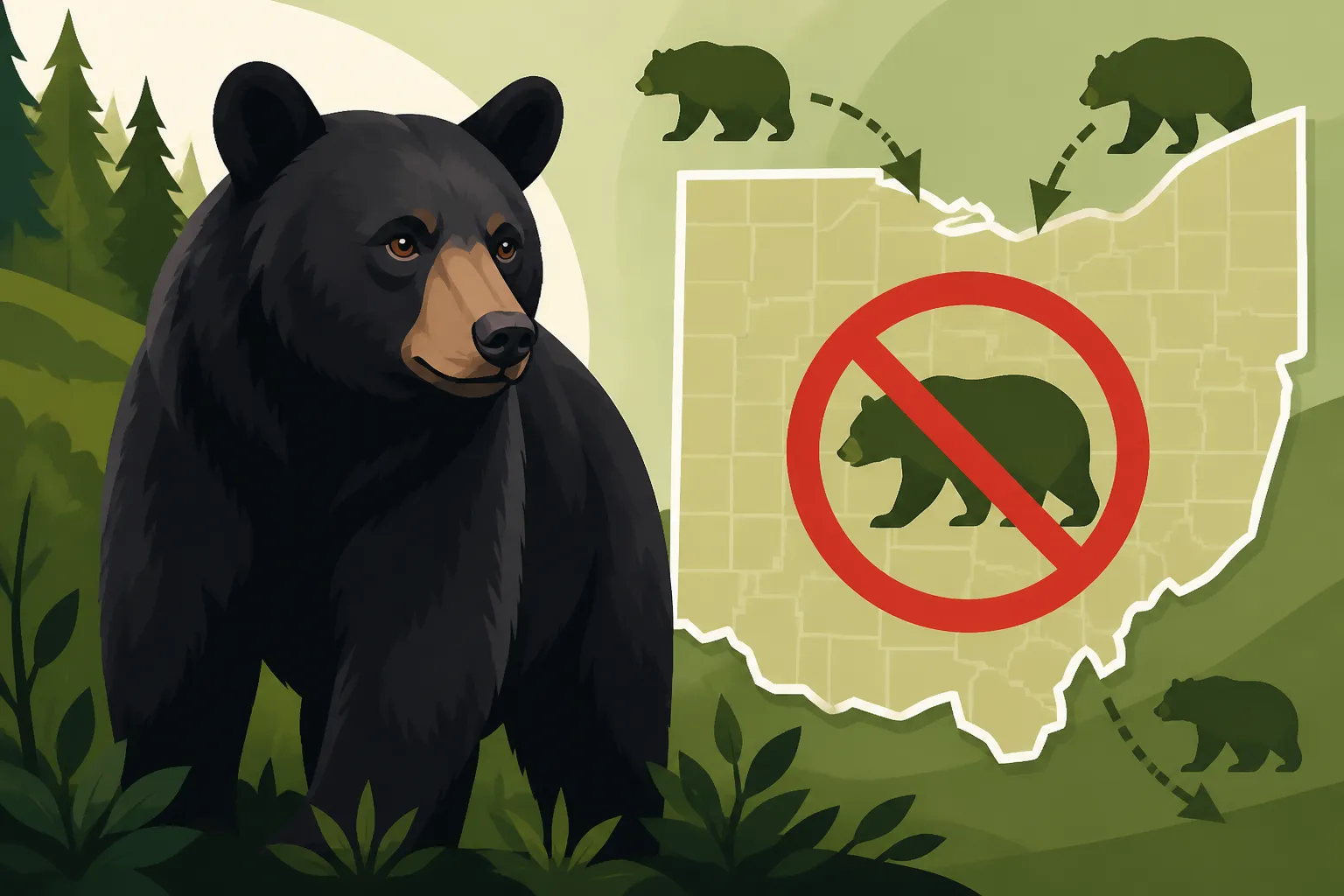
Why Black Bears Are Not Yet a Stable Ohio Species
For many of us who spend time in Ohio's woods, seeing a black bear is still a rare and thrilling event. While sightings have certainly become more frequent over the years, there's a real question about why these incredible animals haven't quite taken root and become a truly stable, self-sustaining population in the same way our deer and turkey have. This guide will take a deep dive into the historical context and the unique ecological hurdles that explain why black bears are still largely considered transient visitors rather than a fully stable species in the Buckeye State, offering insight into their challenging journey home.
Ohio's Black Bear Journey: From Absence to Transient Visitors
It's easy to look back a couple of centuries and imagine Ohio teeming with wildlife, including black bears. And you'd be right! Historically, black bears were an integral part of Ohio's ecosystem, roaming freely across vast swaths of the state. They thrived in the dense, unbroken forests that once covered much of our landscape, finding ample food and denning sites. However, as European settlers moved in, a dramatic shift occurred. The push for agriculture, timber, and human settlement led to widespread deforestation and intense hunting pressure. Bears, being large, shy, and requiring extensive habitat, were particularly vulnerable.
By the mid-1800s, black bears were essentially extirpated from Ohio. That's a fancy word for saying they were locally extinct – gone from our state entirely. For over a century, the only bears most Ohioans saw were in zoos or on television. This absence created a void, not just ecologically, but in the collective memory of what our wild places could hold. It also meant that any bears returning would have to re-establish themselves from scratch, without the benefit of an existing local population base.
Fast forward to the late 20th and early 21st centuries, and we started hearing whispers, then actual reports, of black bear sightings in Ohio. These weren't just isolated incidents; they were a consistent, albeit slow, increase, mostly concentrated in the eastern and southeastern parts of the state. These bears weren't magically reappearing from some forgotten Ohio wilderness; they were migrating from neighboring states like Pennsylvania, West Virginia, and Kentucky, where bear populations had recovered and were beginning to expand. Think of them as trailblazers, venturing into new, old territories. You can read more about Why Black Bears Are Wandering Into Ohio.
While these increasing sightings are incredibly exciting and a testament to broader conservation efforts, they also highlight the transient nature of many of these animals. Many of the bears we see are young males, dispersing from their birth areas in search of new territories and mates. They're explorers, often passing through without settling down to establish a permanent residence and raise cubs. This is a crucial distinction between frequent sightings and a truly stable breeding population. We're seeing more bears, but not necessarily more Ohio-born bears establishing lasting family lines within our borders just yet.
The Hurdles to Establishing a Resident Bear Population
Bringing bears back to a state after such a long absence is a monumental task, and Ohio faces several significant hurdles that prevent its black bear population from achieving true stability. These challenges range from the very landscape of our state to the dynamics of bear reproduction and human coexistence.
Habitat Fragmentation and Loss
One of the most critical factors impacting bear stability in Ohio is habitat. While Ohio still boasts beautiful woodlands, especially in the Appalachian foothills of the southeast, much of our state is heavily fragmented by agriculture, urban development, and a dense network of roads. Black bears are wilderness animals; they need large, contiguous blocks of forest to find food, establish territories, den, and raise their young without constant human disturbance.
Consider a young bear wandering from West Virginia into eastern Ohio. It might find some excellent patches of woods initially, but then it hits a sprawling cornfield, a busy interstate, or a housing development. These aren't just minor inconveniences; they are significant barriers that can lead to increased stress, higher mortality rates from vehicle collisions, and a reluctance for bears to establish permanent territories. Even seemingly robust areas like sections of the Wayne National Forest, while offering significant acreage, can feel like isolated islands if they aren't well-connected to other suitable habitats. The bear's natural instinct is to keep moving if it can't find everything it needs in a safe, secluded environment. For a deeper look at available bear habitat, check out Hunting Southeast Ohio Appalachian Foothills.
Limited Breeding Populations and Genetic Diversity
For a species to be stable, it needs a healthy, reproducing population that can sustain itself over generations. In Ohio, while we have increasing sightings, the number of confirmed breeding female bears and cubs born within our borders is still relatively low and geographically concentrated. This means that many of the bears we see are still effectively "imports" from other states, rather than products of an established Ohio lineage.
When a population is small and relies heavily on immigration, it faces issues with genetic diversity. A limited gene pool can make a population more vulnerable to diseases and less adaptable to environmental changes over time. Imagine a few isolated family groups, spread far apart in suitable patches of habitat. These groups might struggle to find mates, leading to slower population growth or even localized declines. Ohio needs more "founder" females to establish successful breeding territories and gradually expand the resident population, which then starts to recruit new bears into the system rather than relying primarily on bears wandering in from outside.
Human-Bear Conflict and Education
Let's be honest: for all the excitement of seeing a bear, encountering one can also be a bit unsettling for humans, especially for those not accustomed to living alongside large predators. This is a major challenge for black bear stability. As bears venture into areas with higher human populations, the potential for conflict increases. This isn't usually about aggressive attacks, but rather bears being attracted to human food sources like trash, pet food, bird feeders, or even backyard fruit trees. A bear that learns to associate humans with food can quickly become a "nuisance bear," leading to unfortunate outcomes.
Effective human-bear coexistence requires extensive public education. People need to understand bear behavior, how to secure attractants, and what to do if they encounter a bear. Without this understanding, fear and frustration can lead to demands for management actions that hinder population growth. Our state wildlife agencies work tirelessly on this, but it's an ongoing process to educate a population that has lived without bears for so long. For specific guidance, learning What to Do If You See an Ohio Black Bear is crucial for both personal safety and the bear's long-term well-being.
The Critical Importance of Habitat and Connectivity
When we talk about black bear stability, it always comes back to two fundamental elements: suitable habitat and the connectivity between those habitats. Bears are not sedentary creatures; they roam widely, especially young males looking for new territories. For Ohio to support a truly stable bear population, it's not enough to have a few isolated pockets of good woods. Those pockets need to be linked.
Forested Corridors and Natural Highways
Think of river valleys, unbroken ridges, and even utility easements or abandoned rail lines as natural highways for wildlife. These corridors allow bears, and many other species, to move safely from one suitable habitat patch to another, avoiding the dangers of open agricultural fields or busy roads. Without these connections, bear populations can become isolated, which, as mentioned, leads to issues with genetic diversity and vulnerability.
Ohio's southeastern region, with its rugged terrain and extensive public lands like the Wayne National Forest and various state forests, is currently the most hospitable area for bears. However, even here, these lands need to be seen as part of a larger, interconnected network extending into neighboring states. Conservation efforts often focus on identifying and protecting these critical corridors, ensuring that bears have safe passage to disperse, find mates, and establish new territories. This regional approach is vital, as Ohio is on the edge of the expanding bear range from our eastern neighbors.
Food Sources and Denning Sites
Beyond just space, bears need reliable access to diverse food sources throughout the year. Ohio's forests, when healthy, can provide a bounty of acorns, hickory nuts, berries (like blackberries and blueberries), and insects. These natural foods are the backbone of a bear's diet. However, habitat quality varies. A forest that's been heavily logged without proper regrowth, or one that's dominated by a single tree species, might not offer the same buffet as a diverse, mature hardwood forest with a rich understory.
Denning sites are equally important. Black bears prefer secluded, safe places for their winter slumber and for sows to give birth and raise their cubs. These can be hollow logs, rock crevices, brush piles, or dense thickets. The availability of secure, undisturbed denning locations directly impacts the reproductive success and survival of cubs. If bears can't find adequate denning sites, they may move on or experience higher cub mortality. A stable population relies on successful reproduction, which in turn relies on undisturbed denning habitat.
The Role of ODNR and Conservation Partners
The Ohio Department of Natural Resources (ODNR) plays a crucial role in monitoring these transient bears, educating the public, and working with conservation partners to improve habitat. While there's no open bear season in Ohio Why Ohio Has No Bear Season, ODNR gathers data from citizen sightings, roadkills, and occasional nuisance animal captures. This data helps them understand bear movements, population trends, and where efforts might be best focused to support their return. They also coordinate with neighboring states, recognizing that bears don't respect state lines. For more on wildlife monitoring, consider Ohio Wildlife Disease Monitoring.
| Factor | Impact on Black Bear Stability | Current Status in Ohio |
|---|---|---|
| Habitat Fragmentation | Restricts movement, increases human-bear conflict, limits territory size, higher mortality from roads. | Significant issue, especially outside southeastern Appalachian region. Agriculture and development break up forest blocks. |
| Breeding Population Size | Small numbers of reproducing females hinder self-sustaining growth; reliance on transient males. | Low number of confirmed breeding females; most bears are transient, particularly young males. |
| Genetic Diversity | Limited gene pool due to small, isolated groups can lead to vulnerability to disease and reduced adaptability. | Potentially limited; primarily from dispersing individuals from neighboring states. |
| Connectivity/Migration Corridors | Essential for safe movement, gene flow, and population expansion. | Exists to some extent in southeastern Ohio, but challenged by development and roads. Crucial for linking to robust populations in PA/WV. |
| Human-Bear Coexistence | Conflict over food sources can lead to nuisance bears and negative public perception, hindering conservation efforts. | Increasing need for public education as sightings become more common. People are not accustomed to living with bears. |
| Food & Denning Site Availability | Adequate natural food and safe denning sites are critical for health, reproduction, and cub survival. | Generally good in core forested areas, but quality varies and can be impacted by habitat management or human disturbance. |
What the Future Holds for Black Bears in the Buckeye State
Looking ahead, the future of black bears in Ohio is a story still being written, and it largely depends on a combination of natural forces and human actions. The fact that bears are consistently moving into the state is a positive sign, indicating that the larger regional population is healthy and expanding.
For Ohio to transition from being a transient bear destination to one with a truly stable, self-sustaining population, several things need to happen. We need continued habitat protection and restoration, particularly focusing on creating and maintaining those vital corridors that allow bears to move freely and safely. We also need to see more female bears establish territories and successfully raise cubs within Ohio's borders. This natural expansion and internal recruitment are what will truly solidify their presence. For an example of how wildlife populations are tracked, consider How ODNR Counts Ohio's Deer Herd.
Public education remains paramount. As Ohio's Recovering Black Bear Sightings become more common, people need to learn how to live safely and responsibly alongside bears. This means understanding how to secure food sources, manage trash, and generally minimize the potential for conflicts. When people understand that coexisting peacefully is the best way to ensure bears can thrive, it fosters a more welcoming environment for these magnificent creatures. Remember, bears are part of a larger ecosystem, and their presence indicates a healthier environment overall, even if they remain Game You Cannot Hunt in Ohio.
While no one can predict the exact timeline, the trend suggests that Ohio will continue to see an increasing number of black bears. With sustained conservation efforts, responsible land management, and a well-informed public, there's a real hope that the black bear will, one day, once again be a stable and celebrated part of Ohio's diverse wildlife legacy. It’s a slow process, but every confirmed breeding pair and every successful litter of cubs brings us closer to that reality. The journey back from extirpation is long, but the bears are certainly trying to find their way home.
Disclaimer
This article is for general informational purposes only and does not constitute professional advice. Laws, prices and regulations vary by location and change over time. Consult a qualified professional for guidance on your specific situation.