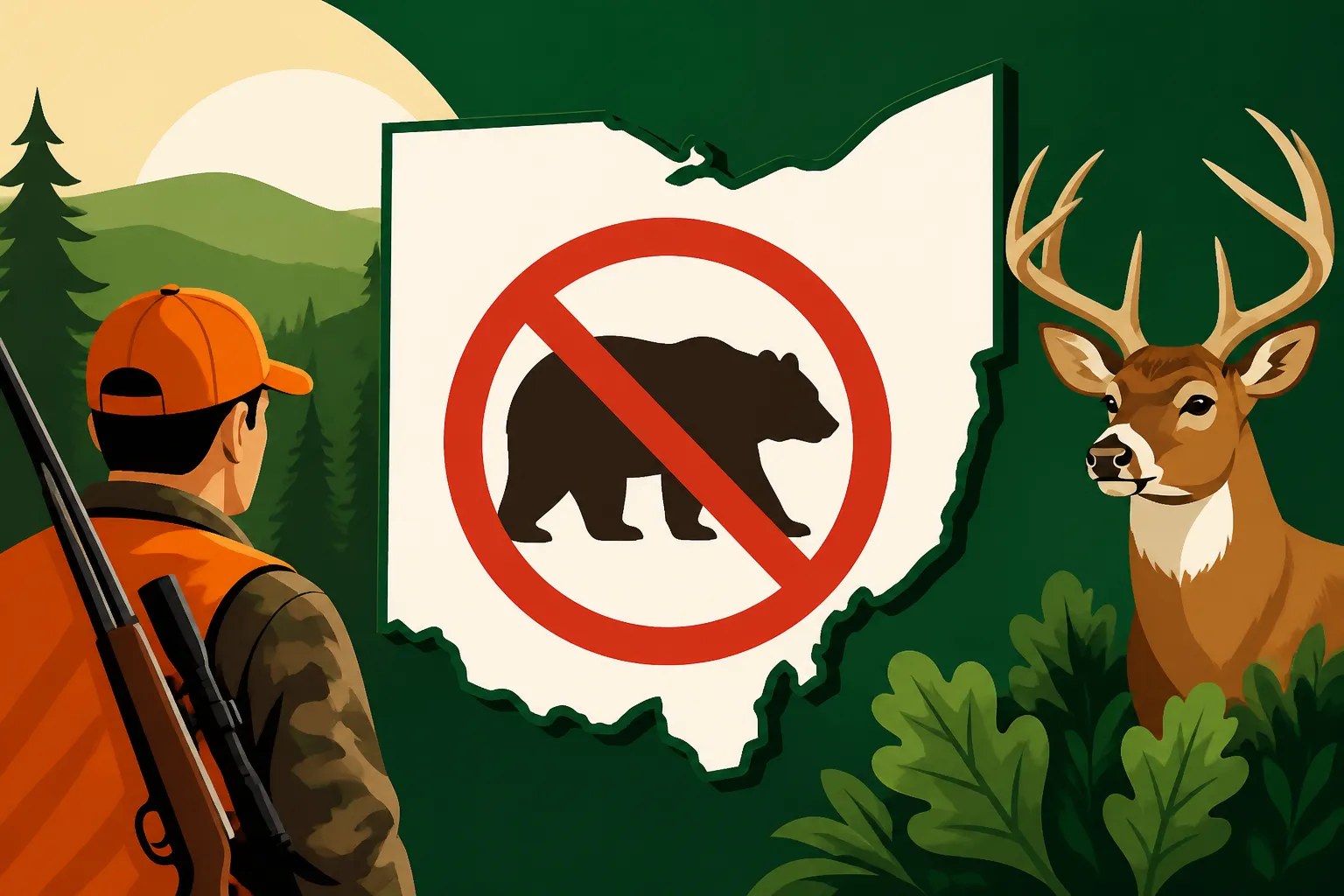
Why Ohio Has No Bear Season
You’ve probably been out scouting for deer, setting up trail cameras, or maybe just enjoying a hike through the Wayne National Forest, and suddenly you spot it: a black bear. A rush of excitement, maybe a little awe, and then the inevitable question pops into your head – "Why can't I hunt these amazing animals in Ohio?" It's a common frustration for many dedicated hunters who see healthy populations in neighboring states. This comprehensive guide will dive deep into the fascinating, complex reasons behind Ohio's current lack of a black bear hunting season, exploring everything from their historical absence to their gradual return, the scientific management approach by the Ohio Department of Natural Resources, and what the future might hold.
Understanding Ohio's Black Bear Population
Ohio wasn't always a state without bears. Their history here is a testament to both their resilience and the dramatic changes wrought by human settlement. Understanding this journey is key to grasping why we don't currently have a hunting season.
Historical Presence and Extirpation
Back before European settlement, black bears were an integral part of Ohio’s wilderness. These magnificent creatures roamed freely across the vast, dense forests that covered much of the state, particularly in the rugged Appalachian foothills to the east and south. They thrived on the abundant mast crops like acorns and hickory nuts, foraged for berries, and found ample denning sites in hollow logs, rock crevices, and dense thickets. Bears were a natural component of Ohio's diverse ecosystem, a formidable presence in the untamed landscape.
However, as pioneers pushed westward, establishing farms and communities, the bears' habitat began to shrink rapidly. Forests were cleared for agriculture, timber, and settlements. Bears were also actively hunted, often indiscriminately, both for their meat and hide, and because they were perceived as a threat to livestock and crops. This relentless pressure, combined with massive habitat loss, led to their eventual disappearance from the state. By the mid-1800s, Ohio's native black bear population was considered extirpated—meaning they were locally extinct. For over a century, the only bears most Ohioans saw were in zoos or traveling circuses. It's a stark reminder of how quickly even robust wildlife populations can vanish without careful management and conservation efforts.
The Return of Black Bears to Ohio
Nature, however, has an incredible way of reclaiming lost territory, especially when conditions begin to improve. The story of the black bear's return to Ohio isn't about reintroduction programs, but rather a slow, natural recolonization from neighboring states. As populations in Pennsylvania, West Virginia, and Kentucky grew, bears started to disperse, seeking new territories and food sources. Ohio, with its gradually regenerating forests, particularly in the unglaciated eastern and southern counties, offered suitable, if somewhat fragmented, habitat.
Starting in the 1980s, sporadic sightings began to increase, predominantly in counties bordering Pennsylvania and West Virginia, like Ashtabula, Jefferson, and Monroe. These were often transient bears, typically young males ranging far from their birth territories in search of mates or new foraging grounds. Over the past few decades, these wanderers have found enough resources and undisturbed areas to establish more permanent residences. This natural expansion highlights the adaptability of black bears and the improving health of some of Ohio's wild spaces. It's a quiet testament to the resilience of wildlife and the importance of healthy ecosystems in adjacent states.
Current Population Estimates and Trends
Fast forward to today, and Ohio's black bear population is undeniably on the rise, though it's still relatively small compared to states like Pennsylvania. The Ohio Department of Natural Resources (ODNR) monitors these animals closely, primarily through confirmed sighting reports, trail camera photos, and roadkill data. While exact numbers are difficult to pinpoint for such elusive creatures, estimates suggest Ohio now hosts a minimum of 50-100 individual bears, with some projections reaching higher. The majority of these animals are concentrated in the eastern and southern portions of the state, particularly within the larger forested blocks of counties like Ashtabula, Trumbull, Geauga, Jefferson, Monroe, Washington, and Athens.
What's really encouraging is that we're seeing not just transient males, but evidence of successful breeding. Sows with cubs have been documented, indicating that bears are not just passing through, but are establishing den sites and reproducing within Ohio's borders. This shift from merely wandering individuals to resident breeding populations is a critical indicator of a healthy, recovering species. The ODNR meticulously tracks these developments, knowing that understanding population growth and distribution is paramount for any future management decisions. You can often find yearly summaries of confirmed sightings and breeding activity on the ODNR website, which helps illustrate the steady expansion of the species. For hunters interested in understanding broader wildlife trends and how Ohio's bear population compares, platforms like GoHunt often compile similar data for other states, offering valuable context on population dynamics and management.
The Factors Influencing Ohio's Bear Management Decisions
Managing a recovering wildlife population like black bears is a delicate balancing act. It’s not just about how many bears there are, but also about the larger ecological and social landscape they inhabit.
Habitat Availability and Fragmentation
One of the most significant challenges for Ohio's black bear population, and consequently for any potential hunting season, is the availability and connectivity of suitable habitat. While parts of eastern and southern Ohio boast regenerating forests, much of the state is heavily fragmented by agriculture, roads, and suburban development. Bears require large, contiguous blocks of forestland for foraging, denning, and breeding without constant human disturbance. They are primarily forest dwellers, relying on dense cover for security and a wide variety of plants, nuts, and berries for food.
In areas like the Wayne National Forest and other state forests such as Shawnee, Zaleski, and Tar Hollow, there are substantial tracts of forest that can support bears. However, even these larger blocks are often bisected by roads or surrounded by human habitation. This fragmentation leads to smaller, more isolated populations, which are more vulnerable to genetic issues and less resilient to environmental changes. It also increases the likelihood of bears encountering humans as they attempt to move between suitable patches of habitat. For a stable, huntable population, Ohio would ideally need more expansive, connected wildlands, similar to the vast wilderness areas found in Pennsylvania or West Virginia. This ecological reality places a fundamental limit on how many bears Ohio can truly support and how they can be managed.
Human-Bear Conflicts
As bear numbers slowly increase and they spread into more populated areas, the potential for human-bear conflicts inevitably rises. This is a primary concern for the ODNR and a major factor in their management strategy. Black bears, by nature, are shy and generally avoid humans, but they are also incredibly intelligent and opportunistic feeders. When natural food sources are scarce, or when they learn that easily accessible food—like unsecured trash cans, pet food left outdoors, bird feeders, or even backyard grills—is available, they will overcome their natural caution.
These conflicts can range from property damage, such as overturned garbage bins or raided chicken coops, to more serious concerns like potential encounters with pets or even people. While black bear attacks on humans are exceedingly rare, especially from unprovoked bears, their presence can cause fear and anxiety in communities unaccustomed to living alongside large predators. The ODNR actively monitors these incidents, categorizing them and tracking where they occur. Each year, they respond to numerous calls about nuisance bears, which often involves hazing the animal to deter it from human areas, or in some cases, live-trapping and relocating it. In extreme and rare instances, if a bear becomes habituated to humans and poses a significant threat, euthanasia might be considered as a last resort. Preventing these conflicts through public education on secure food storage and avoiding attraction of bears is a critical part of the ODNR's work.
Public Perception and Education
The public's view of black bears plays a huge role in wildlife management decisions, and Ohio is no different. For many Ohioans, seeing a black bear is still a novel and exciting experience, evoking a sense of wonder and connection to wildness. There's a strong general desire to see bears thrive and continue their comeback in the state. However, this positive sentiment can quickly shift to concern or even fear if bears become too comfortable around human dwellings or cause damage.
The ODNR dedicates significant resources to educating the public about black bears, emphasizing coexistence and how to prevent conflicts. They provide guidelines on securing food sources, understanding bear behavior, and what to do during a bear encounter. This educational outreach is crucial because a well-informed public is less likely to panic and more likely to take appropriate preventative measures. Misconceptions, often fueled by sensational media reports, can lead to unreasonable fear or, conversely, to people attempting to feed bears, which is highly detrimental to the animals and public safety. Without widespread public understanding and acceptance, establishing a hunting season, even a highly regulated one, would likely face significant opposition. The current focus is on fostering an environment where bears can recover and coexist peacefully, rather than introducing a harvest mechanism that might be perceived as premature or unnecessary by a large segment of the population.
Comparing Ohio to Neighboring States' Bear Seasons
To truly understand why Ohio lacks a bear season, it’s helpful to look at our neighbors. States like Pennsylvania and West Virginia have thriving bear populations and well-established hunting seasons, but their ecological and social landscapes differ significantly from Ohio's.
Pennsylvania's Robust Bear Program
When you talk about black bears in the eastern U.S., Pennsylvania often comes up as a prime example of successful management, and it’s a stark contrast to Ohio. Pennsylvania boasts one of the largest and healthiest black bear populations in the country, with estimates often exceeding 15,000 individuals. This robust population is supported by vast, contiguous tracts of forested mountains, particularly in the central and northern parts of the state. These expansive wilderness areas provide abundant natural food sources, denning sites, and crucial escape cover, allowing bears to thrive with minimal human disturbance over much of their range.
The Pennsylvania Game Commission (PGC) has a long-standing and sophisticated bear management program. They utilize a multi-pronged approach that includes extensive research, population modeling, harvest data analysis, and habitat management. Their hunting seasons are carefully structured, often with multiple segments—archery, muzzleloader, and general firearms—and are designed to manage population growth, distribute harvest, and minimize human-bear conflicts. Licenses are relatively affordable, and the seasons are popular, attracting tens of thousands of hunters annually. This isn't just about recreation; regulated hunting is a scientifically proven tool the PGC uses to maintain a healthy bear population within the carrying capacity of the habitat, ensuring that the number of bears doesn't outgrow the available resources or lead to an unmanageable increase in nuisance incidents. The sheer scale of Pennsylvania's bear habitat and population allows for a sustainable hunting program that Ohio simply can't currently match.
West Virginia and Kentucky Approaches
West Virginia and Kentucky, both sharing borders and Appalachian topography with Ohio, also offer interesting comparisons for bear management. West Virginia, with its deeply forested, rugged terrain, supports a significant and growing black bear population. Like Pennsylvania, West Virginia utilizes regulated hunting as a primary tool for population control and management. Their bear seasons are structured, often with early archery and muzzleloader opportunities, followed by various firearm seasons, sometimes split by region to manage local populations more effectively. The West Virginia Division of Natural Resources (WVDNR) closely monitors harvest data, age structure, and reproduction rates to ensure sustainable hunting opportunities while maintaining a healthy bear population. The abundance of public hunting land, particularly within their extensive state forests and national forest lands, provides ample opportunity for hunters to participate in bear management.
Kentucky, while perhaps not as renowned for bears as West Virginia, has also seen a remarkable recovery of its black bear population, particularly in the eastern mountainous regions. After being extirpated, bears naturally recolonized from West Virginia and Virginia. The Kentucky Department of Fish and Wildlife Resources (KDFWR) now manages a limited, quota-based bear hunting season. This typically involves a very limited number of permits issued through a lottery system, often restricted to specific counties and timeframes. This cautious approach reflects a population that is still expanding and requires careful monitoring to ensure long-term sustainability. The key takeaway from both states is that their bear populations are significantly larger, more widespread, and occupy more continuous, less fragmented habitat than Ohio's, enabling them to implement sustainable hunting seasons, even if in a limited capacity like Kentucky's.
Indiana and Illinois: Similar Reasons to Ohio
While Ohio's forested eastern and southern counties provide some habitat, the state's central and western regions are dominated by agriculture and urban sprawl. In this respect, Ohio shares more in common with states like Indiana and Illinois, neither of which currently has a black bear hunting season. These states also experienced historical extirpation of black bears and are now seeing occasional, often transient, bear sightings.
Indiana, for example, occasionally reports black bear sightings, mostly solitary males dispersing from Michigan or Kentucky. The Indiana Department of Natural Resources (IDNR) considers these animals to be "transient" or "exploratory" and does not have a resident breeding population. Their management focuses on monitoring sightings and public education, much like Ohio. Similarly, Illinois, heavily agricultural with limited large forest blocks, rarely sees bears, typically lone males that have wandered in from Missouri or Wisconsin. The Illinois Department of Natural Resources (IDNR) has a protocol for handling sightings but no management plan for a resident population, let alone a hunting season.
The reasons for the lack of bear seasons in Indiana and Illinois echo Ohio's situation: insufficient population density, fragmented habitat, and no established, self-sustaining breeding populations across a wide enough range to support a managed harvest. These states are primarily concerned with documenting the occasional presence of bears and educating the public on how to respond, rather than planning for a hunting season. This comparison underscores that Ohio is not an anomaly but rather sits somewhere between the robust bear states to its east and the largely bear-less states to its west.
| State | Estimated Bear Population | Presence of Hunting Season | Primary Reason for Status |
|---|---|---|---|
| Ohio | 50-100+ | No | Recovering, low density, fragmented habitat |
| Pennsylvania | 15,000+ | Yes | Robust, widespread population, vast contiguous forests |
| West Virginia | 10,000+ | Yes | Strong population, extensive mountain forests |
| Kentucky | 1,000-2,000+ | Limited (Quota-based) | Recovering, growing population in eastern mountains |
| Indiana | Transient (few individuals) | No | No established breeding population, highly fragmented |
| Illinois | Transient (few individuals) | No | No established breeding population, highly fragmented |
The Ohio Department of Natural Resources Stance
The ODNR plays the central role in all wildlife management decisions in Ohio. Their approach to black bears is rooted in scientific principles, careful observation, and a long-term vision for the species.
Monitoring and Research Efforts
The ODNR's commitment to understanding Ohio's black bear population is extensive, even without an active hunting season. Their primary focus is on monitoring the animals' recovery and distribution. This isn't just a casual observation; it's a dedicated scientific effort. When someone reports an Ohio black bear sighting to the ODNR, whether it's a clear photograph, a video, or distinctive tracks, wildlife biologists follow up to confirm the presence of a bear. This data is meticulously recorded, providing valuable insights into where bears are establishing territories, how far they're traveling, and whether they're breeding.
Beyond public reports, the ODNR utilizes a variety of research techniques. They may deploy remote camera traps in areas with frequent sightings to gather more information on individual bears, including sex and approximate age. In some instances, if a bear is repeatedly causing issues or needs to be relocated, biologists might tranquilize it, collect biological samples (for genetic analysis, health assessments, and age determination), and fit it with a GPS collar. These collars provide invaluable data on movement patterns, habitat use, and denning locations, offering a deeper understanding of the bears' ecological needs within Ohio's landscape. All of this information contributes to the ODNR's comprehensive understanding of why Ohio's Recovering Black Bear Sightings are so important and why Ohio Black Bear Sighting Reports by Year show a steady upward trend, laying the groundwork for informed decisions regarding the species' future.
Management Goals
The ODNR's management goals for black bears are clear and long-term, focusing primarily on the continued recovery and establishment of a self-sustaining, healthy population within the state. They aren't rushing into a hunting season. Instead, their strategy revolves around several key objectives. First and foremost is population growth and expansion. They want to see the number of bears increase and their range expand into more suitable habitat, ultimately leading to a more stable and resilient population. This involves ensuring that enough bears are reproducing successfully and that cubs are surviving to adulthood.
Secondly, a significant goal is minimizing human-bear conflicts. As discussed earlier, coexistence is paramount. The ODNR aims to reduce incidents of property damage or perceived threats by educating the public on proactive measures and responding quickly and effectively to nuisance reports. This helps foster public acceptance of bears and prevents situations where bears become too habituated to human presence. Lastly, the ODNR strives to maintain the ecological integrity of Ohio's ecosystems, recognizing bears as a native species that contribute to the overall health of the forest environment. Their current management philosophy reflects the fact that Why Black Bears Are Not Yet a Stable Ohio Species is still a critical consideration, and the focus remains firmly on conservation and recovery rather than population reduction through hunting. Any discussion of a future hunting season would only occur once these foundational goals are robustly met and sustained over time.
Why a Hunting Season Isn't Currently Viable
Given the ODNR's careful monitoring and clear management goals, their stance on why a hunting season isn't currently viable comes down to several critical factors. The most prominent reason is the sheer size of the bear population. While growing, Ohio's black bear numbers are still relatively low and widely dispersed. A hunting season, even a highly restrictive one, could easily undermine the fragile recovery of the species by removing too many breeding individuals, especially sows. This could lead to a halt or even a reversal of the population growth that biologists have worked so hard to achieve.
Furthermore, the fragmented nature of Ohio's habitat means that bears are not concentrated in vast wilderness areas where a managed harvest would be easily controlled and monitored. Instead, they are often in smaller pockets of forest, sometimes near human development. Introducing a hunting season could exacerbate human-bear conflicts by pushing bears out of traditional ranges or increasing their interactions with people as they try to avoid hunters. The ODNR's priority is fostering an environment where bears can continue to expand their range and population without significant setbacks. Until the population reaches a certain density, distribution, and stability, where it can sustain a managed harvest without jeopardizing its long-term future, the ODNR will continue to prioritize recovery and coexistence over hunting opportunities. This cautious approach is driven by sound biological principles and a commitment to the long-term health of Ohio's wildlife.
What Happens When a Bear Becomes a Nuisance in Ohio
Despite their generally shy nature, bears are opportunistic. As their population expands, so does the likelihood of them venturing into areas where they might encounter people and, occasionally, become a nuisance. Knowing how to react and who to call is essential for both human safety and the bear's well-being.
Reporting Bear Sightings and Incidents
If you're lucky enough to spot a black bear in Ohio, or if one causes an issue on your property, it's incredibly important to report it to the Ohio Department of Natural Resources. This isn't just about sharing an exciting story; it's about contributing to vital wildlife data. When you see a bear, especially if it’s showing signs of habituation (like not being scared of humans) or causing damage, you should contact your local ODNR Division of Wildlife district office or call their toll-free tip line. Don't wait; timely reporting helps wildlife officers respond effectively.
When you call, be prepared to provide as much detail as possible. This includes the exact location of the sighting (address or GPS coordinates), the date and time, a description of the bear (size, color, any distinguishing features like ear tags if you're close enough to see them), what the bear was doing, and if there was any property damage. If you have clear photos or video, even better – those can be invaluable for confirmation. Remember to maintain a safe distance and never approach or try to feed a bear. Accurate reporting allows the ODNR to track bear movements, identify potential problem areas, and assess the overall health and distribution of the population. This information directly feeds into their long-term management strategy and helps inform public safety recommendations.
ODNR's Intervention Protocols
When a bear becomes a confirmed nuisance or poses a threat, the ODNR has established intervention protocols that prioritize public safety and the bear's welfare. Their response is carefully measured, avoiding unnecessary harm to the animal while addressing the specific situation. The first line of defense is usually to try and scare the bear away, often referred to as "hazing." This might involve making loud noises, using air horns, or even firing rubber bullets (a non-lethal deterrent) to re-instill a natural fear of humans. The goal is to teach the bear that associating with people is an unpleasant experience.
If hazing is unsuccessful, or if the bear is in a location where it cannot be safely hazed away (such as a highly populated urban area), ODNR wildlife officers may deploy live traps, typically large culvert traps baited with tempting treats like doughnuts or fruit. Once captured, the bear is often tranquilized for examination. Biologists will collect data, assess its health, and potentially tag it before relocating it to a more remote, suitable habitat, often a large state forest or the Wayne National Forest. This relocation is done with great care to minimize stress on the animal. However, if a bear repeatedly returns to populated areas after relocation, or if it exhibits extremely aggressive or habituated behavior that poses a clear and present danger to human safety, then, as a last resort, euthanasia may be considered. This is a very rare and difficult decision, made only after all other options have been exhausted and with careful consideration for public safety.
Proactive Measures for Coexistence
Living in areas where black bears are present means taking proactive steps to minimize potential conflicts. This isn't just about protecting your property; it's about helping bears remain wild and avoid becoming habituated to human food sources. The ODNR strongly advocates for these preventative measures, emphasizing that an ounce of prevention is worth a pound of cure.
One of the most critical steps is securing all potential food attractants. This includes keeping garbage cans in a secure shed or garage until collection day, or using bear-resistant containers if available in your area. Never leave pet food, birdseed, or suet out overnight; bring feeders in, especially from dusk until dawn. Clean outdoor grills thoroughly after each use, removing any food residue. Consider electric fencing for chicken coops, beehives, or gardens that might be vulnerable. Avoid composting food scraps that could attract bears. If you have fruit trees, pick up fallen fruit regularly. Essentially, you want to eliminate any easy meal a bear might find near your home. By taking these simple but effective steps, you can greatly reduce the chances of a bear visiting your property, keeping both your family and the bears safer. These practices are fundamental to enabling successful coexistence and fostering a healthy environment for Ohio's Recovering Black Bear Sightings.
Potential Future for an Ohio Bear Season
While there's no bear season now, the conversation about a potential future season is always bubbling beneath the surface. For hunters, it represents a new opportunity; for wildlife managers, it's a complex strategic decision.
Population Thresholds and Distribution
For Ohio to ever seriously consider implementing a black bear hunting season, the population would need to grow significantly beyond its current numbers and expand its distribution much more broadly across suitable habitats. Biologists typically look for sustained population growth and a density that can withstand a managed harvest without jeopardizing the species' long-term viability. This means not just 50-100 bears, but potentially several hundred, or even a thousand or more, with established breeding populations in multiple, contiguous counties. The bears would need to be thriving and demonstrating consistent reproduction year after year.
Furthermore, the distribution of these bears is critical. A huntable population isn't just about overall numbers; it's about having enough bears spread across sufficient habitat to allow for a sustainable harvest in designated areas, typically larger public lands or private timber tracts where human-bear conflicts might actually benefit from controlled population reduction. The ODNR would need robust data demonstrating that the bear population has reached a point of stability and resilience where a limited, regulated take would not only be sustainable but could also serve as an effective management tool. This ecological threshold is a scientific benchmark, not an arbitrary number, and would be determined through years of continued monitoring, research, and data analysis.
Public Support and Legislative Changes
Even if the biological conditions were met, introducing a bear hunting season in Ohio would require significant public support and, potentially, legislative changes. Wildlife management in any state is a blend of science and sociology. The ODNR, while guided by biological data, also has a mandate to manage wildlife for the public trust. If a large segment of the Ohio public strongly opposes a bear hunt, even if the science suggests it's viable, it could face considerable resistance.
Public opinion would need to shift from primarily celebrating the bear's return to accepting regulated hunting as a legitimate and necessary tool for managing a healthy, growing population. This would involve a concerted effort by the ODNR to educate the public on the role of hunting in conservation, the science behind population management, and how a limited harvest could benefit both bears and human communities by preventing overpopulation and reducing conflicts. Any proposed season would likely spark intense debate, involving conservation groups, animal welfare organizations, hunters, and the general citizenry. If legislative changes were deemed necessary to authorize such a season, the process could be lengthy and politically charged. Therefore, achieving broad public and political consensus would be just as crucial as meeting biological thresholds.
Long-Term Management Strategies
Should Ohio eventually decide to open a bear season, it would undoubtedly be part of a highly conservative and carefully structured long-term management strategy. It wouldn't be a free-for-all, but rather a targeted and limited harvest designed to meet specific population goals. Such a season would likely start with very few permits, perhaps issued through a lottery system similar to how other states manage limited opportunities for species like elk or mountain goats. These permits would probably be restricted to specific regions of the state where bear populations are densest and conflicts are most prevalent, likely in the unglaciated Appalachian counties.
The season structure itself would likely be short, potentially only a few days or a specific week, and could be split by weapon type (e.g., archery only, then a limited firearm season). Bag limits would be extremely conservative, likely one bear per hunter over a lifetime or per season. Regulations would be stringent, focusing on harvest reporting, potentially mandatory check-ins, and perhaps even carcass testing to monitor for diseases like CWD, much like how deer are managed in the Disease Surveillance Area (DSA). Hunters would also need to complete specific hunter education courses or modules focused on bear hunting safety and ethics. The goal would not be to maximize harvest, but to carefully control population growth, monitor health, and gather data, ensuring the long-term sustainability of Ohio's bear population while providing a limited, high-quality hunting opportunity. The kind of detailed data available through resources like GoHunt or other state wildlife agency reports could be invaluable in shaping such a nuanced plan, drawing on lessons learned from other jurisdictions.
Ethical Considerations and Conservation
The discussion around a bear hunting season inevitably brings up important ethical considerations and the broader role of hunting in conservation. It's a dialogue that extends beyond mere numbers.
The Role of Hunting in Population Management
For many wildlife biologists and conservationists, regulated hunting is not just a recreational activity; it's a vital, scientifically proven tool for sound wildlife population management. When a species' population grows to a certain level, hunting can help maintain it within the carrying capacity of its habitat, preventing overpopulation which can lead to widespread disease, starvation, and habitat degradation. For example, in states with dense deer populations, hunting is essential to control herd size, reduce vehicle collisions, and protect agricultural crops, as seen in Ohio's robust White-Tailed Deer Across Ohio management program.
A carefully managed bear hunt could, in theory, achieve similar objectives. By removing a controlled number of animals, typically young males or specific nuisance individuals, a hunting season can help reduce human-bear conflicts, distribute the population more effectively, and maintain a healthier age and sex structure within the bear community. This approach stands in contrast to unchecked population growth, which could eventually lead to more severe conflicts, public outcry, and potentially more drastic, less humane interventions. The key is "regulated"—a hunting season would be based on scientific data, harvest quotas, and ethical guidelines, ensuring that the hunt contributes positively to the long-term health and sustainability of the species, rather than detracting from it.
Non-Lethal Management Alternatives
While regulated hunting is a recognized management tool, it's also crucial to acknowledge and explore non-lethal alternatives, especially for a recovering species like the black bear in Ohio. The ODNR currently employs several non-lethal strategies, and these would likely continue to be a cornerstone of management even if a limited hunting season were eventually implemented. Public education, as discussed, is paramount: teaching people how to live with bears, secure attractants, and avoid habituating them. This "proactive coexistence" is often the most effective non-lethal method.
Relocation is another non-lethal tactic, albeit a temporary one if the root cause of the nuisance isn't addressed. When bears become problematic, capturing and moving them to remote areas can resolve immediate conflicts, though bears are known to travel vast distances and may return. Another area of focus is habitat management. By enhancing bear habitat in remote, less-populated areas, wildlife managers can encourage bears to stay away from human developments. This could involve creating more natural food sources, improving forest cover, and establishing protected corridors for movement. These non-lethal methods are particularly important in Ohio's current context, where the emphasis is on growing the bear population and fostering public acceptance. The goal is always to empower both humans and wildlife to coexist peacefully, and non-lethal interventions are critical components of that strategy.
Disclaimer
Please remember that hunting regulations, wildlife population statuses, and management strategies can change. Always consult the most current Ohio Department of Natural Resources (ODNR) hunting regulations and official publications before planning any hunting activities. This article is intended for informational purposes only and does not constitute legal advice.