Ohio Wild Turkey Subspecies
It’s easy to think of a wild turkey as, well, just a wild turkey. But for us Ohio hunters, understanding the specific subspecies that thrives in our woods isn't just a fun fact; it's a vital piece of the puzzle for successful hunting. Knowing your quarry means recognizing its habits, preferred habitat, and how it responds to pressure, all of which are deeply tied to its genetic makeup. This comprehensive guide will delve into the specific wild turkey subspecies calling Ohio home and explore how this knowledge can sharpen your hunting skills.
The Eastern Wild Turkey: Ohio's Primary Feathered Resident
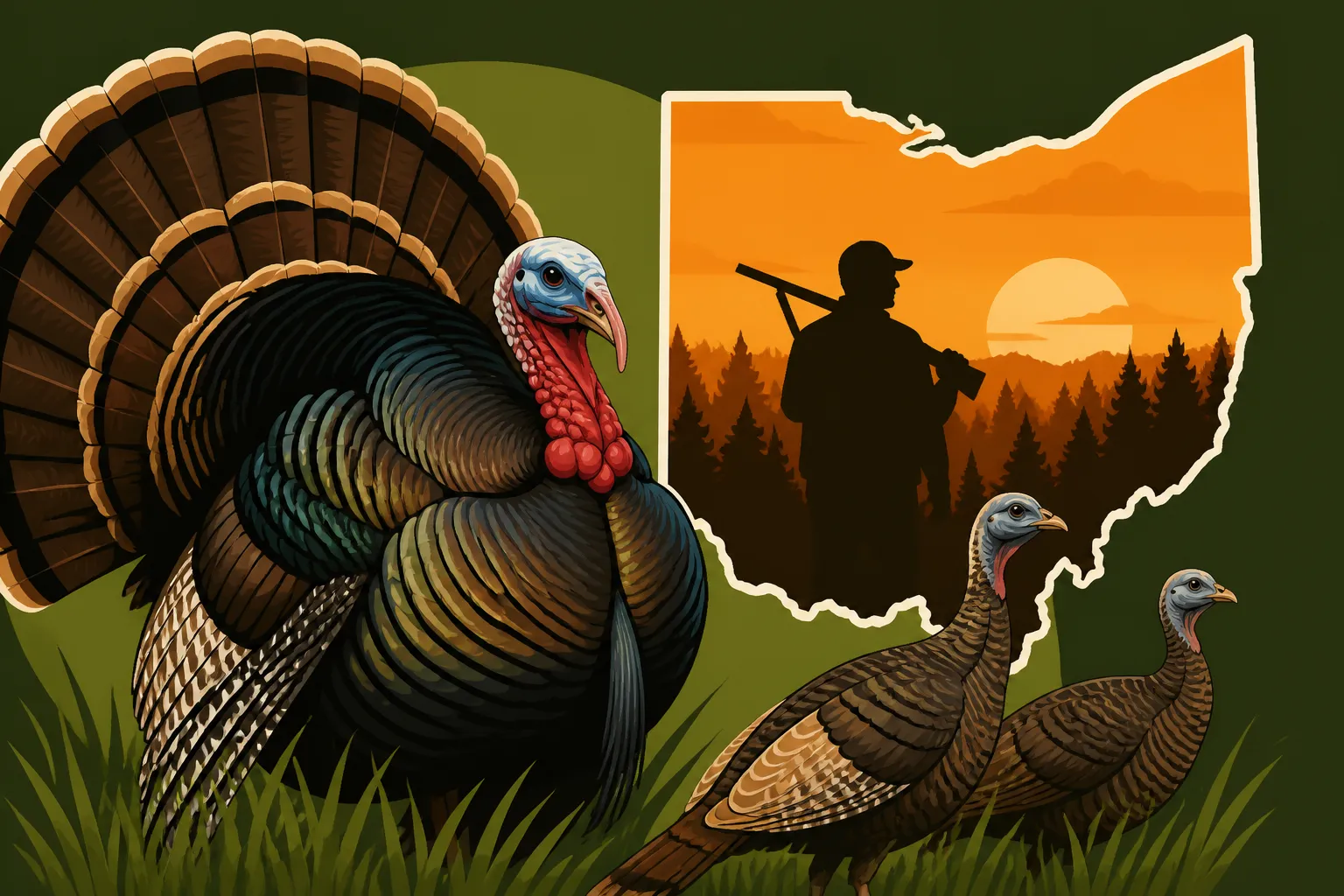
When you hear that thunderous gobble echoing through an Ohio woodlot, you're almost certainly hearing an Eastern wild turkey. This magnificent bird is the backbone of our state's turkey population, having made an incredible comeback from near extirpation. Understanding the Eastern is paramount for any aspiring or seasoned Ohio turkey hunter.
Distinctive Features and Habitat Preferences
The Eastern wild turkey (Meleagris gallopavo silvestris) is characterized by its iridescent plumage, which shimmers with hues of copper, bronze, red, and green, especially in sunlight. Their tail feathers are tipped with a rich, dark chestnut band. Gobblers typically have a prominent "beard" of coarse bristles on their chest, spurs on their legs, and a striking red, white, and blue head that changes intensity with their mood. Hens are generally smaller, less colorful, and often lack a beard, though bearded hens are certainly not uncommon in Ohio! These birds are robust, perfectly adapted to the varied terrain we have here.
Their habitat preferences in Ohio are quite broad, which is a testament to their adaptability. You'll find them thriving in vast tracts of mature, mixed hardwoods, especially those with an abundance of oak and hickory for mast crops. They also do exceptionally well where these woodlands meet agricultural fields, offering a buffet of waste grain, insects, and lush greens. River bottoms, with their dense cover and often reliable water sources, are also prime real estate for Easterns. These environments provide them with everything they need: food, water, cover for roosting and nesting, and open areas for strutting. I've spent countless mornings trying to Calling an Ohio Gobbler Off the Roost along a creek bottom bordered by corn fields, a classic Eastern setup.
Geographic Distribution Across the Buckeye State
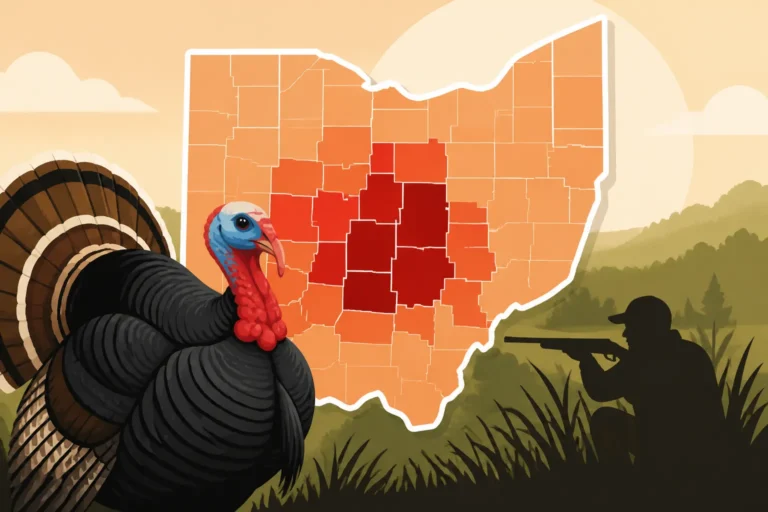
The Eastern wild turkey is truly ubiquitous across Ohio. While their numbers might be denser in certain regions, they are found in all 88 counties. Historically, their strongest populations were in the heavily forested Appalachian foothills of southeast Ohio, places like Shawnee State Forest or Wayne National Forest, where expansive timber provides ideal conditions. However, through diligent restoration efforts by the Ohio Department of Natural Resources, populations have rebounded statewide.
Today, you'll find thriving turkey populations even in the more agricultural and fragmented landscapes of central and northwest Ohio. The birds have learned to adapt, using small woodlots, fencerows, and creek corridors as travel routes and cover. This widespread distribution means that no matter where you hunt in Ohio, if there's suitable habitat, there's a good chance an Eastern gobbler isn't far away. It's truly inspiring to see How Turkeys Were Restored to Ohio and now flourish across our diverse landscape.
Hunting Strategies Tailored to the Eastern
Hunting Eastern wild turkeys in Ohio requires a blend of patience, persistence, and adapting to their local behavior. In the spring, the name of the game is locating gobblers on the roost, either by listening for their morning calls or by using locator calls like an owl hooter or crow call. Once a bird is located, the strategy shifts to setting up quickly and effectively, often using a diaphragm, slate, or box call to mimic a hen's yelps and clucks to draw him in.
Terrain heavily influences tactics. In the steep, broken terrain of southern Ohio, understanding Wind and Thermals on an Appalachian Ridge is crucial, as is patience. Birds might be across a hollow, and you'll need to use the topography to your advantage. In flatter farmland, birds might be more wary of crossing open fields, demanding a different approach, often involving decoys and ground blinds along field edges, like when Turkey Tactics for Farmland Field Edges come into play. Run-and-gun tactics can be effective on public lands where birds might be pressured or constantly on the move, allowing you to cover ground and search for responsive toms. The more you hunt, the more you'll notice subtle changes in their behavior based on the specific Ohio landscape you're in.
Are Other Subspecies Present in Ohio? The Reality Check
It's natural to wonder if other turkey subspecies might roam Ohio. With four recognized subspecies in the U.S. (Eastern, Osceola, Rio Grande, and Merriam's), plus the Gould's in the Southwest, hunters sometimes hope for a grand slam in one state. However, when it comes to Ohio, the answer is pretty straightforward: it's all about the Eastern.
Examining the Likelihood of Hybrids and Transplants
While rumors and occasional isolated sightings of birds with slightly different plumage might pop up, the overwhelming scientific consensus and genetic testing confirm that Ohio's wild turkey population is comprised almost exclusively of the Eastern subspecies. There have been no successful, self-sustaining wild populations of Rio Grande, Merriam's, or Osceola turkeys established in Ohio. Any birds resembling other subspecies are most likely anomalies, genetic variations within the Eastern lineage, or, in very rare cases, domestic birds that have gone feral and interbred.
Some historical stocking efforts might have involved birds from mixed genetic backgrounds decades ago, but these did not lead to established populations of non-Eastern subspecies. The native Eastern birds proved to be the most resilient and best adapted to Ohio's climate and habitats, naturally outcompeting or absorbing any foreign genetics over time. So, while it's fun to dream of a Merriam's strutting through a clearing in Wayne National Forest, it's just not the reality here.
The Importance of Pure Eastern Stock for Ohio's Ecosystem
The focus on maintaining a pure Eastern wild turkey population in Ohio isn't just about species integrity; it's vital for ecological health. Eastern turkeys are perfectly evolved to thrive in Ohio's specific environmental conditions, from our cold, snowy winters to our humid summers, and our particular mix of hardwood forests and agricultural lands. Introducing other subspecies could lead to several problems:
- Reduced Fitness: Other subspecies might not be as well-adapted to our climate, food sources, or disease pressures, leading to weaker populations.
- Genetic Dilution: Hybridization can dilute the unique genetic traits that make Easterns so successful in Ohio, potentially weakening the overall wild turkey gene pool.
- Disease Transmission: Translocating birds from other regions could inadvertently introduce diseases that local populations have no immunity to.
The long-term health and stability of Ohio Turkey Population Estimate depend on supporting the subspecies that belongs here and has proven its ability to flourish.
How ODNR Ensures Eastern Dominance
The Ohio Department of Natural Resources (ODNR) has been meticulous in its efforts to restore and manage our wild turkey population. Their strategies have always centered on the Eastern subspecies. Initial restoration involved trapping wild Eastern turkeys from robust populations in other states and relocating them to suitable habitats within Ohio. This carefully managed program focused on using birds that were already adapted to similar conditions.
Today, ODNR continuously monitors turkey populations through surveys and hunter harvest data to ensure their health and spread. They also manage habitat on public lands to favor the dense cover and mature forests that Easterns need for nesting, brooding, and roosting. You can find a lot of useful data, including historical population trends, through the ODNR's annual reports and online resources. Keeping a close eye on these numbers helps ensure that our Eastern populations remain strong and healthy for future generations of hunters.
Understanding Turkey Behavior, Regardless of Subspecies Nuances
While knowing you're hunting an Eastern is key, many fundamental turkey behaviors are universal, making them fascinating and challenging quarry. Mastering these aspects will dramatically increase your odds of success.
Seasonal Movements and Feeding Patterns
Wild turkeys are opportunistic feeders, and their diet changes with the seasons, directly influencing their movements. In spring, as temperatures rise, they shift from winter food sources like waste grain and dormant vegetation to seeking out new greens, insects, and budding plants. This is also breeding season, so gobblers are focused on strutting, gobbling, and finding hens. Hens, after breeding, will seek out secluded nesting sites, often in dense cover.
As summer progresses, insect consumption increases, especially for poults, and turkeys will spend more time in meadows, field edges, and open woodlands. Come fall, the focus shifts heavily to mast crops like acorns and hickory nuts, which provide vital energy for the coming winter. You’ll find birds congregating in oak and hickory ridges, often scratching through the leaf litter. Understanding these seasonal shifts helps me pinpoint likely turkey locations. For instance, much like deer search for Late-Season Food Sources for Ohio Whitetails, turkeys are constantly on the lookout for available forage throughout the year.
Vocalizations and Communication
Turkey vocalizations are a complex language, and becoming proficient in understanding and mimicking them is a turkey hunter's superpower. Gobbles, obviously, are the signature call of the tom, used to attract hens and challenge other gobblers. But there's a whole symphony of other calls:
- Yelps: A series of relatively evenly spaced notes, often used by hens to locate other turkeys.
- Clucks: Short, sharp notes indicating contentment or a soft inquiry.
- Parrs: A soft, rolling trill, often a close-range contact call or an indicator of a content bird.
- Cuts: Sharp, excited clucks, often indicating a hen ready to breed.
Learning to interpret these calls can tell you a lot about a bird's mood and location. A tom that cuts you off every time you yelp is likely hot and coming in, while one that only answers with distant clucks might need more coaxing. Practice is key, and there are many resources available to help you master various calls.
Roosting Habits and Preferred Trees
Turkeys, both hens and gobblers, spend their nights roosted high in trees to escape ground predators. They typically fly up to roost an hour or so before dark and fly down around dawn. Preferred roost trees are usually large, mature trees with strong, horizontal limbs that offer good visibility, often near water sources, along ridgetops, or on the edges of open fields.
Scouting for roosts is one of the most effective strategies for locating birds, especially during the spring season. I often use my GoHunt mapping app to identify potential roosting areas – looking for tall timber near water or a ridge that drops off into a hollow. Then, a few evenings before the hunt, I'll sneak in to listen for evening fly-up clucks or morning gobblers. Finding Where Ohio Gobblers Roost gives you a tremendous advantage for that critical first hour of the morning hunt.
Tools and Resources for Ohio Turkey Hunters
The modern age has blessed us with incredible tools and resources that make turkey hunting more accessible and efficient than ever before. Leveraging these can significantly improve your chances and enhance your overall experience.
Mapping and Scouting Tools
Gone are the days when a paper map and compass were your only allies (though they're still great to have as a backup!). Today, digital mapping applications are indispensable for turkey hunting in Ohio. Platforms like GoHunt allow you to:
- Identify Public Land: Easily see boundaries for Ohio Wildlife Areas, State Forests, and National Forests. Scouting Ohio Public Land Before Season is made so much simpler.
- Analyze Topography: Understand elevation changes, creek drainages, and ridge lines that turkeys use for travel and roosting.
- Pinpoint Habitat Features: Locate agricultural fields, timber stands, water sources, and potential strutting zones using satellite imagery. I often mark potential roost trees and funnel points on my GoHunt app while scouting.
- Track Your Movement: Record your path, mark sign, and keep notes on turkey activity.
The ability to visualize the terrain and mark waypoints from your couch before you ever step foot in the woods is a game-changer. The Ohio Department of Natural Resources also provides a fantastic resource in the Ohio HuntFish App, which integrates regulations and boundaries.
Effective Calling and Decoy Strategies
No matter how great your map is, you still need to be able to talk turkey. Invest in quality calls and practice regularly. Start with a simple slate or box call, then try a diaphragm call once you get comfortable. Learn a variety of calls, not just the basic yelp. A soft purr or cluck can be incredibly effective at close range when a gobbler is hesitant.
Decoys also play a crucial role, especially when hunting pressured birds or in open country. A single hen decoy can often be enough to pull in a gobbler, but sometimes a jake or even a full gobbler decoy can challenge a tom into range. Placement is critical; consider the line of sight and where you expect the gobbler to approach from. I've learned that Decoy Placement for Pressured Birds often means being more subtle and natural, sometimes placing the decoy slightly out of direct view to draw the tom into searching.
Understanding Ohio's Turkey Regulations
Staying legal is non-negotiable. Ohio's turkey hunting regulations can change, especially regarding season dates, bag limits, and specific zone rules. It is absolutely essential to consult the current Ohio Hunting and Trapping Regulations booklet or the ODNR website every year before you head out. Don't rely on information from last season or word-of-mouth.
For instance, Ohio divides the state into different zones for spring turkey hunting, each with slightly different opening dates. Understanding Ohio Spring Turkey Zones and Dates is crucial to ensure you're hunting legally. Always be aware of legal shooting hours, blaze orange requirements (especially if other seasons overlap), and mandatory check-in procedures for harvested birds. Ignorance of the law is never an excuse, and responsible hunters always do their homework.
Disclaimer
This article is for general informational purposes only and does not constitute professional advice. Laws, prices and regulations vary by location and change over time. Consult a qualified professional for guidance on your specific situation.