Hunting Muskingum River Backwaters
Hunting the backwaters of the Muskingum River system offers a truly unique, albeit challenging, experience for Ohio sportsmen. It's not your typical woodlot hunt or field-edge setup; these dynamic environments demand a different approach, a keen understanding of ever-changing conditions, and a willingness to get a little wet and muddy. This comprehensive guide will walk you through everything you need to know to successfully navigate and hunt the Muskingum's hidden sloughs, oxbows, and flooded timber, helping you unlock opportunities many other hunters overlook.
The Unique Landscape of Muskingum River Backwaters
Let's be real: river backwaters aren't static. They're constantly changing, shaped by rainfall, dam operations, and the relentless flow of the Muskingum itself. This dynamic nature is both their biggest challenge and their greatest appeal, creating ever-shifting prime habitat for a variety of game. Understanding these nuances is the first step to hunting them effectively.
Understanding Water Level Fluctuations and Their Impact
The Muskingum River, much like other major Ohio waterways, is subject to significant water level changes. Heavy rains upriver can quickly swell its banks, pushing water into adjacent low-lying areas, creating temporary sloughs and flooding timber stands that were dry just days before. Conversely, periods of drought can expose vast mudflats, cutting off boat access and stranding game in newly isolated pockets. These fluctuations dictate everything from where game will feed and bed to how you'll even reach your hunting spot. You might scout a perfect waterfowl hide during low water, only to find it completely submerged or inaccessible during a high-water event. Deer patterns along the river bottom are heavily influenced by these changes, as they seek higher ground during floods and utilize newly exposed food sources when water recedes. Predicting these changes isn't always easy, but keeping an eye on river gauges and local weather patterns is absolutely crucial.
Navigating Access Points and Property Boundaries
Accessing Muskingum River backwaters can be a puzzle, especially when dealing with public land mixed with private ownership. Many promising sloughs and oxbows are tucked away, requiring a boat, canoe, or even a determined hike through thick brush and often muddy terrain. It's not like walking into a well-marked wildlife area. Before you even think about putting boots on the ground, you need to meticulously scout your entry and exit points. This is where digital mapping tools truly shine. Applications like onX Hunt are invaluable for overlaying public land boundaries with satellite imagery, allowing you to identify state-owned parcels, wildlife areas, and private holdings. You can pinpoint potential launch sites for a small boat or kayak, identify logging roads that might provide a dry walk-in, and, most importantly, avoid inadvertently trespassing. Remember, some of these backwater areas might be accessible via public fishing access sites, but others will require more creative (and legal!) navigation. Be sure to check state regulations regarding Ohio Public Land Hunting Hours and any specific rules for river access.
Identifying Key Habitat Features
The Muskingum's backwaters aren't just one big puddle; they're a mosaic of diverse habitats, each attracting different game. You'll find everything from shallow, vegetated sloughs perfect for puddle ducks, to deeper oxbows holding diver ducks, and adjacent mature timber that deer use as bedding and travel corridors. Look for areas where feeder creeks enter the main river or backwater, as these often create natural funnels and provide fresh water sources. Islands, even small ones, can be sanctuaries for deer during higher water, offering dry bedding within easy reach of aquatic vegetation or residual crops in adjacent fields. Exposed sandbars and mudflats, particularly during receding water, are magnets for shorebirds and waterfowl seeking grit and invertebrates. Identifying pockets of standing corn or beans on bordering private land that floods occasionally can reveal crucial late-season food sources for both deer and waterfowl. Understanding these micro-habitats within the larger river system is key to placing yourself in the right spot at the right time. Reading Aerial Photos for Southeast Ohio Deer can provide an excellent foundation for this type of detailed habitat analysis, even if you're hunting in a different part of Ohio's river system.
Prime Game Species and Hunting Strategies
The Muskingum River backwaters are surprisingly diverse in the hunting opportunities they offer. While many immediately think of waterfowl, these hidden pockets can be hotbeds for deer and furbearers too, each requiring tailored strategies.
Waterfowl Opportunities in River Sloughs
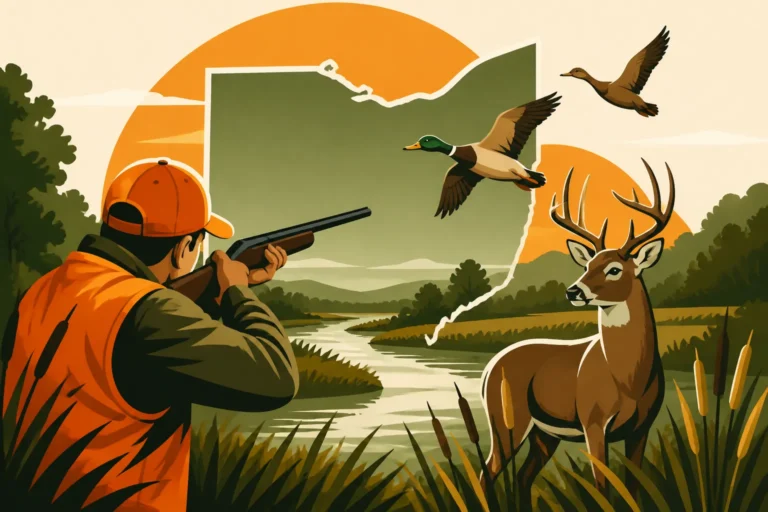
Hunting waterfowl in Muskingum backwaters is a quintessential Ohio experience, but it’s far from easy. Unlike wide-open Lake Erie, these hunts are often intimate, focused on smaller flights of birds working tight cover. Mallards, wood ducks, and even some geese are common visitors to these secluded sloughs. The key to success lies in scouting heavily to find where birds are loafing or feeding, then setting up strategically with good concealment. Portable blinds or even just natural cover like cattails and fallen timber are your best friends. Decoy spreads don't need to be huge; a half-dozen mallards and a couple of wood duck decoys are often more than enough to entice curious birds. Pay close attention to wind direction, as birds will almost always land into the wind, and position yourself accordingly. Keep calls realistic and conservative; loud, aggressive calling can spook birds in these close quarters. Remember that Ohio Waterfowl Migration Timing can vary, so stay flexible with your tactics. You might find great shooting in October for wood ducks and early migrating mallards, and then again in late November or December for greenheads seeking refuge from colder, open waters. For those willing to put in the work, the solitude and the reward of a greenhead cupped in the timber are hard to beat. If you plan to dive into the deeper details, check out Ohio Waterfowl Hunting on Lake Erie and Inland for broader waterfowl insights, as many principles apply even in smaller settings.
Deer Hunting the Adjacent Timber and Floodplains
While backwaters are famous for ducks, don't overlook the incredible deer hunting opportunities in the adjacent timber and floodplains. These river bottoms act as superhighways for whitetails, especially during the rut, and offer crucial bedding and feeding areas. During periods of high water, deer will often move to the nearest high ground, creating predictable travel corridors along the edges of the floodplain. Look for pinch points where the river or a backwater slough forces deer into a narrow strip of dry land. Rub lines and scrape lines are common along these travel routes, especially in early November when Hunting the Rut in Early November is in full swing. Using a ground blind, especially one brushed in with natural vegetation, can be incredibly effective here, providing concealment and allowing you to adapt to changing wind conditions. If you're considering a treestand, pay close attention to the tree species and ensure it's a solid, healthy tree that can withstand potential high water events without compromising your safety or stand integrity. When the water recedes, deer will often move back into the floodplain to browse on succulent vegetation or to forage on leftover agricultural crops. Scouting these areas during the off-season, identifying high-water escape routes and dry-land funnels, is paramount.
Furbearer Potential Along the Water's Edge
The Muskingum River backwaters are an absolute paradise for furbearers like raccoons, muskrats, mink, and even some coyotes. These animals thrive in the rich, watery environments, feeding on fish, frogs, mussels, and other aquatic life. For trappers, the opportunities are immense. Muskrat runs along the edges of sloughs and ditches are obvious sign, as are beaver lodges and bank dens. Mink often patrol the same edges, preying on muskrats and other small game. Raccoon Hunting at Night in Ohio is also a popular pursuit in these areas, with houndsmen taking advantage of the abundant raccoon populations. The mix of water, thick cover, and readily available food sources makes these backwaters prime habitat. If you're hunting deer or waterfowl, keep an eye out for furbearer sign – tracks in the mud, chewed branches, or scat along logs. Understanding the habits of these animals can actually inform your other hunts; for instance, a strong raccoon presence indicates a healthy aquatic ecosystem that might also attract waterfowl. Remember to check all specific Ohio trapping and hunting regulations for furbearers, as seasons and methods can vary.
Essential Gear and Safety for Backwater Hunts
Hunting Muskingum River backwaters isn't for the faint of heart or the ill-prepared. The combination of water, potentially unstable ground, and Ohio's unpredictable weather demands specific gear and a strong emphasis on safety. Cutting corners here can quickly turn a memorable hunt into a miserable (or even dangerous) ordeal.
Watercraft and Wading Gear Choices
If you're hunting Muskingum backwaters, you're almost certainly going to need some form of watercraft, or at the very least, robust wading gear. A small johnboat, canoe, or kayak are ideal for navigating the shallow sloughs and accessing spots unreachable by foot. When choosing a boat, prioritize stability and maneuverability over speed. A flat-bottomed johnboat or a sturdy canoe can carry gear and harvested game, while a kayak offers stealth and access to even tighter spots. Ensure your boat is well-maintained and you have all necessary safety equipment, including life jackets, paddles, and a throw rope.
Waders are non-negotiable. Chest waders, preferably insulated ones, are essential for setting decoys, retrieving birds, navigating muddy banks, and crossing shallow channels. You'll want durable waders that can withstand snags from submerged branches and thick brush. Neoprene waders offer excellent insulation in cold water, while breathable waders are more comfortable for early season hunts but still need proper layering. Consider a good pair of Waders for Ohio Marsh Hunting or Boots for Ohio Mud and Snow to keep your feet dry and warm, as wet feet in cold conditions can quickly lead to hypothermia. Even if you plan to hunt from a boat, you'll inevitably need to step out into the water or mud at some point.
Staying Warm and Dry in Challenging Conditions
Ohio weather, especially during the hunting season, can be notoriously fickle. One day it's mild and pleasant, the next it's a freezing downpour. When hunting backwaters, the risk of getting wet and cold is magnified. Layering is your best defense. Start with moisture-wicking base layers to pull sweat away from your skin. Add insulating layers like fleece or wool, and top it all off with a waterproof and windproof outer shell. Wool is a fantastic choice because it retains much of its insulating properties even when wet. Pack extra layers in a dry bag, especially socks, hats, and gloves. Hand warmers and foot warmers can be a lifesaver on particularly frigid days. Consider bringing a small, portable heater for a ground blind if temperatures are truly plummeting, but ensure proper ventilation. A thermos of hot coffee or soup can also do wonders for morale and core temperature. Remember, hypothermia is a real danger, so prioritize staying dry and warm above all else. This might mean adjusting your Cold-Weather Sitting Strategy in Ohio to ensure you don't stay out too long without proper breaks.
Navigation and Emergency Preparedness
Getting lost in the labyrinthine channels and dense cover of river backwaters is surprisingly easy, even for experienced hunters. The landscape can look completely different from the water than it does from shore, and dense fog or low light can disorient you quickly. A reliable GPS unit or a smartphone with a robust mapping app like onX Hunt is absolutely critical. Download offline maps before you go, as cell service can be spotty or non-existent in remote areas. Use the app to mark your access points, stand locations, and any potential hazards. This is also where you can utilize Using the Ohio HuntFish Map Tool for additional public land insights.
Beyond navigation, always carry a small emergency kit. This should include a first-aid kit, a knife, a fire starter, a headlamp (even for daytime hunts), and a whistle. Let someone know exactly where you're going and when you expect to return. Consider carrying a personal locator beacon (PLB) or satellite messenger if you're venturing into truly remote areas. The Muskingum can be unforgiving, and being prepared for the unexpected is simply smart hunting. Before you head out, make sure you've got all your legal ducks in a row too, including understanding Ohio Hunting Licenses and What They Cost and any specific permits required for migratory bird hunting.
Seasonal Opportunities in Muskingum River Backwaters
Hunting in the Muskingum River backwaters truly is a year-round endeavor if you consider scouting, but the active hunting seasons present distinct opportunities and challenges.
| Season | Primary Species | Key Considerations | Recommended Gear |
|---|---|---|---|
| Early Fall | Squirrel, Deer, Early Waterfowl | Water levels often lower; scouting for mast crops and early migrants. | Lightweight pack, .22 rifle/bow, decoys |
| Late Fall | Deer, Waterfowl, Furbearers | Rutting deer movement; peak waterfowl migration. | Waders, insulated layers, shotgun, rifle, treestand |
| Winter | Waterfowl, Deer (Late Season), Furbearers | Frozen backwaters possible; challenging cold. | Insulated waders, extreme cold layers, ice safety gear, rifle, traps |
| Spring | Turkey (nearby), Furbearers (trapping) | High water often; scouting for next fall, turkey calling from high ground. | Boots, binoculars, turkey calls, shotgun |
This table provides a snapshot, but remember, the river's dynamic nature means these are guidelines, not rigid rules. Every year is a little different, and successful backwater hunters are those who adapt. Always consider Hunting Pressure on Ohio Public Land when planning your trips, as popular areas can see significant traffic, especially during opening weekends. Finding ground others walk past might be the key to success.
Ultimately, hunting the Muskingum River backwaters is about embracing the wild, dynamic heart of Ohio's waterways. It's tough, it's demanding, but for those willing to put in the effort, it offers some of the most rewarding and memorable experiences the Buckeye State has to offer.
Disclaimer
This article is for general informational purposes only and does not constitute professional advice. Laws, prices and regulations vary by location and change over time. Consult a qualified professional for guidance on your specific situation.