Prescribed Burns and Ohio Hunting Closures
It's incredibly frustrating to plan a hunting trip, only to arrive at your favorite public land spot and find it closed, or worse, see a hazy, smoked-out landscape where you expected pristine woods. Prescribed burns, while vital for ecological health and long-term hunting opportunities, can throw a wrench into your immediate plans if you're not aware of them. This guide aims to pull back the curtain on why these controlled fires happen in Ohio, how they impact hunting, and most importantly, how you can stay informed to avoid unpleasant surprises and even use burn areas to your advantage.
The Science of Smoke: Why Ohio Uses Prescribed Burns
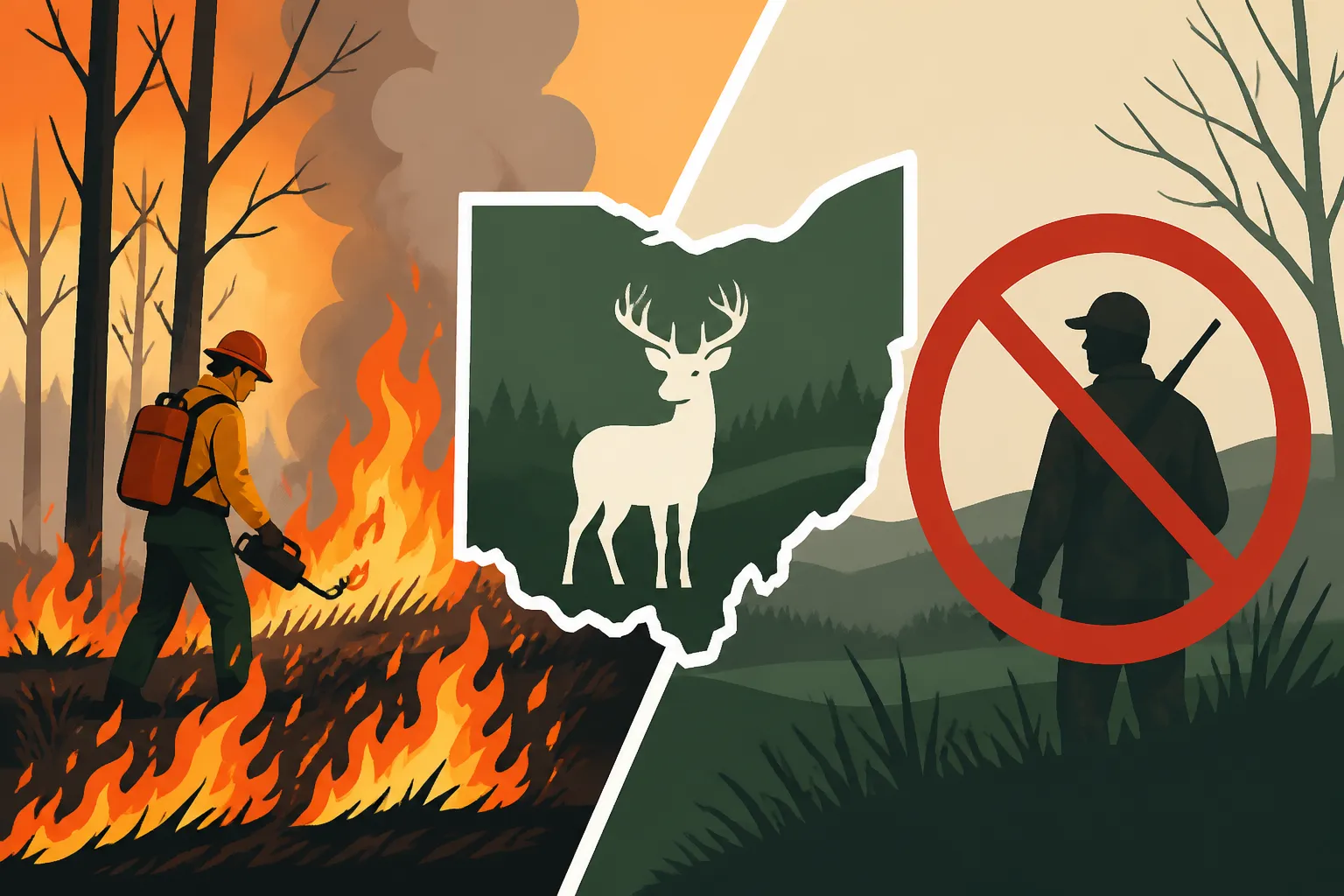
When you see smoke rising from a section of public hunting land in Ohio, it's often not an uncontrolled wildfire, but rather a carefully planned and executed prescribed burn. These aren't just random acts of setting fire to the woods; they are a critical land management tool employed by agencies like the Ohio Department of Natural Resources (ODNR) on properties such as Ohio Wildlife Areas, Wayne National Forest Hunting, and Shawnee State Forest Hunting. The reasons behind these fires are rooted deeply in ecological science and a commitment to maintaining healthy, productive landscapes for wildlife and hunters alike.
Habitat Renewal and Game Species Benefits
One of the primary drivers behind prescribed burns is habitat renewal. Many of Ohio's native ecosystems, particularly oak-hickory forests and prairies, evolved with fire as a natural part of their cycle. Without it, these areas can become choked with dense undergrowth, invasive species, and an overabundance of certain tree types that outcompete more desirable vegetation.
For game species like White-Tailed Deer Across Ohio, Wild Turkeys in Ohio, and even Ohio's Squirrel and Rabbit Populations, prescribed burns can be a game-changer. Deer benefit from the flush of new, nutritious browse that emerges after a fire, as it clears out old, woody vegetation and allows sunlight to reach the forest floor. Turkeys find improved bugging opportunities in the ash-rich soil and better visibility for foraging. Rabbits and quail thrive in the rejuvenated grasslands and open understories that provide both cover and food. It's about creating a diverse, vibrant habitat, not a sterile environment. These burns are often part of a broader Habitat Work on Ohio Wildlife Areas strategy to ensure healthy game populations for years to come.
Reducing Wildfire Risk and Forest Health
Beyond direct habitat improvement, prescribed burns play a crucial role in reducing the risk of destructive, uncontrolled wildfires. Think of it like a controlled preventative measure. Over time, dead leaves, fallen branches, and dense underbrush accumulate on the forest floor, creating a significant "fuel load." When conditions are dry and a wildfire starts, this accumulated fuel can lead to incredibly intense, fast-spreading fires that are difficult to control and cause immense damage to both habitat and infrastructure.
By intentionally burning off these fuel loads under controlled conditions, land managers effectively reduce the potential for catastrophic wildfires. This also promotes the health of the existing forest by cycling nutrients back into the soil, reducing disease and insect infestations by removing stressed vegetation, and favoring fire-adapted tree species like oaks that are important mast producers for wildlife. It's a long-term investment in the resilience and productivity of our woodlands.
Navigating Closures: How to Stay Informed Before Your Hunt
The biggest headache for hunters regarding prescribed burns is the inevitable closure of certain areas for safety reasons. Showing up ready to hunt only to find your spot engulfed in smoke or blocked off is a major disappointment. Thankfully, there are proactive steps you can take to stay informed and avoid these surprises.
Official Channels and Online Resources
The most reliable sources of information regarding prescribed burns and associated hunting closures come directly from the land management agencies themselves. For state lands, the ODNR website is your first stop. They often post notices of planned burns, sometimes weeks or even months in advance, especially for larger, more complex projects. Keep an eye on their press releases and habitat management sections. Many wildlife areas also have dedicated pages or social media accounts where they share updates.
For federal lands like the Wayne National Forest, their official website and local ranger district offices are the places to check. They operate under different guidelines but are equally committed to public safety and transparency. It's not always easy to find these specific details buried in agency websites, so make it a habit to check regularly, especially during spring and fall when burns are most common. Utilizing the Using the Ohio HuntFish Map Tool can sometimes provide real-time updates or links to relevant local information as well.
This is also where modern hunting apps can be incredibly helpful. Platforms like onX Hunt and GoHunt often update their public land layers with boundary changes, temporary closures, or links to agency notifications. Before heading out, I always pull up my onX Hunt app and zoom in on my target area. While they might not have every single burn notice immediately, they are a great second layer of verification and can show you alternative public tracts nearby if your primary spot is closed.
Signs on the Ground and Local Notifications
While online resources are fantastic, nothing beats local intelligence. When you're planning a hunt, especially on larger, less-trafficked public lands, drive by the main access points a few days before your trip. Look for physical signage at trailheads, parking areas, or informational kiosks. Land managers will almost always post notices about active or imminent burns on-site.
It's also worth noting that prescribed burns are highly dependent on specific weather conditions – wind speed and direction, humidity, and fuel moisture all have to be within a very narrow window for a burn to be safely and effectively conducted. This means that a burn planned for a specific date might be postponed last minute if conditions aren't right. Conversely, a burn might be moved up if a suitable weather window opens unexpectedly. This unpredictability is why checking multiple sources – online and on the ground – right up until your hunt is so crucial. If you see active burning, or signs of very recent burning (still smoldering, heavy smoke), it's always best to err on the side of caution and find an alternative spot. Safety for yourself and the fire crews is paramount.
Hunting in the Aftermath: What to Expect Post-Burn
So, you've arrived, and an area has recently been burned. Your first thought might be, "Well, there goes my hunt." But hold on! A recently burned area, while stark and perhaps even a bit unsettling to look at initially, can offer some incredible and unique hunting opportunities. It's all about understanding how game animals react and how the landscape changes.
Immediate Impact and Animal Behavior
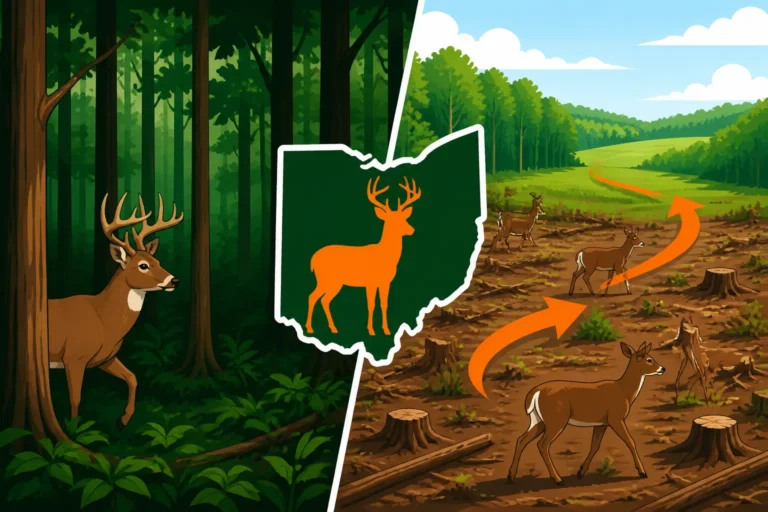
When a prescribed burn is actively underway, animals will naturally flee the immediate area. Deer, turkeys, rabbits, and squirrels are not going to stick around while the ground is smoldering. They'll move to adjacent unburned cover, thickets, or nearby drainages. This initial displacement is temporary. As soon as the flames are out and the smoke clears, animals will begin to filter back in, often within hours or a day or two.
The immediate aftermath might look like a scorched wasteland, but beneath the ash, life is already stirring. The soil is now exposed to more sunlight, and the nutrients from the burned vegetation are readily available. This leads to a rapid "green-up" as new grasses, forbs, and tender shoots emerge. These fresh growths are incredibly attractive to deer, acting as a natural food plot in the middle of the woods. Turkeys will return to scratch for insects and seeds that were previously inaccessible under layers of duff. Don't be fooled by the barren appearance; it's often a buffet line in disguise.
Long-Term Benefits for Hunters
The long-term effects of prescribed burns are almost universally positive for hunters. As the new vegetation grows, it creates a healthier, more diverse habitat. This isn't just about food; it's also about cover and visibility.
Consider hunting deer in an area that was burned six months to a year prior. The dense, thorny underbrush that once made still-hunting impossible might now be cleared, offering better visibility through the timber. New thickets of desirable browse, like young briars and saplings, provide excellent bedding cover, while the open forest floor makes tracking easier. This newfound openness can also benefit hunters who prefer to set up Treestand Setups in Appalachian Ohio Hardwoods, as shooting lanes become clearer and deer movement patterns might be more predictable around the fresh growth.
For turkey hunters, areas burned a year or two prior become prime spots. The renewed forest floor provides superb bugging habitat, and the improved sightlines can make spotting distant gobblers easier. You might also find that the overall health of the deer herd or turkey population in these managed areas is better, leading to healthier animals and potentially more opportunities. Scouting Ohio Public Land Before Season after a burn can reveal surprising shifts in animal patterns, allowing you to find ground that other hunters might overlook because of the initial "burnt" impression. Use your mapping apps like onX Hunt to overlay aerial imagery and see how the landscape has changed over time, helping you pinpoint those edges and new growth areas.
Here’s a quick overview of what to consider when a prescribed burn hits your hunting spot:
| Burn Status | Hunter's Action | Short-Term Impact on Game | Long-Term Impact on Game | Resources to Check |
|---|---|---|---|---|
| Planned Burn (Future) | Check official notifications, adjust hunt plans | Game will likely move to adjacent unburned areas temporarily | Improved browse, cover, and overall habitat health | ODNR website, local park/forest offices, Using the Ohio HuntFish Map Tool |
| Active Burn (Present) | AVOID AREA COMPLETELY for safety (and legality)! | Game will flee the immediate area rapidly | N/A (too early to determine) | Emergency services, ODNR alerts, visual confirmation on-site |
| Recent Burn (Days-Weeks Ago) | Scout edges, look for green-up, increased visibility | Game slowly returning, exploring new food sources | Early stages of habitat renewal, increased foraging | onX Hunt (for boundary lines/alternative spots), local visits, ODNR reports |
| Older Burn (Months-Year+ Ago) | Hunt new growth, enhanced cover, clear lanes, food sources | Game established in new habitat, increased populations | Sustained habitat improvement, potentially larger/healthier game | Reading Aerial Photos for Southeast Ohio Deer, Scouting Ohio Public Land Before Season |
Prescribed burns are a necessary and beneficial part of land management in Ohio. While they can temporarily disrupt your hunting plans, understanding their purpose and knowing how to navigate the closures – and even capitalize on the renewed habitat – will make you a more informed and successful hunter in the long run. Don't let a little smoke deter you; often, where there's smoke, there are improved hunting opportunities waiting to be discovered.
Disclaimer
This article is for general informational purposes only and does not constitute professional advice. Laws, prices and regulations vary by location and change over time. Consult a qualified professional for guidance on your specific situation.