How Many Counties Allow Fall Turkey in Ohio
Figuring out where you can and can't chase those wily fall turkeys in Ohio can feel like solving a complex puzzle. It’s not as straightforward as spring gobbler season, where most counties are fair game. This guide is here to untangle the confusion, giving you the clear picture on which counties in Ohio are open for fall turkey hunting and what you need to know before heading afield.
Understanding Ohio's Fall Turkey Landscape
Ohio's fall turkey season is a fantastic opportunity, but it's often a source of head-scratching for hunters. Unlike the widespread opportunities available during the spring hunt, the fall season is much more restricted. This isn't just to make things complicated; there's a good reason behind the Ohio Department of Natural Resources (ODNR) approach.
Why Not All Counties Are Open for Fall Turkey Hunting
The primary driver behind limiting fall turkey hunting to specific counties is sound wildlife management. Wild turkey populations, while generally robust across Ohio thanks to incredible restoration efforts, can fluctuate due to various factors like harsh winters, poor nesting success, or disease outbreaks. The ODNR monitors turkey populations incredibly closely, looking at things like poult-to-hen ratios (which give a strong indication of reproductive success) and overall harvest data.
In counties where turkey populations are either still recovering, less dense, or are experiencing a downturn, the ODNR often opts to keep them closed for fall hunting. This conservative approach helps ensure the long-term health and stability of the turkey resource. Fall hunting can have a greater impact on the overall population because it targets both hens and gobblers, unlike the spring season which primarily focuses on breeding gobblers. If you're curious about the bigger picture, you can dive deeper into the current Ohio Turkey Population Trends to understand the dynamics at play. It’s all about sustainable hunting, making sure future generations have birds to chase.
The Current List of Open Counties for Fall Turkey
So, let's get down to brass tacks: how many counties do allow fall turkey hunting in Ohio? For the current season, a specific, limited number of counties are open for the fall turkey pursuit. This isn't a statewide opportunity, which means hunters need to be diligent in checking the regulations for their desired hunting grounds.
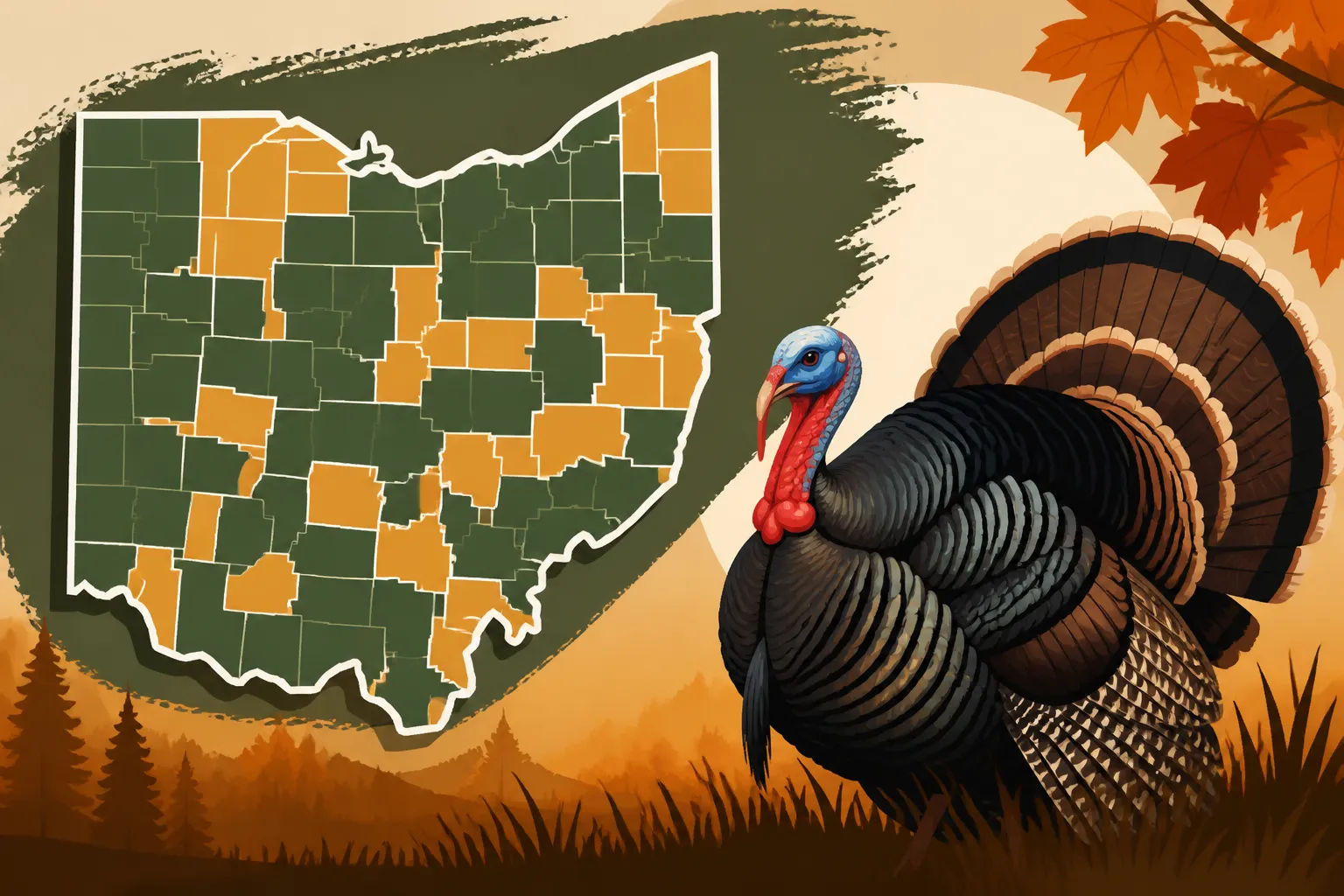
Currently, 40 counties in Ohio are open for fall turkey hunting. This number can change from year to year based on ODNR surveys and data, so always double-check the latest regulations. Knowing which counties are open is the first step in planning your hunt. For the most up-to-date and specific details, consult the ODNR's official hunting regulations. You can also get a quick overview with the Ohio Fall Turkey County List to help in your planning.
Here's a breakdown of the counties generally open for Ohio's fall turkey season. Please note this list is subject to change annually, so always confirm with the latest ODNR hunting digest.
| Region | Number of Counties | Representative Counties |
|---|---|---|
| Northeast Ohio | ~10 | Ashtabula, Columbiana, Coshocton, Guernsey, Harrison, Jefferson, Mahoning, Muskingum, Trumbull, Tuscarawas |
| Southeast Ohio | ~20 | Adams, Athens, Belmont, Brown, Gallia, Highland, Hocking, Jackson, Lawrence, Meigs, Monroe, Morgan, Noble, Perry, Pike, Ross, Scioto, Vinton, Washington |
| Central/East Ohio | ~10 | Carroll, Delaware, Fairfield, Knox, Licking, Morrow, Richland, Wayne |
This table gives you a general idea, but remember, the ODNR website is your ultimate authority. Using a mapping application like GoHunt can also be incredibly helpful to visualize these county lines when you're scouting, especially if you're trying to figure out which parcels of public land fall within an open zone.
Key Regulations and Season Details for Fall Turkey
Once you've identified an open county, understanding the specific rules that govern fall turkey hunting in Ohio is absolutely critical. These regulations are designed to ensure fair chase and continued healthy turkey populations.
Weapon Restrictions and Bag Limits
One of the most significant differences between Ohio's fall and spring turkey seasons lies in the permissible weapons. For fall turkey hunting in Ohio, only shotguns are permitted. This is a hard and fast rule that every hunter must abide by. Unlike the spring season where archery equipment is a popular choice, you'll need to leave your bow at home for the fall. If you're wondering about the specifics of this regulation, our guide on Why Ohio Bans Archery for Fall Turkey offers a deeper explanation. This means your trusted scattergun, patterned effectively, will be your tool of choice. You can find more detail on this in the comprehensive guide to Ohio's Shotgun-Only Fall Turkey Season.
When it comes to the bag limit, hunters are typically allowed one turkey of either sex during the entire fall season. This is another area where fall hunting differs from spring, where hunters might have a two-gobbler limit. The "either sex" rule means you can harvest a hen or a gobbler, which opens up more opportunities but also requires careful consideration from a management perspective. Always verify the current Ohio Fall Turkey Bag Limit as these details can be adjusted by the ODNR.
Additionally, don't forget your hunting license, turkey permit, and the Harvest Information Program (HIP) certification if you're hunting any migratory birds throughout the year. While wild turkey isn't a migratory bird, if you hunt ducks, doves, or geese, you'll already have your HIP certification, which is a good habit to maintain. For details on all required permits, check out Ohio Hunting Licenses and What They Cost.
Navigating Ohio's Fall Turkey Window
The fall turkey season in Ohio has a specific timeframe, typically running for a few weeks in the autumn months. These dates are set annually by the ODNR and can vary slightly from one year to the next. Generally, you can expect the season to open sometime in October and extend into early November, overlapping with portions of the deer archery season.
It's crucial to consult the most current Ohio hunting and trapping regulations digest or the ODNR website for the precise opening and closing dates. Missing the season by a day or misinterpreting the dates can lead to a frustrating, wasted trip or, worse, a violation. Our article on Hunting Ohio's Fall Turkey Window provides more context on these important dates. Remember, daylight saving time can also play a role in legal shooting hours, so be mindful of the exact Ohio Legal Shooting Hours for your hunt.
The fall window can sometimes feel short compared to the spring, adding a sense of urgency to scouting and planning. This emphasizes the importance of utilizing resources like the ODNR's online maps or applications like GoHunt to pinpoint precise public hunting areas within the open counties before the season begins.
Strategies for Success in Ohio's Fall Turkey Woods
Hunting fall turkeys is a very different game than chasing spring gobblers. The birds' behavior changes dramatically once breeding season is over, and understanding these shifts is key to filling your tag.
Locating Fall Flocks in Open Counties
In the fall, turkeys transition from breeding behavior to survival mode, primarily focusing on finding food. This means that successful fall turkey hunting often revolves around locating food sources. Hard mast, particularly acorns, is a huge draw for turkeys. Look for mature oak stands, especially white oaks, which drop their acorns earlier and are highly palatable. Beech nuts, if available, are also a major attractant.
Beyond mast, turkeys will utilize agricultural fields. Cut cornfields, standing soybeans, and even winter wheat plantings can draw flocks, especially if timber edges provide nearby cover and roosting opportunities. Creek bottoms and river corridors, often abundant with various food sources and offering travel routes, are also prime areas to scout. Understanding the subtle nuances of Turkey Tactics for Farmland Field Edges can be a real game-changer if you're hunting in Ohio's agricultural regions.
Scouting is paramount. Spend time before the season looking for fresh turkey sign: tracks, droppings, and scratched-up areas where they've been feeding. This is where tools like GoHunt really shine. You can overlay aerial imagery with public land boundaries and even recent timber cuts to identify potential food sources and travel corridors within your chosen open county. Looking at the landscape through a turkey's eyes – identifying areas of food, water, roosting cover, and escape routes – will put you in the right spot. For comprehensive preparation, review our tips on Scouting Ohio Public Land Before Season.
Effective Fall Turkey Tactics
Fall turkey hunting tactics often center around breaking up flocks and then calling them back. Here's how it works:
- Locate the Flock: Use locator calls (crow, owl, coyote) in the early morning or late evening to pinpoint roosting birds, or simply scout during the day to find feeding flocks.
- Break Them Up: Once you've found a flock, get in close and rush them, shouting and waving your arms, to scatter them in all directions. The goal is to separate the birds completely.
- Set Up and Call: Position yourself quickly near where the birds scattered. Wait quietly for 15-30 minutes, allowing the birds to settle down. Then, begin making soft assembly calls – plaintive yelps, clucks, and especially the kee-kee run of young birds trying to locate their family. The goal is to sound like a lost turkey.
- Patience is Key: Fall turkeys can take a long time to regroup, sometimes hours. Be patient. When birds start to come back, they'll often come in silently or with very soft calls. Our guide on Breaking Up a Fall Turkey Flock goes into much more detail on this classic technique.
Another effective tactic is simply ambushing birds at key feeding or travel areas. If you've scouted a field edge or a oak ridge where turkeys are consistently feeding, setting up a ground blind or finding good natural cover can lead to success. Remember, fall birds are often less vocal than their spring counterparts, so don't expect a lot of gobbling. Your calling might be more about soft reassurance than aggressive provocation. And, of course, ensure your shotgun is patterned correctly for turkey loads, as you only get one shot.
Important Considerations for Ohio Fall Turkey Hunters
Beyond the basic regulations and tactics, there are a few other critical things to keep in mind when pursuing fall turkeys in Ohio. Being prepared for varying conditions and understanding the specific rules ensures a safer and more successful hunt.
The Role of E-Scouting and Public Land Access
Navigating Ohio's public lands, especially in the larger state forests like Shawnee or Wayne National Forest, or the numerous Ohio Wildlife Areas, can be daunting. When you're trying to figure out which pockets of an open county hold turkeys, e-scouting tools become invaluable. Applications like GoHunt allow you to zoom in on specific properties, identify habitat features such as oak ridges, clear-cuts, or field edges, and mark potential roosting or feeding sites. This is especially useful for identifying those hidden corners of public land that might see less pressure.
Finding suitable public ground within the 40 open counties for fall turkey requires a bit of homework. You'll want to cross-reference the open county list with the locations of Ohio's public hunting lands. Some excellent resources include the ODNR's "HuntFish OH" mobile app or their online interactive map. These tools can show you specific wildlife areas, state forests, and other public access points where fall turkey hunting might be permitted. Just be sure to always verify the most current rules for each specific public hunting area, as some might have additional restrictions or special hunts.
Why Ohio Bans Archery for Fall Turkey
Many hunters, especially those who enjoy bowhunting deer and spring turkeys, often wonder why archery equipment is prohibited for fall turkeys in Ohio. It's a question that comes up frequently, and it’s rooted in wildlife management and historical context.
The ODNR's decision to restrict fall turkey hunting to shotguns only is primarily driven by concerns for population management. Fall hunting targets a broader segment of the turkey population, including hens. Historically, turkey populations in Ohio faced significant challenges, and while they've made a remarkable comeback, the ODNR maintains a cautious approach to ensure sustainable harvest levels.
One of the key considerations is the effectiveness and recovery rates with different weapon types. Shotguns, when properly used with modern turkey loads, are highly efficient, leading to quick, clean kills. While archery is also effective, there can be a higher risk of non-lethal hits or lost birds, especially in the thick cover often encountered in the fall. The ODNR aims to minimize these instances, ensuring that every harvested bird is recovered and contributes to the management data.
Furthermore, it simplifies enforcement and reduces potential conflicts, particularly since fall turkey season can overlap with portions of Ohio's archery deer season. By designating shotguns only for fall turkeys, it creates a clear distinction and management framework. This isn't unique to Ohio; many states have specific weapon restrictions for fall turkey seasons to protect and manage their wild turkey resource. It’s all part of the state’s overarching strategy to preserve the species for future hunters.
Disclaimer
Please be aware that hunting regulations, season dates, and open counties can change annually. It is your responsibility to consult the most current Ohio Department of Natural Resources (ODNR) hunting and trapping regulations before planning or undertaking any hunting activity. This article is intended for informational purposes only and should not be considered a substitute for official ODNR guidelines.