Do You Need Written Permission in Ohio?
One of the most anxiety-inducing aspects of hunting, especially for those venturing onto new ground or trying to expand their hunting opportunities beyond crowded public lands, is understanding the rules around private property access. Many hunters grapple with the fundamental question: do you really need written permission to hunt private land in Ohio, or is a verbal agreement enough? This guide aims to clear up that confusion, offering a deep dive into Ohio's permission laws, practical advice for securing access, and best practices for maintaining positive landowner relationships.
Understanding Ohio's Trespass Laws: The Foundation of Private Land Access
Ohio's hunting landscape is a patchwork of public areas and vast expanses of private land. While public hunting grounds are an incredible resource, the most consistent opportunities often lie on private farms and woodlots. However, gaining access to these lands means navigating the state's trespass laws, which exist to protect property owners and their rights. Ignorance of these laws is never an excuse, and a misstep can lead to severe consequences for your hunting privileges and your reputation as an ethical outdoorsperson.
Defining Legal Trespass: What Every Hunter Needs to Know
At its core, trespassing is entering or remaining on someone else's property without their express permission. In Ohio, this isn't just about clearly marked "No Hunting" or "No Trespassing" signs, though those certainly make it obvious. Even if there isn't a single sign to be found, you are still presumed to be trespassing if you enter private land without permission. The onus is entirely on the hunter to know who owns the land they are on and to secure permission before setting foot on it. This means that assuming an old logging road or a thick woodlot that seems abandoned is fair game can quickly land you in hot water.
Think about it from a landowner's perspective: they have invested in their property, whether it's for farming, timber, or simply quiet enjoyment. They expect that their boundaries will be respected. When a hunter enters their land uninvited, it's not just a minor infraction; it's a violation of their property rights. Ohio law takes this seriously, and so should every hunter. It's not enough to say, "I didn't see any signs." You are expected to know whose land it is and if you have permission. This is why tools like onX Hunt are invaluable, allowing you to quickly Finding Ohio Property Lines and understand ownership before you even get out of your truck.
Consequences of Unauthorized Entry: Why It Matters
The penalties for trespassing while hunting in Ohio can range from significant fines to the loss of hunting privileges, and even potential jail time for repeat or aggravated offenses. Beyond the legal ramifications, there's the damage to your reputation and, more broadly, to the image of hunters as a whole. A single incident of unauthorized entry can sour a landowner's perception of all hunters, making it harder for others to gain access in the future.
Imagine being caught hunting without permission on a small parcel of timber near, say, a rural Columbus suburb. The landowner calls the game warden, and suddenly you're facing a fine that could easily run into hundreds of dollars, plus court costs. If it's a particularly egregious case, or if you've been cited for similar offenses before, your hunting license could be suspended, meaning you're out of the woods for an entire season or longer. The financial hit is one thing, but losing the privilege to pursue your passion is often the harder pill to swallow. It truly underscores the importance of always getting permission, no matter how small or insignificant a parcel of land might seem.
Verbal vs. Written Permission: The Ohio Distinction
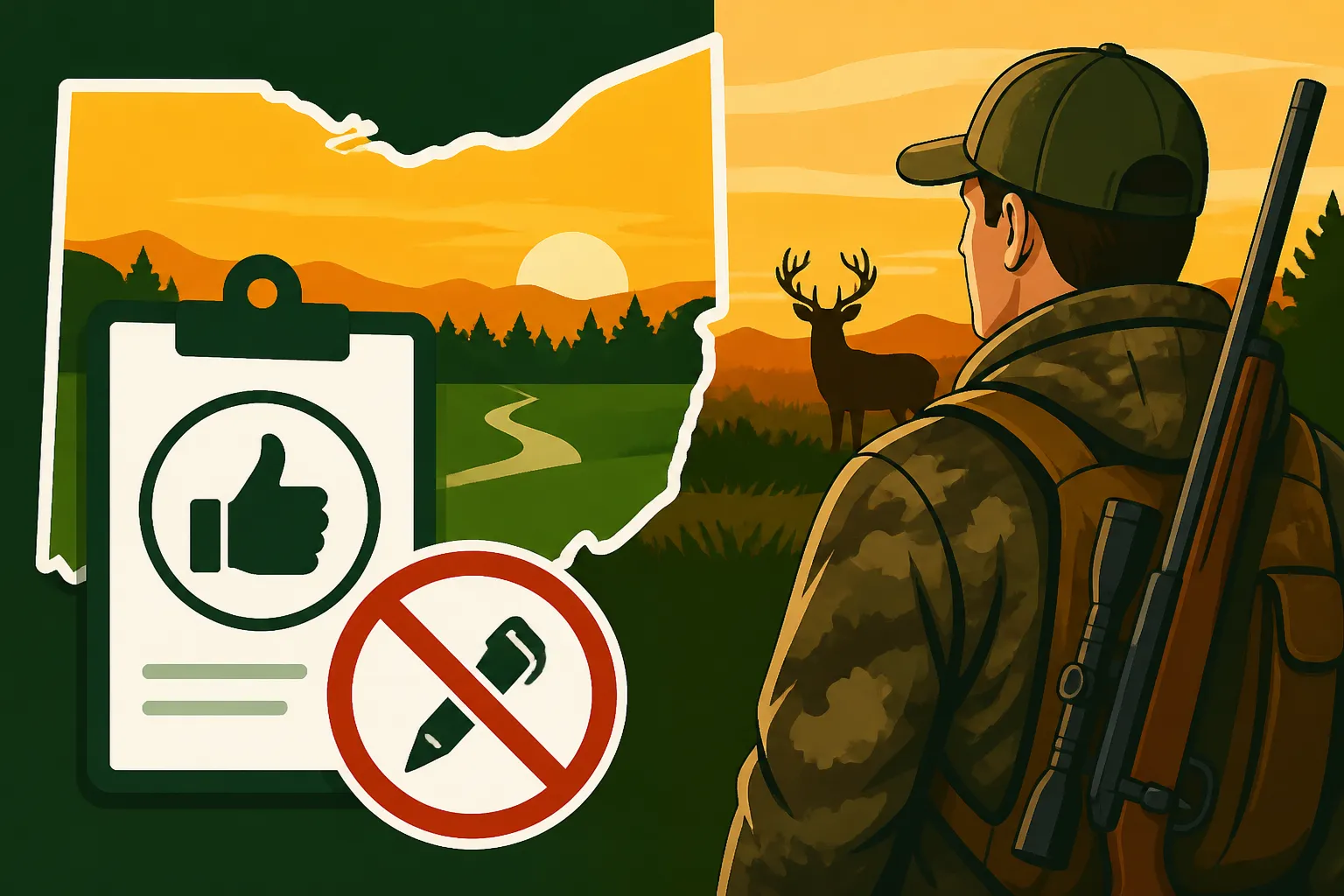
This is where much of the confusion lies. Many hunters assume a quick chat with a farmer and a handshake are good enough. While verbal permission can be legally binding in Ohio, relying solely on it comes with significant risks. For the sake of clarity, peace of mind, and legal protection, written permission is always the superior choice.
The Legality of Verbal Permission in Ohio
Yes, verbal permission is generally considered legal in Ohio for hunting private land. If a landowner explicitly tells you, "Sure, you can hunt my back forty this season," and you shake on it, that constitutes permission. Many seasoned hunters have relied on such agreements for years, often building strong, trusting relationships with landowners over time. There's a certain old-school charm to it, a nod to simpler times when a man's word was his bond.
However, the major drawback of verbal permission is its transient nature and the difficulty of proving it if a dispute arises. What if the landowner forgets they gave you permission, or their memory of the conversation differs from yours? What if new family members or tenants move onto the property and aren't aware of the agreement? Or, tragically, what if the landowner passes away, and their heirs have no knowledge of your arrangement? In any of these scenarios, you could find yourself in a sticky situation, having to prove an agreement that was never documented. This is especially true if a game warden, patrolling a specific area, asks you for proof of permission. While a verbal agreement can be legally sufficient, enforcing it or defending yourself against a claim of trespass becomes incredibly challenging without anything in writing. For hunters building long-term relationships, it's still advisable to transition verbal agreements into written ones as a sign of mutual respect and clarity.
The Power of Written Permission: A Hunter's Best Protection
This is the gold standard for private land access in Ohio. A signed, dated document explicitly granting you permission to hunt a specific property leaves no room for doubt. It protects both you and the landowner by clearly outlining the terms of the agreement. When you're carrying a piece of paper that says, "John Doe permits [Your Name] to hunt deer on Parcel ID 123-456-789 from October 1st to January 31st," any questions from a game warden or a curious neighbor are easily answered.
What should a good written permission slip include?
- Your full name and contact information.
- The landowner's full name and contact information.
- A clear statement granting hunting permission.
- The specific dates the permission is valid (e.g., "for the 2024-2025 deer season," or "from 9/28/2024 to 2/2/2025").
- The specific species you are permitted to hunt.
- Any specific areas of the property you are allowed or not allowed to hunt (e.g., "excluding the 5 acres around the residence").
- A brief description of the property, including parcel numbers or addresses, if available.
- The signatures of both the hunter and the landowner, with the date signed.
Having this document in your pocket not only gives you peace of mind but also shows the landowner that you are a serious, responsible hunter who respects their property and the law. It sets a professional tone for the relationship and helps prevent misunderstandings down the road. Consider it your insurance policy against accidental trespass, allowing you to focus on Hunting Ohio Farmland Deer or stalking a gobbler in Hunting Ohio's Northeast Zone Spring Opener without worry.
Here's a quick comparison:
| Feature | Verbal Permission | Written Permission |
|---|---|---|
| Legal Standing | Generally valid in Ohio | Legally binding and preferred |
| Proof in Dispute | Difficult to prove without witnesses | Clear, undeniable evidence |
| Clarity of Terms | Prone to misinterpretation or forgotten details | Explicitly outlines dates, species, areas |
| Landowner Change | Risk of invalidation if ownership or memory changes | Remains valid until specified end date, less impacted by memory fade |
| Hunter's Confidence | Lower, always a lingering doubt | High, provides legal protection and peace of mind |
| Relationship Building | Can be basis for trust, but easily misunderstood | Fosters trust through clear communication and respect |
Securing Access: Best Practices for Ohio Hunters
Now that we understand why written permission is so important, the next step is actually getting it. This isn't always easy, as many landowners are wary of granting access. Building relationships and leveraging modern tools can significantly increase your chances of finding private land to hunt.
Approaching Landowners: Building Relationships
Successfully Knocking on Doors in Ohio Farm Country for permission isn't just about asking; it's about making a positive impression and building trust. Most landowners aren't going to hand over access to their property to a stranger who just shows up unannounced. They want to know you're responsible, respectful, and safe.
Here are some tips:
- Be respectful of their time: Don't show up during dinner, milking time, or when they're obviously busy in the fields. A weekday afternoon or early evening is often a good window.
- Dress appropriately: You don't need to be in a suit, but don't show up in muddy hunting clothes either. Present yourself as someone mature and responsible.
- Start with an introduction: State your name, where you're from, and why you're there. "Hello, Mr./Ms. [Landowner's Last Name], my name is [Your Name], and I live in [Your Town]. I was wondering if you ever allow hunting on your property?"
- Be specific about your intentions: Are you bowhunting for deer? Shotgun hunting for pheasants? Be clear. Mentioning that you practice Still-Hunting Shawnee State Forest Ridges and understand ethical hunting practices can also help.
- Offer something in return: This isn't always expected, but it goes a long way. Offer to help with chores, fix fences, share your venison, or simply keep an eye on their property for anything suspicious. Many landowners appreciate a responsible presence.
- Provide references: If you have permission to hunt other properties and have a good reputation, ask those landowners if you can use them as a reference.
- Be prepared for "no": Don't take it personally. Thank them for their time and move on. Sometimes, a "no" today can become a "yes" next year if you leave a positive impression.
- Leave a card: Consider having a small card with your name, phone number, and perhaps a sentence about your responsible hunting ethics. This gives them something to remember you by and contact you later if they change their mind.
Remember, you're not just asking for a place to hunt; you're asking for a privilege and committing to a responsibility.
Leveraging Technology: Mapping Tools and Landowner Information
In today's world, modern technology can be your best friend when it comes to locating private land and identifying landowners. Gone are the days of knocking on every door or poring over plat maps at the county courthouse. Apps like onX Hunt have revolutionized how hunters scout and secure permission.
onX Hunt, for example, allows you to overlay property boundaries onto satellite imagery, showing you exactly where public land ends and private land begins. More importantly, it can often provide the landowner's name and sometimes even contact information right there on your phone. This means you can:
- Identify potential properties: While scouting a new area, you can pinpoint attractive parcels of private land adjacent to public ground or near good habitat for White-Tailed Deer Across Ohio.
- Find landowner details: Instead of guessing, you'll have the correct name to address when you knock on their door or send a letter. This shows you've done your homework and are serious.
- Visualize boundaries: Before approaching, you can see the property lines, access points, and terrain features. This helps you be more articulate when discussing where you'd like to hunt.
- Demonstrate responsibility: When you meet a landowner, you can even show them the property lines on your app, assuring them you know exactly where their land starts and ends, and that you respect their boundaries.
While onX Hunt is particularly powerful for this, other apps and services exist that can provide similar property information. For broader research into public land opportunities or understanding complex regulations, platforms like GoHunt also offer valuable insights, though their primary focus might be different. The key is to use these tools not just for navigating, but as part of your strategic approach to building respectful landowner relationships and securing legal hunting access. Understanding Reading Aerial Photos for Southeast Ohio Deer becomes much easier when you can instantly see who owns the land.
Special Scenarios and Hunter Responsibilities
Even with the best intentions and written permission, hunting private land can present unique situations that require careful consideration. Knowing how to handle these can prevent future headaches and maintain your positive standing with landowners.
Retrieving Game from Adjacent Private Land
This is a common dilemma and a stressful one for hunters: you make a good shot on a deer, but it crosses a property line onto adjacent land where you don't have permission. Ohio law is quite clear on this: you still need permission from the landowner to enter their property, even if it's just to retrieve your game.
Many hunters mistakenly believe they have an inherent right to track and retrieve wounded animals. This is simply not true under Ohio law. Entering private land without permission, regardless of the reason, is trespassing. The best practice here is to:
- Contact the landowner immediately: If you know who owns the adjacent property, call them as soon as possible, explain the situation calmly and respectfully, and ask for permission to retrieve your animal.
- Offer to have them accompany you: Some landowners might be more comfortable if they can walk with you, especially if they are concerned about firearms on their property.
- Be prepared to lose the animal: While heartbreaking, if the landowner absolutely refuses permission, you cannot legally enter their property. It's a tough lesson, but it reinforces the importance of knowing property boundaries and taking only high-percentage shots, especially near fences. This scenario often comes up when Tracking a Deer in Fresh Ohio Snow leads you across an unexpected property line.
This is another area where apps like onX Hunt can be incredibly useful. By knowing the adjacent landowner's name and contact information before you even start hunting, you can have a plan in place or even secure advance permission for game retrieval if you're lucky.
Hunting Posted Land: When Signs are Present
When you see "No Trespassing," "No Hunting," or other similar signs clearly posted on a property, the message is unambiguous: do not enter. These signs are a direct communication from the landowner that they do not grant permission for entry. Disregarding them is a clear act of trespass and will almost certainly lead to legal trouble if you are caught.
While Ohio law states that even unposted land requires permission, posted signs serve as an undeniable visual cue. They eliminate any possible argument that you "didn't know." The presence of signs clarifies the landowner's intent and reinforces your legal obligation to stay off. There's no gray area here. If you see signs, turn around and find another place to hunt, perhaps on one of the many Ohio Wildlife Areas.
The Ethical Hunter's Role in Landowner Relations
Beyond the legalities, securing and maintaining private land access boils down to being an ethical and respectful hunter. Landowners are doing you a favor, and treating their property as if it were your own (or better) is paramount.
Here are some ethical guidelines:
- Communicate: Always let the landowner know when you'll be on their property and when you've left. A quick text or call can make a huge difference.
- Respect their rules: If they ask you not to drive in certain fields, or to avoid hunting near their barns, follow those rules meticulously.
- Leave no trace: Pack out everything you pack in. Don't leave trash, spent casings, or any signs that you were there, other than perhaps clean boot tracks. This includes any stands or blinds if they haven't explicitly said you can leave them. Understanding Treestand Rules on Ohio Public Land can also give you context for how to approach private land rules.
- Close gates: Never leave a gate open that you found closed. Livestock getting out is a major headache for farmers.
- Be a good neighbor: If you notice anything amiss on their property while you're hunting – a broken fence, suspicious activity – report it to them. You become an extra set of eyes and ears.
- Share the bounty: Offering the landowner a cut of venison or some cleaned game birds is a fantastic gesture of appreciation and can solidify your relationship for future seasons.
- Say thank you: A verbal thank you, a handwritten note, or a small gift at the end of the season can go a long way in showing your gratitude for the privilege they've extended.
By adhering to these principles, you not only ensure your own access but also help foster a positive image for all hunters, making it easier for future generations to enjoy the privilege of hunting on private land across Ohio.
Disclaimer
This article is for general informational purposes only and does not constitute professional advice. Laws, prices and regulations vary by location and change over time. Consult a qualified professional for guidance on your specific situation.