What Ohio Trespass Law Requires
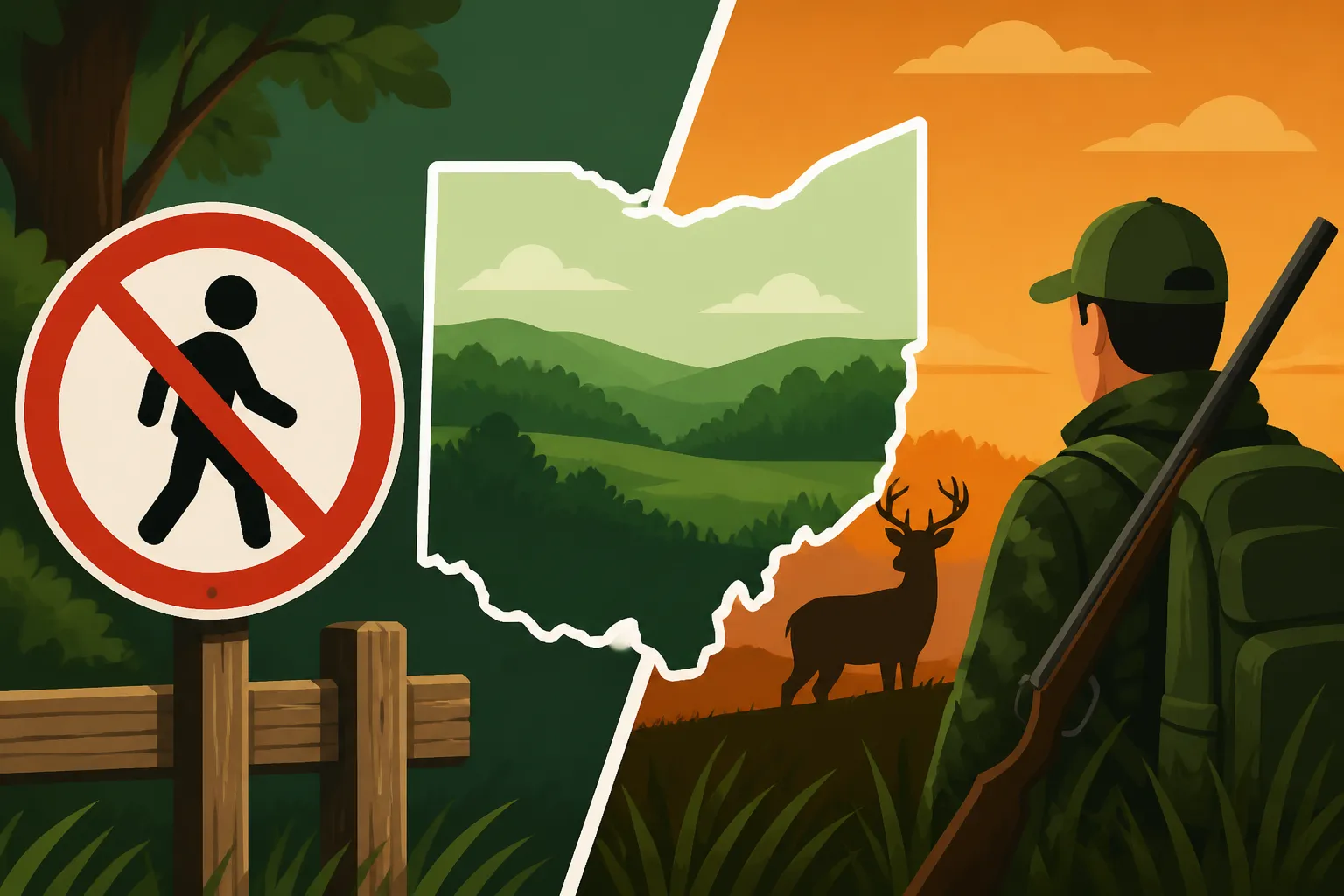
It’s a scenario many of us have faced: you're out in the Ohio woods, deep in the thick of it, when a deer you've been tracking ducks onto what looks suspiciously like private land. Or maybe you're scouting a new area and suddenly see a "No Trespassing" sign staring you down. Navigating property lines and understanding Ohio's trespass laws can feel like a minefield, causing anxiety and sometimes even leading hunters to give up on promising spots. This guide is here to untangle the complexities of Ohio's trespass law, explaining exactly what you need to know to hunt legally and ethically, ensuring your time outdoors is spent enjoying the hunt, not worrying about legal trouble.
Understanding Ohio's Trespass Law: The Foundation
When you step out into the woods or fields in Ohio, whether you're chasing whitetails or spring turkeys, understanding whose land you're on and what the rules are is absolutely paramount. It's not just about avoiding a ticket; it's about respecting landowners and ensuring hunting remains a privilege for everyone.
What Constitutes Trespassing While Hunting?
At its core, trespassing in Ohio means entering or remaining on someone else's property without their express permission. For hunters, this is especially critical because we often find ourselves in rural areas where property lines can be less obvious than a city fence. It doesn't matter if you "didn't see a sign" or "thought it was public land"; if you're on private property without permission, you're trespassing. This isn't just about physically stepping onto the land; it can also apply to retrieving game, even if you shot it legally on public or other private property. The law is clear: if it's not yours, and you don't have permission, stay off.
The "Posted" Versus "Unposted" Land Distinction
Ohio law can be a bit tricky when it comes to "posted" versus "unposted" land, and it's where many hunters get confused. Historically, some states operated under the assumption that if land wasn't explicitly posted with "No Trespassing" signs, implied permission existed. That is absolutely not the case in Ohio.
Ohio Revised Code 2911.21, the state's criminal trespass statute, generally states that you are trespassing if you knowingly enter or remain on land that belongs to another without permission. The landowner doesn't have to post signs for it to be considered private property. While signs certainly make it crystal clear, their absence doesn't grant you permission. Think of it this way: every piece of private land in Ohio is, by default, "No Trespassing" land unless you have explicit permission from the owner. This is a crucial detail that every hunter must grasp. You can dive deeper into Ohio Posted Land Rules to understand the nuances of how signage impacts enforcement, but the golden rule remains: always get permission first.
Importance of Knowing Property Boundaries
It sounds obvious, right? But in the heat of the moment, or when navigating dense woods, property lines can become incredibly blurry. Many hunters assume they can tell where one property ends and another begins by looking for fencerows, changes in timber, or old roads. While these can be indicators, they are rarely definitive legal boundaries.
Relying on guesswork is a recipe for disaster. This is where modern technology becomes an invaluable tool. Apps like onX Hunt and GoHunt provide detailed satellite imagery overlaid with property ownership maps, often showing exact property lines, landowner names, and parcel numbers. These tools can be a lifesaver, allowing you to visually confirm your location in real-time, even deep in the backcountry. Before you ever step foot in an unfamiliar area, especially near suspected private property, take the time to study these maps. Knowing exactly where you stand, and where you're allowed to stand, is fundamental to ethical and legal hunting. It can prevent accidental trespass, and allow you to focus on the hunt, not the legalities. For more on leveraging technology, check out Scouting With the Ohio HuntFish App, which offers similar mapping functionalities.
Securing Permission: Your Key to Ethical Hunting in Ohio
So, if all private land is off-limits without permission, how do you actually go about getting that permission? It's often easier than you think, but it requires a polite approach, clear communication, and a respect for the landowner's wishes.
Verbal Versus Written Permission: Which is Better?
This is a common question, and while Ohio law doesn't explicitly require written permission for hunting, it is always, always, always your best bet.
Here's a breakdown:
| Type of Permission | Pros | Cons |
|---|---|---|
| Verbal Permission | Easier and quicker to obtain. Can be sufficient if you have a long-standing, trusting relationship with the landowner. | Difficult to prove if challenged (e.g., by a new landowner, family member, or law enforcement). Can lead to misunderstandings about where, when, or what you can hunt. Expires easily if relationships sour or property changes hands. |
| Written Permission | Provides clear, undeniable proof of consent. Can specify exact dates, areas, species, and conditions (e.g., "deer only," "archery only," "no vehicle access"). Protects both the hunter and the landowner. | Takes more effort to obtain (requires a conversation, possibly a template, and signatures). Some landowners might be hesitant to put it in writing. |
While verbal permission from a trusted friend or neighbor might feel sufficient, for any new or less established arrangement, or when hunting on properties where you don't know the owner intimately, insist on getting something in writing. Even a simple note with the landowner's name, your name, the date, and a brief statement like "I, [Landowner Name], grant [Your Name] permission to hunt deer on my property located at [Address/Parcel Number] from [Start Date] to [End Date]" can suffice. For more information on this, see Do You Need Written Permission in Ohio?.
The Art of Asking: Tips for Approaching Landowners
Approaching a landowner can be intimidating, but a friendly, respectful demeanor goes a long way. Here are some tips that can increase your chances of success when seeking permission:
- Be Polite and Respectful: This is non-negotiable. Start with "Hello, my name is [Your Name], and I was hoping to speak with you about hunting on your land."
- Dress Appropriately: Don't show up in your full hunting camo with a rifle slung over your shoulder. Dress casually, cleanly, and respectfully.
- Timing is Key: Avoid knocking on doors during meal times (early morning, noon, late afternoon/evening). Weekends or late afternoons during the week often work best.
- Have a Plan: Know what you want to hunt, for how long, and what part of their property you're interested in. Having a map (like from onX Hunt) showing their property and adjacent land can be helpful for discussion.
- Offer Something in Return: This isn't always expected, but it can make a difference. Offer to help with chores, mend fences, clear brush, or even share some of your venison after a successful hunt. This builds goodwill and a relationship.
- Respect "No": If a landowner says no, thank them for their time and move on. Don't argue, beg, or try to convince them. A "no" might change to a "yes" years down the road if they remember your respectful attitude.
- Leave Contact Information: Offer to leave your phone number so they can reach you if they have any concerns or questions.
- Start Small: If they're hesitant, suggest a small trial period or offer to hunt only a specific area. Building trust takes time.
Building a relationship with a landowner is often more valuable than just getting a season's permission. For practical advice on building these connections, read Asking an Ohio Farmer for Permission.
Mapping Tools as Your Ally: onX Hunt and GoHunt
In today's hunting world, digital mapping tools are no longer a luxury; they're an essential part of responsible hunting, especially when dealing with private land. Products like onX Hunt and GoHunt have revolutionized how hunters understand and interact with property boundaries.
These apps allow you to:
- Visualize Property Lines: See exactly where public land ends and private land begins, often with color-coded overlays.
- Identify Landowners: Many apps display landowner names and sometimes even contact information, which is invaluable when seeking permission.
- Pinpoint Your Location: GPS tracking shows your exact position relative to property boundaries, helping you avoid accidental trespass.
- Plan Routes: Plot your approach and exit to ensure you stay on legal ground, whether it's public access or land where you have permission.
- Scout Remotely: Identify potential hunting spots, access points, and terrain features while confirming property ownership from the comfort of your home.
Using these tools proactively not only helps you avoid legal trouble but also demonstrates to landowners that you are a serious, well-prepared, and respectful hunter. It shows you've done your homework and aren't just blindly wandering onto their property. When you go to ask for permission, having these maps on your phone, ready to discuss specific areas, can impress a landowner and make them more comfortable granting access. Knowing your Ohio Hunting Licenses and What They Cost is also a good idea before approaching a landowner, as it shows you are serious about legality.
Common Hunting Scenarios and Trespass Pitfalls
Even with the best intentions, situations can arise where you might inadvertently risk trespassing or find yourself in a tricky spot. Understanding these common scenarios can help you prepare and react appropriately.
Retrieving Game That Crosses a Property Line
This is perhaps one of the most stressful and common dilemmas for hunters. You've made a great shot on a deer, but it runs off, and you watch it disappear onto adjacent private property where you don't have permission. What do you do?
The law is generally consistent: you do not have the right to trespass to retrieve game, even if you clearly hit the animal on legal ground. Your options are:
- Seek Permission Immediately: If possible, identify the landowner and ask for permission to track and retrieve your animal. Explain the situation calmly and politely. Offer to show them where you shot the animal and the blood trail.
- Contact Law Enforcement: If you cannot find the landowner, or they refuse permission, your next step should be to contact the local sheriff's office or an Ohio Division of Wildlife officer. They may be able to contact the landowner on your behalf or advise you on the best course of action. Do NOT attempt to retrieve the animal without permission or official guidance.
- Respect Their Decision: If the landowner (or law enforcement acting on their behalf) denies permission, you must respect that. While it's incredibly frustrating to lose an animal, trespassing to retrieve it will only compound the problem and could lead to serious legal consequences.
Being prepared with landowner contact information (again, where mapping apps can help) for adjacent properties before you even hunt in an area is a smart strategy. For a deeper dive into this specific challenge, refer to Retrieving Game From Private Land in Ohio.
Accidental Trespass: What Happens and How to Prevent It
Sometimes, despite your best efforts, you might accidentally cross a property line without realizing it. Perhaps a deer drive on public land pushes you further than anticipated, or a GPS signal glitches.
- What Happens: If you realize you've accidentally trespassed, the best course of action is to immediately and calmly exit the property the way you came in. If confronted by a landowner, explain what happened, apologize sincerely, and leave. Your willingness to admit the mistake and leave promptly will likely diffuse the situation. Ignoring them or arguing will only escalate things.
- How to Prevent It:
- Study Maps Diligently: Before and during your hunt, constantly refer to your digital mapping app (onX Hunt, GoHunt, etc.) or paper maps.
- Identify Natural Boundaries: Look for roads, creeks, significant changes in topography, or fencelines that correspond to map boundaries. However, remember these are not always legal markers.
- Use Waypoints: Mark known property corners or "no-go" zones on your GPS.
- Communicate on Drives: If hunting with a group, ensure everyone understands the boundaries and has a way to track their location, especially during a Deer Drives With Three or Four Hunters.
Even an "accidental" trespass can lead to charges if the landowner feels their property rights have been violated. It's always best to err on the side of caution.
Navigating Public Land Edges Adjoining Private Property
Hunting along the edges of public and private land can be incredibly productive, as game often uses these transitional zones. However, it also presents unique challenges for avoiding trespass.
- Stay on the Right Side of the Line: This means literally keeping your feet, and your shots, on public property. While a deer might be on private land, if you shoot it from public land, that's generally legal. The issue then reverts to game retrieval (see above).
- Understand Setbacks: Some local ordinances or specific wildlife area rules may have setback requirements for discharging firearms near property lines or occupied dwellings. Always check the specific regulations for the public land you're hunting.
- Respect Private Property Views: Even if you're legally on public land, avoid setting up a stand or blind in a way that gives you a direct view into someone's backyard or too close to their home. While not illegal, it can create a hostile environment with landowners and lead to complaints.
- Use Clear Boundaries: When setting up a stand near a boundary, use GPS to confirm your exact location. Consider putting out non-permanent markers (like flagging tape) on the public side to visually remind yourself where the line is. For guidance on setting up effectively, without crossing lines, read Treestand Setups in Appalachian Ohio Hardwoods or Hanging a Stand on an Appalachian Ridge.
The Serious Side: Consequences and Prevention
Trespassing is more than just a minor inconvenience; it carries significant legal weight and can damage the reputation of all hunters. Understanding the full scope of potential consequences should reinforce the importance of always having permission.
Legal Ramifications of Trespassing in Ohio
In Ohio, criminal trespass (ORC 2911.21) is generally a misdemeanor offense, but the severity can increase depending on the circumstances:
- Fourth-Degree Misdemeanor: This is the most common charge for simple trespass. It can carry penalties including fines and potential jail time (though jail time is rare for a first offense of simple trespass without aggravating factors).
- Third-Degree Misdemeanor: The offense can be elevated if you were previously warned or forbidden to be on the premises, or if you cause any property damage.
- Second-Degree Misdemeanor: If the property is a "person's habitation," an "agricultural area" (and you interfere with livestock or crops), or a school, the penalties increase further. Hunting on private farmland without permission, especially if you disturb crops or livestock, could easily fall into this category.
Beyond the criminal charges, a landowner could also pursue civil charges, suing you for damages caused by your trespass, even if minimal. This could involve legal fees, court costs, and restitution.
Losing Hunting Privileges and Fines
A conviction for trespassing while hunting often comes with an additional penalty that hits hunters particularly hard: the loss of hunting privileges.
- Hunting License Revocation: The Ohio Department of Natural Resources (ODNR) has the authority to revoke or suspend your hunting license for game violations, which can include trespassing. This isn't just a temporary setback; it can mean you are barred from hunting in Ohio for several years, depending on the severity and frequency of the offense.
- Fines and Restitution: On top of the general court fines for trespass, you might face additional fines specific to wildlife violations. If you harvested an animal while trespassing, you could face charges related to poaching or unlawful taking of game, with restitution required for the value of the animal. This is covered in more detail in Ohio Wildlife Violation Penalties.
Imagine investing in your gear, permits like the Ohio Resident Deer Permit Cost, and time, only to lose the ability to use them due to a preventable mistake. It’s a harsh but real consequence.
Cultivating a Reputation: Why Respect Matters Most
Beyond the legal and financial penalties, there's the broader impact on the hunting community. A single act of disrespectful or illegal behavior by one hunter can tarnish the reputation of all hunters in an area, making it harder for others to gain private land access.
- Landowner Relationships: When landowners encounter trespassers, they often become more wary of all hunters. This leads to more "No Hunting" signs, making it tougher for even the most ethical hunters to find ground.
- Public Perception: Non-hunters often form their opinions based on the actions of a few. Trespassing reinforces negative stereotypes about hunters, portraying them as disrespectful and law-breaking.
- Preserving Access: Our ability to hunt, especially on private land which constitutes the vast majority of Ohio, relies heavily on trust and good relationships with landowners. Every time a hunter asks for permission and acts responsibly, they strengthen that trust. Conversely, every trespass erodes it.
By always securing permission, diligently knowing your boundaries, and acting with the utmost respect for property and landowners, you're not just protecting yourself; you're preserving the future of hunting in Ohio for everyone. Being a good ambassador for hunting is just as important as being a good shot.
Disclaimer
This article is for general informational purposes only and does not constitute professional advice. Laws, prices and regulations vary by location and change over time. Consult a qualified professional for guidance on your specific situation.