Which Ohio Counties Still Hold Grouse
If you're an Ohio hunter, you know the ache of memory when it comes to ruffed grouse. There was a time, not so long ago, when chasing these feathered rockets through thickets and hollows was a common late-fall pursuit. But these days, finding a flush can feel like searching for a needle in a haystack. This guide is dedicated to shedding light on the harsh reality of Ohio's ruffed grouse populations, helping you understand which Ohio counties still hold grouse, and offering strategies for those dedicated enough to pursue this increasingly rare upland bird.
The Harsh Reality of Ohio's Ruffed Grouse Decline
Let's not sugarcoat it: ruffed grouse hunting in Ohio isn't what it used to be. For many of us, the sound of a drumming grouse or the explosive flush from a thicket brings back vivid memories of crisp autumn days and challenging shots. But those moments have become fewer and farther between. The numbers just aren't there anymore, and it's a tough pill to swallow for anyone who loves upland bird hunting.
A Vanishing Icon: Why Grouse Numbers Plummeted
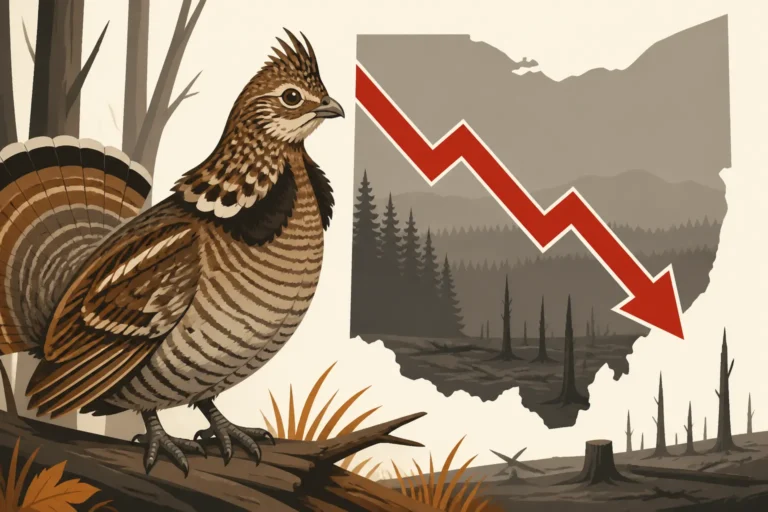
The truth is, Ohio's ruffed grouse population has been on a steady decline for decades. It's not just one factor, but a perfect storm of environmental changes that have pushed this magnificent bird to the brink in our state. The primary culprit? Habitat loss, pure and simple. Grouse are incredibly particular about their environment; they thrive in young, regenerating forests – those early successional habitats that provide dense cover for nesting, brooding, and protection from predators. Think of clear-cuts, young timber stands, and areas recovering from disturbance that create a tangled mess of saplings, shrubs, and briars.
The problem is, Ohio has seen a massive shift away from this type of habitat. As our forests have matured, and land use practices have changed, those vital young stands have dwindled. What was once common across much of the state, especially in our eastern and southern hills, is now fragmented and sparse. It’s disheartening to walk through what looks like perfect woods, only to find it's too open, too old, and simply lacking the specific structure grouse need to survive and reproduce. Beyond habitat, factors like disease, increased predator populations, and even climate shifts have played a role, but habitat truly sits at the core of the issue. For a deeper dive, check out Ruffed Grouse in Decline Across Ohio.
The Role of Forest Maturation and Habitat Fragmentation
To really understand why grouse are struggling, you have to think like a grouse. These birds need layers of protection, places where a hawk can't easily spot them from above, and where a fox has to work hard to get through the undergrowth. Mature, open canopy forests, while beautiful and home to other wildlife, just don't offer that. The canopy closes, sunlight can't reach the forest floor as readily, and the dense understory that grouse rely on begins to thin out.
When remaining pockets of suitable habitat become isolated, it leads to fragmentation. Imagine a puzzle where crucial pieces are missing, and the remaining sections are too far apart for populations to connect and thrive. This makes it harder for grouse to disperse, find mates, and recover from local disturbances or predation events. What we're left with are small, isolated populations that are vulnerable to every challenge nature throws at them. It’s a stark contrast to the vast, continuous tracts of young forest that once supported robust grouse numbers, and it's the main reason Why Ohio Grouse Numbers Fell So Far.
Where to Find Remaining Ruffed Grouse Strongholds in Ohio
Given the grim outlook, you might be wondering if it's even worth looking for grouse in Ohio anymore. The answer, for the truly dedicated, is yes – but you have to know where to look, and adjust your expectations. While scattered flushes can occur almost anywhere with a tiny pocket of suitable habitat, consistent opportunities are now concentrated in very specific regions.
The Appalachian Foothills: A Beacon of Hope
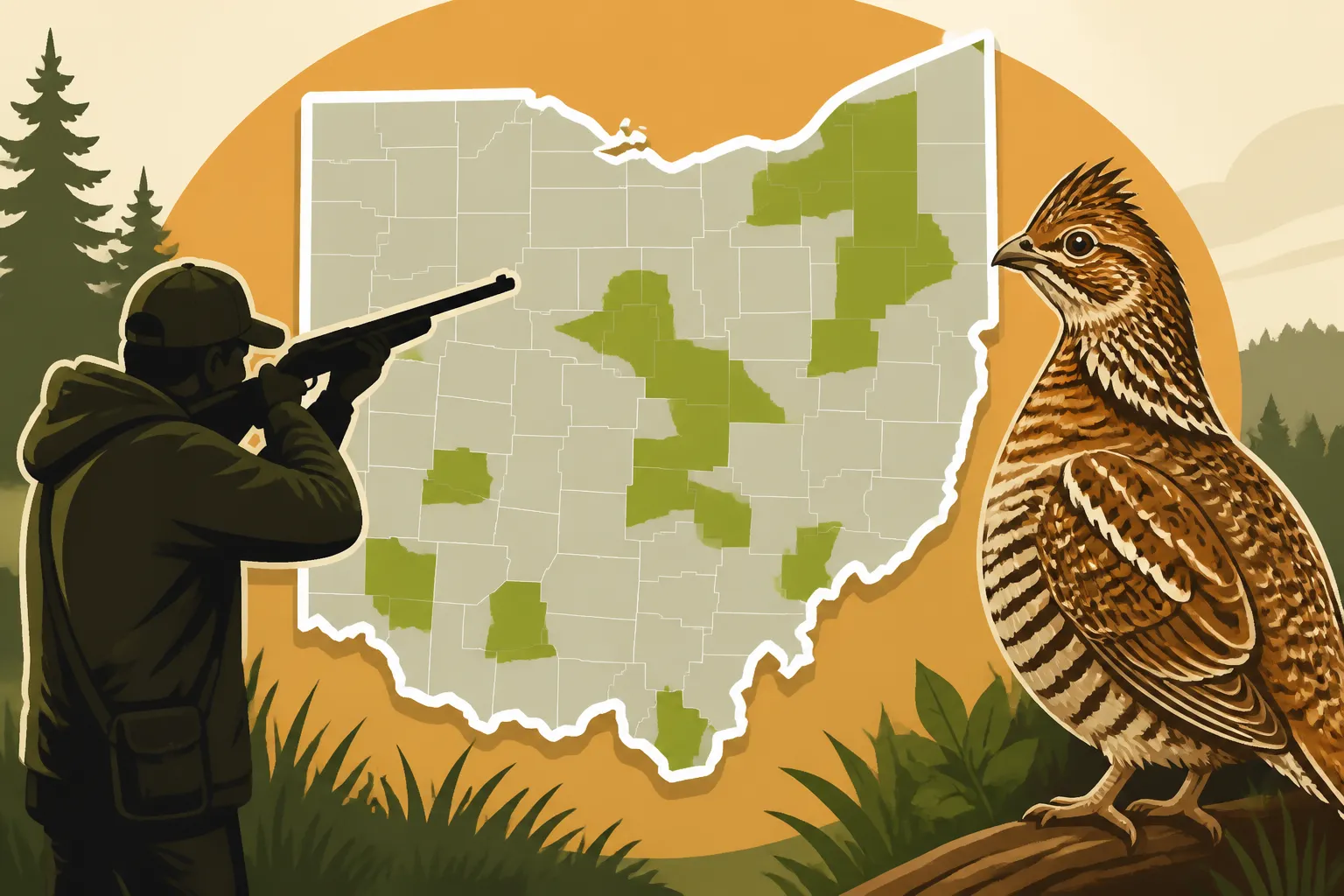
If there's one region in Ohio that still offers a glimmer of hope for ruffed grouse hunters, it's the unglaciated, rugged terrain of the Appalachian foothills in Southeast Ohio. These are the counties that historically held the strongest populations, and despite the widespread decline, they still retain the most potential. We're talking about places like Athens, Hocking, Vinton, Jackson, Ross, Scioto, Meigs, Monroe, and Belmont counties.
What makes these areas different? It's their unique topography and the presence of larger tracts of public land and private timberland where some active forest management, including timber harvests and prescribed burns, still occurs. These practices, when implemented correctly, can create the crucial early successional habitat that grouse so desperately need. Look for areas with a mix of ridge tops and hollows, particularly those that have seen recent logging activity (within the last 5-15 years). Dense hemlock thickets, though less common, can also be sanctuaries, especially in winter. You'll often find these types of environments within our state forests and parts of Wayne National Forest. It's tough hunting, often involving steep climbs and thick cover, but it's where your best chances lie. When hunting these areas, be prepared for some serious physical exertion, as the birds often hold tight in the steepest, nastiest cover. This is where Hunting Southeast Ohio Appalachian Foothills comes into play.
Specific County Breakdown for Ruffed Grouse
While scattered birds can be found, here's a general idea of where your efforts might be best spent. Remember, "still hold grouse" is relative – it doesn't mean you'll find them around every corner, but these are the areas with the highest likelihood.
| County | Primary Habitat Type | Public Land Potential | Outlook for Grouse |
|---|---|---|---|
| Athens | Mixed hardwood forest, clear-cuts, creek bottoms | Wayne National Forest (Athens Unit), Waterloo WA | Decent, focused on specific habitat management areas |
| Hocking | Steep ravines, old clear-cuts, mature forest edge | Hocking State Forest, Tar Hollow State Forest | Improving in areas with recent cuts |
| Vinton | Rugged hills, timber harvests, dense undergrowth | Vinton Furnace State Forest, Zaleski State Forest | Among the best, still some good pockets |
| Jackson | Rolling hills, private timber, limited public land | Jackson WA, Cozaddale Swamp WA | Spotty, reliant on private land management |
| Scioto | Appalachian foothills, mixed forest, older clear-cuts | Shawnee State Forest, Brush Creek WA | Some potential in large timber blocks |
| Meigs | Rolling hills, river bottoms, fragmented forest | Forked Run State Park, Shade River State Forest | Sparse, but local pockets exist |
| Monroe | Heavily forested, steep terrain, some younger growth | Wayne National Forest (Monroe Unit) | Remote, undisturbed pockets, but challenging access |
| Belmont | Rolling hills, private timber, old strip mines | Egypt Valley WA | Very limited, best in large, contiguous tracts |
Counties like Vinton, Athens, and Scioto, largely due to the presence of large state forests and national forest lands like Zaleski State Forest Hunting or Shawnee State Forest Hunting, tend to offer the most contiguous blocks of potential habitat. Within these regions, focus your efforts on areas where there's been recent logging activity. These could be small private timber sales or larger blocks managed by the ODNR or the U.S. Forest Service. It's often tough going – briars, downed timber, and steep slopes are the norm – but that's precisely where these birds find refuge. Don't overlook the potential in areas bordering older clear-cuts that are now transitioning into young forest.
Strategies for Hunting Ohio's Elusive Grouse
Hunting grouse in Ohio today requires a different mindset than hunting other, more abundant game. It's less about filling a vest and more about the experience, the challenge, and the thrill of a hard-earned flush. It truly tests your patience and persistence.
Scouting for Grouse Sign and Habitat
Before you even think about loading your shotgun, you need to scout. Serious scouting. Grouse are creatures of habit and specific habitat. They need dense cover, but also access to food sources like buds, catkins, berries, and insects. Look for areas with a mix of these elements. Spend time on foot, walking old logging roads, power lines, and gas line clearings in target counties.
What specifically are you looking for?
- Young forest growth: Areas with a dense tangle of saplings, briars, and low-growing shrubs, especially those 5-15 years post-timber harvest. This is critical for escape cover.
- Food sources: Grouse will feed on aspen and birch buds, greenbriar berries, wild grapes, dogwood berries, and even certain fern fronds. Look for these plants within or adjacent to dense cover.
- Drumming logs: While harder to spot outside of spring, an old, mossy log in an open section of young woods can indicate a male's territory.
- Droppings: Small, cylindrical pellets, often found near feeding areas or roost sites.
- Cuttings: In winter, look for tiny nips on the buds of aspen or birch, indicating a grouse has been feeding there.
Tools can be incredibly helpful here. Aerial maps, especially those found on apps like GoHunt, allow you to identify potential clear-cuts, dense thermal cover (like hemlock stands), and transition zones from the comfort of your home. You can often see the distinct patterns of different forest ages. Pay close attention to south-facing slopes in winter, as they can warm up and hold birds. Scouting With the Ohio HuntFish App and Reading Aerial Photos for Southeast Ohio Deer can give you a leg up in identifying promising spots.
Tactics for Flushing Birds
Once you've identified a promising area, the real work begins. Hunting Ohio grouse is a true grind, often requiring miles of walking for a few flushes.
- Still-Hunting: This is often the most effective method in dense, unforgiving cover. Move slowly, pausing frequently (every 15-30 seconds) to listen and scan. Grouse will often flush when you break their "line of sight" or after they think you've passed. These birds are masters of camouflage, so a deliberate, methodical pace is key.
- Walking Logging Roads and Trails: While grouse rarely sit directly on a road, they often utilize the thick edge cover. Walk these paths slowly, paying close attention to where the dense stuff meets more open timber. Always be ready for a flush, especially around bends or where cover thickens.
- Working Hollows and Ridge Points: Grouse often gravitate towards the steeper, more inaccessible parts of a hollow or the thick cover on a ridge point. These areas provide both escape cover and varied food sources. Don't be afraid to get into the nastiest stuff; that's where the birds will be. This is where you'll be Flushing Grouse in Southeast Ohio Hollows.
- Using a Dog: A good bird dog, particularly a pointing dog or a flushing spaniel, can dramatically increase your success. Their nose and ability to penetrate thick cover save you countless steps. Beagles are generally for rabbits, but a tenacious one might occasionally put up a grouse. Just ensure your dog is accustomed to the dense briars and steep terrain.
- Patience is a Virtue: Seriously, you'll need it. You might walk for hours without seeing a feather. Don't get discouraged. The next step, the next thicket, could hold that explosive flush you're waiting for. It's a game of persistence, not speed. And remember, the Ohio grouse season can run into late fall, offering varied conditions, so understanding Ohio Grouse Season Status is vital.
Supporting Grouse Recovery and the Future of Hunting
For many of us, the decline of the ruffed grouse is more than just about losing a game bird; it's about seeing a part of Ohio's natural heritage fade. But there are things we can do, both as hunters and conservationists, to help ensure this iconic species has a future.
Habitat Management Efforts and What Hunters Can Do
The most important thing for grouse is habitat, habitat, habitat. The Ohio Department of Natural Resources (ODNR) understands this and is working on forest management plans that benefit early successional species. This includes targeted timber harvests, often on state forests and wildlife areas, to create young forest patches. Prescribed burns are also used to open up the understory and stimulate new growth.
As hunters, we can play a vital role:
- Support Conservation Organizations: Groups dedicated to habitat restoration and wildlife conservation, like the Ruffed Grouse Society, are crucial. Their advocacy and direct habitat projects are making a tangible difference.
- Advocate for Active Forest Management: Educate others about the importance of young forest habitat, even if it doesn't look like a "pristine" mature forest. Healthy forests are dynamic, requiring disturbance to thrive, and grouse are a prime example of a species that benefits from these processes.
- Report Sightings: If you do encounter grouse, especially broods, reporting these sightings to the ODNR can help them track populations and focus management efforts. Every piece of data helps build a clearer picture of their status.
- Respect Private Land: Many potential grouse strongholds are on private timberland. Building relationships with landowners and demonstrating respectful behavior can open doors to more hunting opportunities and cooperative conservation efforts.
Leveraging Technology for Better Scouting
In today's world, technology can be a powerful ally for the dedicated grouse hunter. While nothing replaces boots on the ground, apps and online resources can help you pinpoint high-potential areas, saving you time and effort.
- Online Mapping Platforms: Websites and apps like GoHunt (and others that offer similar mapping capabilities) are invaluable. They provide detailed aerial imagery, topographic maps, and often even public/private land ownership overlays. You can use these to:
- Identify Clear-Cuts: Look for areas that appear lighter green or have distinct, sharp edges in the aerial photos, indicating recent timber removal.
- Pinpoint Dense Cover: Use satellite imagery to find areas with a very dark, dense canopy, which could indicate hemlock thickets or mature evergreens that provide crucial winter cover.
- Locate Access Points: Mark old logging roads, power lines, and gas line clearings that can provide walking access deep into potential grouse country.
- Understand Topography: Use contour lines to identify steep hollows, ridge lines, and saddles that funnel game or offer prime cover.
- ODNR Resources: The ODNR's website often has mapping tools that show state forest boundaries and wildlife area details. Sometimes they even highlight active timber sales or habitat projects, giving you a direct lead on where new young forest is being created.
By using these tools, you can strategically plan your scouting trips, focus on the most promising habitat, and maximize your chances of encountering one of Ohio's most cherished, yet challenging, upland game birds. The hunt for an Ohio grouse is a tribute to persistence and a testament to the wild spirit of our state.
Disclaimer
This article is for general informational purposes only and does not constitute professional advice. Laws, prices and regulations vary by location and change over time. Consult a qualified professional for guidance on your specific situation.