Poult-to-Hen Ratios and What They Mean
It's always a bit of a guessing game each year, isn't it? You listen to the reports, scan online forums, and talk to your buddies, all trying to get a feel for how the upcoming turkey season might shake out. Will there be gobblers booming from every ridge, or will you be scratching your head, wondering where all the birds went? A key piece of the puzzle that often comes up in these conversations, and one that can tell us a lot about the health of our wild turkey populations, is the poult-to-hen ratio. This guide is going to break down exactly what that ratio means, why it matters, and how you, as an Ohio hunter, can use this knowledge to better understand our state's wild turkeys and even tweak your hunting strategy.
Understanding Poult-to-Hen Ratios: What Are They Really?
When we talk about wild turkey populations, especially how they're doing from one year to the next, we often look at a metric called the "poult-to-hen ratio." It might sound like something out of a textbook, but in reality, it's a wonderfully straightforward way to gauge reproductive success and, consequently, predict future turkey abundance. For us hunters, it’s like looking into a crystal ball, albeit a somewhat cloudy one, to see what the next spring season might hold.
The Basics of the Ratio
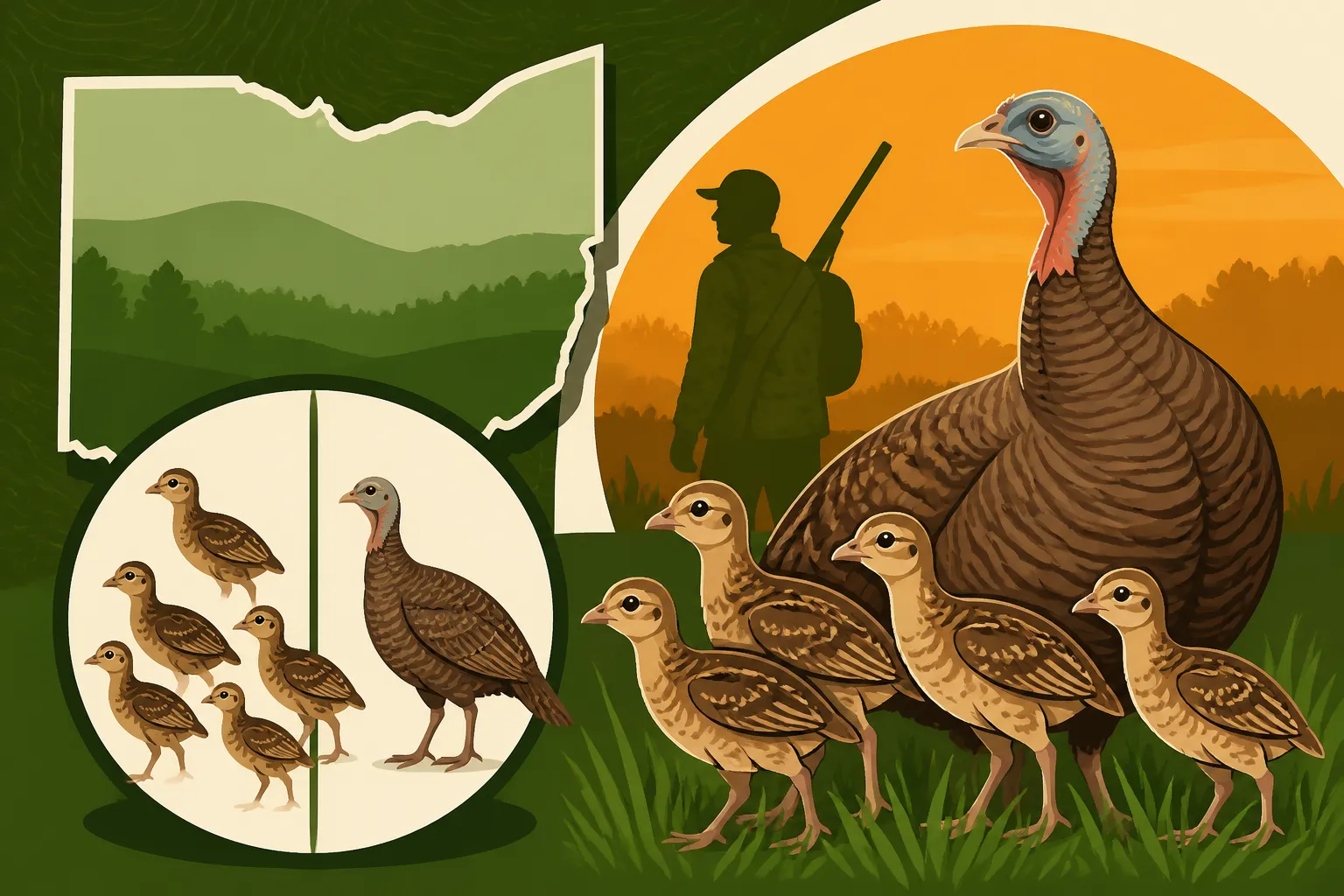
At its heart, the poult-to-hen ratio is simply a count of how many young turkeys – known as "poults" – are observed for every adult female turkey, or "hen," in the population. Imagine you're out walking a logging road in, say, Vinton Furnace State Forest in late summer. You spot a hen with five little turkeys scurrying behind her. You've just observed a poult-to-hen event! Wildlife biologists and even citizen scientists (more on that later) tally these observations over the summer months. They note how many hens they see, and critically, how many poults are accompanying those hens. If a hen is seen alone, she's counted as a hen with zero poults. If she has eight poults, that's eight poults to one hen. All these individual observations are then averaged out to give an overall ratio for a specific area, or even the entire state.
The beauty of this ratio lies in its simplicity. It offers a snapshot of the previous spring and summer's nesting success and poult survival. A high ratio suggests that many hens successfully nested, hatched their clutches, and that a good number of those young poults survived the critical first few weeks and months. This is invaluable information for understanding the pulse of the turkey population.
Why do hunters care so much about this seemingly academic number? Well, those little poults you see this year are the jakes (yearling gobblers) that will be strutting next spring, and the mature gobblers that will be thundering across the ridges in two or three years. A robust class of poults today means more birds available for future hunting opportunities. Conversely, a consistently low ratio can signal trouble, hinting at declining populations and potentially tougher hunting conditions down the line. It's all about foresight and management, ensuring we have healthy, huntable turkey numbers for generations to come.
Why This Ratio Matters to Ohio Hunters
For anyone who loves the thrill of an Ohio spring turkey hunt, this ratio is more than just a number; it's a forecast. It directly correlates to the number of birds we can expect to hear gobbling in the woods and chasing through fields. A strong poult hatch translates into a stronger year-class of turkeys, meaning more jakes in the following spring season and more mature gobblers in subsequent years. This directly impacts how easy or difficult it might be to fill your tag.
Think about it this way: if Ohio experiences a fantastic hatch with a high poult-to-hen ratio, it means that come next spring, there will likely be an abundance of eager, albeit often less experienced, jakes sounding off. These birds can be highly responsive to calls, making for exciting hunts. A few years down the road, those jakes mature into two- and three-year-old gobblers, forming the backbone of our huntable population. A healthy ratio ensures a steady supply of these birds, which is crucial for maintaining the long-term sustainability of turkey hunting in our state.
Moreover, the poult-to-hen ratio can even inform decisions made by wildlife agencies regarding season lengths and bag limits. While not the sole factor, consistent trends in these ratios over several years can influence whether authorities consider adjusting regulations like the Ohio Spring Turkey Bag Limit or expanding Ohio Fall Turkey County List options. So, when you see those little fuzzy chicks trailing a hen in July, you're looking at the future of Ohio's wild turkey hunting, and understanding their success helps us all appreciate the dynamic nature of these incredible game birds.
Deciphering Good, Bad, and Average Ratios in Ohio
So, you've heard about the poult-to-hen ratio, but what actually constitutes a "good" or "bad" number here in Ohio? It's not always cut and dry, as local conditions can vary, but there are definitely general benchmarks that wildlife biologists and seasoned hunters look for to understand the health of our turkey flocks. Knowing these benchmarks can help you interpret the reports you see and make more informed decisions about your own hunting season.
What Constitutes a "Good" or "Bad" Ratio
Generally speaking, a poult-to-hen ratio of around 2.0 to 3.0 or higher is considered excellent. This means that for every hen observed, two to three poults survived to the late summer observation period. A ratio in this range indicates a very successful breeding season with good poult survival, suggesting robust recruitment into the population. If we consistently see these numbers across the state, it's a strong indicator that the turkey population is growing or at least maintaining very healthy numbers, leading to promising future hunting seasons. You might even hear more gobblers in the spring, potentially making it easier to try tactics like Roost Hunting Ohio Gobblers.
On the flip side, a ratio consistently below 1.5, or even hovering around 1.0, can be a cause for concern. A ratio of 1.0 means, on average, only one poult survived per hen observed. Since not all hens nest, and those that do lay multiple eggs, this suggests high poult mortality or poor nesting success. If these low numbers persist for several years, it can lead to a noticeable decline in the overall turkey population, making hunting much tougher. Imagine walking the ridges of Shawnee State Forest year after year, hearing fewer and fewer gobblers – that's the kind of scenario a consistently low poult-to-hen ratio might predict.
It's crucial to remember that a single year's ratio might be an anomaly due to extreme weather, but long-term trends are what really matter. If you see numbers bouncing around 1.5-2.0, that's often considered "average" or "fair." It means the population is likely stable, but perhaps not booming. These insights, especially when combined with other data like Ohio Turkey Harvest Numbers, paint a comprehensive picture of the state of our wild turkey resource.
Factors Influencing Ohio's Poult-to-Hen Ratios
Several environmental and ecological factors play a huge role in shaping Ohio's poult-to-hen ratios. Understanding these can help us appreciate the challenges our wild turkeys face year after year, and why some seasons are better than others. It's a complex dance between weather, habitat, and predation that determines how many of those little poults make it to adulthood.
One of the most critical factors is weather during the nesting and brooding period. Cold, wet springs can be absolutely devastating for young poults. They are highly susceptible to hypothermia, and prolonged periods of rain can lead to them getting chilled and succumbing to the elements. Wet conditions also favor the spread of certain diseases and can make it harder for hens to keep their broods warm and dry. On the other hand, a warm, dry spring often leads to significantly higher poult survival rates, setting the stage for a great year.
Predation is another huge piece of the puzzle. While adult turkeys are formidable, poults are incredibly vulnerable. Raccoons, opossums, skunks, foxes, and coyotes are all keen predators of turkey eggs and young poults. A dense population of these predators can put a significant dent in poult survival. This is why discussions around Nest Predation and Ohio Turkey Hatches are so vital in turkey management. While we recognize predators are a natural part of the ecosystem, an imbalance can impact turkey numbers, especially during the vulnerable nesting period.
Finally, habitat quality plays an undeniable role. Hens need secure nesting sites with good overhead cover to hide their nests from predators. Once hatched, poults require dense, insect-rich cover, often found in early successional habitats, old fields, and open woodlands with a good understory. This dense cover provides both protection from predators and a bounty of insects, which are crucial for rapidly growing poults. Areas with fragmented habitat, aggressive mowing of field edges, or a lack of diverse forest stages can lead to lower poult survival. Ensuring a mosaic of habitat types is key for maintaining healthy turkey populations in Ohio.
How Ohio Wildlife Agencies Track These Numbers
You might be wondering how exactly wildlife agencies like the Ohio Department of Natural Resources (ODNR) gather this information. Do they have secret turkey cameras everywhere? Not quite, but they do employ a combination of scientific surveys and, importantly, rely on the keen eyes of Ohioans themselves. This partnership between biologists and the public is vital for getting an accurate picture of the state's turkey populations and guiding conservation efforts.
Citizen Science: The Summer Brood Survey
One of the most effective and widely used methods for tracking poult-to-hen ratios in Ohio is through a program that relies on citizen science: the summer wild turkey brood survey. Each year, from June 1st through August 31st, the ODNR encourages hunters, landowners, and outdoor enthusiasts to report any sightings of wild turkeys. This isn't just a casual observation; they're specifically looking for counts of adult hens and the number of poults accompanying them.
Imagine you're driving down a country road near Mohican State Forest, and you see a hen cross with six poults. You make a mental note, then later that day, you hop online or use a designated app to submit your observation. You specify the date, location, the number of hens, and crucially, the number of poults. If you see a lone hen, you report a hen with zero poults. This widespread participation is incredibly valuable because it covers a vast geographic area that biologists couldn't possibly cover on their own. The more eyes on the ground, the more robust and accurate the data becomes, giving a clearer picture of how nesting and poult survival fared across the state.
The success of these citizen science programs hinges on public involvement. Every observation, no matter how small it seems, contributes to a massive dataset that helps the ODNR track trends, identify areas of concern or success, and ultimately, make sound management decisions. It’s a fantastic way for anyone who cares about Ohio’s wild turkeys to directly contribute to their conservation and future.
From Data to Decisions: Impact on Turkey Management
Once all those summer brood survey reports are tallied and analyzed, the poult-to-hen ratio data becomes a critical tool in the ODNR's wildlife management arsenal. It's not just an interesting statistic; it directly informs how they manage Ohio's wild turkey populations to ensure their health and sustainability. This data, combined with harvest numbers from previous seasons (like those found in Ohio Turkey Harvest Numbers) and other biological surveys, provides a holistic view.
For instance, if the poult-to-hen ratios show a consistent decline over several years across a broad region, it might trigger a closer look at the factors influencing reproduction in that area. This could lead to increased monitoring, targeted habitat improvement projects, or even discussions about potential adjustments to hunting regulations. Conversely, consistently high ratios might signal a booming population, allowing for more liberal hunting opportunities, or simply confirming that current management strategies are working well. These numbers are really the groundwork for decisions on everything from Ohio Spring Turkey Zones and Dates to the allowances for Ohio's Shotgun-Only Fall Turkey Season.
It’s important to understand that wildlife management is a dynamic process. The poult-to-hen ratio is just one piece of the puzzle, but a very significant one. It helps biologists anticipate future population trends, gauge the effectiveness of current management practices, and ensure that turkey hunting in Ohio remains a vibrant and sustainable tradition. This kind of data-driven approach is how we ensure healthy populations and exciting hunting seasons year after year.
What a Hunter Can Learn from Poult-to-Hen Ratios
As Ohio hunters, we're always looking for an edge, a bit of insight that can help us be more successful in the field. Understanding poult-to-hen ratios, while not a silver bullet, certainly offers a valuable lens through which to view the upcoming seasons. It can help manage expectations and even guide your approach to scouting and calling.
Predicting Future Hunting Success
The most direct takeaway for hunters from a robust poult-to-hen ratio is the promise of future hunting success. When the numbers are high, it means more poults survived the spring and summer. These young birds will mature into jakes the following spring. Jakes, while sometimes frustratingly quiet, are often very vocal and less wary than older gobblers, making them prime targets for hunters, especially those new to turkey hunting. A year with a high number of jakes can provide fantastic hunting opportunities and a great learning experience.
Beyond the immediate next season, those jakes will eventually become two-year-old and older gobblers, which are the prize for many experienced hunters. So, a strong poult-to-hen ratio today ripples through the population for several years, creating a strong recruitment of new birds into the adult gobbler ranks. This helps to sustain the overall turkey population and keeps hunting exciting. Conversely, a few years of poor poult production can mean a noticeable drop in overall turkey numbers and fewer gobblers sounding off, particularly the older, more dominant birds. This kind of information might lead you to temper your expectations for your Spring Turkey Hunting in Ohio trips.
| Poult-to-Hen Ratio | General Interpretation | Likely Hunting Impact (Next 1-3 Years) |
|---|---|---|
| 3.0 or Higher | Excellent Hatch/Survival | Many jakes next year, strong recruitment of 2-3 year old gobblers in subsequent years. Good to excellent hunting. |
| 2.0 – 2.9 | Good Hatch/Survival | Healthy numbers of jakes and mature gobblers. Good hunting potential. |
| 1.5 – 1.9 | Average/Stable Population | Stable numbers, but possibly not booming. Consistent hunting, but might require more effort. |
| Below 1.5 | Poor Hatch/Survival | Fewer jakes next year, potential decline in mature gobblers. Tougher hunting conditions. |
Adjusting Your Hunting Strategy
Armed with the knowledge of current poult-to-hen ratios, you can subtly adjust your hunting strategy. If you know that the past year saw a fantastic hatch, you might expect to encounter more jakes and a generally higher density of turkeys. This could mean more birds responsive to calling, and perhaps less pressure on individual birds because there are simply more of them around. This might encourage you to be more aggressive with your calling, knowing that you have a higher chance of striking a hot bird. You might find yourself having better luck trying tactics like Rattling and Grunting in Ohio in the off-chance you encounter a gobbler looking for a fight.
However, if the ratios have been low for a year or two, indicating a sparse population of young birds, you might want to adjust your expectations and strategy accordingly. Fewer jakes mean fewer vocal birds, and the older gobblers that are present might be more pressured and harder to call in. In such a scenario, patience becomes even more paramount. You might focus more on scouting for fresh sign, utilizing quieter, more subtle calling techniques, or even focusing on areas with less hunting pressure. Perhaps instead of aggressive calling, you might concentrate on finding where the birds want to be, like prime feeding or strutting areas, and setting up an ambush, especially when considering Turkey Tactics for Farmland Field Edges. It’s about being realistic and adapting to the hand nature has dealt, making you a more effective and adaptable hunter in the long run.
Beyond the Numbers: Other Factors for Ohio Turkeys
While poult-to-hen ratios offer a valuable snapshot of turkey reproductive success, they are just one piece of a much larger and more intricate puzzle when it comes to understanding Ohio's wild turkey populations. It's easy to get caught up in the numbers, but a holistic view requires us to consider other crucial factors that influence turkey health and abundance, like habitat quality and the complex dynamics of predation.
Habitat Quality and Its Role
Even with perfect weather, a healthy poult-to-hen ratio simply isn't possible without robust habitat. Wild turkeys are incredibly dependent on diverse landscapes that provide everything they need throughout the year: nesting cover, brooding cover, foraging areas, and secure roosting sites. In Ohio, this means a mix of mature hardwoods, young timber, open fields, and thick brush.
For nesting, hens seek out dense, woody cover – often areas of timber harvest regrowth, thick fencerows, or dense briar patches – where they can lay their eggs and incubate them safely hidden from predators. After hatching, those tiny poults need immediate access to insect-rich areas, typically found in early successional habitats like old fields, timber clear-cuts, or field edges that aren't mowed too frequently. These areas provide both abundant protein for rapid growth and crucial concealment from aerial and ground predators. Furthermore, turkeys need large, mature trees for roosting, often along creek bottoms or on high ridges, as discussed in Ohio Turkey Roost Tree Preferences. A lack of any of these critical habitat components, or fragmentation of these areas, can severely limit the number of poults that survive, regardless of how many eggs are laid. Conserving and managing these varied habitats is paramount to ensuring thriving turkey populations across the state.
Predator Management and Its Complexities
The impact of predators on turkey populations, particularly on poult-to-hen ratios, is a topic that often generates passionate discussion among hunters and wildlife managers alike. While predators are a natural and necessary part of any ecosystem, their populations and activities can certainly influence turkey survival rates, especially during the vulnerable nesting and brooding periods. It's a complex dynamic with no easy answers.
Ohio's landscape supports a healthy population of various predators, including coyotes, raccoons, opossums, and foxes. These animals naturally prey on turkey eggs and poults, and in areas where predator populations are exceptionally high, or where turkey habitat is poor, the predation pressure can become a limiting factor for turkey recruitment. This is why you often hear hunters discussing the impact of Coyote and Predator Hunting in Ohio on other game species. However, it's also important to remember that turkeys have evolved alongside predators for millennia, and healthy turkey populations can typically withstand a certain level of predation.
The challenge for wildlife managers is to find the right balance. While reducing predator numbers in specific areas might offer temporary relief to turkey populations, broad-scale predator control is often impractical, costly, and can have unintended consequences for the ecosystem. Instead, a more sustainable approach usually involves improving habitat. Good habitat provides turkeys with the cover and resources they need to evade predators and successfully raise their young. Ultimately, while predators will always play a role, robust habitat and healthy turkey populations are the best defense, demonstrating the interconnectedness of all living things in our Ohio wilds.
Disclaimer
This article is for general informational purposes only and does not constitute professional advice. Laws, prices and regulations vary by location and change over time. Consult a qualified professional for guidance on your specific situation.