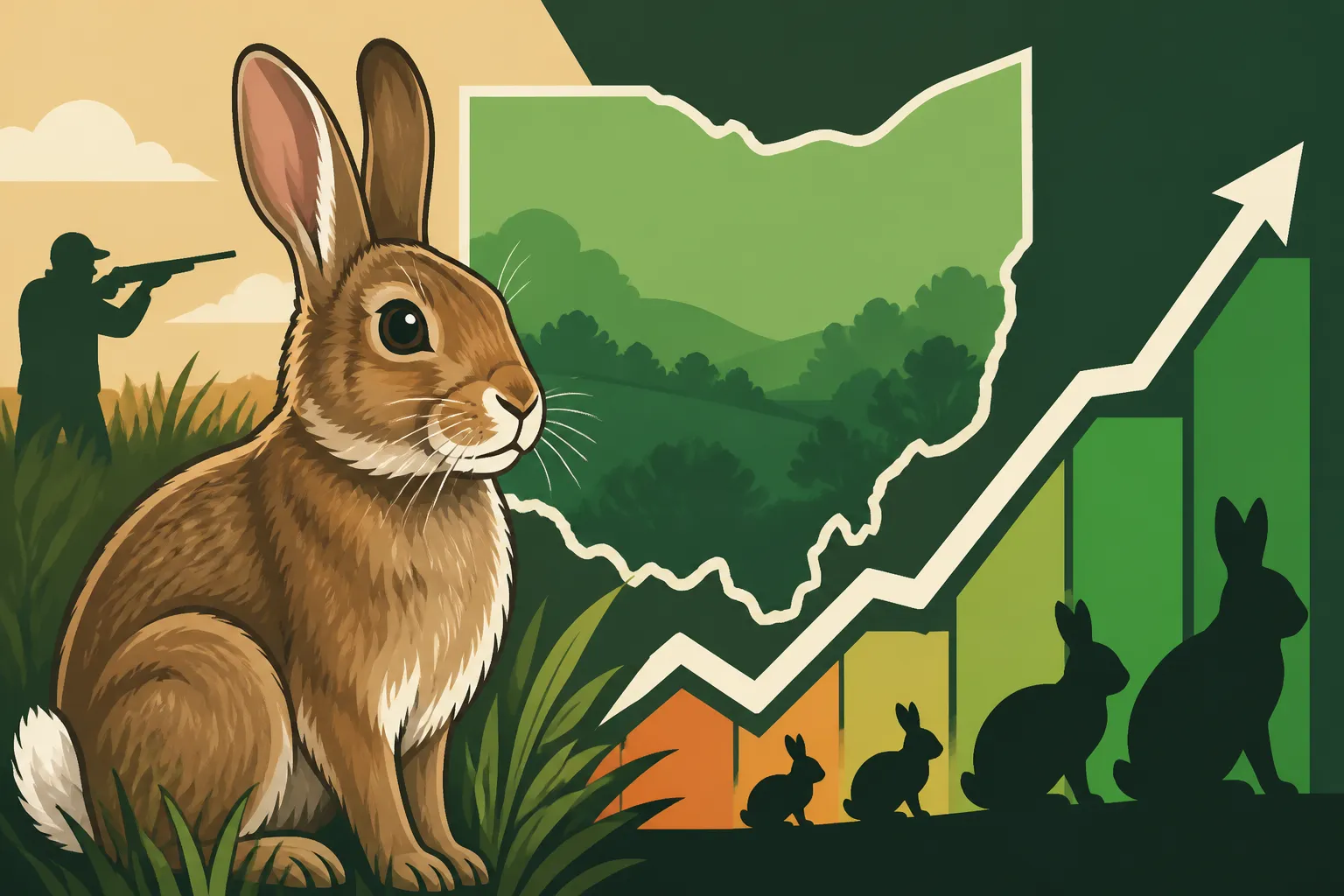
Ohio Cottontail Population Trend
There's nothing quite like the thrill of chasing cottontails through a frosty Ohio field, but if you've been out hunting rabbits in recent years, you might have noticed fewer bunnies scampering around than in decades past. Many hunters feel a real sense of loss, remembering a time when rabbit hunting was a staple, almost a rite of passage, for young hunters and seasoned veterans alike. This guide dives deep into the current state of Ohio's cottontail population, exploring the trends, challenges, and what we, as hunters and conservationists, can do to support these iconic small game animals.
The Rise and Retreat of Ohio's Cottontail Populations
For generations, the cottontail rabbit was king of Ohio's small game. Hunters recall brimming with excitement as beagles opened on a hot trail, or the sudden flush from a brush pile. But times have changed, and the landscape that once supported an abundance of rabbits has evolved, leading to noticeable shifts in their numbers.
The Heyday of Rabbit Hunting in Ohio
Back in the mid-20th century, Ohio's rural landscape was a patchwork quilt of small farms, hedgerows, and neglected fields that provided ideal habitat for cottontail rabbits. Farmers kept smaller, less efficient fields, and many abandoned farms slowly grew into thickets of multiflora rose, hawthorns, and briars – a cottontail paradise. Think about the stories your grandpa tells, or maybe even your own early hunting memories, of seemingly endless rabbits. There were so many places for them to hide, breed, and thrive, offering cover from predators and plenty of forage. The habitat was naturally fragmented in a way that truly benefited these edge-dwelling creatures, and the population exploded. It was common to bag a limit of rabbits in a morning, and the opening day of Ohio Small Game and Upland Bird Seasons was a celebrated event in many communities.
Gradual Decline and Shifting Landscapes
Starting in the latter half of the 20th century and continuing into the 21st, Ohio's agricultural landscape underwent a massive transformation. Small farms consolidated into larger operations, fencerows were removed to accommodate bigger equipment, and many marginal lands were converted into row crops. The dense, brushy cover that cottontails depend on for survival began to disappear. It wasn't a sudden crash, but a slow, steady erosion of prime habitat. Hunters started to notice that they had to work harder for fewer rabbits, and the distinctive "thump-thump-thump" of a flushing bunny became a rarer sound. This trend directly speaks to Why Ohio Rabbit Numbers Declined, a topic that weighs heavily on the minds of many who cherish this traditional sport.
Key Factors Influencing Ohio's Rabbit Numbers
Understanding the decline isn't about blaming any single factor; it's a complex interplay of environmental changes, agricultural practices, and natural pressures. Each plays a role in the current Ohio Cottontail Population Trend.
Habitat Loss and Fragmentation
This is arguably the most significant factor affecting cottontail populations in Ohio. Rabbits are true "edge species," meaning they thrive where different types of cover meet – think where a field meets a woodlot, or a thicket borders open ground. They need dense, protective cover for nesting, escaping predators, and sheltering from harsh weather, but also access to open areas for foraging on grasses and forbs. As farms grew larger and became more "efficient," fencerows were cleared, brush piles burned, and overgrown field edges tidied up. What remained were often vast, monoculture fields that offered little to no escape cover or diverse food sources. Development, too, has played a part, turning once-wild areas into subdivisions and commercial zones. The vital strips of thick Rabbit Hunting Thick Fencerows that once crisscrossed the state became fewer and farther between, leaving rabbits vulnerable and with limited places to call home.
Predation and Disease Pressures
While habitat loss is the primary driver, increased predation and the prevalence of certain diseases certainly don't help the cottontail's cause. As rabbit numbers decrease, any additional pressure can feel more pronounced. Ohio is home to a healthy population of predators like coyotes, foxes, and various raptors, all of whom include cottontails in their diet. When rabbit habitat becomes fragmented, cottontails are often forced into smaller, isolated pockets, making them easier targets for predators.
Furthermore, diseases like tularemia and fibroma virus can impact rabbit health and survival, especially when populations are already stressed. While natural predator-prey cycles are a given in any ecosystem, a decline in robust habitat means rabbits are less able to bounce back from these natural challenges, making recovery slower and more difficult. The interaction between fragmented habitat and predator efficiency is a critical component of understanding current trends.
Agricultural Practices and Chemical Use
Modern agriculture, while crucial for feeding our communities, has had unintended consequences for wildlife, including cottontail rabbits. The expansion of large-scale farming often means the conversion of diverse landscapes into vast fields of single crops like corn or soybeans. These fields, while providing seasonal food, offer very little year-round cover. Once harvested, they become barren expanses, leaving rabbits exposed during critical winter months.
Beyond the physical changes, the widespread use of herbicides and pesticides also has an impact. Herbicides reduce the diversity of weeds and natural grasses that cottontails feed on, limiting their food supply. Pesticides can directly or indirectly affect insects, which are part of the broader food web that supports healthy rabbit populations. While these chemicals are often necessary for crop production, their ecological footprint on non-target species like rabbits is undeniable. It's a tough balance for landowners to strike, but recognizing this impact is the first step toward finding more wildlife-friendly farming practices.
Regional Differences in Cottontail Populations
Ohio is a diverse state, from the Appalachian foothills in the southeast to the flat farmlands of the northwest. Not surprisingly, cottontail populations reflect this geographical variety, thriving in some areas more than others.
Farmland Corridors vs. Appalachian Foothills
In the expansive farmland corridors of Northwest Ohio, you'll often find rabbits concentrated in what little dense cover remains: drainage ditches, overgrown field edges, old homesteads, and thick fencerows. These areas, while reduced, can still hold decent numbers, especially where landowners have made an effort to maintain some brushy habitat. However, hunters often have to cover more ground to find these isolated pockets of cover. The challenge here is finding those small, overlooked patches where rabbits can still thrive against a backdrop of intensive agriculture. A tool like GoHunt's mapping features can be invaluable for identifying these elusive habitat patches in an otherwise open landscape.
Conversely, the Appalachian foothills of Southeast Ohio present a different picture. Here, the landscape is more rugged, with a mix of timber, old clear-cuts, and smaller, less intensely farmed plots. While the sheer density of rabbits might not always match the historical numbers of prime agricultural areas, the continuous blocks of cover offer more consistent habitat. Rabbits here will utilize logging roads, recent timber harvests with their dense regrowth, and natural draws that provide thick, protective vegetation. Hunters venturing into areas like Wayne National Forest or Shawnee State Forest will find rabbits along the edges of clearings, thick young timber, and brushy creek bottoms. Understanding Reading a Ridge for Southeast Ohio Deer can sometimes also give you clues to good rabbit habitat, as deer and rabbits often share preferences for dense, younger growth.
Suburban Edges and Urban Pockets
It might sound counterintuitive, but some of the most consistent rabbit populations can be found in the suburban fringes and even within certain urban green spaces. These areas often feature a mosaic of unkempt backyards, neglected industrial lots, overgrown parkland, and utility easements. Here, rabbits can find abundant forage from garden plants, ornamental shrubs, and un-mowed areas, coupled with escape cover from thick bushes, rock piles, and even garden sheds.
The key difference here is often reduced hunting pressure and a lack of large-scale agricultural clearing. While legal hunting opportunities might be limited to archery in certain urban areas or specific controlled hunts, these populations demonstrate how resilient cottontails can be when sufficient cover and food are present. Hunters seeking permission on private land near suburban development might be surprised at the rabbit numbers they encounter, especially if the landowners have let some of their property go a bit wild.
| Ohio Region | Typical Habitat Characteristics | Cottontail Density Trend | Hunting Opportunities |
|---|---|---|---|
| Northwest Farmland | Large row crop fields, limited fencerows, ditches, isolated woodlots | Declining/Low, localized pockets | Requires extensive scouting for cover |
| Northeast Farmland | Mix of smaller farms, woodlots, residential development | Moderate, often higher near urban edges | Good on private land with cover, some public |
| Central Ohio | Urban/suburban expansion, small woodlots, parkland, some agriculture | Variable, surprisingly good in certain suburbs | Primarily private land, limited public |
| Southeast Appalachian | Hilly, forested, clear-cuts, creek bottoms, smaller farms | Moderate to good, consistent cover | Extensive public land, mixed private |
| Southwest Farmland | Mixed agriculture, suburban growth, river corridors | Declining/Low, but good along river systems | Mostly private land |
Hunting Pressure and its Impact
For most small game species, habitat availability is a far greater determinant of population health than hunting pressure. Rabbits are no exception. While hunters certainly harvest cottontails, the bag limits and season lengths in Ohio are carefully set by the Ohio Department of Natural Resources (ODNR) to ensure sustainable populations.
Impact of Hunter Numbers on Local Populations
Historically, rabbit hunting was extremely popular, with high hunter participation. Even then, the impact of hunting pressure on overall rabbit numbers was minimal compared to habitat changes. Rabbits have a high reproductive rate, meaning they can rebound quickly from losses if habitat conditions are favorable. The biggest impact hunter numbers might have is locally, causing rabbits in heavily hunted areas to become warier and more nocturnal. This doesn't necessarily mean a population decline, but rather a behavioral shift, making them harder to hunt.
Today, small game hunting participation has seen a decline compared to past decades. This means that, paradoxically, there's less direct hunting pressure on cottontail populations now than there was during their peak. For modern hunters, this means that while finding rabbits can be a challenge due to habitat, the competition from other hunters might be less of a concern on many public lands. Using the Ohio HuntFish App can often show you areas that receive less pressure if you're willing to walk a bit further.
The Role of Bag Limits and Season Lengths
Ohio's current bag limit for rabbits is four per day, with a season running from early November through February. These regulations are established by the ODNR based on biological data, population trends, and habitat assessments. The relatively conservative bag limit and extended season are designed to allow hunters ample opportunity while still protecting the overall health of the rabbit population.
In states with healthy rabbit populations, even higher bag limits are common, again underscoring that hunting pressure, when regulated appropriately, is not the primary factor in population health. The long season, extending well into winter, allows hunters to take advantage of periods when cover is reduced, making rabbits easier to locate, while still ensuring that sufficient breeding stock remains for the spring. The ODNR's careful management aims to ensure that future generations can still experience the joy of Running Beagles on Ohio Cottontails.
Conservation Efforts and Future Outlook
Despite the challenges, there are ongoing efforts to support cottontail populations in Ohio, offering a glimmer of hope for these cherished small game animals.
ODNR Initiatives and Habitat Programs
The Ohio Department of Natural Resources (ODNR) understands the importance of small game species like the cottontail rabbit. Many of their habitat improvement projects on state-owned wildlife areas directly benefit rabbits. These efforts often focus on creating early successional habitat – the brushy fields, young timber, and thickets that rabbits love. This includes techniques like controlled burns, selective timber harvesting to promote new growth, and planting native warm-season grasses and shrubby cover.
One such area is the Killdeer Plains Wildlife Area, where the ODNR manages large tracts of land to provide diverse habitat for a variety of species, including rabbits. They are actively engaged in restoring and maintaining the types of dense cover that cottontails need to thrive. While these efforts can't reverse all the widespread habitat loss across the state, they do create critical strongholds and demonstrate best practices for landowners. The ODNR also provides technical assistance to private landowners interested in improving habitat on their property.
Private Landowner Partnerships
The vast majority of land in Ohio is privately owned, making private landowner cooperation absolutely vital for any significant improvement in statewide rabbit numbers. Many agricultural producers are becoming more aware of the benefits of wildlife-friendly practices, and programs exist to encourage them. Farmers are increasingly adopting practices like leaving un-mowed field borders, planting buffer strips, creating brush piles, and restoring small wetland areas. Even simply allowing a fencerow to grow a little thicker or leaving a corner of a field unharvested can provide a vital oasis for rabbits.
Organizations like Pheasants Forever and Quail Forever, while focused on birds, often implement habitat projects that also greatly benefit rabbits. Their efforts to plant switchgrass, provide escape cover, and restore native prairies create a mosaic of habitat types that cottontails readily use. Connecting with these organizations or local soil and water conservation districts can be a great way for landowners to learn how to make their property more attractive to rabbits, ultimately contributing to a more robust Ohio Rabbit Numbers Today.
How Hunters Can Monitor and Adapt
As hunters, we have a unique perspective on wildlife populations. We're often the first to notice changes, and we have a role to play in both monitoring and adapting our strategies to current conditions.
Reading Sign and Understanding Rabbit Behavior
To be a successful rabbit hunter today, you need to be a keen observer. Rabbits are crepuscular, meaning most active at dawn and dusk. Look for fresh tracks in soft ground or snow, especially around dense cover. Droppings, small and round, are another clear indicator. Chewed vegetation, especially woody stems with a clean, angled cut, also tell a story. In winter, when snow covers the ground, rabbits will often create tunnels under drifts or burrow into brush piles for warmth and concealment.
Understanding their behavior is also key. When flushed, a rabbit will often run in a wide circle before returning to its original cover. This is a classic behavior that hunters, especially those Running Beagles on Ohio Cottontails, can use to their advantage. Learning to interpret these signs and anticipate their movements will make you a more effective and ethical hunter, even when populations are lower. GoHunt's detailed maps with property boundaries and topographical features can also help you pinpoint potential rabbit hideouts by showing variations in cover and terrain.
Utilizing Tools and Resources
In today's hunting world, technology can be a powerful ally. Mapping applications like GoHunt provide incredibly detailed aerial imagery that can help you identify prime rabbit habitat from your living room. Look for color variations that indicate dense brush, hedgerows, un-mowed areas, and field edges. You can mark these potential hot spots and plan your routes before you ever set foot in the field. This is particularly useful when you're Scouting Ohio Public Land Before Season.
Beyond digital tools, don't underestimate the value of talking to local farmers, landowners, and other hunters. They often have invaluable firsthand knowledge of where rabbits are holding. Joining local conservation groups or hunter education courses can also provide insights into local rabbit populations and habitat projects. As hunters, being informed and adaptable is crucial to keeping the tradition of rabbit hunting alive in Ohio. This might mean adjusting your Shotgun Choke Choice for Fast Rabbit Flushes or investing in Upland Guns for Fencerow Cover to maximize your chances in dense cover.
Disclaimer
Please remember that hunting regulations and wildlife populations can change. Always consult the most current Ohio Department of Natural Resources (ODNR) hunting regulations before heading afield. This article is intended for informational purposes and should not be considered legal advice.