Ohio Mallard and Wood Duck Numbers
For Ohio waterfowlers, there's nothing quite like the sight of cupped wings over the decoys, or the sudden flush of a wood duck from a hidden creek bend. But as much as we love chasing them, it can feel like a guessing game year to year: are the numbers up? Are they down? This guide will dive deep into what drives Ohio's mallard and wood duck populations, helping you understand the factors at play and what it means for your next hunt.
Understanding Ohio's Mallard Population Dynamics
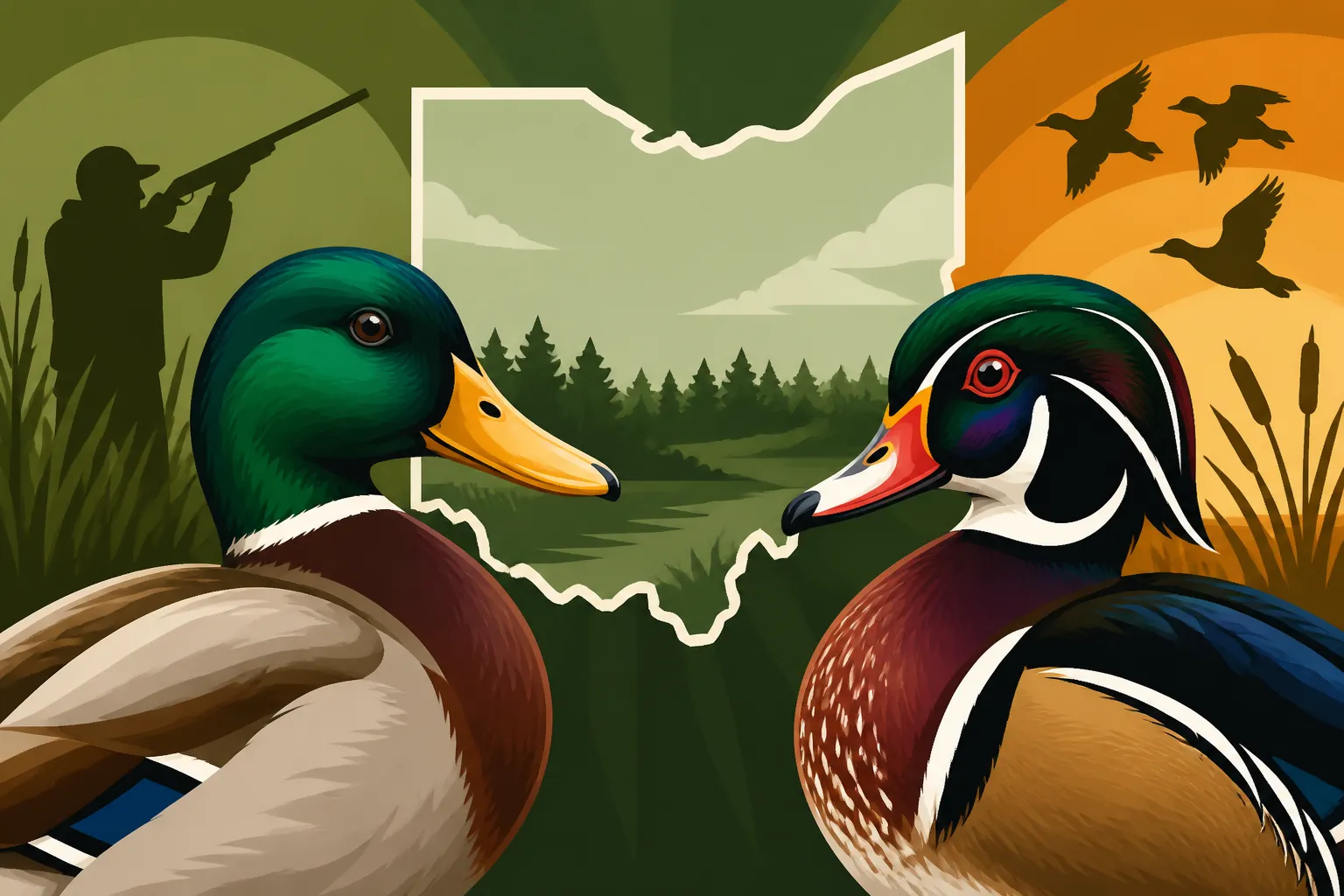
Mallards are the quintessential duck for many hunters, instantly recognizable with their iridescent green heads (on the drakes, of course!) and familiar quack. In Ohio, we're in a unique position because we see both a significant resident population that breeds right here in the Buckeye State, as well as a massive influx of migratory birds from the northern breeding grounds. Trying to understand the overall picture of mallard numbers in Ohio can feel like trying to count raindrops in a thunderstorm, but wildlife biologists work hard to give us a clearer view.
The Importance of Resident and Migratory Mallards
It's easy to think of "Ohio mallards" as one big group, but they're actually two distinct populations sharing our marshes, rivers, and farm fields. The resident birds are those that hatch here, grow up here, and often try to nest here again the following spring. These are the ducks you might see dabbling in local ponds throughout the summer or raising broods along the Maumee River. Their success is highly dependent on local habitat conditions, like the availability of safe nesting cover in the spring and reliable water sources through the summer.
Then we have the migratory birds, which truly make up the bulk of our fall and winter flights. These ducks spend their summers raising broods in the prairie potholes of the Dakotas, Minnesota, and even Canada. As winter approaches and those northern wetlands freeze, they start their southward journey, often staging in huge numbers in places like Lake Erie's western basin. The sheer volume of these birds can dramatically change our hunting prospects from one week to the next, making the overall continental population and weather patterns in the flyway just as critical as our local conditions. You can really get a sense of this by looking at Duck Migration Timing Through Ohio.
Factors Influencing Mallard Numbers
So, what makes these numbers go up and down? It's a complex dance between a lot of different elements. Habitat is, without a doubt, the biggest player. For resident mallards, healthy wetlands with diverse vegetation for nesting, plenty of invertebrates for protein, and secure brood-rearing areas are essential. If a spring is particularly wet and offers abundant temporary wetlands, nesting success generally improves. Conversely, drought conditions can severely limit available nesting and brood-rearing habitat, leading to lower local production.
Beyond natural habitat, agricultural practices in Ohio also play a significant role. Many mallards utilize flooded crop fields for feeding during migration, especially cut corn or soybean fields. Changes in cropping patterns, harvest timing, or the conversion of marginal farmlands to other uses can impact how many birds find suitable foraging areas. Finally, hunting pressure, both locally and across the flyway, is another factor, though regulations and bag limits are carefully set to ensure sustainable harvest rates. When you're out there, you're not just seeing the local birds; you're seeing a snapshot of conditions across thousands of miles, something mapping applications like GoHunt can help you visualize by showing regional habitat types.
How ODNR Monitors Mallard Populations
Understanding the actual number of ducks is a monumental task, but the Ohio Department of Natural Resources (ODNR) works diligently, often in conjunction with federal agencies, to gather data. One primary method involves conducting aerial surveys over key waterfowl habitats during different times of the year. These surveys help estimate breeding populations in the spring and migratory populations during fall and winter. While counting every single duck is impossible, these surveys provide reliable indices of population trends.
Banding efforts are another critical tool. Biologists capture ducks, apply a small, individually numbered band to their leg, and release them. When a banded duck is harvested by a hunter, reporting that band provides invaluable information about migration routes, survival rates, and harvest mortality. This data, combined with hunter harvest surveys where hunters report their success, helps the ODNR and partners like the U.S. Fish and Wildlife Service set season dates and bag limits. It's a massive undertaking, and every reported band or checked bird contributes to a clearer picture of Ohio Duck Daily Bag Limit and population health.
Delving into Ohio's Wood Duck Statistics
The wood duck is arguably Ohio's most stunning waterfowl species, a true gem of our timbered swamps and shaded creek bottoms. Unlike the mallard, which thrives in open marsh and farmland, wood ducks are much more reliant on specific forested wetland habitats. Their secretive nature and preference for dense cover can make tracking their numbers a bit trickier than their more open-water counterparts.
The Unique Role of Wood Duck Nesting Habitat
Wood ducks are cavity nesters, a characteristic that sets them apart from most other duck species. This means they rely on natural tree cavities, often old woodpecker holes or hollows formed by broken limbs, for their nests. These cavities need to be of a certain size and height, and they are typically found in mature bottomland hardwoods, riparian zones along rivers and streams, and flooded timber. Without these specific nesting sites, wood duck populations simply cannot thrive.
Because natural cavities can be limited, especially in areas with a history of intensive logging, artificial nest boxes play a crucial role in wood duck conservation. Across Ohio, countless nest boxes have been erected by wildlife agencies, conservation groups, and private landowners. These boxes provide safe, predator-resistant nesting sites and have been instrumental in boosting local wood duck production. If you've ever thought about helping out, putting up a wood duck box on your property could make a real difference. For more on where these birds thrive, check out Mallards and Wood Ducks in Ohio Marshes.
Tracking Wood Duck Trends
Directly surveying wood duck populations can be challenging due to their dense habitat preferences and shy nature. Unlike mallards congregating in open fields, wood ducks often stay hidden in thick cover. However, biologists use a combination of methods to estimate their numbers and track trends. Breeding bird surveys, often conducted by listening for their distinctive "woo-eek" call at dawn or dusk in suitable habitat, provide valuable data on breeding pair densities.
Brood surveys, where biologists count ducklings in family groups during the summer, also offer insights into nesting success and recruitment. The widespread use of nest boxes provides another data point, as biologists can monitor the occupancy and success rates of these boxes. While exact population figures might be harder to pin down than for mallards, these methods provide a good indication of whether wood duck populations are stable, increasing, or decreasing, helping the ODNR manage their habitat and harvest effectively.
Conservation Efforts and Their Impact
The story of the wood duck is a true conservation success story, and Ohio has been a big part of it. Historically, market hunting and habitat destruction pushed wood duck populations to perilously low levels in the early 20th century. However, strict hunting regulations, coupled with massive efforts to restore wetland habitats and the widespread deployment of nest boxes, have allowed the species to rebound dramatically.
Today, ongoing conservation work focuses on protecting and restoring bottomland hardwood forests, maintaining riparian corridors, and continuing nest box programs. Many wildlife areas across Ohio actively manage these habitats to benefit wood ducks and other wetland species. These efforts aren't just about ensuring hunting opportunities; they're about preserving the ecological health of our waterways and forests, guaranteeing that the vibrant colors of the wood duck remain a common sight for generations to come. When you're using an app like GoHunt to scout areas, look for those dense, low-lying timber areas near water – that's prime wood duck real estate.
What These Numbers Mean for Ohio Waterfowl Hunters
Understanding the population trends of mallards and wood ducks isn't just for biologists; it's incredibly valuable for hunters. It helps us anticipate what kind of season we might have, where to focus our efforts, and how to adapt our tactics. While we can't control the weather or continental breeding success, being informed allows us to make smarter decisions in the field.
Adapting to Fluctuating Populations
If continental mallard numbers are strong, and our local conditions are favorable, you can generally expect to see more birds. This might mean more opportunities in larger, more open bodies of water like parts of the Hunting Lake Erie Marsh Zone Waterfowl or big river backwaters. In such years, ducks might be less wary earlier in the season, and you might have more success with larger decoy spreads. Conversely, if numbers are down, or if hunting pressure is high, ducks can become incredibly spooky. In those seasons, smaller, more realistic spreads, meticulous concealment in your Layout Blinds and Marsh Boats, and focusing on less-pressured areas become even more critical.
For wood ducks, local conditions often dictate success more than continental numbers, although overall population health is still vital. A year with good spring rains that create plenty of flooded timber and small ponds can mean a fantastic wood duck season, as they'll have more places to hide and feed. In drier years, they'll concentrate on permanent water sources, which can make them easier to locate but also more pressured. Learning to read these local conditions is key.
The Impact of Weather and Water Levels
Weather is perhaps the single biggest variable that impacts waterfowl hunting in Ohio, especially for migratory birds. A strong cold front pushing down from the north can bring in waves of new ducks, transforming a slow day into a spectacular one. Conversely, a warm spell in November can delay migration, leaving us with fewer birds than we'd hoped. Duck Migration Timing Through Ohio is something many hunters obsess over, and for good reason.
Water levels are equally important. High water can spread ducks out across vast areas, making them harder to find. Low water can concentrate them into smaller pools, but also push them out of areas that become too shallow to feed. In river systems, fluctuating levels can create new feeding flats or expose old ones. Keeping an eye on weather forecasts and local river gauges, in addition to using detailed mapping tools like GoHunt that show water bodies and topographical features, can give you a significant advantage. This is especially true for those Hunting the Ohio River Backwaters.
Practical Scouting for Mallards and Wood Ducks
Armed with a better understanding of population dynamics, your scouting efforts become much more strategic. For mallards, look for areas that align with current conditions. If it's early season and mild, focus on local wetlands and flooded timber where resident birds are likely to be. As cold fronts arrive, shift your attention to larger bodies of water, agricultural fields near water, and river systems where new birds will be staging. Tools like GoHunt can help you identify potential feeding areas or flight corridors between water and food.
For wood ducks, consistent scouting is all about finding those hidden pockets of suitable habitat. Focus on small, timber-lined creeks, beaver ponds, and flooded woods. They often don't travel far, so finding a good roosting or feeding spot can mean consistent action. Even if you're not seeing many birds early in the year, knowing where the wood duck habitat is will pay off when the migratory push arrives.
Ohio Duck Quick Comparison
| Feature | Mallard | Wood Duck |
|---|---|---|
| Primary Habitat | Marshes, open water, agricultural fields, rivers | Timbered swamps, forested wetlands, small creeks, beaver ponds |
| Nesting | Ground nests in dense cover near water | Tree cavities, artificial nest boxes |
| Diet | Seeds, grains, aquatic plants, invertebrates | Acorns, seeds, aquatic plants, invertebrates |
| Migration Pattern | Strong migratory component from northern prairies | Shorter migrations, more resident populations |
| Key ID (Drake) | Green head, white neck ring, chestnut breast | Iridescent crest, intricate patterns, red eye |
Understanding the numbers for both our local mallards and wood ducks, as well as the larger flyway picture, is a crucial part of becoming a more successful and conservation-minded waterfowler in Ohio. It's not just about filling a limit; it's about appreciating the incredible journey these birds make and being part of their future.
Disclaimer
This article is for general informational purposes only and does not constitute professional advice. Laws, prices and regulations vary by location and change over time. Consult a qualified professional for guidance on your specific situation.