Appalachian Ohio Versus Farm-Belt Deer
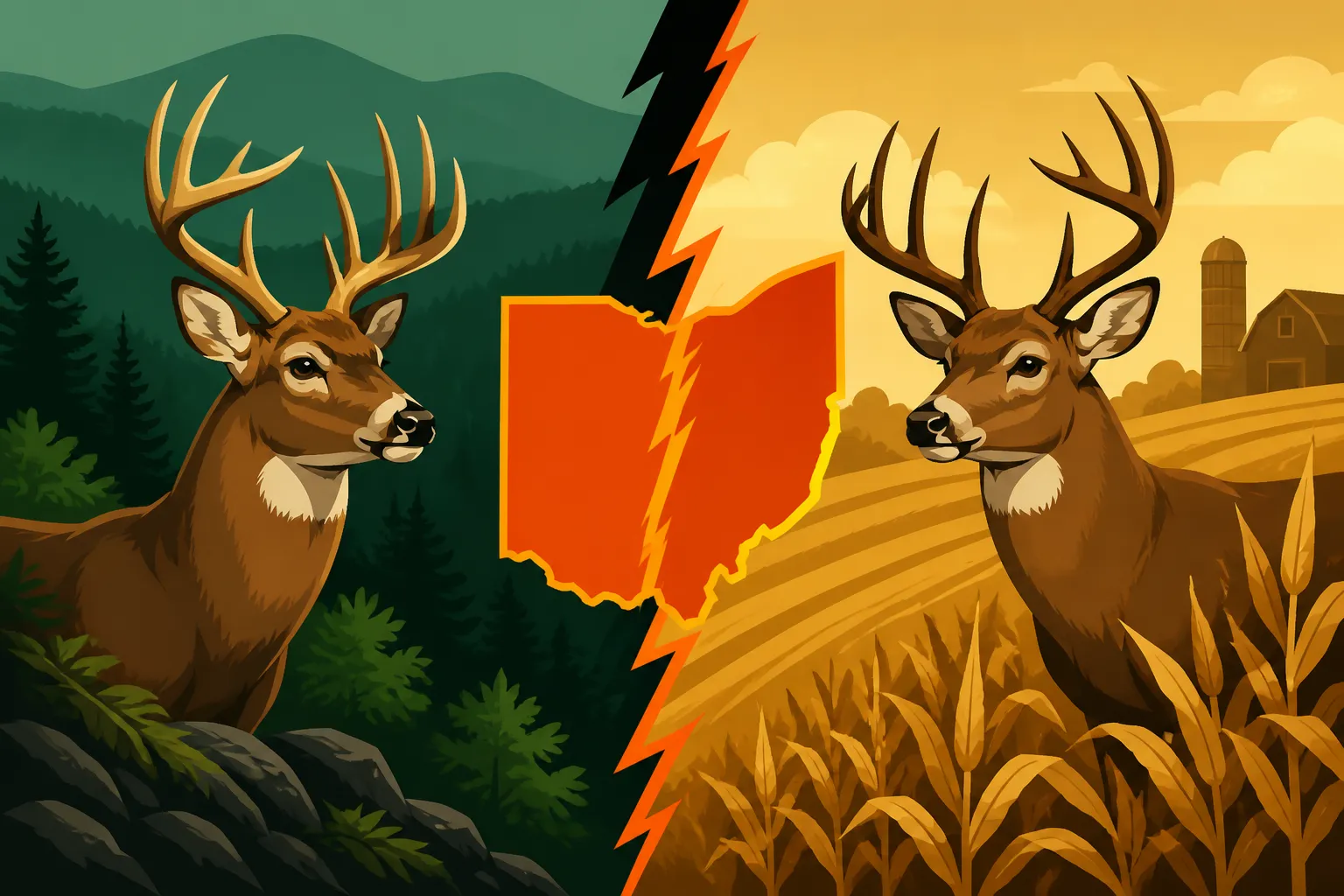
For those of us who spend our autumns in the Ohio deer woods, there's a constant, friendly debate: where's the real deer hunting? Is it in the rugged, timber-choked hills of Appalachian Ohio, or in the sprawling, crop-laden plains of the Farm-Belt? Each region presents its own unique set of challenges and triumphs, and understanding these differences is key to filling your tag, no matter where you choose to pursue whitetails.
The Fundamental Differences in Ohio's Deer Landscapes
Ohio is a remarkably diverse state when it comes to terrain and habitat, and these variations directly dictate how deer live, move, and how we, as hunters, need to adapt our strategies. It’s not just about what you see on a map; it’s about the very essence of the hunt.
Topography and Habitat: A Hunter's First Clue
When you talk about Appalachian Ohio, you’re picturing places like Wayne National Forest, Shawnee State Forest, and countless smaller state forests and wildlife areas spread across the southeastern quadrant of the state. This is where the land starts to get serious. We're talking steep, broken hillsides, deep ravines, thick secondary growth timber, and dense pockets of hard-to-penetrate briar patches and clear-cuts. The trees are predominantly hardwoods – oaks, maples, hickories – providing mast crops that can be feast or famine depending on the year. Water sources are often spring-fed creeks and small streams snaking through hollows. Food sources, outside of mast, are generally limited to browse, occasional small clearings, and perhaps a tucked-away food plot on private parcels. This vastness can be overwhelming, but it also means there are always pockets of unpressured ground if you’re willing to work for it.
Contrast that with Ohio's Farm-Belt, which stretches across the western, central, and northern parts of the state. Here, the landscape flattens out dramatically, dominated by endless fields of corn, soybeans, and wheat. Woodlands are often fragmented, appearing as small woodlots, fencerow strips, or narrow creek bottoms. These "islands" of cover in a sea of agriculture become absolute magnets for deer. While there are still hardwoods, you'll also find more softwoods and early successional growth along field edges and in smaller patches. Water is rarely an issue, with numerous ditches, ponds, and rivers. The abundance of agricultural crops provides an almost unlimited food source for deer for much of the year, leading to different deer behavior and larger overall populations in many areas.
Deer Behavior: Adapting to Their Environment
Deer in Appalachian Ohio are, by necessity, masters of their rugged domain. They are acutely aware of elevation changes, using saddles, benches, and ridge lines as primary travel corridors. Bedding areas are often found on leeward slopes, just below the crest of a ridge, or in the thickest, nastiest tangles on steep hillsides where human intrusion is minimal. When pressured, these deer simply drop into a deep hollow or climb an opposing ridge, disappearing into the vastness. Their movements tend to be more spread out, and they can be incredibly wary, especially on public land that sees a lot of foot traffic. You're less likely to see large groups of deer, and individual animals, particularly mature bucks, often become almost ghost-like, only moving in daylight during the deepest parts of the rut or under very specific conditions. Their daily patterns revolve around limited food sources and secure bedding in dense cover.
Farm-Belt deer, on the other hand, live a feast-or-famine existence tied directly to the agricultural calendar. During crop seasons, standing corn provides unparalleled cover and food, making deer practically vanish into its depths. Once crops are harvested, deer movements become much more predictable, centered around the remaining woodlots, fencerows, and any standing grain fields left. They often bed in these isolated cover patches and travel between them and nearby food sources. While the sheer density of deer can be higher in these areas, especially in counties with abundant agriculture, they also face more consistent human pressure, leading to highly nocturnal behavior. They might tolerate closer human presence in their sanctuaries but become incredibly sensitive to any perceived threat when moving through open areas. Their entire survival strategy is often built around utilizing small, dense pockets of cover and maximizing feeding opportunities in vast, open spaces under the cover of darkness.
Hunting Appalachian Ohio: The Challenge and the Reward
Hunting the Appalachian foothills of Ohio is a unique experience. It tests your physical endurance, your mental grit, and your ability to read vast, unbroken timber. Many hunters feel a deep connection to this style of hunting, embracing the solitude and the hard-earned rewards it offers.
Navigating Steep Terrain and Thick Cover
One of the first things you'll realize when hunting places like the Ironton Unit of Wayne National Forest or Zaleski State Forest is that flat ground is a luxury, not a given. The sheer elevation changes can be brutal, and a half-mile walk that looks easy on a map can turn into an hour-long ordeal of climbing and descending. Carrying your gear – a treestand, sticks, a pack – up and down these hills is a workout in itself. The cover isn’t just thick; it’s often impenetrable. Clear-cuts from past timber operations, briar patches, and dense stands of regenerating hardwoods create natural barriers that funnel deer or force them to navigate specific, often steep, paths. This means your boots need to be comfortable and provide excellent ankle support, and your clothing needs to be durable enough to withstand snags and thorns. Being in peak physical condition isn't just a suggestion here; it's a necessity. It’s a common frustration for hunters who aren't prepared, leading to shorter hunts and less effective scouting.
Scouting and Stand Placement in Hill Country
Effective scouting in Appalachian Ohio is less about finding a specific field edge and more about understanding the overall flow of the land. Deer use geological features like saddles, benches, and points to their advantage. A saddle, for instance, offers an easier path from one ridge to another, concentrating deer movement. Benches, flat spots on a hillside, serve as natural travel corridors or feeding areas. Looking for these features is crucial, along with finding mast trees, particularly white oaks, which are prime food sources in the fall. An app like GoHunt, with its detailed topographic maps and satellite imagery, becomes an indispensable tool for identifying these features and potential travel routes before you even step foot in the woods. You might find yourself on a Reading a Ridge for Southeast Ohio Deer expedition, looking for subtle changes in elevation that hint at deer movement.
When it comes to stand placement, thermal currents play a massive role, especially in the mornings and evenings. Warm air rises and cool air sinks, meaning your scent can swirl in unpredictable ways as the sun changes the temperature gradient on a hillside. Often, the ideal spot might be just below a ridge top or along a bench, catching deer as they transition between bedding and feeding, but always with the wind in mind. You might also want to explore Treestand Setups in Appalachian Ohio Hardwoods to get specific ideas for these tricky environments.
Understanding Deer Movement in the Big Woods
Deer in the big woods of southeastern Ohio often move differently than their farm-country cousins. They might not stick to precise routines, especially if pressure is high. Instead, they might use a wider range of cover to move from bedding to feeding, making long, meandering loops. This is where patience truly pays off. Long, all-day sits in a well-chosen stand become more effective than short, hurried morning or evening hunts. You're looking for subtle cues – a distant rub line, an old scrape, or a fresh track in a muddy creek bottom – that indicate recent activity. The deer population density might be lower, but the bucks that grow old here are wise, accustomed to avoiding humans in their expansive territory. Learning to identify and utilize bedding areas in the thickest cover, often on south-facing slopes for warmth, is critical for success.
Hunting Ohio's Farm-Belt: Opportunities in Ag Landscapes
Switching gears to Ohio's Farm-Belt means a completely different approach. While the landscape might seem less dramatic, the hunting can be equally, if not more, challenging due to high deer densities and intense hunting pressure.
Decoding Field Edges and Woodlot Islands
In agricultural areas, the deer’s world revolves around the interplay of open fields and isolated pockets of cover. Woodlot islands, often just a few acres of timber surrounded by crops, become critical bedding and staging areas. Fencerows and creek bottoms, even narrow ones, act as highways for deer moving between these sanctuaries and the abundant food sources. Understanding the layout of these cover strips and how deer utilize them is paramount. Imagine a small block of timber at the corner of a cornfield – that corner, or "pinch point," is going to see a lot of deer traffic. Your goal is to identify these high-traffic funnels, natural barriers, and transition zones. If you’re hunting in the northwest, you’ll definitely want to learn about Hunting Northwest Ohio Farmland Deer. The key is often finding the subtle features – a ditch, a slight elevation change, a clump of cedars – that deer will instinctively follow for cover.
The Impact of Crop Cycles on Deer Patterns
Crop cycles are perhaps the single biggest factor influencing deer movement in the Farm-Belt. During early archery season, standing corn fields are impenetrable fortresses. Deer bed, feed, and live their lives entirely within these vast fields, making them incredibly difficult to hunt. Once the corn is cut, deer are suddenly exposed and their patterns shift dramatically, concentrating around remaining cover and newly exposed food sources like waste grain. Soybeans offer food and some cover, while winter wheat and alfalfa provide early and late-season forage. Keeping tabs on what crops are planted where, and when they are harvested, is like having a secret weapon. A field that's a wasteland one week can be a hotbed of activity the next. For example, understanding Entry Routes Through Standing Corn becomes irrelevant once the combines roll, forcing a complete tactical shift. This constant change means scouting isn't just a pre-season activity; it's an ongoing process throughout the hunting season.
Dealing with Increased Pressure in Agricultural Areas
Unfortunately, with high deer populations and accessible land, comes increased hunting pressure. Many of these smaller woodlots and fencerows are hunted intensely, sometimes by multiple groups. This pressure quickly makes deer highly nocturnal, moving predominantly under the cover of darkness. It’s a common frustration for hunters to see plenty of sign but only catch glimpses of deer on trail cameras after sunset. To combat this, you need to think smarter, not just harder. Focus on pinch points, funnels, and transition areas that offer security cover right up until the last minute of daylight. Consider using ground blinds brushed into the landscape to minimize your silhouette and scent, especially on a Setting Up on a Northwest Ohio Field Edge. Identifying areas that offer better concealment, whether it's a dense thicket in a woodlot or a deep ditch line, can give you an edge. Sometimes, it’s about finding that one small, overlooked spot that other hunters walk past.
Deer Population Dynamics and Hunter Success
Understanding the deer populations in both regions helps set realistic expectations for your hunt and guides your strategy. Ohio's whitetail herd is robust overall, but the regional nuances are significant.
Density and Age Structure: Where to Find the Giants
When we talk about sheer numbers, the Farm-Belt generally boasts a higher deer density. Counties like Tuscarawas, Coshocton, and Licking, with their mix of agriculture and decent timber, consistently lead the state in overall deer harvest. You're likely to see more deer, and potentially more deer in a shorter amount of time, in these areas. However, the age structure can lean younger due to higher hunter numbers and often more liberal harvest limits on antlerless deer. While big bucks certainly exist, they are often incredibly savvy and nocturnal.
Appalachian Ohio, while having a generally lower overall deer density, often has a higher potential for older-aged bucks, particularly on large public land tracts where deer can escape pressure and live longer. Counties like Adams, Scioto, and Athens are often discussed when hunters are looking for Best Ohio Counties for Big Bucks, because the rugged terrain and vast, unbroken timber offer sanctuary. These deer might be fewer and farther between, but the mature bucks you do encounter have often reached an impressive size due to escaping hunters for several seasons. It’s a trade-off: higher odds of seeing a deer in the Farm-Belt versus potentially encountering a truly mature, older buck in the Appalachian region. It's helpful to review the Ohio Deer Population Estimate to get a broader understanding of the statewide picture, but always drill down to regional and even county-specific data.
Harvest Trends and Management Strategies
Ohio's deer management strategies reflect these regional differences. In many Farm-Belt counties, Deer Management Permits are often unlimited, allowing hunters to take multiple antlerless deer to control populations and minimize crop damage. This can lead to higher overall harvest numbers, but again, potentially a younger age structure for bucks. The goal here is often population control.
In parts of Appalachian Ohio, while antlerless opportunities are still available, the emphasis might shift slightly, with natural conditions and hunter pressure playing a more significant role in population dynamics. The ODNR constantly monitors herd health and hunter success, adjusting bag limits and season structures annually. Understanding these rules, especially if you're targeting multiple deer, is crucial. For example, some regions might allow you to fill an antlerless permit late in the season, which can be a valuable opportunity. The overall trend shows that Ohio remains a top deer hunting state, but success often hinges on adapting to the micro-environments you choose to hunt.
Gear and Tactics: Tailoring Your Approach
Just as the landscapes differ, so too should your gear and tactics. What works wonders on a flat farm field might leave you struggling on a steep ridge, and vice-versa.
Essential Gear for Appalachian Hunts
For hunting the Ohio Appalachia, physical gear needs to be robust and reliable. First and foremost, comfortable, supportive, and waterproof hiking boots are non-negotiable. You’ll be covering miles of uneven ground. Layered clothing is critical – you might start a cold morning hike bundled up, but quickly shed layers as you climb. Wool or synthetics are preferred for their moisture-wicking and warmth properties. A good quality hunting pack, capable of carrying water, food, emergency supplies, and perhaps your treestand, is also essential. Think about Packs for a Day on Wayne National Forest – you need something that distributes weight well and can withstand abuse. Navigation tools, beyond your phone, are also smart. A handheld GPS or a downloaded map on an app like GoHunt, which works offline, can be a lifesaver when you’re deep in unfamiliar timber without cell service. A rangefinder is also extremely useful, as judging distances in broken, hilly terrain can be notoriously difficult. Don't forget safety gear; a quality safety harness is paramount for any treestand hunter, and a first-aid kit should always be in your pack.
Specialized Tactics for Farm-Belt Deer
Hunting the Farm-Belt often calls for different tactics focused on stealth, observation, and capitalizing on limited cover. Ground blinds can be incredibly effective here, especially when placed strategically along fencerows, woodlot edges, or in standing cover near a field. Make sure your blind is brushed in thoroughly to break up its outline. When using a treestand, focus on bottleneck areas, small funnels, or secluded pockets within woodlots that deer use as security cover before heading into open fields. Long-range observation with good binoculars is a key skill. You might spend hours glassing fields from a distance, identifying where deer are entering and exiting, and then plan your approach for the next hunt.
Understanding wind direction and scent control is always important, but perhaps even more so in areas where deer have fewer places to escape human odor. Playing the wind precisely is critical, especially when setting up on a Setting Up on a Northwest Ohio Field Edge. Using quality scent control products and playing thermal currents where possible can give you an edge. Many Ohio hunters, regardless of terrain, opt for modern firearms like Straight-Wall Rifles for Ohio Deer due to their accuracy and effective range, making them versatile for both open field shots and tighter timber situations. And remember, no matter where you hunt in Ohio, always adhere to the Blaze Orange Requirements during the appropriate seasons to stay safe and visible to other hunters.
| Feature | Appalachian Ohio (e.g., Wayne National Forest) | Farm-Belt Ohio (e.g., Northwest Ohio) |
|---|---|---|
| Topography | Steep hills, ravines, ridges, broken terrain | Flat, gently rolling hills |
| Primary Habitat | Dense hardwoods, clear-cuts, thick undergrowth | Agricultural fields (corn, beans, wheat), small woodlots, fencerows |
| Deer Density | Generally lower | Generally higher |
| Mature Buck Potential | Good potential for older, larger-racked bucks (fewer, but wiser) | Good potential for big bucks (more numerous, but highly nocturnal) |
| Food Sources | Mast (acorns, hickory), natural browse, limited clearings | Abundant agricultural crops, waste grain, small browse |
| Cover | Vast, unbroken timber, thickets, deep hollows | Isolated woodlots, standing crops, fencerows, ditches |
| Hunting Pressure | Varies; can be high on accessible public land, lower in deep woods | Often high due to smaller cover patches |
| Typical Tactics | Still-hunting, long sits, understanding thermals, deep penetration | Observation, ground blinds, ambush points on field edges, adapting to crop cycles |
| Essential Gear | Sturdy boots, robust pack, GPS, rangefinder, layers | Binoculars, ground blind, scent control, light pack |
Disclaimer
Always consult the most current Ohio Department of Natural Resources (ODNR) hunting regulations before heading afield. Seasons, bag limits, and rules can change. This information is for general guidance and discussion purposes only.