Setting Decoys on a Frozen Pond
Trying to hunt ducks and geese when the water is locked up solid can feel like a fool's errand. You've scouted, seen the birds, but then a cold snap hits, and suddenly all your prime spots are unhuntable sheets of ice. It's frustrating, but it doesn't mean your season is over. This guide will walk you through the often-overlooked art of setting decoys on a frozen pond, turning a challenging situation into a unique opportunity to bag late-season waterfowl.
Understanding the Dynamics of Frozen Ponds for Waterfowl
When temperatures drop significantly and ice forms across larger bodies of water, ducks and geese are forced to adapt. They become incredibly concentrated on any open water they can find, no matter how small. This concentration, while a challenge for hunters, also presents a prime opportunity if you know how to capitalize on it. It’s about understanding their survival instincts and providing what they desperately need: a safe place to rest and access to unfrozen water.
Why Waterfowl Seek Open Pockets in Winter
Birds are pretty resilient, but even they have their limits. When major rivers, lakes, and marshes freeze solid, ducks and geese suddenly lose their feeding grounds and roosting areas. They'll spend a lot of energy flying around, searching for any patch of open water. This might be a spring-fed seep, a flowing creek that resists freezing, a bubbler system on a private pond, or even a small section kept open by strong currents or geothermal activity. The desperation drives them to these spots, often making them less wary than they might be earlier in the season. These small, isolated pockets become absolute magnets, attracting birds from miles around. You might see everything from mallards and wood ducks to divers and a mix of Canada geese, all vying for the same precious real estate.
Challenges and Opportunities of Hunting on Ice
Hunting over ice brings a unique set of challenges that can deter many hunters, which is exactly what makes it an opportunity. First, safety is paramount. Walking on ice, especially unfamiliar ice, carries inherent risks. You need to be absolutely sure of its thickness and stability, and always hunt with a partner. Then there's the setup itself: breaking ice, moving decoys, and creating an open water pocket. It's physically demanding and often cold work. However, the reward can be immense. When birds are concentrated and desperate, they often decoy incredibly well. They've flown past miles of frozen landscape, and that small patch of open water with what looks like contented birds is exactly what they're looking for. Plus, the silence that ice creates can make birds harder to hear approaching, but also means your movements and calls carry further. Knowing when and where to find these crucial open spots is key to success, and scouting apps like GoHunt can be invaluable for identifying potential areas where smaller ponds might hold thin ice or even spring-fed pockets.
Essential Gear for a Frozen Pond Hunt
Before you even think about setting foot on a frozen pond, you need to assemble the right gear. This isn't your typical early-season waterfowl hunt where you can get away with a few floating decoys and a basic call. Safety, warmth, and specialized tools are critical for success and, more importantly, for getting home safely.
Safety First: Ice Spud, PFD, and Communication
Hunting on ice is inherently dangerous, and safety should be your absolute top priority. Never, ever hunt alone on ice, and always let someone know where you're going and when you expect to return.
A good ice spud or chisel is your best friend. This tool allows you to test ice thickness as you go, poking ahead of you with each step. A minimum of 4 inches of clear, solid ice is generally considered safe for walking, but conditions can vary wildly, and current or underlying structures can weaken ice unexpectedly. Always err on the side of caution.
Wearing a Personal Flotation Device (PFD), or life vest, is non-negotiable. Even if you don't plan on breaking through, accidents happen. A PFD can keep you afloat and increase your chances of rescue if the worst occurs. Look for inflatable PFDs that are less bulky and allow for easier movement while carrying gear.
Finally, reliable communication is vital. A fully charged cell phone in a waterproof case is a must, but understand that signal can be spotty in remote areas. Consider carrying a satellite messenger or two-way radios, especially if you're hunting with a group and spreading out. A loud whistle can also be useful for signaling your partners in an emergency. Remember to pack a small, waterproof first-aid kit as well.
Decoys and Tools for Creating Open Water
When it comes to decoys, you'll want a mix that stands out against the stark white of the ice. Flocked decoys minimize glare, and a variety of species can add to the realism. But the real "magic" happens with motion. Motion decoys like spinning wing decoys or even battery-operated pulsators that create ripples in open water can be incredibly effective. Consider using a spread of primarily mallard decoys, as they are a common denominator for many species, and pair them with a few Canada goose floaters if you're targeting mixed bags.
Creating open water is the toughest part. A steel ice chisel or spud bar is essential for breaking a hole. Some hunters use a chainsaw (with extreme caution and proper safety gear), but a spud bar is usually sufficient for smaller pockets and safer. Another invaluable tool is a black plastic tarp. Laying a black tarp on the ice absorbs sunlight and can help melt a small area, especially on sunny days. If you're really dedicated, a portable ice eater or bubbler system can keep a small area open, though these are typically only practical for private land access with power. Otherwise, plan on physically breaking ice or utilizing naturally occurring open water. Remember that these specialized tools and methods are part of what makes a successful late-season hunt possible.
Warmth and Concealment
Late-season hunting in Ohio means cold, often brutal, weather. Layering is paramount. Start with good base layers, add insulating mid-layers like fleece or wool, and top it with a waterproof and windproof outer shell. Consider a heavyweight jacket and bibs designed for extreme cold. Insulated, waterproof boots are critical, along with thick wool socks. Don't forget insulated gloves or mittens, a warm hat that covers your ears, and even a face mask. Keeping a thermos of hot coffee or soup can make a huge difference in comfort and endurance. For more tips on staying comfortable, check out our guide on Cold-Weather Sitting Strategy in Ohio.
Concealment on a frozen pond means adapting. The white backdrop makes traditional camo less effective. A white camouflage suit or a simple white sheet draped over your existing camo can help you blend into snowy or icy surroundings. Utilize natural features like snowdrifts, cattail edges (if not completely buried in snow), or shorelines with brush. Portable ground blinds or layout blinds, often used for Layout Blind Hunting Ohio Farm Fields, can be adapted for ice hunting, but ensure they are brushed in thoroughly with snow or natural debris.
Strategic Decoy Placement on Ice
Once you've assessed the safety and gathered your gear, the real artistry begins: decoy placement. This isn't just about throwing out some fakes; it's about creating an irresistible illusion for desperate birds. Your goal is to make your small, open water pocket look like the safest, most inviting spot for miles around.
Creating an Open Water Landing Zone
The primary objective when hunting a frozen pond is to create an open water landing zone. This is the spot where the birds want to land, and it should be directly in front of your blind or concealment, within easy shooting range.
Breaking the ice: If there isn't a natural open hole, you'll need to make one. Use your ice spud or chisel to carefully break an area of ice, ideally a crescent or L-shape against a natural bank or cover. The size doesn't need to be huge; a 10×10 foot area can be plenty. The shards of ice you break out can be piled around the edges to help create a natural-looking border or even provide additional concealment. If you're able to keep a larger hole open, perhaps with a portable ice eater, it significantly increases your attractiveness to waterfowl. Remember, these birds are looking for refuge, so even a small, maintained opening is a beacon.
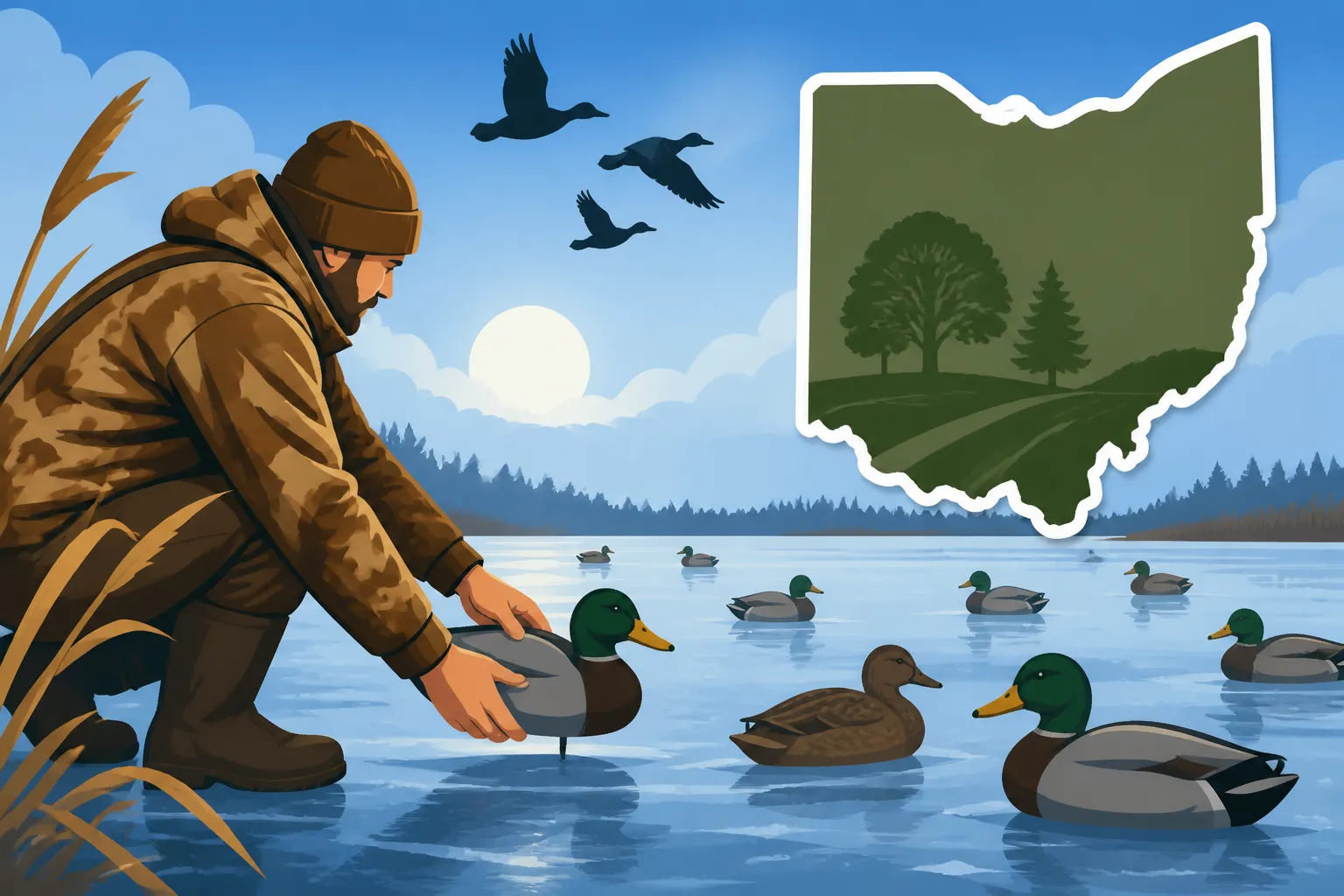
Decoy patterns: Arrange your floating decoys in a way that guides birds into your shooting zone. A "J" hook or a loose "U" shape are classic patterns that work well. Place the majority of your decoys at the far end of the open water, with their heads facing into the wind (as landing birds will always come in against the wind). Leave the center of the "J" or "U" open and free of decoys – this is your landing strip. Consider putting a few "guard" decoys on the ice near the open water, facing towards it, to give the impression of birds resting on the ice but ready to jump into the water. This adds to the sense of security.
Species-Specific Decoy Spreads
While any open water attracts birds in the deep freeze, tailoring your spread to the specific species you're targeting can increase your success.
Mallards and dabbling ducks: These are often the most common visitors to small, frozen ponds. A spread of 1-2 dozen mallard decoys, primarily drakes for visibility, can be very effective. Add a few pintail or wigeon decoys if those species are common in your area. For these birds, focus on creating a realistic, somewhat loose feeding spread in your open water. If you have a spinning wing decoy, place it slightly off to the side of your landing zone, where it catches the light and mimics a landing bird. Adding a few full-body mallard decoys on the ice around the edge of your open water can enhance the realism, suggesting birds have already landed and are comfortable. This setup is particularly effective for attracting weary birds.
Canada geese: If geese are using the pond, a separate spread of goose decoys on the ice itself is crucial. Geese prefer to land on the ice next to the open water, so place your full-body or shell goose decoys in family groups, facing into the wind, near your open water hole. A common tactic is to create a small "gap" in your goose spread leading to the open water, again, as an invitation for incoming birds. Don't be afraid to mix species; a few goose decoys alongside your duck spread can make the area look even more inviting. When considering your overall Ohio Duck and Goose Bag Limits, remember that a mixed spread can sometimes yield a more diverse harvest. GoHunt maps can help identify specific pond types that historically hold certain species during freeze-ups, aiding your strategy.
Utilizing Ice Edges and Shoreline Cover
The edges of the ice and the surrounding shoreline are just as important as the open water itself. These areas provide crucial context and security for incoming birds.
Decoys on the ice: Placing full-body or shell decoys directly on the ice around your open water helps create a more natural scene. These birds appear to be resting and secure, drawing in circling waterfowl. Position them as if they're looking towards or away from the open water, some preening, some resting. The key is to make it look like a safe haven where birds are already comfortable. If there's snow, lightly dust your decoys with it to break up their outlines. A guide on Decoy Spreads for Lake Erie Divers might offer some transferable ideas for creating realistic patterns, even if the species are different.
Natural cover for concealment: Your concealment needs to blend seamlessly with the frozen landscape. If there are cattails, reeds, or brush along the shoreline, use them. A portable ground blind or layout blind can be effective, but it must be heavily brushed in with snow, ice chunks, or whatever natural debris is available. The white backdrop of ice and snow means anything artificial will stick out like a sore thumb. Remember that birds approaching a small waterhole in a vast frozen landscape will be scrutinizing every detail. Hiding against a natural bank or in a snowdrift can be incredibly effective. Consider utilizing the information on Waders for Ohio Marsh Hunting to help you traverse muddy or slushy edges safely during setup.
| Decoy Type | Best Use on Frozen Pond | Placement Strategy | Key Benefit |
|---|---|---|---|
| Floating Decoys | In the open water pocket | "J" or "U" pattern, with open center | Guides birds to a safe landing zone |
| Full-Body Goose Decoys | On the ice, near the open water | Family groups, facing into wind, a "gap" for landing | Signals safety, attracts large birds |
| Full-Body Duck Decoys | On the ice, scattered around open water | Resting, preening poses, adds realism | Makes the "scene" look established and safe |
| Motion Decoys | Slightly off-center in open water | Creates ripples, visible movement | Attracts attention, mimics active birds |
| Flocked Decoys | Anywhere, especially for ducks | Reduces glare, natural appearance | Prevents "shine" from bright sun on ice |
Executing the Frozen Pond Hunt
Once your decoys are set and your blind is meticulously hidden, the waiting game begins. But a successful frozen pond hunt is more than just sitting still; it involves thoughtful calling, keen observation, and strategic adjustments.
Setting Up Your Blind and Staying Hidden
The stark reality of a frozen, open landscape means your blind placement and ability to remain invisible are critical. If you're using a portable ground blind, get it set up and brushed in long before first light. Use chunks of ice, snow, and any sparse vegetation like dead cattails or corn stalks to break up its outline. A white camouflage tarp or netting can be draped over your blind for ultimate concealment against a snowy backdrop. Remember, incoming birds will have an unobstructed view from a distance, so every detail matters.
If you don't have a blind, use natural cover. A snowdrift, a thick patch of evergreens on the bank, or even the shadows cast by a large tree can provide enough concealment if you remain absolutely still. Position yourself so you have a clear shot at the open water landing zone. Since you're often hunting tight quarters, make sure you can swing your shotgun easily without hitting the blind or exposing yourself. This type of hunting requires a heightened sense of awareness regarding your presence. For those who hunt different conditions, insights from Hunting Northwest Ohio Farmland Deer might indirectly emphasize the importance of blending into open agricultural landscapes, a principle that applies here.
Calling Tactics for Concentrated Birds
When birds are concentrated and desperate for open water, your calling tactics can be surprisingly effective, but also need to be subtle. Aggressive calling can sometimes scare off wary late-season birds who have already run a gauntlet of hunting pressure.
Subtle and confident: Start with soft, reassuring calls. A few contented clucks and low quacks from mallard calls are often enough. As birds approach, increase the intensity slightly, but avoid high-pitched, frantic calling. Your goal is to sound like happy, relaxed birds who have found exactly what they need – open water. If you see a flock working your spread, a soft greeting call followed by quiet contented sounds is usually best. Don't be afraid to let the decoys do the work, especially if the birds are locked onto your open water hole. Sometimes, no call at all is the best call.
Patience is key: Late-season birds can take their time. They've learned caution. They might circle several times, make a pass, and then come back for another look. Resist the urge to call too much or move too soon. Let them work your spread. A well-placed spinning wing decoy or an occasional jerk string creating ripples can be more persuasive than a perfect highball call. Understanding Ohio Waterfowl Migration Timing helps you gauge the likely temperament of the birds you're encountering – early migrants might be less wary than those that have seen a lot of hunting pressure.
The Shot and Aftermath
When birds commit and drop their feet into your landing zone, wait until they are within comfortable shooting range. On a small, frozen pond, this might mean waiting until they're practically over the decoys. Take your shot, and be prepared for doubles or even triples if a large flock comes in.
Retrieval: Retrieving downed birds from ice can be tricky. If the ice is solid and safe, a good retrieve dog is invaluable. If the bird lands in your open water hole, a long retrieve pole with a hook or a small net might be necessary. Never risk your safety to retrieve a bird. If a bird falls through thin ice or into an unsafe area, it's heartbreaking, but it's not worth a potentially life-threatening situation. For this reason, selecting the right ammunition is also important; choosing Waterfowl Loads for Lake Erie Divers might give you insights into effective shot sizes and patterns that lead to quick, clean kills, reducing the chance of lost birds. Remember to always use non-toxic shot for waterfowl hunting in Ohio.
Post-hunt care: Once you've collected your birds, quickly field dress them to cool the meat, especially if you're hunting on an unusually warm winter day. Pack them in a cooler with ice (if available) or snow. Check them according to Ohio's reporting rules and then enjoy the fruits of your challenging but rewarding late-season hunt. Many hunters in Ohio take pride in their ability to adapt to conditions, much like those who are Hunting the Ohio River Backwaters or even those tackling Ohio Waterfowl Hunting on Lake Erie and Inland areas. This kind of adaptability is what GoHunt emphasizes for successful hunting across diverse terrains and seasons.
Disclaimer
Hunting is an inherently dangerous activity. This guide is for informational purposes only and does not substitute for proper training, adherence to all local, state, and federal hunting regulations, or personal safety precautions. Always prioritize safety, understand local ice conditions, and never hunt alone. Consult the Ohio Department of Natural Resources for the most current regulations and safety guidelines.