Cold-Weather Sitting Strategy in Ohio
The biting cold of an Ohio late season can make even the most dedicated hunter want to pack it in, especially when you know those elusive, big bucks are still moving. It’s a common frustration to feel your toes go numb or your fingers stiffen, robbing you of the focus needed for that critical moment. This guide will dive deep into proven strategies for staying warm, comfortable, and effective in your stand or blind, ensuring you can capitalize on those crucial late-season opportunities when the mercury drops.
Understanding Late-Season Deer Movement in the Cold
When winter truly settles in across Ohio, deer behavior shifts dramatically. Their primary driver becomes survival, and that means finding calories and conserving energy. If you can understand this fundamental shift, you're halfway to putting yourself in the right place.
The Power of Primary Food Sources
As the temperatures plummet and natural forage dies back or gets covered by snow, deer become absolute slaves to their stomachs. This isn't the time for casual browsing; they're looking for dense, high-calorie food sources that will get them through the night. Think standing cornfields that a farmer might have left unharvested, robust plots of brassicas or winter wheat, or even standing soybean fields. These become critical magnets.
A hypothetical scenario might involve a large block of mature timber bordered by a vast unharvested cornfield. That cornfield, offering both food and some visual cover, will be an absolute hub of activity. Deer will stage in the timber, waiting for legal shooting light to fade, then pour into that corn. Your job is to intercept them. You'll often find trails beaten down like cattle paths leading directly from dense bedding areas to these caloric havens. Understanding these specific late-season patterns is key, as highlighted in our guide on Late-Season Food Sources for Ohio Whitetails.
Bedding Areas and Thermal Cover
In extreme cold, deer don't want to travel any further than necessary to get from their bed to their food. They also need serious protection from the elements, particularly biting winds and heavy snow. This makes thermal cover their sanctuary. Look for dense cedar thickets, stands of pines or other evergreens, or thick regenerating clear-cuts. South-facing slopes are gold in the winter, as they catch more sunlight and are often sheltered from prevailing northwesterly winds.
Imagine scouting an Appalachian ridge system in southeast Ohio. You're not just looking for fresh tracks, you're looking for where those tracks lead into dense, almost impenetrable cover on the leeward side of the hill, especially if that area catches the weak winter sun. These thickets provide insulation and a break from the wind, allowing deer to conserve precious body heat. A successful cold-weather hunt often means finding the intersection of these secure, warm bedding areas and accessible, high-calorie food sources.
Daylight Movement and the Post-Rut Surge
The mid-November rut might be a distant memory, and the post-rut lull can be incredibly frustrating. However, don't write off late season entirely. While the primary rut is over, a secondary rut can occur in December and even into January, with a few unbred does coming back into estrus. Bucks, though run down, will still be searching. But more importantly, the extreme cold forces deer to move more during daylight hours to feed and survive.
That's your window. The deer that were nocturnal earlier in the season due to hunting pressure or warmer temperatures might now be moving during the day, simply because they have to eat. Don't be fooled by the perceived inactivity of the "lull." If you can withstand the cold, you'll often be rewarded with sightings during prime daylight hours that simply wouldn't happen in warmer conditions. You need to be patient and ready to seize these fleeting opportunities. For more on this, check out our insights on Hunting the Late-Season Rut Lull.
Layering Up for Ohio's Winter Chill
The biggest hurdle to successful cold-weather hunting is staying warm enough to remain still, focused, and comfortable for hours on end. The secret isn't one giant parka; it's a strategic layering system designed to manage moisture and trap heat.
The Science of Layering Properly
Think of your clothing system as a series of specialized tools, each with a job:
- Base Layers: These are your foundation, worn directly against the skin. Their primary job is to wick moisture (sweat) away from your body. Sweat is your enemy in cold weather because as it evaporates, it cools you rapidly. Avoid cotton at all costs, as it absorbs moisture and holds it, becoming a cold, damp blanket. Instead, opt for high-quality merino wool or synthetic performance fabrics. Merino wool is fantastic because it's naturally odor-resistant and still insulates when damp.
- Mid-Layers: These are your insulation powerhouses. They trap air to provide warmth. You might use one thick mid-layer or several thinner ones. Common materials include fleece, down, or synthetic puffy insulation (like PrimaLoft or Thinsulate). Down is incredibly warm for its weight but loses much of its insulating power when wet. Synthetics perform better in damp conditions. Having multiple mid-layers allows you to adjust to changing temperatures and activity levels.
- Outer Layer: This is your shield against the elements – wind, rain, and snow. It needs to be windproof and waterproof (or at least highly water-resistant) while also being quiet. In the brittle cold, even slight movements can create a surprising amount of noise, so silent fabrics like brushed tricot or softshell are preferred. This layer protects your inner insulation from getting wet and being compromised. Brands like Sitka Gear, Kuiu, and First Lite offer excellent systems built around this principle.
Imagine you're walking in before dawn to your stand. You'll likely wear a light base and mid-layer, carrying your heavy outer layers in your pack. Once you reach your stand, you can quickly add those layers before you cool down, trapping the body heat you generated from the walk.
Head, Hands, and Feet are Crucial
You lose a significant amount of heat through your head, and cold extremities can quickly make a hunt miserable. Paying extra attention to these areas is non-negotiable for comfort and safety.
- Head: A good insulated hat is essential. A fleece-lined beanie or a full balaclava that covers your face and neck can make a huge difference. Some hunters even tuck a hand warmer into their hat on really brutal days.
- Hands: This is often the trickiest part, balancing warmth with dexterity. A common strategy is to wear thin, moisture-wicking liner gloves (often merino wool or thin synthetic) under a pair of heavily insulated mittens or "shooters" mitts that allow your fingers to come out for a shot. A good hand muff with a chemical hand warmer inside is another invaluable tool, especially when waiting for deer.
- Feet: Cold feet can send you home faster than anything else. Invest in high-quality, thick merino wool socks. Crucially, wear insulated boots that are at least one size larger than your regular shoes. This creates air space around your foot, allowing insulation to work and preventing compression of your socks, which cuts off circulation. Consider a dedicated boot blanket that you can slip over your boots in the stand, along with chemical toe warmers. Our guide on Insulated Boots for All-Day Sits offers more in-depth advice on this.
Strategic Use of Hand and Body Warmers
Those little chemical hand warmers aren't just for your pockets. They can be deployed strategically to keep your core and extremities toasty. Besides hands and feet, try placing them:
- Against your kidneys: This helps warm your blood as it circulates through your core.
- Over your femoral arteries: One in each inner thigh pocket can send warmth down your legs.
- In a chest pocket: Near your heart, to radiate warmth.
- Inside your hat or a neck gaiter: A small warmer can make your head feel significantly warmer.
Rechargeable electric hand warmers are also an option, offering adjustable heat and reusability, though they require charging. Before you even leave the truck, you might activate a few chemical warmers. Using the mapping features on a platform like GoHunt to navigate to your stand, you can time it so those warmers are at peak heat once you're settled in, maximizing their efficiency when you need them most.
Essential Gear for Cold-Weather Comfort
Beyond your clothing, a few key pieces of gear can dramatically improve your experience and extend your time in the cold Ohio woods.
Portable Heaters and Seating Solutions
Sometimes, no amount of layering feels like enough. That's where supplemental heat comes in:
- Portable Propane Heaters: For those hunting from an enclosed ground blind, a small, portable propane heater like a Mr. Heater Portable Buddy can be a game-changer. They put out a surprising amount of heat, allowing you to shed a few layers and stay comfortable. Always use them in well-ventilated blinds and be mindful of carbon monoxide.
- Insulated Seat Pads: Even if you’re in a treestand, sitting directly on cold metal or wood will sap your body heat. A thick, closed-cell foam seat pad, or even a heated cushion with a battery pack, can prevent heat transfer from your body into the cold stand, making a huge difference in comfort.
- Heated Clothing/Accessories: Modern heated vests, gloves, and socks, often powered by rechargeable batteries, are becoming increasingly popular. While an investment, the ability to control your core temperature with the push of a button is invaluable on frigid days. Battery life is the primary consideration here.
Here's a quick comparison of popular heating solutions:
| Heating Solution | Pros | Cons | Best Use Case |
|---|---|---|---|
| Chemical Hand/Body Warmers | Inexpensive, lightweight, disposable | Limited duration (8-18 hrs), single-use | Pockets, gloves, boots, strategic body placement |
| Rechargeable Hand Warmers | Reusable, adjustable heat, often dual-purpose charger | Requires charging, higher upfront cost, finite battery life | Pockets, can warm hands directly |
| Portable Propane Heater | High heat output, warms a large space | Requires ventilation, bulky, fire risk, fuel cost | Enclosed ground blinds, ice shanties |
| Heated Seat Cushions/Vests | Targeted warmth, hands-free operation | Battery life, higher cost, can be bulky | Treestands, ground blinds, long stationary sits |
| Thermos with Hot Beverages | Internal warming, morale boost | Limited liquid capacity, adds weight | Any hunt, essential for long sits |
Thermos and Hot Beverages
Never underestimate the power of a hot drink on a frigid morning. A good quality thermos filled with coffee, tea, hot chocolate, or even a savory broth can warm you from the inside out. It's not just about the calories or hydration; it's a huge psychological boost. When you feel the warmth spreading through your core, it gives you a renewed sense of comfort and helps you push through those last few hours in the stand.
Shelter Options: Ground Blinds vs. Enclosed Treestands
The type of shelter you choose can significantly impact your cold-weather comfort.
- Ground Blinds: A well-brushed-in pop-up ground blind offers immense protection from the wind and often provides a noticeable temperature increase over an open treestand. They're excellent for staying concealed and can easily accommodate a portable heater. When hunting thick cover or field edges, a ground blind can be an excellent choice, as detailed in our article on Using a Ground Blind on Ohio Public Land.
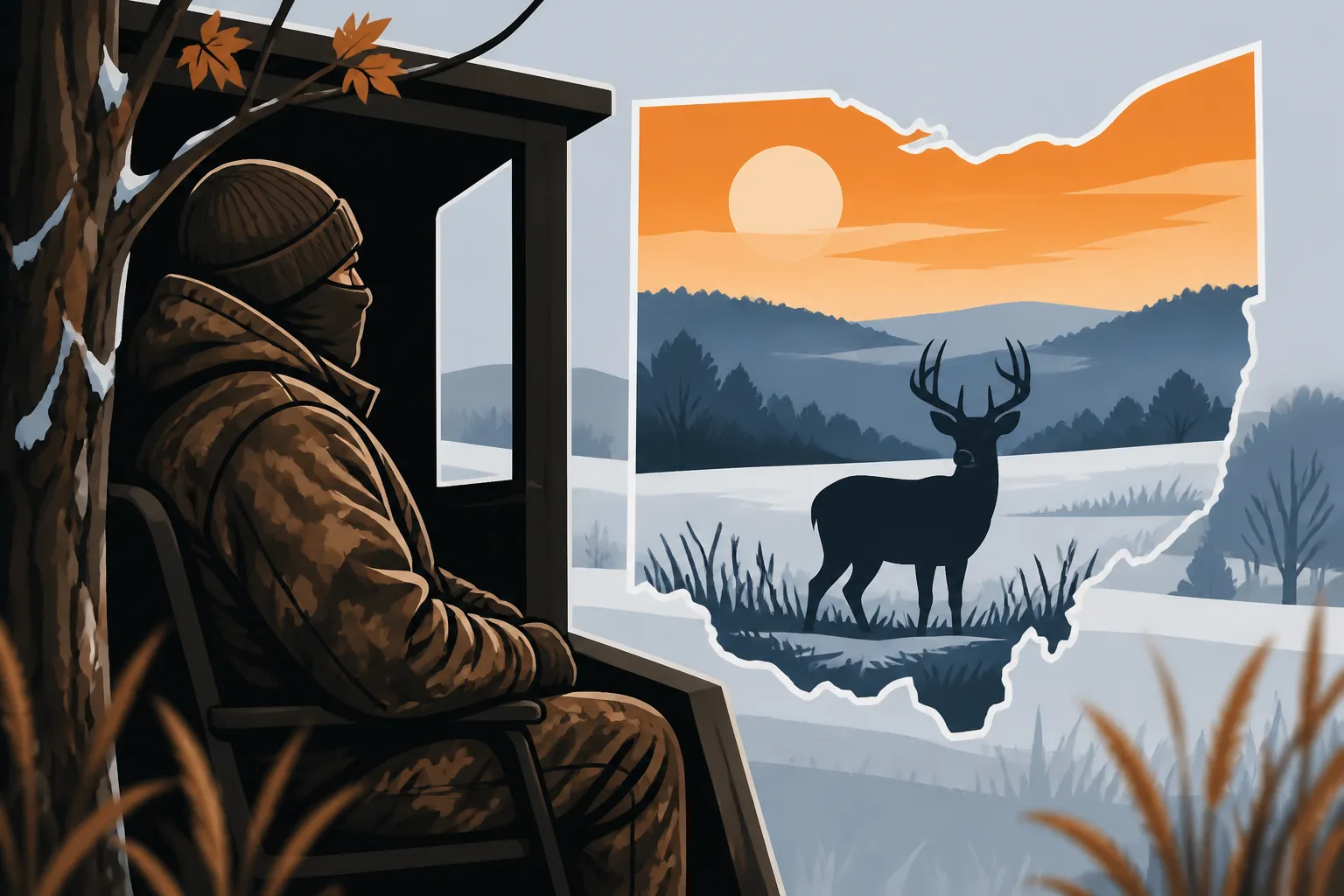
- Enclosed Treestands/Box Blinds: Some hunters opt for enclosed ladder stands or permanent box blinds, especially on private land. These structures offer maximum protection from the elements, often with windows that can be closed between viewing periods. The trade-off is reduced mobility and often a more permanent setup, but the comfort factor is undeniable. While an enclosed stand might not be feasible everywhere, it’s worth considering where legal and practical, especially for long, cold sits. If you're looking for more adaptable elevated options, our guide on Hanging a Stand on an Appalachian Ridge might offer some alternative perspectives.
Stand and Blind Tactics for Bitter Temperatures
Having the right gear is only part of the equation. How you approach your hunt, set up your position, and manage your time in the cold are equally critical.
Entry and Exit Routes for Minimal Impact
In the late season, deer are highly educated and wary, especially in colder temperatures when they are focused on survival. Your entry and exit routes become paramount.
- Morning Hunts: Approach your stand in complete darkness, using terrain features (creek beds, ditches, ridgelines) and natural cover to your advantage. Avoid walking through known bedding areas or across open fields where deer might be feeding. Get to your stand early, giving the woods time to settle before daylight.
- Evening Hunts: Plan your exit as carefully as your entry. If deer are feeding in front of you, you'll need a quiet and discreet way out that doesn't blow them out of the area, potentially ruining future hunts. Consider waiting until well after dark, or having a route that keeps you downwind and out of sight of feeding deer.
- Wind and Thermals: These are critical, especially in hilly terrain. Always approach and sit with the wind in your favor. In the morning, thermals typically fall down the hillside; in the evening, they rise. Understanding and utilizing these forces, as discussed in Wind and Thermals on an Appalachian Ridge, will keep your scent away from deer. The detailed topographical and wind maps available through services like GoHunt can be invaluable for planning these routes.
Patient Waiting and Managing Discomfort
The mental game of cold-weather hunting is as important as the physical. It’s tempting to fidget, move, or pack up early when discomfort sets in. But patience is often rewarded in the late season when deer movement can be sporadic but intense.
- Small Movements: To avoid fidgeting excessively, practice making small, slow movements to keep circulation going. Wiggle your toes, flex your fingers, gently stretch your neck and shoulders. These minimal movements can make a big difference without alerting deer.
- Stay Positive: Remind yourself why you're out there. The anticipation of a big buck, the silence of a snow-covered woods, the challenge of the conditions. These thoughts can help you push through.
- Minimize Distractions: Ensure all your gear is organized and easily accessible so you're not fumbling around and making noise. Having everything within reach means less movement and less chance of being caught off guard. When you're using a mapping app like GoHunt to identify those less-pressured pockets, you're investing in the kind of strategic advantage that makes those long, cold sits worth it. You know you're in a good spot; now you just have to stay focused.
Utilizing Natural and Artificial Cover
Maximizing your natural surroundings and employing artificial cover can significantly boost your comfort and concealment in cold weather.
- Natural Windbreaks: Position your stand or blind on the leeward side of a ridge, in a thick cedar grove, or against a dense hedgerow. Even a slight break from the wind can make a 10-degree difference in how warm you feel. When you're Sitting a Field Edge in Late Season, choosing the brushiest, most sheltered side can dramatically increase your comfort.
- Pop-Up Blinds: If using a ground blind, brush it in thoroughly with natural materials from the surrounding area. This not only increases concealment but also provides an extra layer of insulation against the wind and helps hold heat inside.
- Elevated Box Blinds: On private land, building or using an elevated box blind can create a truly comfortable hunting experience. These enclosed structures protect you from all elements and allow for significant heating, making all-day sits not just tolerable, but enjoyable.
The late season in Ohio offers incredible opportunities for deer hunters who are willing to brave the cold. By understanding deer behavior, optimizing your layering system, bringing the right gear, and employing smart hunting tactics, you can turn a potentially miserable hunt into a productive and rewarding experience. Don't let the cold deter you; embrace the challenge, and you might just tag the buck of a lifetime. Plus, successfully navigating tough weather means you'll be well-prepared for any situation, whether it's Recovering a Deer From a Steep Ravine or simply enjoying the unique beauty of winter in the woods while Reading Ohio Snow for Fresh Deer Movement.
Disclaimer
Hunting is an inherently dangerous activity. Always prioritize safety, understand and follow all Ohio hunting regulations, and use appropriate gear for the conditions. This guide is for informational purposes only and does not replace professional instruction or local wildlife authority guidelines.