Binocular Harnesses Worth Wearing
If you've spent any real time chasing deer, turkeys, or small game across Ohio's diverse landscapes, you know the struggle: a pair of binoculars dangling from your neck, swinging like a pendulum, banging against your chest, or worse, getting snagged on every piece of briar you walk past. It's not just annoying; it can actively hinder your hunt by creating noise, slowing you down, and even damaging your expensive optics. This guide will walk you through why a quality binocular harness is an absolute game-changer for Ohio hunters, helping you keep your glass secure, accessible, and ready when that crucial moment arrives.
Why a Binocular Harness Isn't Just "Extra Gear"
For years, many of us just threw our binoculars around our necks, thinking that was good enough. We tolerated the discomfort, the bouncing, and the constant adjustments. But once you experience the difference a well-designed binocular harness makes, you'll wonder how you ever hunted without one. It’s more than just a convenience; it’s a vital piece of kit that enhances your effectiveness and protects your investment.
The Frustrations of Neck Straps and Loose Binos
Think about those long walks into your favorite public land spot, perhaps deep into Wayne National Forest or an expansive Ohio Wildlife Area. With a traditional neck strap, your binoculars might bounce with every step, causing a dull ache in your neck and shoulders by the time you reach your stand. It’s not just the physical strain; that constant movement can make a surprising amount of noise as your binos tap against zippers, buttons, or even your rifle stock. Imagine still-hunting through thick cover, trying to be as silent as possible, only to have your binoculars clatter against a tree as you squeeze past. It's enough to make any seasoned hunter groan.
Beyond the noise and discomfort, loose binoculars are prone to damage. A slip on a muddy ridge or a snag on a low branch could send your expensive glass tumbling, risking a broken lens or a knocked-out prism. And how many times have you missed a quick look at a distant deer because your binoculars were tangled in your jacket or tucked away in your pack, taking precious seconds to retrieve? These are the real-world frustrations that a good harness is designed to eliminate, allowing you to focus on the hunt, not your gear.
Safety and Convenience in the Ohio Woods
The primary benefit of a binocular harness is keeping your optics secure and readily available, right on your chest, without interfering with your movement. This hands-free advantage is enormous. When you're climbing into a treestand, navigating uneven terrain, or traversing steep ravines, having both hands free for balance and safety is paramount. You won't have to worry about your binoculars swinging into your face or getting caught on a climbing stick when you're 20 feet up.
Moreover, a harness protects your optics from the elements and accidental impacts. Many modern harnesses feature a durable, often weather-resistant pouch that fully encases your binoculars. This means your lenses are shielded from rain, snow, dust, and brush, ensuring they're clean and clear the moment you need them. This protection is especially crucial during Ohio's unpredictable weather, whether it's a damp October morning or a snowy January muzzleloader hunt. Quick access means you can raise your binoculars to your eyes in seconds when you spot movement, maximizing your chances of identifying that buck before it slips away. Optics for Appalachian Ohio Ridges often means needing quick, clear glass.
Key Features to Look For in an Ohio Binocular Harness
Not all binocular harnesses are created equal. When you're investing in one, especially for the demanding conditions of Ohio hunting, you want to consider several key features that will make your time in the field more comfortable, efficient, and successful. Think about your typical hunting style and the environments you frequent most.
Comfort and Fit for Long Days Afield
Comfort is king, especially when you're putting in long hours on stand or covering miles on foot. Look for harnesses with wide, padded shoulder straps that distribute the weight of your binoculars evenly across your back and shoulders, rather than concentrating it all on your neck. Adjustable straps are also crucial to achieving a snug, customized fit that prevents bouncing and shifting. A harness that's too loose will defeat the purpose, while one that's too tight can restrict movement or breathing.
Some harnesses even feature a breathable mesh back panel to help manage moisture and prevent overheating, which is a blessing during early season archery hunts in Ohio when temperatures can still climb. Consider how the harness sits on your chest and whether it interferes with your backpack straps or other gear. A well-designed harness should feel like a natural extension of your hunting system, not an obstacle. Packs for a Day on Wayne National Forest often require careful layering of gear.
Protection and Durability Against Ohio's Elements
Ohio weather can be fickle, throwing everything from torrential downpours to heavy wet snow at you within a single season. A good binocular harness needs to be built tough to withstand these conditions. Look for durable, water-resistant or waterproof materials like Cordura or similar heavy-duty synthetics. The stitching should be reinforced, and zippers, if present, should be robust and ideally water-resistant.
Lens protection is paramount. Many quality harnesses include a built-in flap or lid that completely covers the binocular lenses when not in use. This protects against scratches, dust, and moisture accumulation. Some even have a magnetic closure for silent, one-handed operation, which is critical when you’re trying to remain stealthy. Imagine glassing for a gobbler during Spring Turkey Hunting in Ohio; you need your optics clear and ready in an instant, without fumbling.
Storage and Accessibility for Essential Tools
While the primary function is to hold your binoculars, many harnesses offer additional storage, which can be incredibly useful for other small, essential items. Look for harnesses with extra pockets or compartments. A small front pocket is perfect for lens cloths, wind indicators, or a small map. Side pockets can hold things like a grunt tube, a headlamp, or even a compact rangefinder. Some harnesses come with dedicated, integrated rangefinder pouches that clip or Velcro on, keeping this vital tool right next to your binos for quick acquisition.
Accessibility is key. Features like quick-release buckles allow you to quickly detach the harness if needed, and silent magnetic closures on the main compartment ensure quiet access to your binoculars. Some manufacturers, including those like GoHunt, design their harnesses with modularity in mind, allowing you to add or remove accessory pouches based on your specific needs for a given hunt. This level of customization ensures that everything you need is organized and within easy reach, minimizing fumbling and maximizing your efficiency in the field.
Different Styles of Binocular Harnesses for Ohio Hunters
Just like there are different types of bows, rifles, and shotguns, there are various styles of binocular harnesses, each with its own advantages and ideal uses. Understanding these differences will help you choose the best one to suit your hunting adventures across Ohio.
Traditional Chest Harnesses
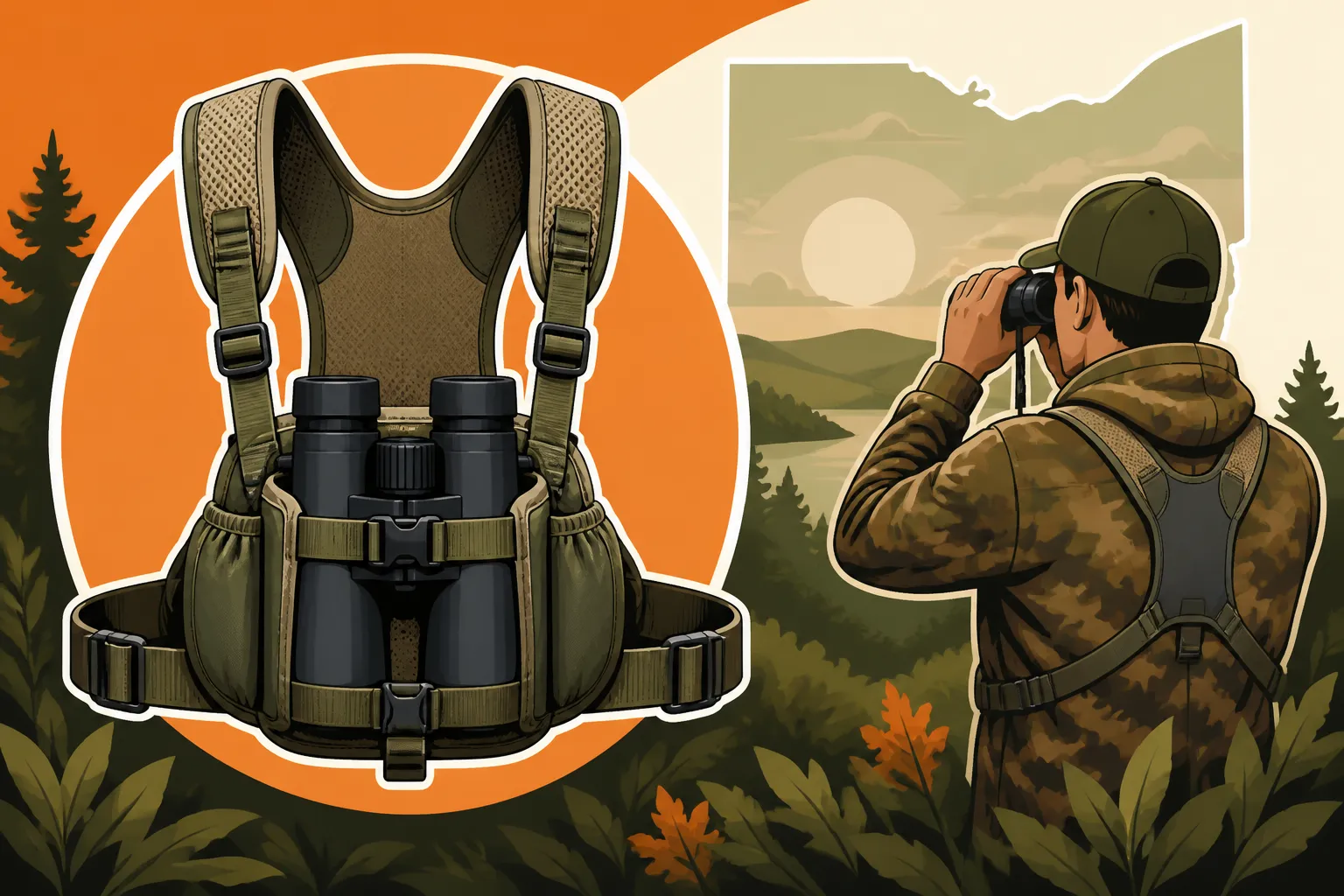
Traditional chest harnesses typically consist of a system of straps that cross your back and shoulders, connecting to your binoculars with small loops or quick-release clips. The binoculars themselves usually hang openly on your chest.
Pros:
- Lightweight and Minimalist: These are often the lightest and least bulky option, making them ideal for hunters who want to keep their gear streamlined.
- Quick Access: Because the binoculars are exposed, they offer incredibly fast access. Just grab and raise them to your eyes.
- Excellent Ventilation: With minimal material, they allow for maximum airflow, which can be a relief on warmer early-season hunts.
- Affordable: Generally, traditional harnesses are more budget-friendly than their pouch-style counterparts.
Cons:
- Limited Protection: The open design means your binoculars are exposed to rain, snow, dust, and impacts.
- No Extra Storage: Most traditional harnesses don't offer additional pockets or compartments.
- Potential for Swing: While better than a neck strap, some models can still allow for a bit of swing if not adjusted properly, especially during vigorous movement.
Best Use Cases in Ohio:
These harnesses are great for hunters who prioritize weight savings and speed, and who may not be in constantly wet or dusty conditions. They are a good choice for fair-weather archery hunting in open timber, or for Squirrel Hunting Ohio Oak Ridges where quick glassing is beneficial but heavy protection isn't a primary concern.
Pouch-Style Harnesses with Integrated Protection
Pouch-style harnesses feature a main compartment that fully encloses your binoculars, protecting them from the elements and physical impacts. This pouch is then suspended on your chest by a harness system similar to the traditional style.
Pros:
- Superior Protection: The enclosed design keeps your binoculars safe from rain, snow, dust, mud, and accidental bumps. This is a huge advantage for hunting in Ohio's unpredictable weather or dense brush.
- Added Storage: Most pouch harnesses include multiple pockets for accessories like a rangefinder, wind checker, lens cloth, or grunt call. This helps consolidate your essential gear. GoHunt is a brand that understands the need for integrated storage, often offering robust pouch systems designed for efficient organization.
- Quiet Operation: Many feature silent magnetic closures or robust zippers that minimize noise when accessing your binoculars.
- Reduced Bouncing: The structured pouch helps stabilize the binoculars, reducing movement and discomfort.
Cons:
- Bulkier and Heavier: They are generally larger and heavier than traditional harnesses due to the added material and padding.
- Slightly Slower Access: While still quick, opening a flap or unzipping a compartment takes a fraction of a second longer than simply grabbing exposed binoculars.
- Can Retain Heat: The larger footprint can sometimes lead to more heat retention against your chest.
Best Use Cases in Ohio:
Pouch-style harnesses are incredibly popular and versatile for almost all types of Ohio hunting. They excel in wet conditions, dense cover, and any situation where protecting your valuable optics is a priority. Think about Hunting the Ohio Rut in Early November when weather can shift quickly, or Muzzleloader Tactics in January Cold where snow and moisture are common. They are ideal for hunters who carry multiple small accessories and want everything organized and protected.
Backpack-Integrated Systems
Some hunting backpacks come with integrated binocular harness systems, or offer modular attachments that allow you to connect a bino pouch directly to the backpack straps.
Pros:
- Seamless Integration: Everything works together as a single system, reducing strap clutter and potential for snagging.
- Ultimate Stability: When properly integrated, the binoculars are extremely stable against your chest, moving with your pack.
- Weight Distribution: The weight of the binoculars is fully supported by the backpack's frame and harness, taking pressure off your neck and shoulders.
Cons:
- Less Versatility: You're often tied to a specific backpack or system, making it less adaptable if you switch packs or want to hunt without a pack.
- Can Be Expensive: Often, these integrated systems are part of higher-end hunting packs.
- Potential for Limited Access: Depending on the design, accessing your binoculars might be slightly less convenient if they are tucked too tightly against the pack.
Best Use Cases in Ohio:
These systems are best for hunters undertaking long excursions into remote public lands like Wayne National Forest, where you're carrying a full pack for an entire day or multiple days. If your style involves extensive hiking and you need all your gear to work in harmony, an integrated system could be the answer. They are great for Scouting Ohio Public Land Before Season when you're covering miles and need to keep your gear stable.
| Harness Type | Pros | Cons | Best for Ohio Hunting Scenarios |
|---|---|---|---|
| Traditional Chest | Lightweight, quick access, good ventilation, affordable | Limited protection, no extra storage, potential for slight swing | Fair-weather archery, open timber, squirrel hunting, minimal gear setups |
| Pouch-Style (Enclosed) | Superior protection, added storage, quiet operation, reduced bounce | Bulkier, heavier, slightly slower access, can retain heat | All-around hunting, wet/snowy conditions, dense cover, organized gear, Hunting Ohio's Two-Weekend Gun Deer Season, Spring Turkey Hunting in Ohio |
| Backpack-Integrated | Seamless integration, ultimate stability, better weight distribution | Less versatile, can be expensive, potentially limited access | Long treks, multi-day hunts, extensive public land scouting, carrying heavy loads |
Choosing the Right Harness for Your Ohio Hunting Style
With so many options available, picking the right binocular harness comes down to understanding your specific hunting needs and the conditions you typically encounter in Ohio. Think about how you move, what gear you carry, and what species you pursue most often.
Bowhunting Considerations
For bowhunters, stealth and an unobstructed draw cycle are paramount. You need a harness that keeps your binoculars tight to your body, prevents any noise, and doesn't interfere with your bowstring or arm movement.
- Low Profile: Look for a harness that is as flat as possible against your chest. Any bulk can rub against your bowstring, creating noise or altering your shot.
- Quiet Materials and Closures: Magnetic closures are often preferred over zippers for absolute silence. The fabric itself should be quiet and not rustle when you move. Rattling Volume in Thick Cover means every sound matters.
- Minimal Interference: Ensure the harness doesn't impede your shoulder movement or get in the way of your release when drawing your bow. A snug fit is crucial to prevent the harness from shifting during your shot sequence.
- Quick Access, Quietly: When that deer steps out, you need to quickly verify antlers or identify shooting lanes without fumbling or making noise. A well-designed pouch harness with a silent flap or a traditional harness can both work, depending on your preference for protection versus speed. Many bowhunters prefer systems that offer quick, silent access to their rangefinder as well, often built into the bino harness itself.
Gun Hunting and Shotgun Season Needs
Gun hunters often carry more gear, and the movements can be different, especially during Ohio's gun deer seasons. Your harness needs to accommodate this while still providing quick access to your optics.
- Durability and Weather Protection: Gun seasons, particularly the late December Hunting the Second Gun Weekend in December, can bring severe cold, snow, and rain. A rugged, weather-resistant pouch harness is highly recommended to protect your optics.
- Blaze Orange Integration: During gun seasons, blaze orange is mandatory in Ohio. Some harnesses are available in blaze orange, or have modular panels that can be added. Ensure your harness doesn't cover up too much of your required orange area, or plan to wear an orange vest over it. How Much Blaze Orange Ohio Requires is a key safety regulation.
- Quick Rifle Shouldering: The harness should not interfere with shouldering your rifle or shotgun. Test it out with your hunting layers and firearm to ensure a comfortable and unimpeded mount.
- Stability for Walking: If you're involved in deer drives on public land or still-hunting through diverse terrain, a stable harness that prevents bouncing is essential. This allows you to focus on spotting game and moving safely through the woods.
Small Game and Upland Hunting
When you're chasing rabbits in fencerows or squirrels in timber, your movement is often fast and dynamic. Your harness should be lightweight, comfortable, and not restrict your agility.
- Lightweight and Low Bulk: For active hunting, you want something that won't weigh you down or get in the way of scrambling over logs or busting through thickets. Traditional chest harnesses or smaller, compact pouch harnesses are often ideal.
- Durability Against Brush: Rabbit Hunting Thick Ohio Fencerows or Squirrel Hunting Ohio Hickory Groves means you'll be pushing through dense cover. The harness materials should be snag-resistant and durable to withstand constant abrasion.
- Easy Movement: The harness should allow for a full range of motion, whether you're swinging a shotgun or climbing a tree. Overly bulky harnesses can hinder these quick movements.
- Minimal Noise: While not as critical as bowhunting, noise can still spook wary squirrels or rabbits. Look for quiet materials and secure closures that won't jingle or rustle.
Ultimately, the best binocular harness for you is one that you can forget you're wearing, allowing your binoculars to become a natural extension of your vision. Consider trying on different styles, perhaps even with your hunting pack and outer layers, to find the perfect fit and function for your unique Ohio hunting adventures.
Disclaimer
This article is for general informational purposes only and does not constitute professional advice. Laws, prices and regulations vary by location and change over time. Consult a qualified professional for guidance on your specific situation.